Concept
Authors of the Bible
Historicity of the Bible's authors, Who wrote the Bible, 40 authors of the Bible, Forty authors of the Bible, Biblical authors, Bible authors, Authorship of the BibleIntro
People often say the Bible was written by about 40 authors over about 1,500 years. That number is a fair summary of the traditional view, which names the authors the books themselves, Jewish tradition and the early church gave for each book. It is a count of traditional attributions, not a fact anyone can check line by line.
Some books never name a writer at all. Judges, Ruth, Samuel, Kings, Chronicles, Esther, Job and Hebrews are anonymous, and so, strictly, are the four Gospels, whose authors' names come from their earliest titles and from the early church. Scholars also disagree about several famous attributions: whether Moses wrote the Torah, whether one Isaiah wrote all 66 chapters of his book, when Daniel was written, and whether Paul wrote every letter that carries his name.
This page lists the authors book by book and sets out the evidence that each one wrote what tradition says. The evidence comes in three kinds: what scholars have argued, what ancient writers outside the Bible said, and what archaeologists have dug up. Where the evidence is strong, the page says so. Where an attribution rests on tradition alone, it says that too.
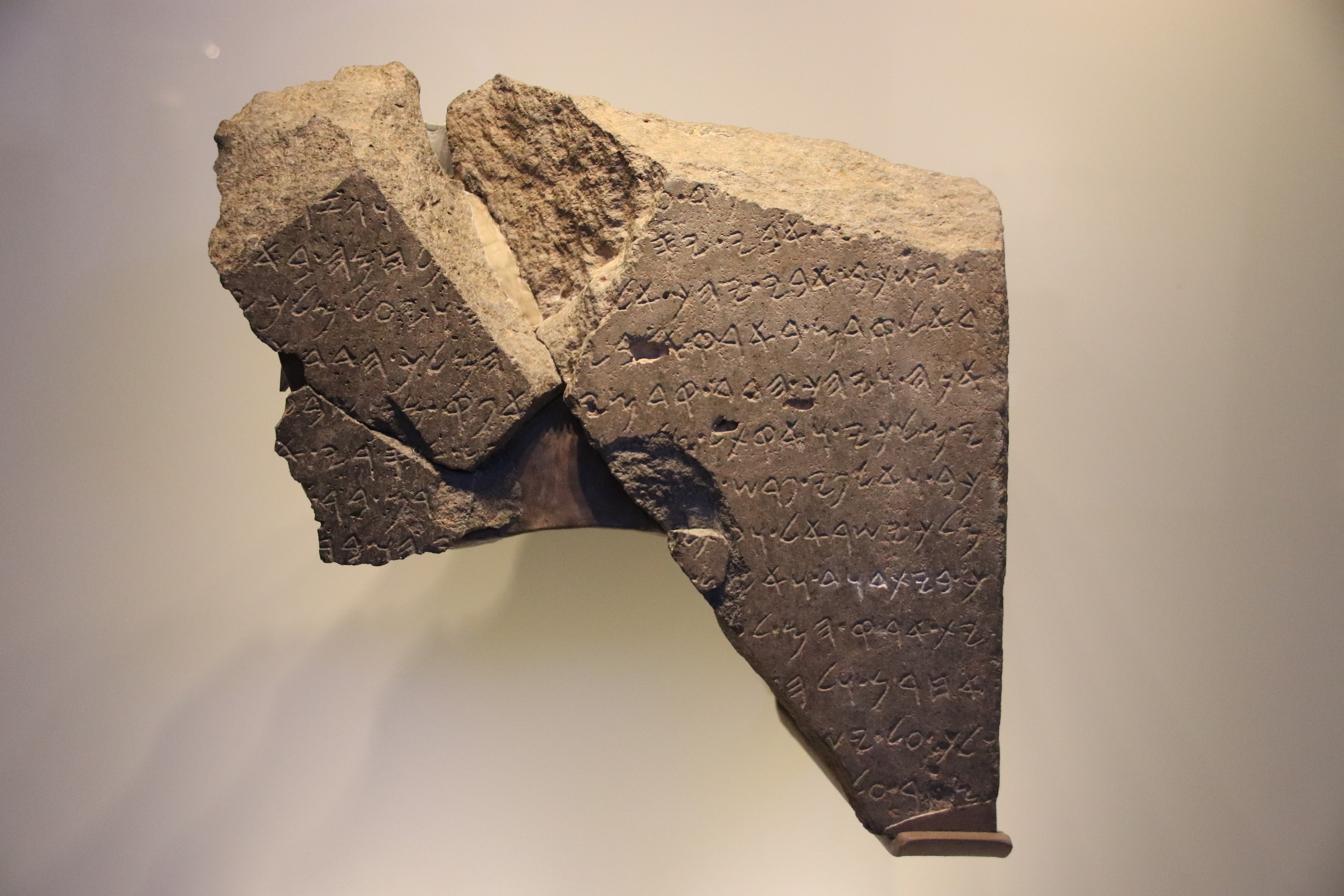
The Tel Dan Stele fragments, Aramaic, 9th century BC, found at Tel Dan in 1993 and 1994, now in the Israel Museum, Jerusalem. Image: CC0, via Wikimedia Commons.
See this page's graph and discover linked topics
In full
The authorship of the biblical books is established, where it can be, by four converging lines of evidence: internal claims (a book naming its writer, or writing in the first person); early attestation (the earliest Jewish and Christian writers who name the author, and how close they stood to the book); setting (whether the book knows the language, names, offices, places and customs of the period its traditional author lived in, which archaeology and ancient records can test); and manuscript evidence (how early copies of the book exist, and what titles they carry).
Three positions should be kept distinct:
- The traditional view accepts the attributions given by the books, by the Jewish tradition preserved in Josephus (Against Apion 1.37-41) and the Babylonian Talmud (Bava Batra 14b-15a), and by the church fathers from Papias and Irenaeus onward. On this view roughly 40 people wrote the Bible across roughly 1,500 years, from Moses to John.
- The critical view, dominant in university biblical studies since the nineteenth century, holds that many books grew through stages of composition and editing and that several attributions are later traditions or pseudonyms. Its best-known conclusions are a post-Mosaic Pentateuch built from sources (Documentary Hypothesis and its successors), a multi-author Isaiah, a Daniel completed about 165 BC, and a set of six disputed letters of Paul.
- The case for the traditional view, argued by scholars such as K. A. Kitchen, Gleason Archer, Richard Bauckham, Martin Hengel (on the Gospel titles), Colin Hemer, Craig Blomberg, F. F. Bruce and Peter J. Williams, holds that the critical conclusions often rest on assumptions about prophecy and literary development more than on evidence, and that the setting, early attestation and manuscript data fit the traditional authors better than critics allow.
Archaeology rarely proves authorship directly. No inscription says "Moses wrote this." What archaeology does is test whether a writer knew the world he claims to have lived in: the names of minor officials, the titles of local governors, the kings on the throne, the shape of a pool. A writer who gets that detail right is more likely to be the contemporary that tradition says he was. That is how the archaeological evidence below should be read.
Confidence varies a great deal from book to book. It is high for the undisputed letters of Paul, which almost every scholar accepts. It is strong for Luke-Acts, Jeremiah, Ezekiel, Ezra and Nehemiah. It is debated for the Torah, Isaiah 40-66, Daniel and the Gospels. It is honestly thin for most of the minor prophets and the minor psalm and proverb writers, where the only evidence is the heading of the book itself.
How the count of 40 works
The number depends on how the authors are counted. This page lists 39 named authors, counting the sons of Korah as one group. Other lists reach 40 by adding Mordecai for Esther, an unknown author for Hebrews, or Hezekiah's scribes, who copied out Solomon's proverbs (Proverbs 25:1). Some lists drop the minor contributors to the Psalms and Proverbs and come in closer to 35.
Three cautions keep the count honest:
- Writing often meant dictating. Jeremiah dictated to Baruch the scribe (Jeremiah 36:4). Paul's letter to the Romans was written down by Tertius (Romans 16:22), and 1 Peter was written "by Silvanus" (1 Peter 5:12). An author in the ancient sense is the person responsible for the content, not always the one holding the pen.
- Some books were completed by others. The account of Moses' death (Deuteronomy 34) and of Joshua's death (Joshua 24:29-33) were added after the men died. A baraita in the Talmud (Bava Batra 14b) says Joshua wrote the last eight verses of the Torah, though the Talmud also records Rabbi Shimon's view that Moses wrote them (15a). Traditional scholars accept editorial updating of this kind.
- The Talmud's "wrote" is broad. When Bava Batra 15a says the Men of the Great Assembly "wrote" Ezekiel, the Twelve, Daniel and Esther, it is usually read as meaning they wrote down or edited those books into their final form, not that they composed the prophecies.
The authors at a glance
| Author | Books | Approximate date (traditional view) | Main evidence of authorship |
|---|---|---|---|
| Moses | Genesis to Deuteronomy; Psalm 90; Job by tradition | 15th or 13th century BC, depending on the date of the exodus | Internal claims (Exodus 24:4; Deuteronomy 31:9, 24); Jesus and the apostles; Josephus; Bava Batra 14b; Late Bronze Age treaty form (Kitchen) |
| Joshua | Joshua | 15th or 13th century BC | Joshua 24:26; Bava Batra 14b-15a; tradition only for the whole book |
| Samuel | Judges, Ruth, part of 1 Samuel | 11th century BC | Bava Batra 14b-15a; 1 Samuel 10:25; 1 Chronicles 29:29; tradition only |
| Nathan | Court records used in 2 Samuel and Kings | c. 1000-960 BC | 1 Chronicles 29:29; 2 Chronicles 9:29; Bava Batra 15a |
| Gad | Court records used in 1 and 2 Samuel | c. 1000 BC | 1 Chronicles 29:29; Bava Batra 15a |
| David | About 73 psalms by their headings | c. 1000-970 BC | Psalm headings; 2 Samuel 22 and 23:1; Jesus (Mark 12:36); Qumran Psalms Scroll; Tel Dan Stele for his dynasty |
| Asaph | Psalms 50 and 73-83 | c. 1000 BC | Psalm headings; 1 Chronicles 16:7; 2 Chronicles 29:30 |
| Sons of Korah | Psalms 42, 44-49, 84-85, 87-88 | 10th century BC onward | Psalm headings only |
| Heman | Psalm 88 | 10th century BC | Psalm heading; 1 Kings 4:31 |
| Ethan | Psalm 89 | 10th century BC | Psalm heading; 1 Kings 4:31 |
| Solomon | Most of Proverbs; Ecclesiastes; Song of Songs; Psalms 72 and 127 | c. 970-930 BC | Proverbs 1:1, 10:1, 25:1; Song 1:1; 1 Kings 4:32; Kitchen on the form of Proverbs |
| Agur | Proverbs 30 | Unknown | Proverbs 30:1 only |
| Lemuel | Proverbs 31:1-9 | Unknown | Proverbs 31:1 only |
| Isaiah | Isaiah | c. 740-680 BC | Isaiah 1:1; New Testament citations of both halves by name; Sirach 48:24-25; Great Isaiah Scroll |
| Jeremiah | Jeremiah; Lamentations and Kings by tradition | c. 627-580 BC | Jeremiah 36; Daniel 9:2; Sirach 49:6-7; Lachish Letters; Jerusalem bullae of named officials |
| Ezekiel | Ezekiel | 593-571 BC | First-person dated oracles; Sirach 49:8; Babylonian Chronicle; Jehoiachin ration tablets |
| Daniel | Daniel | 605-536 BC | Matthew 24:15; Josephus; Qumran copies; Nabonidus Cylinder on Belshazzar |
| Hosea | Hosea | c. 755-715 BC | Hosea 1:1; Sirach 49:10; Qumran and Murabba'at scrolls of the Twelve |
| Joel | Joel | Undated; proposals run from the 9th century to about 400 BC | Joel 1:1; Acts 2:16; scrolls of the Twelve |
| Amos | Amos | c. 760 BC | Amos 1:1; the mid-8th-century earthquake layers at Hazor and other sites |
| Obadiah | Obadiah | Probably soon after 586 BC | Obadiah 1; scrolls of the Twelve |
| Jonah | Jonah | 8th century BC | 2 Kings 14:25; Matthew 12:39-41; scrolls of the Twelve |
| Micah | Micah | c. 735-700 BC | Micah 1:1; Jeremiah 26:18 quotes Micah 3:12; Sennacherib Prism and Lachish reliefs |
| Nahum | Nahum | Between 663 and 612 BC | Nahum 1:1; Nahum 3:8 on the fall of Thebes; fall of Nineveh in 612 BC |
| Habakkuk | Habakkuk | c. 609-598 BC | Habakkuk 1:1; the Habakkuk Commentary from Qumran Cave 1 |
| Zephaniah | Zephaniah | 640-609 BC | Zephaniah 1:1; scrolls of the Twelve |
| Haggai | Haggai | 520 BC | Ezra 5:1 and 6:14; dated by the reign of Darius I |
| Zechariah | Zechariah | From 520 BC | Ezra 5:1 and 6:14; dated by the reign of Darius I |
| Malachi | Malachi | c. 460-430 BC | Malachi 1:1; Persian-period setting |
| Ezra | Ezra; Chronicles by tradition | c. 458-440 BC | First-person memoir (Ezra 7-9); Bava Batra 15a; Persian-era Aramaic documents |
| Nehemiah | Nehemiah | c. 445-430 BC | First-person memoir; Elephantine Papyri naming Sanballat and the high priest Johanan |
| Matthew | Gospel of Matthew | AD 50s to 60s (traditional) | Papias; Irenaeus; uniform title; name patterns (Bauckham, Williams) |
| Mark | Gospel of Mark | AD 50s to 60s | Papias on Mark as Peter's interpreter; Irenaeus; Clement of Alexandria; uniform title (Hengel) |
| Luke | Luke; Acts | c. AD 60-62 | Prologues (Luke 1:1-4; Acts 1:1); "we" passages; Irenaeus; Muratorian Fragment; P75 title; Hemer |
| John | John; 1, 2 and 3 John; Revelation | c. AD 85-95 | John 21:24; Irenaeus; Justin Martyr on Revelation; P52, P66, P75 |
| Paul | Thirteen letters, Romans to Philemon | c. AD 48-67 | Signatures (Galatians 6:11; 2 Thessalonians 3:17); 1 Clement 47; Ignatius; Polycarp; P46; Gallio inscription |
| Peter | 1 and 2 Peter | c. AD 62-67 | 1 Peter 1:1 and 5:12; Polycarp's use of 1 Peter; 2 Peter disputed in the early church |
| James | James | c. AD 45-62 | James 1:1; Origen; Josephus on James's death |
| Jude | Jude | AD 60s | Jude 1; Muratorian Fragment; Tertullian |
Books with no named author: Judges, Ruth, 1 and 2 Samuel, 1 and 2 Kings, 1 and 2 Chronicles, Esther, Job, Lamentations, many of the Psalms, and Hebrews. The traditions for these (Samuel for Judges and Ruth, Jeremiah for Kings and Lamentations, Ezra for Chronicles, Moses for Job) appear in the table where they apply, and are marked as tradition.
The Torah
Moses
The five books of Moses never call themselves "the book of Moses" as a whole, but they report Moses writing laws, a war record, the covenant and a song (Exodus 17:14; 24:4; 34:27; Numbers 33:2; Deuteronomy 31:9, 22, 24). Joshua, Kings and Nehemiah speak of "the book of the law of Moses" (Joshua 8:31; 2 Kings 14:6; Nehemiah 8:1), Ezra of "the book of Moses" (Ezra 6:18), and Jesus cites "the book of Moses" (Mark 12:26) and says Moses wrote of him (John 5:46-47).
- Scholars. K. A. Kitchen, On the Reliability of the Old Testament (2003), argues that the covenant in Exodus, Leviticus and Deuteronomy follows the layout of Hittite treaties of the fourteenth and thirteenth centuries BC (title, history, stipulations, deposit and reading, witnesses, blessings and curses) more closely than the Assyrian treaties of the seventh century, which points to a second-millennium origin for the covenant core. James Hoffmeier, Israel in Egypt (1997), sets out the Egyptian names, loanwords and customs in the exodus account. Gleason Archer, A Survey of Old Testament Introduction, argues that the Egyptian detail in Genesis and Exodus fits a writer educated in Egypt. Gordon Wenham argues in his Word Biblical Commentary on Genesis that much of its material is older than the classic source theory allows.
- Extrabiblical sources. Josephus, Against Apion 1.39, says the five books of Moses contain the laws and the history from creation to Moses' death. The Talmud, Bava Batra 14b-15a, says Moses wrote his book, the section on Balaam, and Job, and that Joshua wrote the last eight verses of the Torah. Philo of Alexandria likewise treats Moses as the author of the Torah.
- Archaeological finds. No find names Moses, and none is likely to; see Moses Did Not Exist Objection Defeater. The Ketef Hinnom Silver Scrolls, two tiny rolled silver amulets from a Jerusalem tomb of the late seventh or early sixth century BC, carry the priestly blessing of Numbers 6:24-26. They are the oldest known text overlapping a passage of the Bible, and they show a passage that critical scholars assign to the late "Priestly" source already in use before the exile. The Merneptah Stele (about 1208 BC) names Israel as a people in Canaan, which sets an outer limit for the exodus generation.
- The critical view. Since Julius Wellhausen's Prolegomena to the History of Israel (1878, 1883), most critical scholars have held that the Pentateuch was assembled from several sources long after Moses. The classic four-source model has lost its consensus, especially in Europe, but a post-Mosaic final form remains the majority critical position. See Mosaic Authorship of the Pentateuch, Documentary Hypothesis, Moses Did Not Write the Torah Objection Defeater and Josiah Wrote the Bible Objection Defeater.
The history books
Joshua
The book says Joshua wrote the covenant words of Shechem "in the book of the law of God" (Joshua 24:26), and Bava Batra 14b assigns him the book. It also records his death, so a later hand at least finished it. Archer points to phrases like "to this day" with Rahab still living (Joshua 6:25) as signs of an early writer.
- Scholars. Archer argues for early composition from these internal markers. Most critical scholars treat Joshua as part of a Deuteronomistic History edited in the seventh and sixth centuries BC.
- Extrabiblical sources. Bava Batra 14b-15a. Nothing earlier names Joshua as author.
- Archaeological finds. The evidence bears on the events, not on authorship, and it is debated: see Jericho Conquest and Joshuas Altar at Mount Ebal. The attribution of the book to Joshua rests on tradition.
Samuel, Nathan and Gad
Samuel "wrote in a book" the rules of the kingship (1 Samuel 10:25). 1 Chronicles 29:29 says the acts of David were written in the records of Samuel the seer, Nathan the prophet and Gad the seer, and Bava Batra 14b-15a says Samuel wrote his book, Judges and Ruth, and that Gad and Nathan finished it after his death (1 Samuel 25:1 reports his death).
- Scholars. Traditional scholars generally read 1 and 2 Samuel as an edited work drawing on these prophetic court records, which fits the Chronicler's list of sources. Critical scholars likewise see older sources, such as the "Court History" of David (2 Samuel 9-20), behind the books.
- Extrabiblical sources. Bava Batra 14b-15a.
- Archaeological finds. The Tel Dan Stele names the "House of David" a little more than a century after David, and some scholars read the same phrase in line 31 of the Mesha Stele, though that reading is disputed. These confirm the dynasty these writers served, not their authorship. See King David Never Existed Objection Defeater.
Kings, Chronicles, Ezra and Nehemiah
Kings cites its own sources, "the book of the chronicles of the kings of Israel" and "of Judah," and tradition (Bava Batra 15a) assigns it to Jeremiah. The same passage says Ezra wrote his book and the genealogies of Chronicles, and that Nehemiah completed them.
- Ezra. Ezra 7:27 to 9:15 is written in the first person, and Ezra 4:8 to 6:18 and 7:12-26 preserve Aramaic letters and decrees in the official language of the Persian empire. H. G. M. Williamson, Ezra, Nehemiah (Word Biblical Commentary, 1985), treats Ezra's memoir as a genuine first-person source, while arguing in other work that Chronicles comes from a different hand. The Cyrus Cylinder records the Persian policy of returning deported peoples and their gods that stands behind Ezra 1.
- Nehemiah. Nehemiah 1-7 and 12-13 are a first-person memoir. The Elephantine Papyri, letters written in 407 BC by the Jewish garrison in Egypt, name Sanballat as governor of Samaria and Johanan as high priest in Jerusalem, the same Sanballat who opposed Nehemiah (Nehemiah 2:10) and the Johanan of Nehemiah 12:22. They fit the memoir's setting exactly.
The attribution of Kings to Jeremiah and of Chronicles to Ezra is tradition only. Many conservative scholars, like critical ones, treat both as anonymous.
Psalms and wisdom
David and the psalmists
About 73 psalms carry the heading le-David, which can mean "by David," "for David" or "belonging to the David collection." David was remembered as a musician and "the sweet psalmist of Israel" (2 Samuel 23:1), and 2 Samuel 22 is Psalm 18 set in his life. Jesus attributes Psalm 110 to David (Mark 12:36), and Peter does the same for Psalm 16 (Acts 2:25).
- Scholars. The headings are old: they appear in the Hebrew text and, with variations, in the Greek Septuagint of the third and second centuries BC. Critical scholars treat them as later editorial notes; traditional scholars treat them as preserved attributions. Both sides agree that some psalms are not David's, such as Psalm 137, written in the Babylonian exile.
- Extrabiblical sources. The Great Psalms Scroll from Qumran Cave 11 (11Q5) includes a prose note crediting David with 3,600 psalms and 450 songs. The scroll is usually dated to the first half of the first century AD, so it shows how firmly David was linked to the Psalms by then, though the numbers themselves are not evidence.
- Archaeological finds. The Tel Dan Stele confirms David's dynasty. Nothing confirms individual psalms.
- The other psalmists. Asaph, the Sons of Korah, Heman the Ezrahite and Ethan the Ezrahite are known from the psalm headings and from Chronicles, which makes Asaph and Heman leaders of David's temple singers (1 Chronicles 6:31-39; 15:16-19). Beyond that there is no outside record of them.
Solomon, Agur and Lemuel
Proverbs names Solomon three times (1:1; 10:1; 25:1), and 1 Kings 4:32 says he spoke 3,000 proverbs. The book itself names other writers: "the wise" (22:17; 24:23), Agur (30:1) and Lemuel, who passed on what his mother taught him (31:1).
- Scholars. Kitchen, "Proverbs and Wisdom Books of the Ancient Near East" (Tyndale Bulletin 28, 1977), compares Proverbs with dated Egyptian and Mesopotamian instruction texts and argues that the structure of Proverbs 1-24 fits the early first millennium BC. Most scholars also see a close relation between Proverbs 22:17 to 24:22 and the Egyptian Instruction of Amenemope, which shows the book drawing on international wisdom of the kind 1 Kings 4:30-31 credits to Solomon's court.
- Ecclesiastes and Song of Songs. Ecclesiastes is written by "the Preacher" (Qohelet), "son of David, king in Jerusalem," and never uses Solomon's name. Some conservative scholars, such as Tremper Longman III in his commentary on Ecclesiastes (1998), think a later writer used a Solomonic voice. The Song is headed le-Shelomoh (1:1), with the same range of meanings as le-David.
- Archaeological finds. The six-chambered gates of the tenth century BC at Hazor, Megiddo and Gezer match 1 Kings 9:15 (see Solomons Gates at Hazor Megiddo Gezer), though their date is debated. They bear on Solomon's reign, not his writing.
The prophets
Isaiah
The book is headed by Isaiah son of Amoz and dated by four kings of Judah (Isaiah 1:1). See Isaiah the Prophet.
- Scholars. John Oswalt, The Book of Isaiah (2 volumes, 1986 and 1998), and E. J. Young, Who Wrote Isaiah? (1958), defend the unity of the book, pointing to vocabulary and themes found in both halves, such as the title "the Holy One of Israel."
- Extrabiblical sources. Ben Sira (Sirach 48:24-25, about 180 BC) credits Isaiah with comforting the mourners of Zion, wording that comes from Isaiah 40 and 61. The New Testament cites both halves by Isaiah's name, and John 12:38-41 quotes Isaiah 53:1 and Isaiah 6:10 side by side as words of the same prophet. Josephus, Antiquities 11.5-6, says Cyrus read the prophecy of Isaiah that named him.
- Archaeological finds. The Great Isaiah Scroll from Qumran (1QIsa-a), usually dated to the second half of the second century BC, copies all 66 chapters as one book (see Dead Sea Scrolls). The Sennacherib Prism, Hezekiahs Tunnel and Siloam Inscription and Hezekiahs Bulla confirm the reign and crisis that Isaiah 36-39 describes. A bulla found near Hezekiah's was read by Eilat Mazar (2018) as possibly "Isaiah the prophet," but the word read as "prophet" is damaged and incomplete, and many epigraphers doubt the reading, so it carries no weight.
- The critical view. Since J. C. Döderlein (1775), and in its three-part form since Bernhard Duhm (1892), most critical scholars assign chapters 40-66 to writers of the exile and after, largely because Isaiah 44:28 and 45:1 name Cyrus, who lived some 150 years after Isaiah. The traditional reply is that this conclusion assumes predictive prophecy cannot happen. See OT Authorship and Prophetic Tradition.
Jeremiah
Jeremiah 36 tells how the prophet dictated his oracles to Baruch son of Neriah, how King Jehoiakim burned the scroll, and how Jeremiah dictated it again with additions. See Jeremiah the Prophet.
- Scholars. The book exists in two editions: the Greek is roughly one-seventh to one-eighth shorter than the Hebrew, and two Hebrew copies from Qumran agree with the shorter form. Most scholars take this as evidence of an edited book growing from Jeremiah's dictated scrolls, which fits Jeremiah 36 itself.
- Extrabiblical sources. Daniel 9:2 and 2 Chronicles 36:21 cite Jeremiah's 70 years by name (see Jeremiah's Seventy Years). Ben Sira 49:6-7 recalls Jeremiah's call and suffering. Bava Batra 15a assigns him the book, Kings and Lamentations.
- Archaeological finds. The Lachish Letters (about 588 BC) describe the Babylonian advance in which, as Jeremiah 34:7 says, Lachish and Azekah were the last fortified cities left. The Nebo-Sarsekim Tablet names a Babylonian official listed in Jeremiah 39:3. The Babylonian Chronicle records the capture of Jerusalem in 597 BC. Seal impressions from controlled excavations in Jerusalem name Gemariah son of Shaphan, Jehucal son of Shelemiah and Gedaliah son of Pashhur, officials who appear in Jeremiah 36-38 (see Jeremiah Bullae). Two bullae reading "Berechiah son of Neriah the scribe," taken to be Baruch, came from the antiquities market with no known findspot, and their authenticity is disputed, so they should not carry weight.
Ezekiel
Ezekiel writes in the first person and dates his oracles by the years of King Jehoiachin's exile, from 593 to 571 BC. See Ezekiel the Prophet.
- Scholars. Ezekiel's authorship is among the least disputed in the Old Testament. Moshe Greenberg, Ezekiel 1-20 (Anchor Bible, 1983), defends the book's coherence as the work of one prophetic mind.
- Extrabiblical sources. Ben Sira 49:8 recalls Ezekiel's vision of the chariot. Copies of Ezekiel were found at Qumran and at Masada.
- Archaeological finds. The Jehoiachin Ration Tablets from Babylon list rations for "Jehoiachin, king of Judah," the king by whose exile Ezekiel dated his book. Cuneiform archives of Judean exiles in Babylonia from the sixth and fifth centuries BC, published by Laurie Pearce and Cornelia Wunsch (2014), show deported Judeans settled in farming villages, the setting of Ezekiel 1:1-3.
Daniel
Daniel is set in Babylon from 605 to about 536 BC and speaks in the first person from chapter 7 on. See Daniel the Prophet.
- Scholars. Joyce Baldwin, Daniel (Tyndale Old Testament Commentaries, 1978), and the essays by D. J. Wiseman, K. A. Kitchen and others in Notes on Some Problems in the Book of Daniel (1965) defend a sixth-century setting. Kitchen's essay in that volume argues that the Aramaic of Daniel is Imperial Aramaic that does not require a second-century date, and that its Persian loanwords point to a setting before the Greek period. John J. Collins, Daniel (Hermeneia, 1993), gives the standard critical case for completion about 165 BC.
- Extrabiblical sources. Jesus calls the author "Daniel the prophet" (Matthew 24:15). Josephus (Antiquities 10.266-268) treats Daniel as a prophet whose books were still read. A Qumran text (4Q174) cites "the book of Daniel the prophet."
- Archaeological finds. Eight copies of Daniel were found at Qumran, the earliest commonly dated to the late second century BC, close to the date critics give for the book's composition. The Nabonidus Cylinder names Belshazzar as the son of King Nabonidus, explaining why Daniel 5 has him offer only the "third" place in the kingdom.
- The critical view. The late date, first argued by the pagan philosopher Porphyry in the third century AD, rests mainly on the precision of Daniel 11 about the second-century wars. See Daniel Was Written in the 2nd Century Objection Defeater and Daniel 2 and 7 Prophecy Argument.
The twelve minor prophets
The twelve shorter prophets were copied as one book, "the Twelve," by the second century BC. Ben Sira (Sirach 49:10, about 180 BC) already speaks of "the twelve prophets."
- Scholars. Most of the twelve are accepted by critical scholars as the source of the core of their books, with debate over later additions: Zechariah 9-14, parts of Micah 4-7, and the hymn of Habakkuk 3. The date of Joel and Obadiah is genuinely uncertain. Jonah is the one book many scholars read as a parable rather than history.
- Extrabiblical sources. Haggai and Zechariah are named as prophets in Ezra 5:1 and 6:14. Jeremiah 26:18 quotes Micah 3:12 by name about a century after Micah. 2 Kings 14:25 names Jonah son of Amittai as a prophet under Jeroboam II. Peter cites Joel by name (Acts 2:16), and Jesus cites Jonah (Matthew 12:39-41). Bava Batra 15a says the Men of the Great Assembly wrote down the Twelve.
- Archaeological finds. The Twelve survive in Hebrew scrolls from Qumran Cave 4 and Wadi Murabba'at and in a Greek scroll from Nahal Hever. The Habakkuk Commentary (1QpHab), one of the first Dead Sea Scrolls found, comments on Habakkuk 1-2 line by line. Destruction layers from a major earthquake about the middle of the eighth century BC, found at Hazor and other sites, fit Amos's dating of his book to "two years before the earthquake" (Amos 1:1). The fall of Nineveh in 612 BC, foretold by Nahum, is recorded in the Babylonian Chronicles (see Nineveh Discovery). For most of these prophets, though, there is no record of the man himself outside the Bible.
Each prophet has his own page: Hosea the Prophet, Joel the Prophet, Amos the Prophet, Obadiah the Prophet, Jonah the Prophet, Micah the Prophet, Nahum the Prophet, Habakkuk the Prophet, Zephaniah the Prophet, Haggai the Prophet, Zechariah the Prophet and Malachi the Prophet.
The New Testament
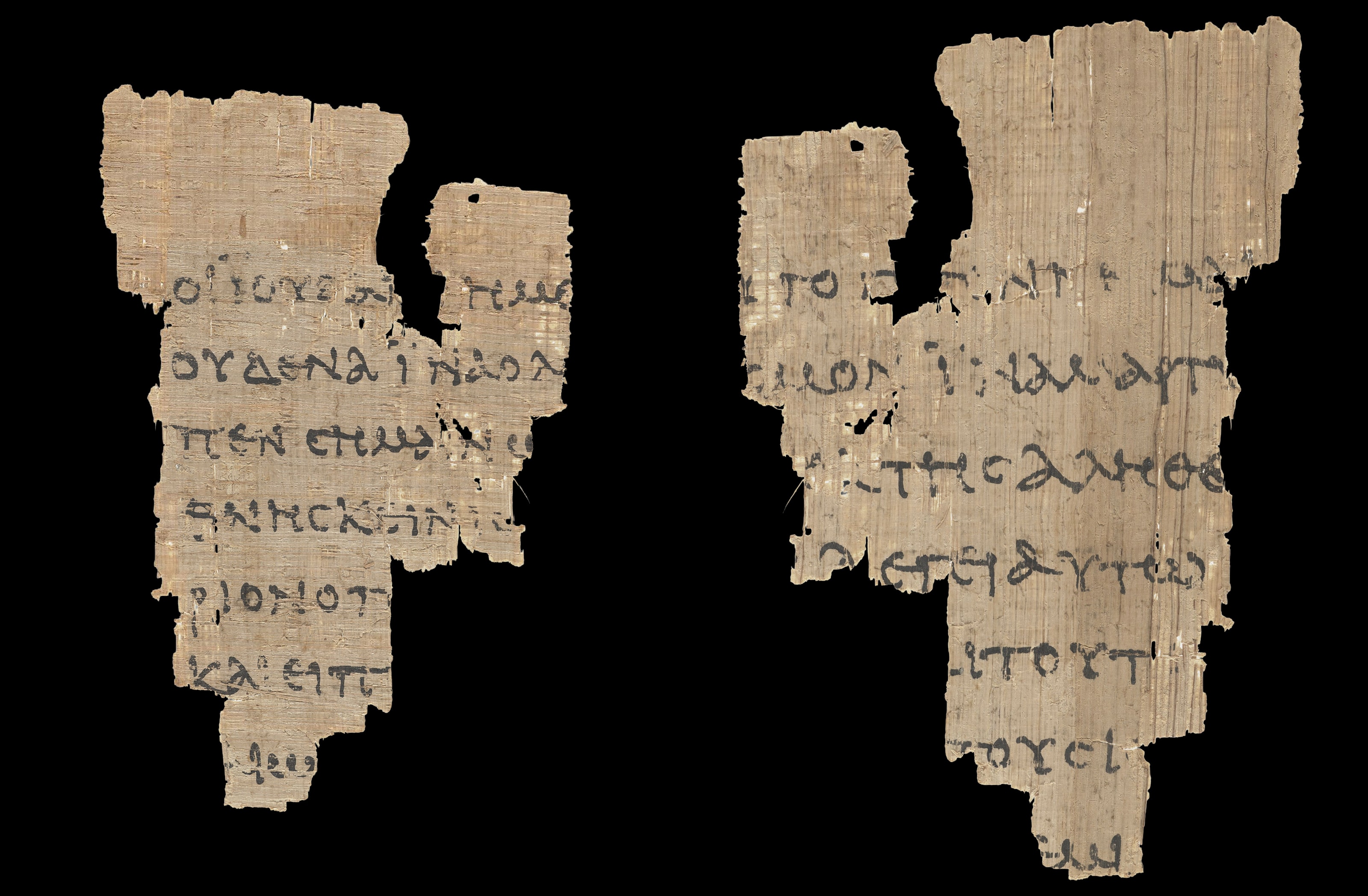
Papyrus 52 (Rylands Library Papyrus P457), the earliest known fragment of John: the recto with John 18:31-33 (left) and the verso with John 18:37-38 (right). John Rylands Library, Manchester. Image: public domain, via Wikimedia Commons.
The four Gospels
The Gospels do not name their authors in the text. Their names come from the titles ("According to Matthew," and so on) and from the early church. See Anonymous Gospels Objection Defeater and NT Authorship and Eyewitness Apologetics.
- Scholars. Martin Hengel, Studies in the Gospel of Mark (1985) and The Four Gospels and the One Gospel of Jesus Christ (2000), argued that the titles must be early: once several Gospels circulated together, churches needed to tell them apart, yet no rival names for any of the four are known anywhere. Simon Gathercole, "The Titles of the Gospels in the Earliest New Testament Manuscripts" (Zeitschrift für die neutestamentliche Wissenschaft, 2013), confirmed that the titles are present in the earliest manuscripts that preserve the beginning or end of a Gospel. Richard Bauckham, Jesus and the Eyewitnesses (2006; 2nd ed. 2017), argues that the Gospels rest on named eyewitness testimony and that their personal names match the frequencies of Jewish names in first-century Palestine. Peter J. Williams, Can We Trust the Gospels? (2018), develops the name and geography evidence (see Gospel Name Frequencies Argument). Craig Blomberg, The Historical Reliability of the Gospels (1987; 2nd ed. 2007), and F. F. Bruce, The New Testament Documents: Are They Reliable? (1943), make the wider case.
- Extrabiblical sources. Papias, writing in the early second century and quoted by Eusebius (Church History 3.39.15-16), says Mark became Peter's interpreter and wrote down what Peter remembered, and that Matthew arranged the sayings in the Hebrew language. Irenaeus, Against Heresies 3.1.1 (about AD 180), names all four: Matthew among the Hebrews, Mark as Peter's interpreter, Luke as Paul's companion, and John, the disciple who leaned on Jesus' breast, at Ephesus. Irenaeus had heard Polycarp, who had known John. The Muratorian Fragment, a canon list usually dated to the late second century though some scholars argue for the fourth, names Luke as the physician who wrote the third Gospel and Acts, and John as the fourth evangelist. Clement of Alexandria (quoted in Church History 6.14) and Tertullian (Against Marcion 4.2 and 4.5) give the same four.
- Archaeological finds. Papyrus 75, usually dated to the late second or early third century (Brent Nongbri argued in 2016 that a fourth-century date is also possible), ends Luke with the title "Gospel according to Luke" and begins John with "Gospel according to John." P52, shown above, is commonly dated to the second century, though Brent Nongbri ("The Use and Abuse of P52," Harvard Theological Review, 2005) argues the range should run later; either way it shows John copied in Egypt within a few generations of its writing. The Pilate Stone, the Caiaphas Ossuary, the Pool of Siloam (John 9:7) and the five-porticoed Pool of Bethesda (John 5:2) show the Gospel writers knew Judea and Jerusalem as they were before AD 70.
Per Gospel:
- Matthew. Papias and Irenaeus name him. Critical scholars mostly doubt that an apostle would rely on Mark as heavily as Matthew does; defenders reply that an apostle could still use Peter's account. See Matthean Authorship of the First Gospel and Synoptic Problem.
- Mark. The attribution to a minor figure who deserted Paul (Acts 15:38) is hard to explain as an invention. Bauckham notes that Peter is the first and last disciple named in Mark (1:16; 16:7), a marker of the main eyewitness source. See Petrine Source Hypothesis.
- Luke. Luke 1:1-4 claims careful research from eyewitnesses, and the "we" passages of Acts (16:10-17; 20:5 to 21:18; 27:1 to 28:16) put the writer beside Paul. Colin Hemer, The Book of Acts in the Setting of Hellenistic History (1989), catalogued a long list of specific details in Acts, from local titles to sailing conditions, that check out against inscriptions and other sources. The title "politarchs" for the rulers of Thessalonica (Acts 17:6) is confirmed by inscriptions (Politarch Inscriptions). See Acts as History (Ramsay's Verification).
- John. The Gospel says the beloved disciple wrote it (John 21:24). Irenaeus identifies him with John the son of Zebedee. Bauckham, by contrast, argues that the beloved disciple was an eyewitness named John "the Elder" who was not one of the Twelve, drawing on Papias's mention of an elder John (Church History 3.39.4). See Johannine Authorship of the Fourth Gospel. For Revelation, Justin Martyr (Dialogue with Trypho 81) names "John, one of the apostles of Christ" as its author in the mid-second century, while Dionysius of Alexandria in the third century doubted it on grounds of style (Eusebius, Church History 7.25).
Paul
Thirteen letters open with Paul's name. Paul signed letters in his own hand and told readers that his signature was the mark of a genuine letter (1 Corinthians 16:21; Galatians 6:11; 2 Thessalonians 3:17), which shows forgery was a live concern in his own lifetime.
- Scholars. Seven letters, Romans, 1 and 2 Corinthians, Galatians, Philippians, 1 Thessalonians and Philemon, are accepted by almost every scholar. Ephesians, Colossians and 2 Thessalonians are disputed, and most critical scholars regard 1 and 2 Timothy and Titus as written after Paul's death; Bart Ehrman's Forged (2011) is a popular statement of that view. Luke Timothy Johnson, The First and Second Letters to Timothy (Anchor Bible, 2001), defends Pauline authorship of the pastoral letters, and D. A. Carson and Douglas Moo, An Introduction to the New Testament (2nd ed. 2005), and Donald Guthrie, New Testament Introduction, defend all thirteen. E. Randolph Richards, Paul and First-Century Letter Writing (2004), shows how secretaries and co-senders affected the style of ancient letters, which weakens style-based arguments. See Half of Pauls Letters Are Forgeries Objection Defeater and Dating of Paul's Letters.
- Extrabiblical sources. Clement of Rome, writing from Rome to Corinth about AD 95, tells the Corinthians to take up the letter of "the blessed Paul the apostle" and recalls its warnings about factions over Cephas and Apollos (1 Clement 47:1-3), which is 1 Corinthians 1:12. Ignatius (To the Ephesians 12:2) and Polycarp (To the Philippians 3:2) both speak of Paul's letters to their readers. Within the New Testament, 2 Peter 3:15-16 already refers to a collection of Paul's letters.
- Archaeological finds. Papyrus 46, a codex of Paul's letters from about AD 200, is the earliest surviving collection; its surviving leaves do not include the pastoral letters, and scholars debate whether its lost final leaves could have held them. The Gallio Inscription at Delphi dates Gallio's term as proconsul of Achaia to about AD 51-52, fixing Paul's stay in Corinth (Acts 18:12) and with it the date of 1 and 2 Thessalonians. The Erastus Inscription at Corinth names an Erastus who paved a street as aedile; whether he is the city official of Romans 16:23 is debated.
Peter, James and Jude
- Peter. 1 Peter names Peter and says it was written "through Silvanus" (1 Peter 5:12), which may explain its polished Greek. Polycarp's letter to the Philippians uses 1 Peter repeatedly, and Eusebius notes this (Church History 4.14.9). 2 Peter is the most disputed book in the New Testament: Origen knew of doubts about it (Eusebius, Church History 6.25), and Eusebius lists it among the books "spoken against" (3.25). Michael Green, 2 Peter and Jude (Tyndale New Testament Commentaries), and Michael Kruger, "The Authenticity of 2 Peter" (Journal of the Evangelical Theological Society, 1999), defend it. Papyrus 72 (third or fourth century) contains both letters of Peter and Jude.
- James. The letter opens in the name of James, a servant of God and of the Lord Jesus Christ (James 1:1), and tradition identifies him with the brother of Jesus who led the Jerusalem church (Galatians 1:19; Acts 15:13). Josephus (Antiquities 20.200) records the stoning of "James, the brother of Jesus who was called Christ" in AD 62, confirming the man and his standing. Origen cites the letter as James's; Eusebius lists it among the disputed books.
- Jude. Jude calls himself "brother of James" (Jude 1). The Muratorian Fragment accepts the letter, and Tertullian cites it. Eusebius (Church History 3.20), drawing on Hegesippus, reports that grandsons of Jude, "the Lord's brother," were brought before the emperor Domitian.
Hebrews
Hebrews names no author. Origen judged that the thoughts were Paul's but the wording another's, and concluded that only God knows who wrote it (Eusebius, Church History 6.25.14). Tertullian (On Modesty 20) attributed it to Barnabas, and Martin Luther suggested Apollos. Papyrus 46 places it among Paul's letters, just after Romans. Clement of Rome was already using it about AD 95. Its authority in the church never depended on knowing its author.
Objections and defeaters
The main objections to the traditional authors are answered in their own pages:
- Moses Did Not Write the Torah Objection Defeater, the source-critical case against Mosaic authorship, answered
- Mosaic Authorship of the Pentateuch, the positive case for Moses as the source of the Torah
- Moses Did Not Exist Objection Defeater, the argument from silence about Moses, answered
- Josiah Wrote the Bible Objection Defeater, the claim that the Torah was composed under King Josiah
- The Bible Was Written in Babylon Objection Defeater, the claim that the Hebrew Bible was invented in exile
- Daniel Was Written in the 2nd Century Objection Defeater, the late-date case for Daniel, answered
- OT Authorship and Prophetic Tradition, how the prophets' words were written down and passed on
- Bible Was Written by a Literate Few Objection Defeater, the claim that an elite wrote the Bible to serve itself
- The Bible Is Just Second-Hand Sources Objection Defeater, the claim that no biblical writer was an eyewitness
- Anonymous Gospels Objection Defeater, the claim that the Gospels were anonymous until late
- Matthean Authorship of the First Gospel, the case for Matthew
- Johannine Authorship of the Fourth Gospel, the case for John
- Petrine Source Hypothesis, Peter as the eyewitness behind Mark
- Gospel Name Frequencies Argument, what the names in the Gospels show about where they were written
- Half of Pauls Letters Are Forgeries Objection Defeater, the disputed letters of Paul
- Dating of Paul's Letters, when each letter was written
See also
- History of the Bible, when the books were written, recognized, copied and translated
- Bible and Hermeneutics, the parent hub
- People of the Bible, biblical people confirmed outside the Bible, book by book
- Biblical Figures Confirmed by Archaeology, Lawrence Mykytiuk's controlled list of attested biblical people
- Biblical Archaeology, the artifact pages cited here
- NT Authorship and Eyewitness Apologetics, the New Testament authors and their nearness to the events
- Dead Sea Scrolls, the Qumran copies of Isaiah, Daniel and the Twelve
- Bible Manuscript Reliability, how the text was transmitted after it was written
- Canon, how the books were recognized
- Documentary Hypothesis, the source theory of the Pentateuch
- Synoptic Problem, how the first three Gospels relate
- Pre-Pauline Creeds, the earliest Christian formulas inside Paul's letters
- Higher Criticism, the method behind the critical view
Common questions this page answers
Q: Who wrote the Bible?
On the traditional view, about 40 people over about 1,500 years: Moses, kings such as David and Solomon, prophets from Isaiah to Malachi, the scribes Ezra and Nehemiah, the Gospel writers Matthew, Mark, Luke and John, and the apostles Paul, Peter, James and Jude. Several books, including Judges, Kings, Esther, Job and Hebrews, name no author.
"About 40" is a fair round number for the traditional attributions, but the exact count depends on how you treat anonymous books, the minor contributors to Psalms and Proverbs, and scribes who wrote at dictation. This page lists 39 named authors, counting the sons of Korah as one group.
Q: Is there evidence Moses wrote the Torah?
The Torah reports Moses writing laws, the covenant and a song, later Scripture and Jesus call it the book of Moses, and Josephus and the Talmud credit him with it. K. A. Kitchen argues that its covenant form matches second-millennium Hittite treaties. Most critical scholars still hold that the Pentateuch reached its final form long after Moses, and even traditional scholars accept later editorial touches such as the account of his death.
Q: Did Matthew, Mark, Luke and John write the Gospels?
The Gospels are unnamed in their text, but every early manuscript title and every early writer who comments, from Papias in the early second century to Irenaeus about AD 180, gives the same four names, and no rival names are known. Critical scholars often doubt that the apostles Matthew and John wrote the Gospels named after them, while the attributions to Mark and Luke, who were not apostles, are hard to explain as inventions.
Q: Did Paul write all the letters attributed to him?
Seven of the thirteen are accepted by nearly all scholars. Ephesians, Colossians and 2 Thessalonians are disputed, and most critical scholars think the letters to Timothy and Titus came after Paul. Scholars such as Luke Timothy Johnson, D. A. Carson and Douglas Moo defend all thirteen, noting that Paul used secretaries and co-senders, which changes a letter's style.
Archaeology tests whether the writers knew their world. The Tel Dan Stele confirms David's dynasty, Jerusalem seal impressions name officials from Jeremiah 36-38, the Babylonian ration tablets name King Jehoiachin, the Elephantine Papyri name Nehemiah's opponent Sanballat, and the Gallio inscription fixes Paul's stay in Corinth. Early copies such as the Great Isaiah Scroll, P52 and P46 show the books existed early, and early Gospel manuscripts such as P75 carry their authors' names in their titles.
Q: Which books of the Bible are anonymous?
Judges, Ruth, 1 and 2 Samuel, 1 and 2 Kings, 1 and 2 Chronicles, Esther, Job, Lamentations, many psalms and Hebrews name no author. Jewish and Christian tradition suggests authors for several of them, but those suggestions are tradition rather than evidence.