Concept
New Testament Archaeology Evidence Catalog
New Testament archaeology, NT archaeology evidence, Archaeological evidence for the New Testament, Is the New Testament backed by archaeology, New Testament historical evidence database, NT evidence catalog, 100 facts New Testament archaeologyIntro
The New Testament is full of names, titles, places and customs that can be checked. It names Roman governors and Jewish high priests, gives local officials their correct local titles, and describes pools, temples, roads and harbors. This page gathers the most useful of those checks into one list, so you can see at a glance what has been confirmed, how strongly, and where to read more.
Each item has a grade. A (direct) means independent evidence, such as an inscription, a coin, an excavated site or a non-Christian writer, establishes the detail. B (corroborating) means the evidence fits strongly, or the identification is probable but not certain. C (contextual) means the evidence is consistent with the account and helps explain it, but does not establish it. One thing to keep in mind throughout: archaeology confirms the setting of the New Testament, the people, places and customs. It cannot confirm a miracle or the resurrection. What it can show is that the writers knew the world they were writing about, which is a reason to take their testimony seriously when it turns to the events at the center of their story.
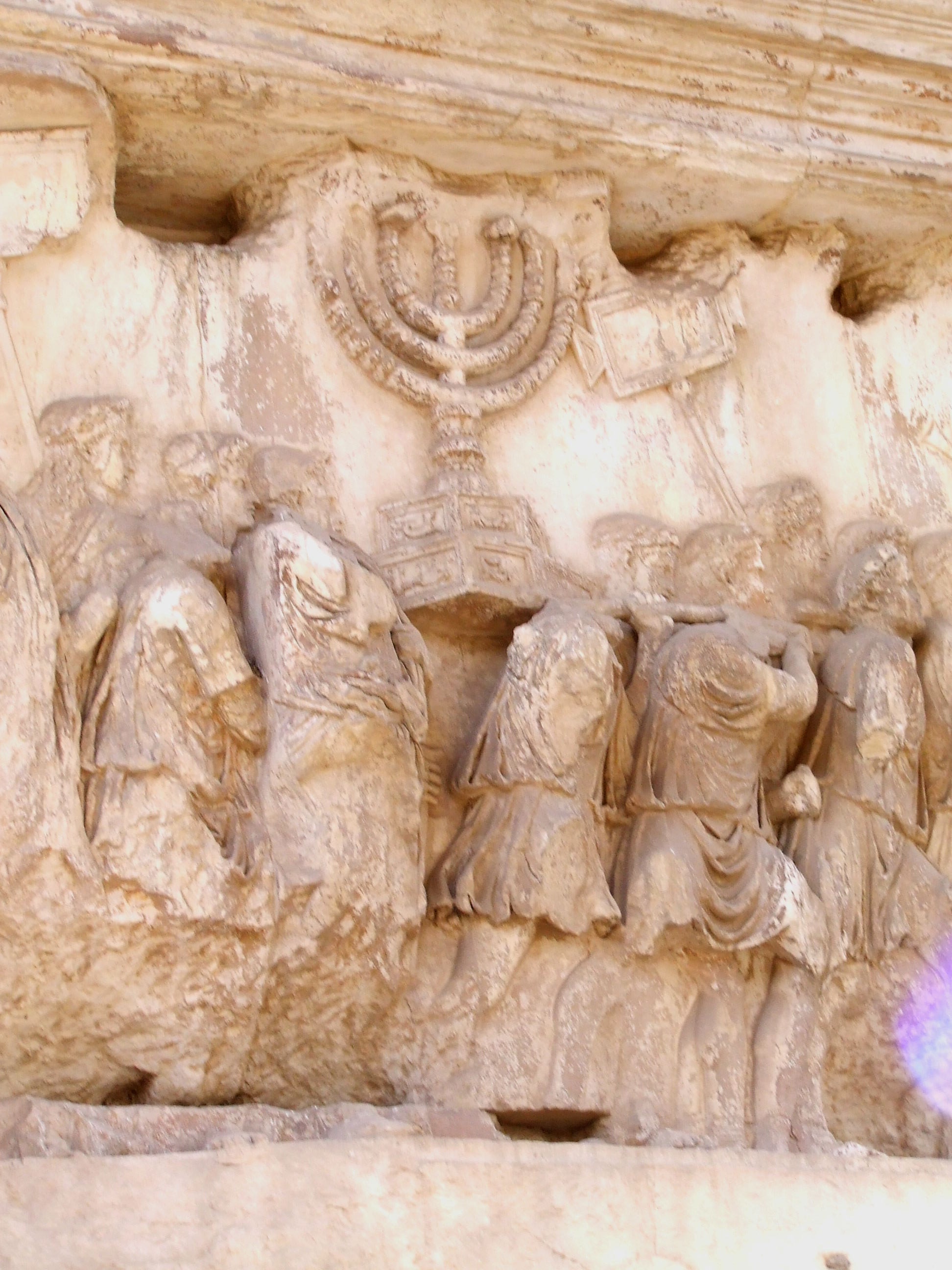
Spoils of the Jerusalem Temple carried in triumph, relief on the Arch of Titus, Rome, after AD 81. Photo: Laurel Lodged, public domain, via Wikimedia Commons, resized.

See this page's graph and discover linked topics
In full
This catalog is a graded inventory of external evidence bearing on the historical setting of the New Testament: inscriptions and artifacts, persons attested outside the New Testament, excavated places, Jewish religious practice, Roman administrative and legal procedure, and early non-Christian and Christian testimony with the earliest manuscripts. Grades describe the strength of the link between the evidence and the specific New Testament detail, not the importance of the detail. Where several data points depend on one source (for example, Josephus for most of the Herodian family), they are grouped, so the catalog does not inflate the count. Items commonly circulated in popular lists that turn out to be double counts, trivially weak, or overstated have been merged, dropped, or downgraded, with the correction stated. The cumulative argument these items support is methodological: a text whose checkable claims about a period are repeatedly accurate, including claims a later or distant author would have been likely to get wrong, earns a presumption of reliability as a historical source. That presumption is defeasible and does not by itself establish its supernatural claims, which must be argued on their own evidence (see Resurrection of Jesus and Minimal Facts Argument).
How to read the grades
- A, direct. An inscription, coin, excavated structure, or independent ancient writer establishes the stated detail. Example: the Pilate Stone names Pontius Pilate as prefect of Judea.
- B, corroborating. Strong agreement, or a probable but not certain identification. Example: the Caiaphas Ossuary names "Joseph son of Caiaphas," very probably the high priest's family, though the identification is not beyond dispute.
- C, contextual. Consistent with the account and illuminating it, but not independently establishing it. Example: the Nazareth Inscription shows Roman concern about tomb robbery, but its link to Jesus's tomb is unproven.
- What a grade does not mean. An A grade confirms the detail named in the row, not the whole surrounding narrative. Pilate's existence is grade A; what Pilate did at Jesus's trial rests on the Gospels and on the non-Christian writers in Part 6.
Part 1. Inscriptions and artifacts
| # | Claim | NT reference | Evidence | Grade | Codex page |
|---|---|---|---|---|---|
| 1 | Pontius Pilate governed Judea with the rank of prefect | Luke 3:1; Matthew 27:2 | Latin dedication naming "Pontius Pilatus, Prefect of Judea," found at Caesarea Maritima, 1961 | A | Pilate Stone |
| 2 | Gallio was proconsul of Achaia while Paul was in Corinth | Acts 18:12-17 | Letter of Claudius at Delphi naming Gallio as proconsul, dated AD 52 | A | Gallio Inscription |
| 3 | Thessalonica was governed by "politarchs" | Acts 17:6-8 | Some thirty or more Macedonian inscriptions using the title, several from Thessalonica | A | Politarch Inscriptions |
| 4 | Gentiles were barred, on pain of death, from the Temple's inner courts | Acts 21:27-29; Ephesians 2:14 | Two Greek warning inscriptions from the Temple balustrade; Josephus, Jewish War 5.193-194 | A | Temple Warning Inscription |
| 5 | Caiaphas was high priest at Jesus's trial | Matthew 26:57; John 18:13 | Ossuary inscribed "Joseph son of Caiaphas," Jerusalem, 1990; Josephus names him "Joseph called Caiaphas" | B | Caiaphas Ossuary |
| 6 | Erastus, the city treasurer, was a Corinthian official | Romans 16:23 | Latin pavement inscription naming an Erastus who paved it as aedile, Corinth, 1929. Identification debated: the titles differ and the pavement's date is disputed | B | Erastus Inscription |
| 7 | Lydia's trade fits her hometown | Acts 16:14 | Inscriptions of the dyers at Thyatira; Thyatiran purple-dyers attested at Thessalonica. Lydia herself is not named | B | Thyatira Dyers Inscriptions |
| 8 | Roman crucifixion could use nails through the feet | John 20:25; Luke 24:39 | Heel bone of Yehohanan with an iron nail still in it, Giv'at ha-Mivtar, Jerusalem, 1968 | A | Crucifixion Remains of Yehohanan |
| 9 | Rome destroyed the Temple in AD 70 and carried off its treasures | Luke 21:5-6; Mark 13:1-2 | Arch of Titus relief of the spoils; Josephus, Jewish War books 6-7; burned houses in Jerusalem's Upper City. Confirms the event, not when the prediction was spoken | A | |
| 10 | Lysanias was tetrarch of Abilene | Luke 3:1 | Inscription from Abila naming Lysanias the tetrarch in the time of Tiberius, against the charge that Luke confused him with an earlier Lysanias | B | Quirinius defeater |
| 11 | A crucified man was worshipped as a god by Christians in Rome | 1 Corinthians 1:23 | Graffito of a donkey-headed crucified figure, "Alexamenos worships [his] god," Palatine, c. AD 200 | B | Alexamenos Graffito |
| 12 | Roman law treated tomb robbery as a grave crime | Matthew 28:11-15 | Edict of Caesar against tomb violation, sent from Nazareth in 1878; marble traced to Kos in 2020; no link to Jesus established | C | Nazareth Inscription |
| 13 | A ring of Pilate's administration | none directly | Bronze ring from Herodion inscribed with the name Pilatus; identification with the prefect contested | C | Pilates Ring at Herodion |
| 14 | An ossuary of "James son of Joseph, brother of Jesus" | Galatians 1:19 | Ossuary genuine; authenticity of the final phrase disputed, unprovenanced | C | James Ossuary |
Correction to popular lists. The Erastus and Caiaphas items are often listed as certain. They are probable, not certain, and presenting them as settled makes the stronger items look weaker by association.
Part 2. People named in the New Testament
These are attested in coins, inscriptions, or ancient historians. Josephus is the main source for most of the Herodians, so they are grouped rather than counted as separate proofs.
| # | Claim | NT reference | Evidence | Grade | Codex page |
|---|---|---|---|---|---|
| 15 | Herod the Great ruled Judea and built on a vast scale | Matthew 2:1 | Josephus; his coins; Herodium, Masada, Caesarea and the Temple platform | A | |
| 16 | Archelaus succeeded Herod in Judea | Matthew 2:22 | Josephus; coins; deposed AD 6 | A | |
| 17 | Herod Antipas ruled Galilee and executed John the Baptist | Luke 3:1; Mark 6:17-29 | Josephus, Antiquities 18.116-119; coins minted at Tiberias | A | |
| 18 | Philip was tetrarch of the northeastern territories | Luke 3:1 | Josephus; his coins, which carried the emperor's portrait | A | |
| 19 | Augustus, Tiberius, Claudius and Nero ruled at the times stated | Luke 2:1; 3:1; Acts 11:28; 18:2; 25:11 | Roman historians, coins, inscriptions | A | |
| 20 | Quirinius governed Syria | Luke 2:2 | Josephus; inscriptions of his career. The timing of Luke's census is disputed | A (person) | Quirinius Census Contradiction Objection Defeater |
| 21 | Annas was a powerful former high priest | Luke 3:2; John 18:13 | Josephus, Antiquities 18.26 (Ananus son of Seth); five of his sons became high priest (Antiquities 20.198) | A | |
| 22 | Herod Agrippa I died suddenly at Caesarea after being hailed as a god | Acts 12:20-23 | Josephus, Antiquities 19.343-350, an independent parallel account | A | |
| 23 | Agrippa II and Bernice heard Paul | Acts 25:13-26:32 | Josephus; Tacitus; Suetonius, Titus 7 | A | |
| 24 | Felix governed Judea, married to Drusilla | Acts 23:24-24:27 | Josephus, Antiquities 20.137-144; Tacitus, Histories 5.9 and Annals 12.54 | A | |
| 25 | Porcius Festus succeeded Felix | Acts 24:27 | Josephus, Antiquities 20.182-200 | A | |
| 26 | Ananias son of Nedebaeus was high priest at Paul's hearing | Acts 23:2; 24:1 | Josephus, Antiquities 20.103, 205-213, including his violence and greed | A | |
| 27 | Sergius Paulus was proconsul of Cyprus | Acts 13:7 | A senatorial family of Sergii Paulli is well attested, including a Lucius Sergius Paullus in Rome under Claudius; which inscription, if any, names the Acts proconsul is uncertain | B | |
| 28 | Aretas IV was king of the Nabataeans | 2 Corinthians 11:32 | Coins and Nabataean inscriptions. The person is certain; how his ethnarch controlled Damascus is debated | A (person) | |
| 29 | Gamaliel was a leading Pharisaic teacher | Acts 5:34; 22:3 | Rabbinic tradition (Mishnah) remembers Rabban Gamaliel the Elder | B | |
| 30 | John the Baptist preached repentance and baptism and was executed by Antipas | Mark 1:4; 6:17-29 | Josephus, Antiquities 18.116-119 | A | |
| 31 | James, "the brother of Jesus," was executed in Jerusalem | Galatians 1:19 | Josephus, Antiquities 20.200, under the high priest Ananus son of Ananus, AD 62 | A | James the Brother of Jesus |
Correction. Some popular lists attach Ananus son of Ananus, who had James executed, to Acts 23:2. The high priest in Acts 23 is a different man, Ananias son of Nedebaeus (row 26).
Part 3. Places
| # | Claim | NT reference | Evidence | Grade | Codex page |
|---|---|---|---|---|---|
| 32 | Capernaum was a lakeside town on the Sea of Galilee | Matthew 4:13; Mark 1:21 | Tell Hum: first-century houses, the basalt foundation under the later synagogue | A | Capernaum Synagogue |
| 33 | Magdala was a thriving town with a synagogue | Luke 8:2; Matthew 4:23 | First-century synagogue excavated 2009, with the Magdala Stone | A | Magdala Stone |
| 34 | Nazareth was an inhabited Jewish village | Luke 1:26; 4:16 | Early Roman houses and tombs, including the house excavated in 2009 near the Basilica of the Annunciation | A | Mythicism Refutation |
| 35 | The Pool of Bethesda had five porticoes | John 5:2 | Double pool near St. Anne's church; the colonnade arrangement fits five porticoes | A (pool); B (porticoes) | Pool of Bethesda |
| 36 | The Pool of Siloam was a large pool in Jesus's Jerusalem | John 9:7 | Monumental Second Temple stepped pool, found 2004 | A | Pool of Siloam |
| 37 | The Temple complex was monumental and recently built | Mark 13:1; John 2:20 | Herodian retaining walls, the Western Wall, the southern steps and the stones of the platform | A | |
| 38 | Caesarea Maritima was the Roman administrative capital with Herod's palace | Acts 10:1; 23:33-35 | The artificial harbor, the theater, the palace complex used as the governor's praetorium | A | Pilate Stone |
| 39 | Philippi was a Roman colony on the Via Egnatia | Acts 16:12 | Latin civic inscriptions, the forum, the paved Via Egnatia | A | Church at Philippi |
| 40 | Corinth had a judicial platform (bēma) in its forum | Acts 18:12-17 | A rostrum in the forum long identified as the bēma; identification probable | B | Church at Corinth |
| 41 | Cenchreae was Corinth's eastern port | Romans 16:1; Acts 18:18 | Excavated harbor installations | A | |
| 42 | Ephesus had a great theater and was a center of Artemis worship | Acts 19:23-41 | The excavated theater; the Artemision; votive and civic inscriptions of Artemis | A | Church at Ephesus |
| 43 | Athens had the Areopagus council | Acts 17:19-34 | The council is well attested in literature and inscriptions | A | |
| 44 | The seven cities of Revelation lay on a real circuit, each with known local features | Revelation 2-3 | Excavations; Colin Hemer's study of the local setting | B | Seven Churches of Asia |
| 45 | Malta's governor bore the title "the first man" of the island | Acts 28:7 | Inscriptions from Malta using the same title (prōtos) | A | Acts as History (Ramsay's Verification) |
| 46 | The shipwreck occurred at a particular bay on Malta | Acts 27:39-44 | The traditional site fits the description; no direct evidence | C |
Part 4. Jewish religion, Temple and customs
| # | Claim | NT reference | Evidence | Grade | Codex page |
|---|---|---|---|---|---|
| 47 | Galilee had synagogue buildings in Jesus's day | Luke 4:15-16 | First-century synagogues at Magdala and Gamla | A | Magdala Stone |
| 48 | Greek-speaking Jews had synagogues in Jerusalem | Acts 6:9 | The Theodotos inscription, a pre-70 Greek synagogue dedication from Jerusalem. Its link to the "synagogue of the Libertines" is speculative | A (setting) | |
| 49 | Ritual purification was widely practiced | Mark 7:4; John 3:25; 11:55 | Hundreds of stepped immersion pools (miqva'ot) in Jerusalem and Judea | A | |
| 50 | Stone vessels were used for purity | John 2:6 | Limestone vessels common in Jewish sites of the period | A | |
| 51 | Rock-cut tombs closed with stones were standard for the well-to-do | Matthew 27:60; John 19:41 | Numerous first-century Jerusalem tombs, blocking stones and ossuaries | A | Golgotha and the Tomb of Jesus |
| 52 | Jewish scripture was copied and read before Christianity, and messianic hopes were current | Luke 4:17; John 1:19-21 | The Dead Sea Scrolls, including the Great Isaiah Scroll and texts on messianic figures | A | Dead Sea Scrolls |
| 53 | Pharisees and Sadducees differed over resurrection | Matthew 22:23; Acts 23:8 | Josephus, Jewish War 2.162-166; Antiquities 18.12-17 | A | Josephus |
| 54 | Priests signaled from the Temple with trumpets | Luke 1:8-10 (setting) | Hebrew inscription "to the place of trumpeting," found at the southwest corner of the Temple Mount; Josephus, Jewish War 4.582 | C |
Part 5. Roman administration, law and travel
| # | Claim | NT reference | Evidence | Grade | Codex page |
|---|---|---|---|---|---|
| 55 | Senatorial provinces had proconsuls | Acts 13:7 (Cyprus); 18:12 (Achaia); 19:38 (Asia) | Cyprus was senatorial from 22 BC; Achaia was returned to the senate in AD 44; Asia was always senatorial | A | Acts as History (Ramsay's Verification) |
| 56 | Ephesus had a town clerk, a lawful assembly and Asiarchs | Acts 19:31, 35-39 | Ephesian inscriptions naming the grammateus and the dēmos; inscriptions of Asiarchs | A | Church at Ephesus |
| 57 | Philippi's magistrates and lictors acted as Roman officials | Acts 16:20-22, 35-38 | Colonial institutions attested by Latin inscriptions | A | Church at Philippi |
| 58 | Roman citizens could not lawfully be beaten uncondemned | Acts 16:37; 22:25-29 | Lex Porcia and Lex Julia; Cicero, Against Verres 2.5.162-170 | A | |
| 59 | A citizen could appeal to the emperor | Acts 25:10-12 | Roman legal sources on citizen appeal; the details of procedure under Nero are debated | A | |
| 60 | Alexandrian grain ships sailed to Italy | Acts 27:6; 28:11 | Literary and papyrus evidence for the grain fleet | A | |
| 61 | Sailing after "the Fast" in autumn was dangerous | Acts 27:9 | Vegetius, On Military Matters 4.39, on the closed season | A | |
| 62 | The account of the voyage is nautically accurate | Acts 27 | James Smith's study of the winds, soundings and route (1848) | B | |
| 63 | Roman roads linked Paul's cities | Acts 16-18 | The Via Egnatia, milestones and excavated paving | A | |
| 64 | Roman census practice could require people to register at home | Luke 2:1-3 | Household census returns from Roman Egypt; a prefect's edict of AD 104 ordering people to return home. Relevance to Judea is inferential | C | Quirinius Census Contradiction Objection Defeater |
Part 6. Non-Christian testimony and the earliest Christian evidence
| # | Claim | NT reference | Evidence | Grade | Codex page |
|---|---|---|---|---|---|
| 65 | Christ was executed by Pontius Pilate under Tiberius, and Christians in Rome were persecuted under Nero | Luke 23; 1 Peter 4:12-16 | Tacitus, Annals 15.44, c. AD 116 | A | Tacitus |
| 66 | Jesus had a brother named James | Galatians 1:19 | Josephus, Antiquities 20.200, broadly accepted as authentic | A | Josephus |
| 67 | Josephus mentions Jesus as a teacher executed by Pilate | the Gospel passion narratives | Josephus, Antiquities 18.63-64. Most scholars accept an authentic core with later Christian interpolations | B | Josephus |
| 68 | Christians met before dawn and sang hymns "to Christ as to a god," and were tried for the name | Philippians 2:6-11; 1 Peter 4:16 | Pliny the Younger, Letters 10.96, with Trajan's reply, 10.97, c. AD 112 | A | Extra-Biblical Case for Jesus |
| 69 | Claudius expelled Jews from Rome | Acts 18:2 | Suetonius, Claudius 25.4, "at the instigation of Chrestus." The expulsion is clear; whether "Chrestus" means Christ is ambiguous | B | |
| 70 | Nero punished Christians | 1 Peter 4:12-16 | Suetonius, Nero 16.2 | A | |
| 71 | Paul's undisputed letters were written in the AD 50s | 1 Corinthians; Galatians; Romans | Mainstream critical dating anchored by the Gallio inscription; the letters name Peter, James and John as Jerusalem leaders | A | Dating of Paul's Letters |
| 72 | The creed of death, burial, resurrection and appearances predates Paul's letter | 1 Corinthians 15:3-7 | Formulaic language and Paul's "delivered... received"; dated by most scholars to within a few years of the crucifixion | B | Pre-Pauline Creeds |
| 73 | Peter and Paul suffered and died as witnesses | John 21:18-19; 2 Timothy 4:6 | 1 Clement 5, Rome, usually dated c. AD 96 | B | Clement of Rome |
| 74 | Jesus was crucified under Pontius Pilate | the Gospel passion narratives | Ignatius of Antioch, Trallians 9; Smyrnaeans 1; Magnesians 11, c. AD 110 | B | Ignatius of Antioch |
| 75 | A copy of John circulated in Egypt early | John 18:31-33, 37-38 | P52 (Rylands Papyrus 457). Colin Roberts (1935) dated it c. AD 100-150, the figure most often cited; Brent Nongbri (2005) and others argue the handwriting allows a wider range into the later second or third century | B | Manuscripts |
| 76 | A collection of Paul's letters existed around AD 200 | the Pauline letters | P46 (Chester Beatty), usually dated c. AD 200; a minority argues for earlier | A | Manuscripts |
Corrections. P52 is often quoted as "AD 125" as if that were settled; it is a palaeographic estimate with a real range. The Josephus passage on Jesus (Antiquities 18.63-64) should not be quoted in its received form as Josephus's words, because parts of it are later Christian additions; the James passage (Antiquities 20.200) is the safer citation.
What was dropped or merged
- Double counts merged. The four emperors are one row (19). The two Josephus notices on John the Baptist are one (30). The two Pliny letters are one (68). Proconsuls of Cyprus and Achaia are folded into one administrative row (55) as well as their own artifacts.
- Weak items dropped. A bare claim that Bethany had first-century tombs, that Jericho was inhabited, or that Roman officers used escorts for prisoners adds little and is omitted.
- Downgraded. The Nazareth Inscription (C), the Pilate ring (C), the James ossuary (C) and the Malta shipwreck site (C).
- Moved out of archaeology. Paul's letters naming Peter, James and John (row 71) are internal testimony, not external evidence. They belong here only because their date is externally anchored.
Ten to lead with in a debate
Pick evidence where the object is tangible, the reading is not disputed, and the connection to the text is direct.
- Pilate Stone (Luke 3:1). The governor who tried Jesus, named and titled in stone.
- Gallio Inscription (Acts 18:12). A Roman proconsul, the right title, and a firm date of AD 51 to 52.
- Politarch Inscriptions (Acts 17:6). An unusual local title once thought to be Luke's mistake.
- Temple Warning Inscription (Acts 21:28). Explains why one accusation nearly got Paul killed.
- Pool of Siloam (John 9:7). A large first-century pool exactly where John puts it.
- Pool of Bethesda (John 5:2). The double pool behind John's "five porches."
- Crucifixion Remains of Yehohanan (John 20:25). Physical proof that Romans nailed victims.
- Caiaphas Ossuary (Matthew 26:57). Very probably the high priest's family tomb. Say "probably," and it holds.
- Tacitus, Annals 15.44 (Luke 23). A hostile Roman historian confirms the execution under Pilate.
- Josephus on James, Antiquities 20.200 (Galatians 1:19). A Jewish historian names "the brother of Jesus who was called Christ."
Why these and not others. The dyers of Thyatira and the Corinthian bēma are good illustrations, but each confirms a setting rather than a named person or event, and the bēma identification is probable rather than certain. Yehohanan and Josephus on James make harder evidence for the same time slot.
Method: why the details add up
The argument is cumulative, not a single proof.
- Specific details are risky. A writer who names the governor, his exact title, the local magistrates' title, and the harbor where a ship put in makes claims that can fail. Vague stories cannot be tested; the New Testament can.
- Many details were time-bound. Provincial status changed: Achaia had proconsuls only from AD 44, and Cyprus only after 22 BC. Thessalonica's politarchs were a Macedonian peculiarity. The title of Judea's governor shifted from prefect to procurator after AD 44. Getting these right points to authors close to the events or using sources that were.
- Hemer's survey. Colin Hemer's The Book of Acts in the Setting of Hellenistic History (Mohr Siebeck, 1989) works verse by verse through Acts and classifies the details that can be checked against inscriptions, papyri, coins and literature. He concluded that Acts shows a level of local and period accuracy best explained by an author who had access to first-hand information. William Ramsay had reached a similar judgment from field epigraphy a century earlier. See Acts as History (Ramsay's Verification).
- Independence matters. The strongest rows rest on sources with no interest in supporting Christianity: Roman inscriptions, Tacitus, Josephus, Pliny, a hostile cartoon.
The steel-man objection. A good historical novel can have an accurate setting and a fictional plot. Accurate background, the objector says, shows research, not truthfulness.
The answer.
- The concession is real, and this catalog does not claim more: setting accuracy does not prove the miracles.
- But it defeats the specific claim that the New Testament is late legend composed far from the events, because legend accumulating over generations tends to lose exactly the time-bound details that the texts preserve.
- Ancient historical novels rarely have this density of checkable incidental detail. The detail in Acts and the Gospels is mostly unforced, offered in passing rather than displayed.
- Once the texts are shown to be early and well-informed, the question about the resurrection becomes a question about what their sources saw, which is where the case continues: Minimal Facts Argument and Resurrection of Jesus.
Calibration. The case is strongest for Acts and the Gospels' Jerusalem and Galilee settings. Archaeology also raises real difficulties for some details, for example the dating of Luke's census, and those are answered on their own pages rather than hidden (see Quirinius Census Contradiction Objection Defeater).
Scholarship
Published academic works this page draws on, each matched to a publisher, index or library catalog record.
- Colin J. Hemer, The book of Acts in the setting of Hellenistic history (1989). Open Library
- John McRay, Archaeology and the New Testament (1991). Open Library
- Brent Nongbri, "The Use and Abuse of P 52: Papyrological Pitfalls in the Dating of the Fourth Gospel," Harvard Theological Review 98 (2005). doi:10.1017/s0017816005000842
- William Mitchell Sir Ramsay, St. Paul the traveller and the Roman citizen (Hodder, 1895). Open Library
- James Smith, The Voyage and Shipwreck of St. Paul (1848). Open Library
See also
- Biblical Archaeology, the parent hub for the whole Bible
- NT Geographical Reliability, the geographical side of the same case
- Biblical Figures Confirmed by Archaeology, Lawrence Mykytiuk's strict list of identified persons
- Gospel Reliability Debate Source Sheet, the source sheet for live debate
- Historicity of Jesus, whether Jesus existed
- Extra-Biblical Case for Jesus, Objections and Responses, the non-Christian sources in depth
- Acts as History (Ramsay's Verification), the argument from Luke's accuracy
- Dating of Paul's Letters, the Gallio-anchored chronology
- Lydia of Thyatira, the convert whose trade the Thyatira inscriptions illuminate
- Manuscripts, the manuscript evidence in full
Common questions this page answers
Q: Is the New Testament supported by archaeology?
Yes, for its historical setting. Inscriptions, coins, excavated sites and non-Christian writers confirm dozens of the people, titles, places and customs the New Testament mentions, such as Pontius Pilate, Gallio, the politarchs of Thessalonica and the pools of Siloam and Bethesda. Archaeology cannot confirm miracles, but it shows the writers knew their world.
Q: What is the best archaeological evidence for the New Testament?
The strongest items name a person or title directly: the Pilate Stone, the Gallio inscription at Delphi, the politarch inscriptions, and the Temple warning inscription. Excavated sites such as the Pool of Siloam and physical evidence such as the crucified heel bone of Yehohanan add tangible confirmation of the Gospel setting.
Q: Does archaeology prove the resurrection of Jesus?
No, and it is not designed to. Archaeology confirms the setting: real governors, real places, real customs. That makes the New Testament authors credible witnesses to their world, and the case for the resurrection then rests on the early testimony itself, examined on its own terms.
Q: What do the grades A, B and C mean?
A means independent evidence directly establishes the detail. B means the evidence corroborates it strongly or the identification is probable but not certain. C means the evidence is consistent with the account and gives context, but does not establish it.
Q: How old is the oldest New Testament manuscript?
P52, a small fragment of John 18, is usually dated by handwriting to c. AD 100-150, following Colin Roberts. Brent Nongbri and others argue that the handwriting allows a wider range, into the later second or third century. Substantial manuscripts such as P46 (Paul's letters) date from around AD 200.
Q: Did Luke get Roman titles right?
Repeatedly. He calls Gallio proconsul of Achaia, uses the Macedonian title politarch for Thessalonica's magistrates, calls Malta's leading official "the first man of the island," and names Ephesus's town clerk and Asiarchs, all of which inscriptions confirm.