Person
Zipporah
Zippora, Sephora, Tzipporah, Wife of Moses, Cushite Wife of Moses, Moses' Cushite Wife, Moses' Ethiopian WifeIntro
Zipporah was the wife of Moses. She was a daughter of Jethro (also called Reuel), the priest of Midian, and she married Moses while he was a fugitive from Egypt. She bore him two sons, Gershom and Eliezer, and in one strange scene she saved Moses' life by circumcising their son (Exodus 4:24-26).
Later, Numbers 12 says Miriam and Aaron spoke against Moses "because of the Ethiopian woman whom he had married" (Numbers 12:1, KJV), a Cushite woman. God defended Moses and struck Miriam with a skin disease. Readers have asked for over two thousand years whether that Cushite woman was Zipporah or a second wife. Both answers have serious support, and the lesson of the chapter holds either way: God rebuked the people who looked down on Moses' marriage.
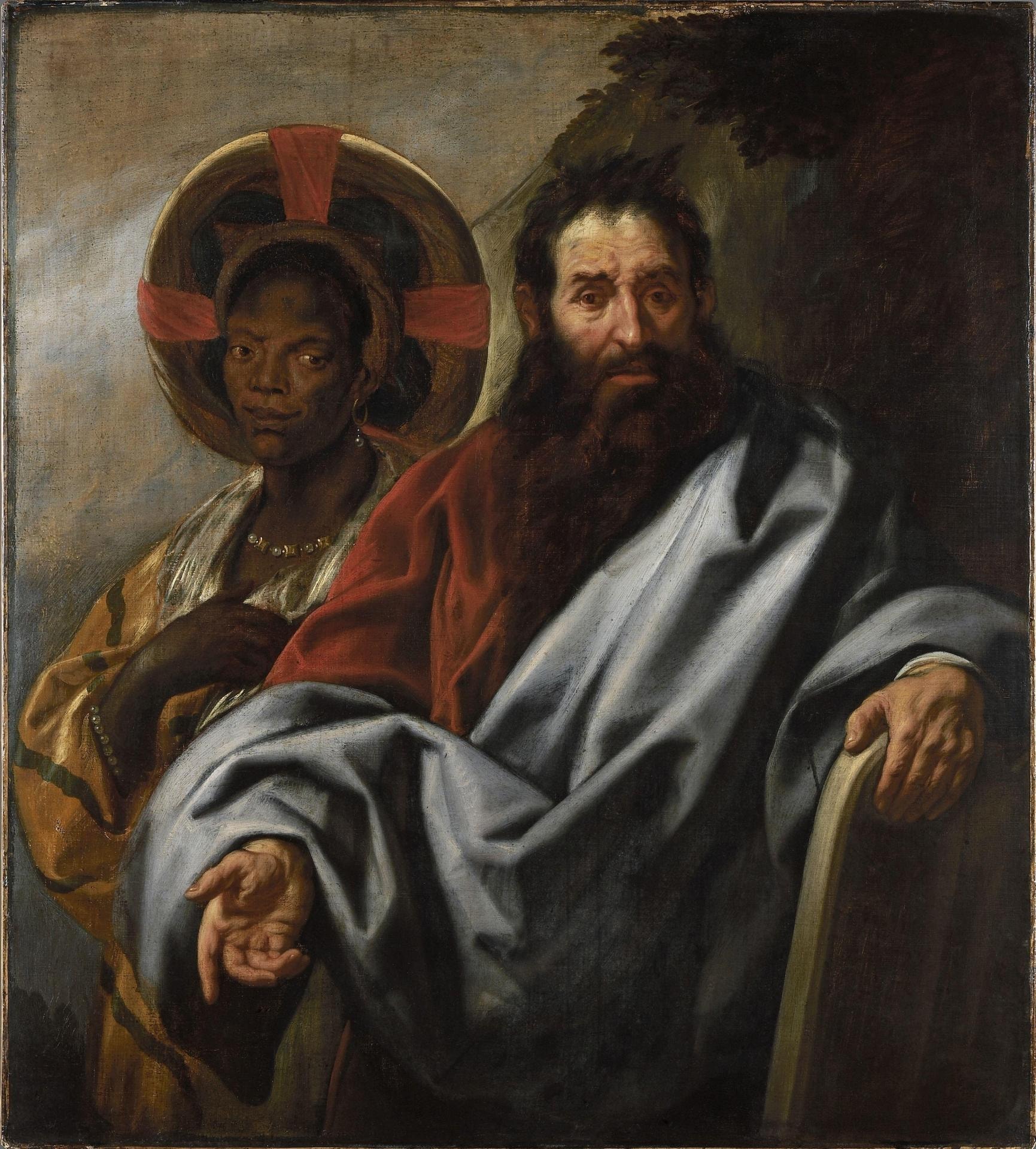 Moses and his Ethiopian wife Sephora, Jacob Jordaens, c. 1650, Rubenshuis, Antwerp. Jordaens follows the reading that Zipporah and the Cushite were one woman. Public domain (Wikimedia Commons), resized.

See this page's graph and discover linked topics
In full
Zipporah in Exodus. After killing an Egyptian, Moses fled to Midian, defended the seven daughters of the priest of Midian at a well, and was taken into the household (Exodus 2:15-21). The priest, called Reuel here and Jethro elsewhere, gave him his daughter Zipporah, who bore Gershom (Exodus 2:22). On the road back to Egypt, "the LORD met him, and sought to kill him," and Zipporah took a flint, circumcised her son, touched Moses' feet with the foreskin and said, "Surely a bloody husband art thou to me" (Exodus 4:24-26, KJV). Moses later sent her and the two boys back to her father, and Jethro brought them to him at the mountain of God (Exodus 18:2-6).
The Cushite woman in Numbers. In Numbers 12:1 Miriam and Aaron speak against Moses because of the Cushite woman he had married, and the narrator repeats the point: he had married a Cushite woman. Their stated complaint in verse 2 is about authority: "Hath the LORD indeed spoken only by Moses?" (KJV). The LORD summons the three, declares that Moses alone speaks with him "mouth to mouth" (Numbers 12:8, KJV), and when the cloud lifts "Miriam became leprous, white as snow" (Numbers 12:10, KJV). Aaron pleads, Moses prays, and Miriam is shut out of the camp seven days.
One woman or two?
| One woman: the Cushite is Zipporah | Two women: Moses married a Cushite after Zipporah | |
|---|---|---|
| Textual basis | Habakkuk 3:7 sets "the tents of Cushan" in parallel with "the land of Midian" (KJV), so a people called Cushan lived in or near Midian. 2 Chronicles 21:16 places Arabians "near the Ethiopians" (KJV), showing a Cushite group could be located by Arabia | Kushit everywhere else in the Hebrew Bible points to the African Kush; the Bible never otherwise calls Midianites Cushites; Numbers 12:1 reads like news ("for he had married"), not a reference to a decades-old marriage |
| Chronology | Zipporah is the only wife the Torah names, and she had just rejoined Moses in Exodus 18 | Exodus 18:2 says Moses had "sent her back," which some read as a divorce or separation that left room for a second marriage; Zipporah is never mentioned again |
| Early interpreters | Rabbinic tradition (Sifre on Numbers; Rashi) identifies the Cushite with Zipporah and takes "Cushite" as praise of her beauty; the Aramaic Targum Onkelos renders the word "the beautiful woman" | Josephus (Antiquities 2.238-253) tells a legend that Moses, as an Egyptian general, campaigned in Ethiopia and married Tharbis, the Ethiopian king's daughter |
| Modern scholarship | Defended by those who read Cushan as a Midianite clan | Probably the more common modern reading of the plain sense |
A third data point. The second-century BC Jewish playwright Ezekiel the Tragedian, in his drama on the Exodus, has Zipporah describe her homeland as Libya, peopled by Ethiopians, dark-skinned men. That is one ancient Jewish writer who did identify Zipporah herself as African, the same reading Jordaens painted.
What can be said with confidence. The Hebrew word is Kushit, the feminine of the gentilic built on Kush (Strong's H3568), the Bible's name for the Nile lands south of Egypt. If the woman is a second wife, she was very probably African. If she is Zipporah, then "Cushite" either places her among a Cushan people of the Midian region or describes her by an African term the writer thought fitting. Either way the narrator chose to mark her as Cushite at the very point where Moses' family objected to her.
What Numbers 12 teaches either way
- The objection is tied to her. The narrator gives the cause first, "because of" (Hebrew ʿal-odot) the Cushite woman. Verse 2's complaint about prophetic authority is the stated grievance; verse 1 shows what lay underneath it, or at least what prompted it.
- God answers for Moses. The LORD's speech defends Moses' unique standing. He does not rebuke Moses for the marriage; he rebukes the people who spoke against him.
- The irony is in the text. Miriam is struck "white as snow." Many interpreters, ancient and modern, see a pointed reversal: the one who despised a dark-skinned woman is made unnaturally white. The text does not spell this out, so it should be offered as a reading, not a certainty.
- Intermarriage and faith. The Torah forbids marriage with the Canaanite nations because of idolatry (Deuteronomy 7:3-4), not because of skin or ancestry. Moses' marriages, to a Midianite and possibly a Cushite, show that foreign descent was never itself the barrier.
Zipporah's own story
Apart from the Cushite question, Zipporah is a remarkable figure:
- The daughter of a priest who blessed Israel's God. Her father Jethro rejoices at the Exodus, says "Now I know that the LORD is greater than all gods," and offers sacrifices (Exodus 18:11-12, KJV), then gives Moses the advice that organizes Israel's judges.
- The woman who acted when Moses did not. In Exodus 4:24-26, one of the most obscure passages in the Bible, she understands what is required and performs the circumcision herself. Her words, "a bridegroom of blood," remain debated, but the narrative credits her with saving Moses' life.
- A foreign woman inside the founding family. Like Tamar, Rahab and Ruth, she is a non-Israelite woman whose story is woven into Israel's beginnings.
Reception
- Origen read Moses' Ethiopian wife as a figure of the church gathered from the Gentiles, joined to the Law-giver and defended by God against those who despised her.
- Ethiopian and African American readers have long treated Numbers 12 as a key text, the divine defense of an African woman in the household of Israel's greatest prophet. Esau McCaulley develops this reading in Reading While Black (2020).
- European art sometimes followed the one-woman reading and painted Zipporah as African, as in the Jordaens above.
Tensions
- The Africans in Scripture Argument says the Midianite identification is "a later interpretive overlay" and that Kushit is "used consistently" of Sudan and Ethiopia. Habakkuk 3:7, which pairs Cushan with Midian, gives the one-woman reading an inner-biblical basis older than the rabbis. The African reading remains the more natural sense of Kushit, but the Midianite reading has textual roots of its own, and this page presents both.
- The same page presents Miriam and Aaron's objection as plainly ethnic. The text gives the Cushite woman as the occasion (verse 1) and prophetic authority as the stated grievance (verse 2), and God's speech answers verse 2. Reading verse 1 as ethnic prejudice is reasonable and widely held, but it is an inference from the narrator's emphasis, not an explicit statement.
Scholarship
Published academic works this page draws on, each matched to a publisher, index or library catalog record.
- Esau McCaulley, Reading While Black: African American Biblical Interpretation as an Exercise in Hope (2020). Open Library
See also
- Moses, her husband
- Africans in Scripture Argument, where Numbers 12 is a key premise
- Africa in the Table of Nations, where Kush first appears
- Hagar, another foreign woman in the founding family of Israel
- Ebed-melech, another Cushite the Bible honours
- Israelites Were Black Racial Descriptors Objection Defeater, on reading ethnicity from biblical texts
- Josephus, source of the Tharbis legend
- Africa and Christianity
Common questions this page answers
Q: Who was Zipporah in the Bible?
Zipporah was the wife of Moses, a daughter of Jethro (Reuel), the priest of Midian. She bore Moses two sons, Gershom and Eliezer, and saved his life by circumcising their son (Exodus 4:24-26).
Q: Was Moses' wife Black?
Numbers 12:1 says Moses married a Cushite woman, and Cush is the Bible's name for the African lands south of Egypt. If that woman was a second wife, she was very probably African. If she was Zipporah, "Cushite" may refer to a Cushan people near Midian.
Q: Did Moses have two wives?
Possibly. Some readers think the Cushite woman of Numbers 12 was a second wife married after Zipporah was sent back; others, including rabbinic tradition, identify her with Zipporah. The text does not settle it.
Q: Why did Miriam and Aaron speak against Moses?
Numbers 12:1 says it was because of the Cushite woman he had married, and verse 2 records their complaint that God had spoken through them too. God defended Moses and struck Miriam with a skin disease, white as snow.
Q: What does "bridegroom of blood" mean in Exodus 4?
It is Zipporah's cry after she circumcised her son when the LORD sought to kill Moses (Exodus 4:24-26). The meaning is debated; most interpreters connect it with circumcision as the sign of the covenant, which Moses had neglected.
Q: What is a Cushite?
A Cushite (Hebrew Kushi, feminine Kushit) is a person from Kush, the Nile region south of Egypt in today's Sudan. Older English Bibles translate it "Ethiopian."