Person
Xerxes I
Ahasuerus, King Ahasuerus, Xerxes, Xerxes the Great, Khshayarsha, Xšayāršā, Ahasuerus of Esther, Xerxes I (Ahasuerus)Intro
Xerxes I ruled the Persian Empire from 486 to 465 BC. Most scholars identify him with King Ahasuerus of the book of Esther, the king who made the Jewish orphan Esther his queen and allowed the Jews to defend themselves against Haman's plot. He is also the king who invaded Greece in 480 BC and fought the battles of Thermopylae and Salamis.
The name Ahasuerus is the Hebrew form of the king's Persian name, Xšayāršā, which the Greeks wrote as Xerxes. His own inscriptions survive at Persepolis and on a cliff at Van in eastern Turkey.
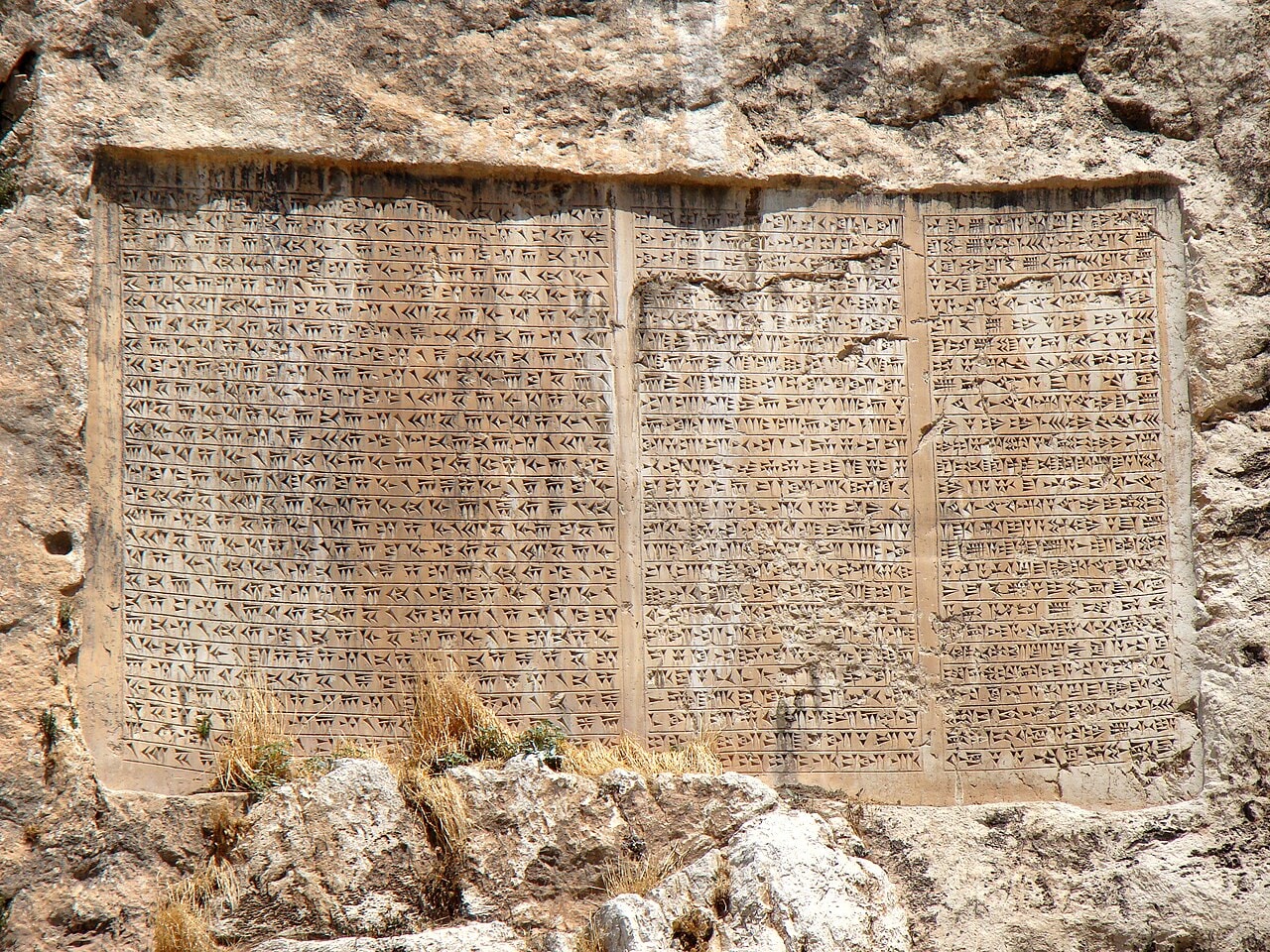
The trilingual inscription of Xerxes I (XV) cut into the rock of the Van citadel in eastern Turkey, in Old Persian, Elamite and Babylonian. Photo: Bjørn Christian Tørrissen, CC BY-SA 3.0, via Wikimedia Commons, resized.

See this page's graph and discover linked topics
In full
Xerxes (Old Persian Xšaya-ṛšā, "ruling over heroes") was the son of Darius I and Atossa, daughter of Cyrus the Great. He succeeded his father in 486 BC, put down revolts in Egypt and Babylon, led the great invasion of Greece in 480-479 BC (Thermopylae, the burning of Athens, defeat at Salamis and Plataea), completed much of Persepolis, and was assassinated in 465 BC.
The Hebrew 'Ahashwerosh is a regular rendering of the Persian name through its Babylonian and Aramaic forms, and is the reason most scholars equate the Ahasuerus of Esther 1:1 and Ezra 4:6 with Xerxes. The book of Esther's details have often been compared with the Greek record: a king ruling "from India even unto Ethiopia" (Esther 1:1) matches the extent of Xerxes' empire; a great banquet of officials "in the third year of his reign" (483 BC, Esther 1:3) falls in the period Herodotus describes for the planning of the Greek campaign; and Esther reaches the king "in the seventh year of his reign" (479 BC, Esther 2:16), after his return from Greece. The palace at Susa (Shushan) excavated by French teams from the 1880s onward fits the book's setting.
Lawrence Mykytiuk counts Xerxes among the 53 Hebrew Bible persons confirmed in inscriptions, on the strength of his own inscriptions and dated documents. His existence is beyond dispute. The historical character of the Esther narrative is a separate and genuinely debated question.
In the Bible
- Ezra 4:6. "And in the reign of Ahasuerus, in the beginning of his reign, wrote they an accusation against the inhabitants of Judah and Jerusalem" (ASV). This is the canonical first mention.
- Esther 1:1. "Now it came to pass in the days of Ahasuerus (this is Ahasuerus who reigned from India even unto Ethiopia, over a hundred and seven and twenty provinces)" (ASV).
- Esther 1-2. The banquet at Susa, the deposing of Queen Vashti, the choice of Esther (2:17).
- Esther 3-9. Haman's decree against the Jews, Esther's intercession, the counter-decree, and the institution of Purim.
- Esther 10:1-3. The king's tribute "upon the land, and upon the isles of the sea," and Mordecai's rise.
Other Ahasuerus. Daniel 9:1 names "Ahasuerus, of the seed of the Medes" as father of Darius the Mede. That is a different figure, and his identity is part of the Darius the Mede question.
Family and lineage
- Father: Darius I.
- Mother: Atossa, daughter of Cyrus the Great.
- Queen in Greek sources: Amestris (Herodotus 7.114; 9.108-113). Some scholars, for example William Shea, have argued that Vashti and Amestris are the same woman; others regard the names as irreconcilable.
- Queen in Esther: Vashti, then Esther (Hadassah).
- Son and successor: Artaxerxes I.
Historical and archaeological evidence
| Source | What it says | Date | Location | Grade |
|---|---|---|---|---|
| Gate of All Nations inscription (XPa) | Xerxes names himself builder of the gate, son of Darius | c. 480s-470s BC | Persepolis, Iran (in situ) | Direct |
| "Daiva" inscription (XPh) | Xerxes records suppressing the worship of false gods in a rebellious land | c. 480s BC | Found at Persepolis; National Museum of Iran, Tehran | Direct |
| Van inscription (XV) | Xerxes, son of Darius, completes a monument his father began | 5th century BC | Van citadel, eastern Turkey (in situ) | Direct |
| Babylonian and Persepolis tablets | Documents dated by his regnal years | 486-465 BC | Various; British Museum and other collections | Direct |
| Inscribed alabaster vessels | "Xerxes, the Great King" in Old Persian, Elamite, Babylonian and Egyptian hieroglyphs | 486-465 BC | Several museums, including the Cabinet des Médailles, Paris | Direct |
The Marduka tablet. In 1940 Arthur Ungnad published a Babylonian text naming a Marduka, an official at Susa, from around the beginning of Xerxes' reign. Several Persepolis tablets also name men called Marduka. Edwin Yamauchi (Persia and the Bible, 1990) judged a link with Mordecai possible but unprovable; David Clines and others are skeptical, noting that Marduka was a common Babylonian name. The codex treats it as an open question, not as evidence for Mordecai.
Scholarly consensus
- Xerxes as Ahasuerus. This identification is the standard view in modern scholarship, based on the linguistic match. The Septuagint and Josephus (Antiquities 11.184) instead placed the Esther story under Artaxerxes, an identification few hold today.
- Esther's historicity: the case for. Conservative scholars, among them Edwin Yamauchi and Karen Jobes, point to the accurate Persian setting: the postal system, court officials, palace layout, Persian loanwords, and the chronological fit with Herodotus. They read Esther as history told with literary artistry.
- Esther's historicity: the case against. Many critical scholars, for example Carey Moore and Jon Levenson, treat Esther as a historical novella. They note that Herodotus names Amestris, not Vashti or Esther, as queen; that Persian law as presented (irrevocable decrees, Esther 8:8) is not attested elsewhere; and that the 127 provinces differ from Herodotus's twenty satrapies. Defenders reply that provinces (medinot) were subunits of satrapies, and that a Greek historian's silence about a harem queen is not strong evidence.
- Ezra 4:6. Most take the accusation "in the beginning of his reign" as part of a thematic summary of opposition from Cyrus to Artaxerxes, not in strict sequence.
Theological significance
- Providence without the divine name. The book of Esther never names God, yet the plot turns on a series of timely reversals: a sleepless night, a remembered service, a gallows turned on its builder. The narrative invites readers to see God's hidden care for his people in the ordinary workings of a pagan court.
- "For such a time as this." Mordecai's question to Esther (Esther 4:14) is the book's theological center: deliverance will come, and the question is whether she will take her place in it.
- Purim. The festival instituted under Xerxes (Esther 9) is still kept by Jews, an unbroken memorial of the deliverance the book describes.
Church Fathers
No patristic commentary focused on Xerxes as a historical figure has been located. Early Christian writers generally followed the Septuagint and Josephus in placing Esther under an Artaxerxes.
Scholarship
Published academic works this page draws on, each matched to a publisher, index or library catalog record.
- Edwin M. Yamauchi, Persia and the Bible (1990). Open Library
See also
- People of the Bible, every person in the codex's biblical-figures series, grouped by book of first mention
- Darius I, his father
- Artaxerxes I, his son and successor
- Cyrus the Great, his grandfather through Atossa
- Esther, the book's passages
- Biblical Figures Confirmed by Archaeology, Mykytiuk's list
- Bible Stories Are All Fiction Objection Defeater, the broader argument about biblical historicity
- Josephus, whose Antiquities retells the Esther story
Common questions this page answers
Q: Who was King Ahasuerus in the book of Esther?
Most scholars identify him with Xerxes I of Persia (reigned 486-465 BC). The Hebrew name Ahasuerus is the regular Hebrew form of the Persian name Xšayāršā, which the Greeks wrote as Xerxes.
Q: Is there archaeological evidence for Xerxes?
Yes, abundant. His own inscriptions survive at Persepolis and at Van in Turkey, along with inscribed vessels and many documents dated by his reign. Lawrence Mykytiuk lists him among the biblical persons confirmed by inscriptions.
Q: Is the book of Esther historical?
Scholars disagree. Defenders point to its accurate Persian setting and its chronological fit with Herodotus. Critics call it a historical novella, noting that Greek sources name Amestris as queen and do not mention Esther. Xerxes himself is not in doubt.
Q: Is Xerxes the king in the movie 300?
Yes. The Xerxes of the battle of Thermopylae (480 BC) is the same king most scholars identify with Ahasuerus of Esther. Esther became queen in his seventh year, after his return from the Greek campaign.