Concept
Worship
what is worship, define worship, biblical definition of worship, worship in the bible, worship vs honor, worship in spirit and truth, difference between worship and respectWorship is giving to someone the honor, devotion and submission that are due to one regarded as worthy of ultimate allegiance. In Scripture that kind of worship belongs to God alone.
Intro
To worship is to treat someone as worthy of everything: your praise, your trust, your obedience, your life. The English word comes from "worth-ship," and the idea fits. You worship what you treat as worth the most.
The Bible's words for worship come from a simple physical act: bowing down. The same act can mean respect for a king or worship of God, so the Bible itself has to tell us which is which. It does that by looking at who receives the bowing, what the person intends, and what the setting is. A servant can bow to a master without worshipping him. But when Scripture says "thou shalt worship no other god" (Exodus 34:14, ASV), it is speaking of a devotion that no creature may receive.
That is why worship is not only singing in church. Paul calls the whole of a Christian's life, offered to God, "your spiritual service" (Romans 12:1, ASV).
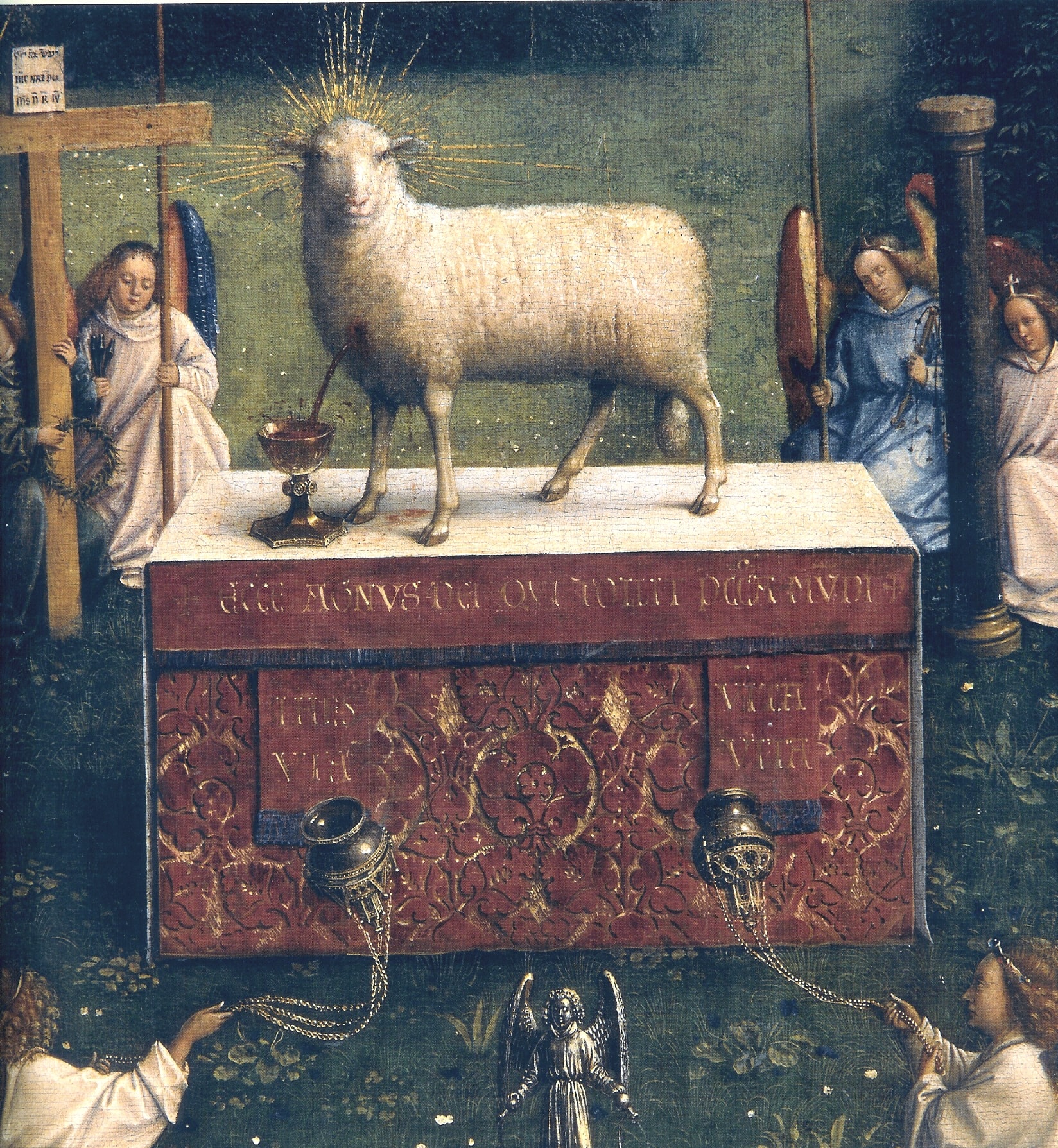
Jan and Hubert van Eyck, Adoration of the Mystic Lamb (detail), Ghent Altarpiece, completed 1432, Saint Bavo's Cathedral, Ghent. The Lamb receives the worship of heaven, as in Revelation 5:13-14. Image: public domain, via Wikimedia Commons.
See this page's graph and discover linked topics
In full
Biblical worship has an inward and an outward side. The vocabulary is gestural: Hebrew shachah (H7812, "to bow down, prostrate oneself") and Greek proskuneō (G4352 - proskuneo, "to bow before, do homage, worship") both name an act of prostration that can express civil homage or religious adoration. A second family names service: Hebrew ʿāvad and Greek latreuō / latreia, the service rendered to a deity, used in Matthew 4:10 ("him only shalt thou serve") and Romans 12:1. Worship in the full sense therefore includes adoration (recognizing God's worth), reverence, submission, devotion and service. Because the gestural words are shared between civil and religious use, the distinction between honor due to a human and worship due to God is drawn by recipient, intention and context. Jesus relocates worship from sacred place to manner, "in spirit and truth" (John 4:23-24), without loosening its exclusive object.
The words
| Word | Language | Basic sense | Used of people? | Used of God? |
|---|---|---|---|---|
| shachah (H7812) | Hebrew | bow down, prostrate oneself | Yes: Abraham to the Hittites (Genesis 23:7), David to Saul (1 Samuel 24:8) | Yes: "Worship Jehovah in holy array" (Psalm 29:2) |
| proskuneō (G4352) | Greek | bow before, do homage, worship | Yes: a servant to his master (Matthew 18:26) | Yes: "worship God" (Revelation 22:9) |
| latreuō / latreia | Greek | religious service | No; reserved for God or gods | Yes: "him only shalt thou serve" (Matthew 4:10) |
What worship includes
- Adoration. Recognizing and declaring God's worth. "Oh come, let us worship and bow down; Let us kneel before Jehovah our Maker" (Psalm 95:6, ASV).
- Reverence. Awe before His holiness. "Let us have grace, whereby we may offer service well-pleasing to God with reverence and awe" (Hebrews 12:28, ASV).
- Submission. Yielding to His authority, the original meaning of bowing.
- Devotion. Loyalty that excludes rivals. "My glory will I not give to another" (Isaiah 42:8, ASV).
- Service. A life offered: "present your bodies a living sacrifice... which is your spiritual service" (Romans 12:1, ASV).
Worship and honor: the distinction that matters
The same bow can mean two different things. Scripture shows both, and shows where the line falls.
| Honor shown to a person | Worship reserved for God |
|---|---|
| Abraham bows to the Hittites (Genesis 23:7) | "Thou shalt worship no other god" (Exodus 34:14) |
| David bows to Saul as king (1 Samuel 24:8) | "Thou shalt worship the Lord thy God, and him only shalt thou serve" (Matthew 4:10) |
| The servant falls before his master (Matthew 18:26) | Peter refuses Cornelius: "I myself also am a man" (Acts 10:26) |
| Opponents bow before the church in Philadelphia (Revelation 3:9) | The angel refuses John twice: "worship God" (Revelation 19:10; 22:9) |
Mordecai's refusal to bow to Haman (Esther 3:2) shows that the same gesture could become a matter of conscience when it carried a claim the worshipper of the true God could not grant.
The line is drawn by three things:
- Recipient. Is the one receiving it a creature or the Creator?
- Intention. Is it the respect due a superior, or the devotion due the one worthy of all?
- Context. Does the setting treat the act as civil courtesy, or as religious adoration that God claims for Himself alone?
Why it matters for the deity of Christ
Because the vocabulary is shared, some argue that when Jesus "received worship" He received only the homage due a king. The New Testament closes that door from inside:
- Creatures refuse it; Jesus accepts it. Peter and the angel both refuse proskuneō. Jesus accepts it from the disciples (Matthew 14:33; Matthew 28:17) and from the man born blind (John 9:38).
- God commands it for the Son. "Let all the angels of God worship him" (Hebrews 1:6, ASV). The angels who forbid worship of themselves are ordered to worship the Son.
- The Lamb shares the throne's worship. "Unto him that sitteth on the throne, and unto the Lamb, be the blessing, and the honor, and the glory, and the dominion, for ever and ever. ... And the elders fell down and worshipped" (Revelation 5:13-14, ASV).
The objection rests on an equivocation between the two senses of the verb. The texts above show which sense applies to Jesus. See G4352 - proskuneo and Jesus Never Claimed to Be God Objection Defeater.
Worship in spirit and truth
At the well in Samaria, Jesus moves the question from where to how: "the hour cometh, and now is, when the true worshippers shall worship the Father in spirit and truth: for such doth the Father seek to be his worshippers. God is a Spirit: and they that worship him must worship in spirit and truth" (John 4:23-24, ASV).
- In spirit: not bound to a mountain or a temple, and given from the heart by the Spirit's work.
- In truth: directed to God as He has actually revealed Himself, not to a God of our own design.
Common objection
"Worship is just respect. The Bible uses the same word for bowing to kings, so worshipping Jesus proves nothing, and worshipping God is no different in kind from honoring a parent."
Response
- The shared vocabulary is real, and conceding it costs nothing. Context distinguishes the senses, as the honor-and-worship table shows.
- Scripture forbids the religious sense toward any creature (Exodus 34:14; Matthew 4:10), and creatures who are offered it refuse it (Acts 10:26; Revelation 19:10).
- The Son receives exactly what creatures refuse, at God's command (Hebrews 1:6) and alongside God (Revelation 5:13-14).
- Everyone worships something, in the sense of treating it as worth the most. See Argument from the Universal Worship Convergence and Idolatry.
See also
- G4352 - proskuneo, the Greek verb for bowing and worship
- Idolatry, worship given to what is not God
- Prayer, the most common act of worship
- John of Damascus, who distinguished worship owed to God from honor shown to others
- Argument from the Universal Worship Convergence, why every culture worships
- Jesus Never Claimed to Be God Objection Defeater, the worship of Jesus as evidence of His deity
- Trinity, the doctrine that makes sense of worship given to the Father and the Son
Common questions this page answers
Q: What is the biblical definition of worship?
Worship is giving God the honor, devotion, submission and service that He alone is worthy of. The Bible's main words for it, Hebrew shachah and Greek proskuneō, mean to bow down, and the New Testament extends worship to the whole of life offered to God (Romans 12:1).
Q: What is the difference between worship and respect?
The same act of bowing can express either. Respect is honor shown to a person, such as a king or a parent. Worship is the devotion due to the one who is worthy of all, and Scripture reserves it for God alone (Exodus 34:14; Matthew 4:10). Recipient, intention and context tell them apart.
Q: Is bowing down always worship in the Bible?
No. Abraham bowed to the Hittites and David bowed to Saul, and neither was worshipping them. Bowing becomes worship when it is religious devotion given to one treated as God.
Q: What does it mean to worship in spirit and truth?
Jesus meant that true worship is no longer tied to a sacred place, but is given from the heart by the Spirit and directed to God as He has truly revealed Himself (John 4:23-24).
Q: Did Jesus accept worship?
Yes. He accepted proskuneō from His disciples and from the man born blind, while Peter and an angel both refused it for themselves. Hebrews 1:6 has God commanding the angels to worship the Son, and Revelation 5 shows the Lamb worshipped together with the One on the throne.