Person
Uzziah
Azariah king of Judah, Azariah of Judah, Azariah son of Amaziah, King Uzziah, Uzziah king of Judah, OziasIntro
Uzziah, also called Azariah, was king of Judah for about fifty years in the eighth century BC. He became king at sixteen, built up Judah's army, towers and farms, and was famous far beyond his borders. Late in life he tried to burn incense in the Temple, a duty reserved for the priests, and was struck with leprosy. He lived apart until he died. Isaiah dates his great vision of God on the throne to "the year that king Uzziah died."
Two seals of his officials name him, and a stone plaque from about the time of Jesus marks the place where his bones were reburied.
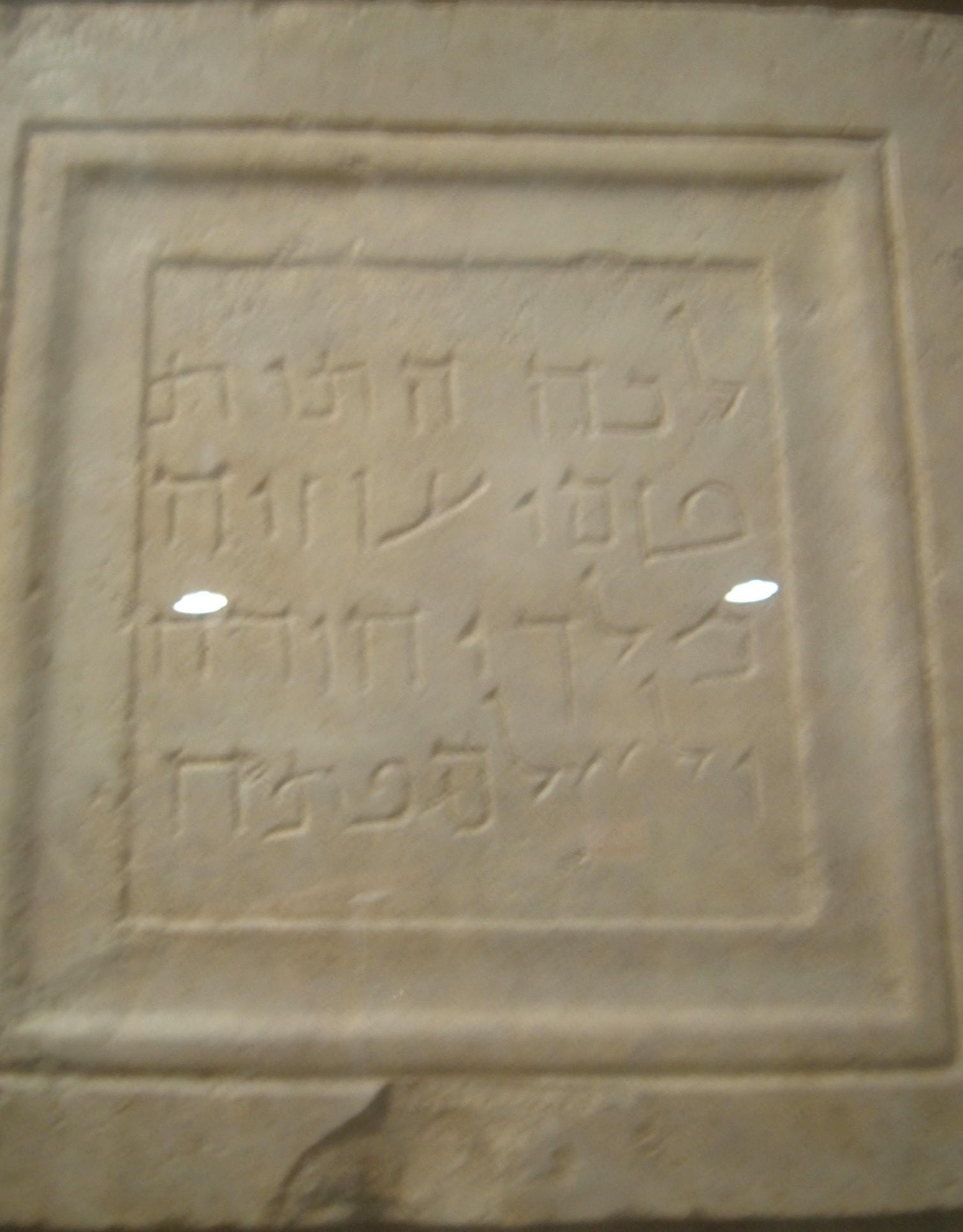
Copy of the Uzziah burial plaque, an Aramaic inscription of the late Second Temple period reading, in substance, "Hither were brought the bones of Uzziah king of Judah. Do not open." The original is in the Israel Museum, Jerusalem. Photo: אחיה פ. at Hebrew Wikipedia, public domain, via Wikimedia Commons.

The 30-second version:
Uzziah (Azariah) ruled Judah for about fifty years in the 700s BC and made it strong and prosperous. When pride led him to burn incense in the Temple, a priest's task, he was struck with leprosy and lived apart until his death. Isaiah saw the Lord "high and lifted up" in the year Uzziah died. Seals of two of his officials name him, and a plaque made centuries later marks where his bones were reburied.
See this page's graph and discover linked topics
In full
The king appears under two names. Kings calls him Azariah almost throughout (2 Kings 14:21; 15:1-7), and uses Uzziah only in synchronisms (15:13, 30, 32, 34); Chronicles, Isaiah, Hosea, Amos and Zechariah call him Uzziah. Both are Yahwistic names built on near-synonyms for help or strength ("Yah has helped," "Yah is my strength"), and most scholars take one as a throne name or alternative form. Kings gives him fifty-two years (15:2), a figure most chronologies read as including a co-regency with his father Amaziah and, after his leprosy, a regency by his son Jotham (15:5). Mykytiuk dates him 788/787 to 736/735 BC; Thiele 792 to 740 BC.
His strongest attestation comes from two seals of royal officials, "Abiyaw, servant of Uzziah" and "Shubnayaw, servant of Uzziah," both acquired on the antiquities market. Lawrence Mykytiuk counts Uzziah among the securely identified persons on the strength of these seals. The burial plaque is a later witness: it shows that Jews of the late Second Temple period believed they had his bones and treated them with care.
In the Bible
- Made king at sixteen. "All the people of Judah took Azariah, who was sixteen years old, and made him king in the room of his father Amaziah" (2 Kings 14:21, ASV). He rebuilt Elath on the Red Sea (14:22).
- Kings' summary. He "did that which was right in the eyes of Jehovah" but did not remove the high places; "Jehovah smote the king, so that he was a leper unto the day of his death, and dwelt in a separate house. And Jotham the king's son was over the household" (2 Kings 15:3-5, ASV).
- Chronicles' fuller account. 2 Chronicles 26 describes his success "as long as he sought Jehovah" (26:5), victories over the Philistines and Arabians, towers in Jerusalem and the wilderness, cisterns and farms, "for he loved husbandry" (26:10), and war engines "to shoot arrows and great stones" (26:15). Then "when he was strong, his heart was lifted up... for he went into the temple of Jehovah to burn incense upon the altar of incense" (26:16). Azariah the priest and eighty others withstood him, and "the leprosy brake forth in his forehead before the priests" (26:19). He was buried "in the field of burial which belonged to the kings; for they said, He is a leper" (26:23).
- Isaiah. Isaiah's ministry began in his reign (Isaiah 1:1), and the call vision is dated "in the year that king Uzziah died I saw the Lord sitting upon a throne, high and lifted up" (Isaiah 6:1, ASV). Chronicles says Isaiah wrote "the rest of the acts of Uzziah" (2 Chronicles 26:22).
- Hosea and Amos date their ministries to his reign (Hosea 1:1; Amos 1:1), and Zechariah remembers "the earthquake in the days of Uzziah king of Judah" (Zechariah 14:5).
- Genealogies. 1 Chronicles 3:12 lists him as Azariah; Matthew 1:8-9 includes Uzziah in the line of Jesus.
Family and lineage
- Father: Amaziah king of Judah. Mother: Jecoliah of Jerusalem (2 Kings 15:2).
- Son and successor: Jotham, who governed as regent during the leprosy (2 Kings 15:5) and then reigned.
- Grandson: Ahaz; great-grandson: Hezekiah.
- Dynasty: the house of David; Matthew's genealogy runs "Joram begat Uzziah; and Uzziah begat Jotham" (Matthew 1:8-9).
Historical and archaeological evidence
- Seal of Abiyaw, servant of Uzziah, and seal of Shubnayaw, servant of Uzziah. Two stamp seals in Hebrew script of the eighth century BC naming officials with the title "servant of" the king. Both are unprovenanced. Mykytiuk accepts them as authentic and identifies the Uzziah with the king. Grade: strong.
- The Uzziah burial plaque. A limestone tablet with an Aramaic inscription in square script, usually dated to the first century BC or first century AD. In substance it reads: "Hither were brought the bones of Uzziah, king of Judah. Do not open." Eleazar Sukenik identified it in 1931 in the collection of the Russian Orthodox Church of the Ascension (Eleona) on the Mount of Olives, and published it in the Palestine Exploration Quarterly that year; it is now in the Israel Museum, Jerusalem. Its original findspot is undocumented. It agrees with 2 Chronicles 26:23 that Uzziah lay apart from the royal tombs, and suggests a later reburial. Grade: a late witness to tradition, not a contemporary attestation.
- "Azriyau" in Tiglath-Pileser III's annals. Earlier scholars identified an "Azriyau" who led a western coalition against Assyria around 738 BC with Azariah of Judah. Nadav Na'aman showed in 1974 that the fragment once read as "Azriyau of Judah" belongs to an inscription of Sennacherib, and most scholars now regard Azriyau as a north Syrian ruler. The identification is not used here as evidence.
- The earthquake. Amos 1:1 and Zechariah 14:5 remember a great earthquake in his days. A mid-eighth-century earthquake has been argued from destruction layers at Hazor and other sites (Steven Austin and colleagues, 2000); the dating of individual layers is debated.
Scholarly consensus
Uzziah's historicity is accepted across the field. Discussion centers on chronology (how to fit fifty-two years with co-regencies), on the double name, and on whether Chronicles' building and military notices draw on old archival sources. Many scholars accept that the Chronicler had sources beyond Kings for his reign; others, such as Sara Japhet in her commentary, read much of 2 Chronicles 26 as the Chronicler's own theological shaping of the rise-and-fall pattern. The two accounts agree on the leprosy and the separate house.
Theological significance
- Holiness and office. The center of 2 Chronicles 26 is the boundary between king and priest. The priests' words are blunt: "It pertaineth not unto thee, Uzziah, to burn incense unto Jehovah, but to the priests the sons of Aaron" (26:18, ASV). Strength turned to pride, and pride to trespass.
- The true King. Isaiah's vision comes as a long and prosperous reign ends in uncleanness. The prophet who had seen an earthly king struck in the Temple now sees "the King, Jehovah of hosts" enthroned there (Isaiah 6:5), and confesses that he himself is "a man of unclean lips."
- In the line of Christ. Matthew includes him among the kings of David's line who lead to Jesus (Matthew 1:9), a line that kept the promise even through flawed kings.
Church Fathers
No patristic comment on Uzziah with a verified locator is cited here; the Fathers discuss him mainly through Isaiah 6.
See also
- People of the Bible, every person on the codex's list, by the book that first names them
- Biblical Figures Confirmed by Archaeology, Mykytiuk's list, where Uzziah is number 22
- Isaiah the Prophet, whose call vision is dated by Uzziah's death
- Jeroboam II, his contemporary in Israel
- Ahaz and Hezekiah, his grandson and great-grandson
- Amos and Hosea, prophets of his reign
Common questions this page answers
Q: Are Uzziah and Azariah the same king?
Yes. 2 Kings mostly calls the king Azariah, while 2 Chronicles, Isaiah, Hosea, Amos and Zechariah call him Uzziah. Both are forms of a Yahwistic name meaning help or strength from God, and the reign, father, son and leprosy are the same in both accounts.
Q: Why was King Uzziah struck with leprosy?
According to 2 Chronicles 26:16-21, his heart was lifted up in pride and he entered the Temple to burn incense, a duty reserved for the priests descended from Aaron. When the priests confronted him and he raged at them, leprosy broke out on his forehead, and he lived in a separate house until his death.
Q: Is there archaeological evidence for King Uzziah?
Yes. Two eighth-century seals belong to officials called "servant of Uzziah," and Lawrence Mykytiuk counts Uzziah as securely identified. A later Aramaic plaque, now in the Israel Museum, says Uzziah's bones were brought to that place and must not be disturbed.
Q: What is the significance of "the year that king Uzziah died" in Isaiah 6?
It dates Isaiah's call to the end of a long, prosperous reign that closed in the king's uncleanness. Against that background Isaiah sees the Lord enthroned in the Temple as the true King, holy beyond any human ruler.