Concept
Uganda Martyrs
Martyrs of Uganda, Namugongo Martyrs, Charles Lwanga, Saint Charles Lwanga, Charles Lwanga and Companions, NamugongoIntro
The Uganda Martyrs were young African Christians, Catholic and Anglican, put to death between 1885 and 1887 on the orders of Mwanga II, king (kabaka) of Buganda. Most were pages at the royal court. The best-known deaths came on 3 June 1886, when a large group was burned alive at Namugongo. Twenty-two Catholic martyrs, led by Charles Lwanga, were declared saints in 1964, and the Anglican Church of Uganda honors its own martyrs alongside them. Their deaths came before British colonial rule, at the hands of an African king, and the faith spread afterward chiefly through Ugandan evangelists.
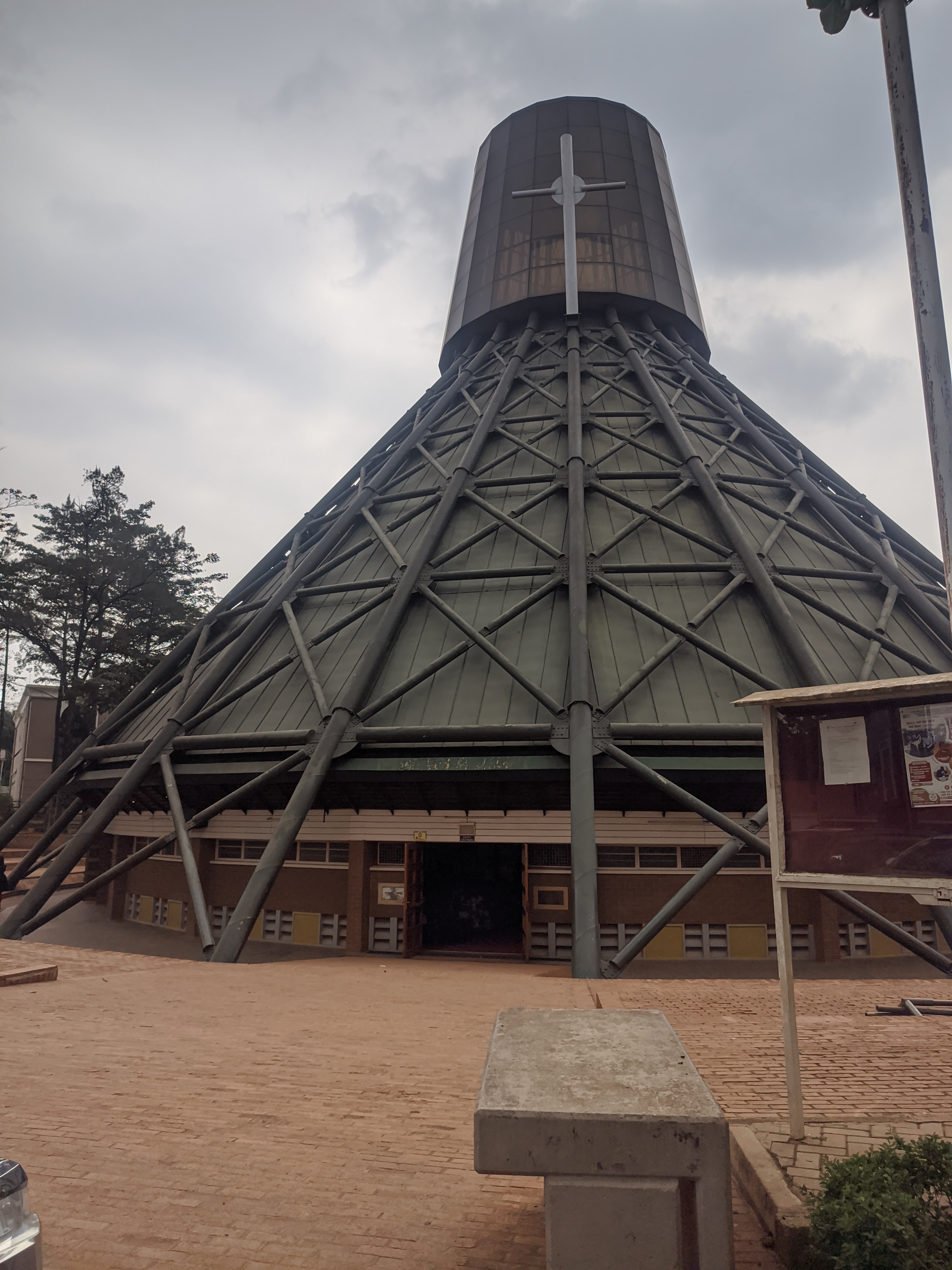 The Basilica of the Uganda Martyrs at Namugongo, built on the site of the 1886 burning. Photo: Lebu Ayiga, CC0 (Wikimedia Commons), resized.

See this page's graph and discover linked topics
In full
Christian missionaries reached Buganda, a powerful kingdom on the northern shore of Lake Victoria, in 1877 (the Anglican Church Missionary Society) and 1879 (the Catholic Missionaries of Africa, known as the White Fathers). Under Kabaka Mutesa I, many young pages and courtiers became readers, as converts were called, and were baptized. Mutesa's son Mwanga II, who came to the throne in 1884, turned against them.
Historians disagree about why. The French missionary Siméon Lourdel, an eyewitness, put first the king's sense that literate Christians despised him, with the pages' refusal of his sexual demands as a further cause. Other historians stress the pages' refusal as the immediate trigger. Roland Oliver argued that resentment of Christianity alone cannot explain why young pages were targeted while senior Christian chiefs were spared. Kevin Ward emphasizes that Mwanga saw the Christians as rebels whose loyalty to Christ and to foreign missionaries rivaled loyalty to the kabaka. The sources agree that the martyrs died because they would not renounce Christ or obey commands they held to be sinful.
Timeline
| Date | Event |
|---|---|
| 31 January 1885 | Three Anglican youths, Makko Kakumba, Yusufu Rugarama and Nuwa Serwanga, are killed. |
| 29 October 1885 | Anglican Bishop James Hannington, approaching Buganda from the east, is killed with most of his party on Mwanga's orders. |
| 15 November 1885 | Joseph Mukasa Balikuddembe, a Catholic leader at court who had rebuked the king over Hannington's killing, is beheaded and burned, the first of the Catholic martyrs. |
| 25 May to 3 June 1886 | Mass arrests and executions. On 3 June a large group of Catholics and Anglicans is burned alive at Namugongo. Charles Lwanga, head of the pages and their catechist, is among them. |
| 27 January 1887 | The last of the canonized Catholic martyrs is killed. |
Sources count 22 Catholic and 23 Anglican martyrs in this period, and other Christians died whose names were not recorded.
Recognition
- Catholic. Pope Benedict XV beatified the 22 Catholic martyrs on 6 June 1920, and Pope Paul VI canonized them on 18 October 1964, during the Second Vatican Council. Their feast is 3 June.
- Anglican. The Church of Uganda commemorates its martyrs, and 3 June, Martyrs' Day, is a public holiday in Uganda. Both Catholic and Anglican shrines stand at Namugongo, which draws one of the largest Christian pilgrimages in Africa each year.
- Paul VI in Uganda. In 1969 Paul VI became the first pope to visit sub-Saharan Africa, traveling to Kampala and Namugongo. In his homily of 31 July 1969 to the bishops of Africa he said, "you may, and you must, have an African Christianity."
What happened next
- Civil war among believers. After Mwanga's deposition in 1888, Catholic, Protestant and Muslim factions fought for control of Buganda. The Protestant party, backed by the Imperial British East Africa Company, prevailed in 1892, and Britain declared a protectorate in 1894. This is a sober part of the story: the faith that produced martyrs also produced factional politics tied to foreign powers.
- African evangelists. The spread of Christianity through Uganda and beyond was carried mainly by Ganda catechists and evangelists, such as the Anglican Apolo Kivebulaya, who worked for decades in western Uganda and eastern Congo.
- The East African Revival. From the 1930s a revival movement that began in Rwanda and Uganda spread across East Africa, shaping evangelical Christianity in the region.
Significance
- Against "the colonizers' religion." The martyrs chose Christ before colonial rule existed, against their own king, and many were teenagers. Their witness was not imposed by any empire. See Christianity Is the White Mans Religion Objection Defeater.
- Martyrdom as evidence. The Ugandan pages, like the early church martyrs, died for a faith they could have renounced to save themselves. See Historical Evidence for the Martyrs.
- Ecumenical witness. Catholic and Anglican converts died together at Namugongo, and both churches honor them.
Tensions
- Motives. The relative weight of politics, sexual coercion and religious hostility in Mwanga's actions is debated. This page reports the main views and does not settle the question.
- Numbers. The canonized and commemorated lists are not the full total; some victims went unrecorded.
See also
- Historical Evidence for the Martyrs, why martyrdom matters as evidence
- Christianity and Colonialism in Africa, the colonial context that followed the martyrdoms
- Persecution of Christians in Africa, the continuing story of African martyrs
- Christianity Is the White Mans Religion Objection Defeater, African Christians choosing Christ before colonial rule
- Catholic Church, which canonized the 22 Catholic martyrs
- Africa and Christianity, the master hub
Common questions this page answers
Q: Who were the Uganda Martyrs?
They were young Catholic and Anglican Christians, mostly pages at the royal court of Buganda, killed between 1885 and 1887 on the orders of King Mwanga II for refusing to renounce their faith. Many were burned alive at Namugongo on 3 June 1886.
Q: Why were the Uganda Martyrs killed?
Historians debate the mix of causes. Mwanga II saw the Christians as rivals to his authority and as linked to foreign missionaries, and many of the pages refused his sexual demands. The martyrs died because they would not abandon Christ or obey commands they believed were sinful.
Q: Who was Charles Lwanga?
Charles Lwanga was head of the royal pages at Mwanga's court and a Catholic catechist who instructed and protected the younger pages. He was burned at Namugongo on 3 June 1886 and was canonized with his companions by Pope Paul VI in 1964.
Q: When were the Uganda Martyrs canonized?
The 22 Catholic martyrs were beatified by Pope Benedict XV on 6 June 1920 and canonized by Pope Paul VI on 18 October 1964. Their feast day is 3 June.
Q: Were the Uganda Martyrs killed by colonizers?
No. They were killed by an African king, Mwanga II of Buganda, before British colonial rule was established. The British protectorate over Uganda came in 1894.
Q: What is Uganda Martyrs Day?
It is 3 June, a public holiday in Uganda marking the 1886 burning at Namugongo. Pilgrims travel to the Catholic and Anglican shrines at Namugongo, many of them on foot.