Concept
Ubuntu and Christian Ethics
Ubuntu, Ubuntu Ethics, Ubuntu Theology, Ubuntu and Christianity, Umuntu Ngumuntu Ngabantu, I Am Because We Are, BothoIntro
Ubuntu is a southern African word for humanness. It comes from a Zulu and Xhosa saying, umuntu ngumuntu ngabantu: a person is a person through other people. The idea is that nobody becomes fully human alone. We grow into our humanity by belonging, sharing, forgiving and caring for one another.
Christians in Africa have found ubuntu a natural partner for the gospel, which also says we belong to one another as members of one body. Archbishop Desmond Tutu made it famous worldwide when he led South Africa's Truth and Reconciliation Commission after apartheid. Ubuntu and Christian ethics agree on a great deal. They differ on where human worth comes from and on how far our duty to others reaches, and those differences matter.
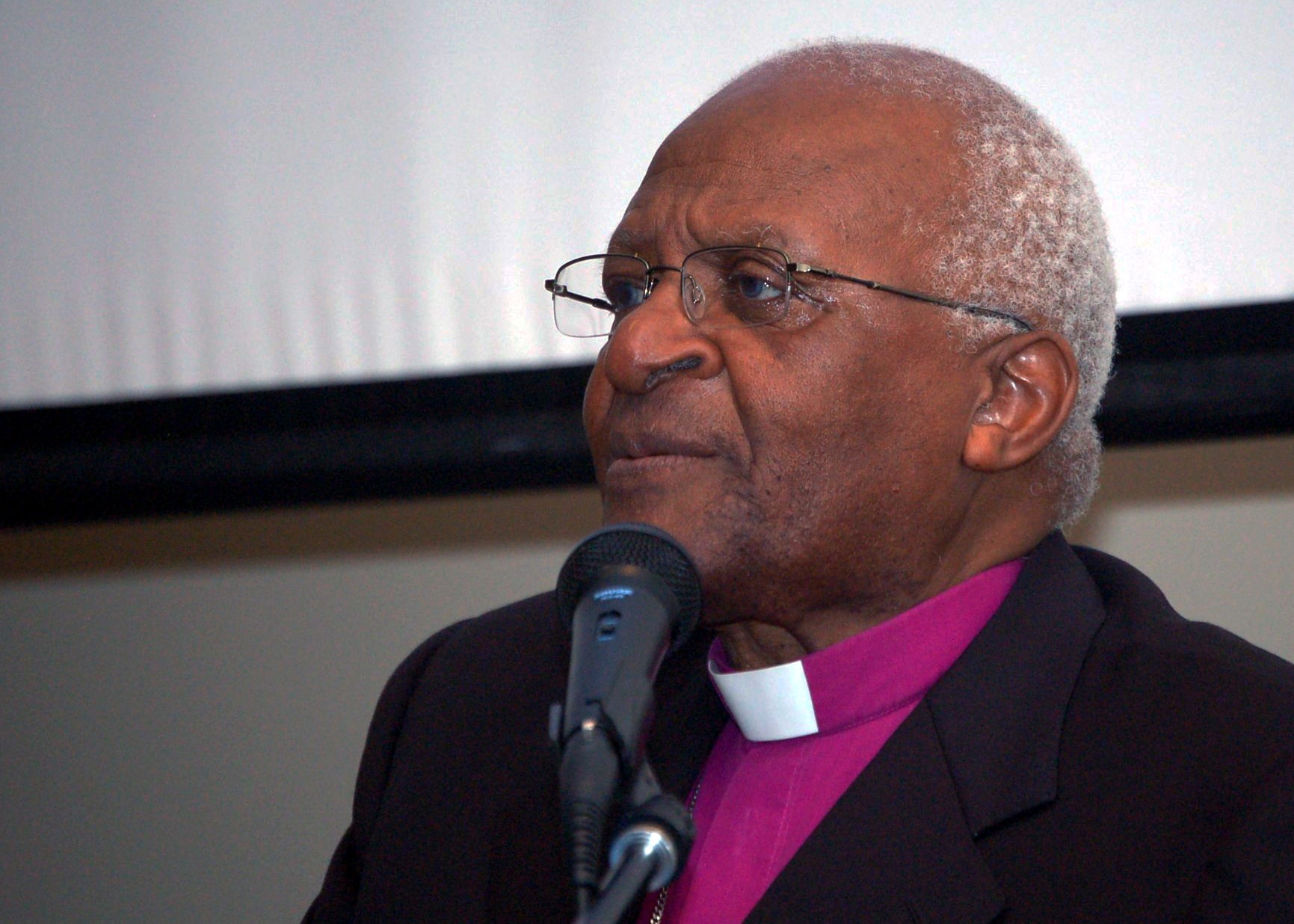 Archbishop Desmond Tutu speaking at the first International Ethics Conference, University of Botswana, 7 December 2009. Photo: Cmdr. J. A. Surette, U.S. Navy, public domain (Wikimedia Commons), resized.

See this page's graph and discover linked topics
In full
Ubuntu (Nguni languages; botho in Sotho and Tswana) names a relational account of personhood and morality common to many sub-Saharan African cultures: a human being becomes a person, in the full moral sense, through relationships of mutual recognition, solidarity and care. In its philosophical forms it has been developed as a theory of personhood (Ifeanyi Menkiti, Kwame Gyekye), as a normative ethical theory (Thaddeus Metz), and as a public philosophy of reconciliation (Desmond Tutu, the South African Constitutional Court).
Christian ethics engages ubuntu at three levels:
- Convergence. Both reject atomistic individualism, both treat the community as a moral reality, and both prize hospitality, forgiveness and the restoration of broken relationships.
- Grounding. Christianity grounds human worth in the image of God, given to every human being before any relationship is achieved (Genesis 1:27). Some ubuntu theorists ground personhood in community and treat it as something one grows into or can fail to achieve.
- Scope. Ubuntu's natural horizon is the community of kin and neighbors. The gospel extends the neighbor to the stranger and the enemy (Luke 10:29-37; Matthew 5:44).
The page sets out the idea, its leading interpreters, Tutu's ubuntu theology, and a Christian assessment that steel-mans ubuntu before marking where Scripture both confirms and corrects it.
The idea
The maxim and its meaning
- Umuntu ngumuntu ngabantu (Zulu): a person is a person through other persons.
- John Mbiti, in African Religions and Philosophy (1969), compressed the African view of the individual into a line that became the most quoted summary of the idea: "I am, because we are; and since we are, therefore I am."
- The contrast usually drawn is with Descartes' "I think, therefore I am," in which the self is established alone, by its own thought. Ubuntu holds that the self is established in relationship. See Rene Descartes.
Typical marks of a person with ubuntu
- Generosity and hospitality, especially to the stranger and the guest
- Readiness to forgive and to restore relationship rather than to retaliate
- Respect for elders and care for the weak
- Sharing of goods and burdens within the community
- A sense that one's own good is bound up with the good of others
Leading interpreters
| Thinker | Work | Contribution |
|---|---|---|
| John Mbiti (Kenya) | African Religions and Philosophy (1969) | "I am, because we are"; the individual exists corporately |
| Ifeanyi Menkiti (Nigeria) | "Person and Community in African Traditional Thought" (1984) | Personhood is acquired over a lifetime through moral achievement in community; the community defines the person |
| Kwame Gyekye (Ghana) | Person and Community (1992); Tradition and Modernity (1997) | "Moderate communitarianism": the community is vital, but individuals have intrinsic worth and rights the community must respect |
| Mogobe Ramose (South Africa) | African Philosophy through Ubuntu (1999) | Ubuntu as the foundation of an African philosophy |
| Augustine Shutte (South Africa) | Ubuntu: An Ethic for a New South Africa (2001) | A Catholic philosopher's reading of ubuntu alongside Christian personalism |
| Thaddeus Metz (South Africa) | "Toward an African Moral Theory" (2007) | Right action is action that honors communal relationships of identity and solidarity |
| Michael Battle (USA) | Reconciliation: The Ubuntu Theology of Desmond Tutu (1997) | Tutu's ubuntu as a theology grounded in God and the image of God |
Ubuntu in public life: South Africa
Ubuntu moved from philosophy into law and politics at the end of apartheid.
- The interim Constitution (1993). Its closing section on national unity and reconciliation spoke of "a need for understanding but not for vengeance, a need for reparation but not for retaliation, a need for ubuntu but not for victimisation."
- S v Makwanyane (1995). In the case that abolished the death penalty, several justices of the new Constitutional Court invoked ubuntu as a value of the constitutional order.
- The Truth and Reconciliation Commission. Established under the Promotion of National Unity and Reconciliation Act of 1995 and chaired by Archbishop Desmond Tutu, it heard testimony from victims and offered amnesty to perpetrators who made full disclosure of politically motivated crimes.
Tutu's ubuntu theology
Tutu, Anglican Archbishop of Cape Town, explained the commission's approach in No Future Without Forgiveness (1999). In his telling, ubuntu explained why South Africa sought restorative rather than purely retributive justice: the goal was the healing of broken relationships, because the humanity of victim and perpetrator is bound together. Michael Battle argues that Tutu's ubuntu was explicitly theological, rooted in the doctrine of the Trinity (God as persons in communion) and in the image of God in every person, including the oppressor. On this reading Tutu did not treat ubuntu as a rival to the gospel but as an African vocabulary for what the gospel already says.
Critics on several sides objected that the commission asked victims to forgive while many perpetrators kept their wealth and position. Christians themselves debate whether forgiveness can be required of victims as a public policy, a question treated at Biblical Forgiveness.
A Christian assessment
Where ubuntu and Scripture agree
- Persons are made for communion. God says, "It is not good that the man should be alone" (Genesis 2:18, KJV). Personhood is relational from the start.
- The church is one body. "And whether one member suffer, all the members suffer with it; or one member be honoured, all the members rejoice with it" (1 Corinthians 12:26, KJV); "we, being many, are one body in Christ, and every one members one of another" (Romans 12:5, KJV).
- Burdens are shared. "Bear ye one another's burdens, and so fulfil the law of Christ" (Galatians 6:2, KJV).
- Hospitality is holy. "Be not forgetful to entertain strangers: for thereby some have entertained angels unawares" (Hebrews 13:2, KJV).
- Reconciliation is the goal. The gospel is a "ministry of reconciliation" (2 Corinthians 5:18), and justice in Scripture aims at restored relationship, not only at punishment.
- God himself is communion. Christian theology confesses one God in three persons, eternally in relationship. A relational account of the human person fits a Triune Creator better than a solitary one.
Where Scripture corrects or completes it
- Worth is given, not earned. Menkiti's strong communitarianism holds that personhood is achieved, so that the young or the morally failed are less fully persons. Scripture grounds dignity in the image of God shared by every human being from the start (Genesis 1:27; Genesis 9:6). Gyekye's moderate view, which insists on intrinsic individual worth, is much closer to the Christian position. See Biblical Dignity.
- The neighbor includes the stranger and the enemy. When asked "who is my neighbour?" Jesus answered with a Samaritan, a member of a despised outgroup (Luke 10:29-37). "Love your enemies" (Matthew 5:44, KJV) pushes beyond any ethic of kin and community. Ubuntu at its best welcomes the stranger, but a community ethic has no internal reason to extend to those outside the community; Christian love does.
- The individual answers to God, not only to the group. The prophets often stood alone against their own people, and Peter's "We ought to obey God rather than men" (Acts 5:29, KJV) places conscience above communal consensus. Communal ethics without that check can sanction pressure, scapegoating and violence against outsiders.
- Reconciliation needs a ground. Ubuntu describes the restored community but does not itself supply a reason why wrongs can be forgiven without being ignored. The Christian answer is the cross: God reconciles the world to himself in Christ, so forgiveness is costly and just, not merely pragmatic (2 Corinthians 5:19-21).
Steel-manning the ubuntu thinkers
Ubuntu's defenders reply that these corrections describe its corruptions, not its core. Metz's theory treats harming outsiders as a failure of ubuntu, since it damages the capacity for communal relationship itself. Ramose and others argue that the maxim "a person is a person through other persons" is universal in scope, because every human being is a potential member of the community. Christians can welcome these readings, while noting that the universal scope they defend is exactly what the doctrine of the image of God secures.
Critiques of ubuntu
- Vagueness. Some philosophers argue the term is used so widely (in politics, business, branding) that it has lost content.
- "The end of ubuntu." Bernard Matolino and Wenceslaus Kwindingwi (2013) argued that ubuntu belonged to small traditional communities and cannot serve as a public ethic for modern, plural, urban societies, and that its political use has often been an elite project.
- Gap between ideal and practice. Critics point to xenophobic violence against African migrants in post-apartheid South Africa as evidence that appeals to ubuntu have not secured welcome for the stranger.
These critiques are internal debates among African philosophers. They do not show ubuntu false; they show that a communal ethic needs a ground beyond the community, which is the Christian point.
Apologetic relevance
- The moral argument. Ubuntu's insistence that persons have worth and that community obligations are binding presupposes objective moral value. The question of what grounds that value is the heart of the Moral Argument.
- Against the "white man's religion" charge. African Christians did not need to abandon African moral wisdom to follow Christ. Tutu, Shutte and others show the gospel speaking an African moral language. See Christianity Is the White Mans Religion Objection Defeater.
- A bridge for evangelism. In much of southern Africa, ubuntu is the shared moral vocabulary. Showing that Christ fulfills its best intuitions, and gives a reason for the parts communities struggle to live out, is a natural apologetic path.
Scholarship
Published academic works this page draws on, each matched to a publisher, index or library catalog record.
- Kwame Gyekye, Tradition and Modernity (Oxford University Press, 1997). doi:10.1093/acprof:oso/9780195112252.001.0001
- John S. Mbiti, African Religions and Philosophy (1970). Open Library
- Thaddeus Metz, "Toward an African Moral Theory*," Journal of Political Philosophy 15 (2007). doi:10.1111/j.1467-9760.2007.00280.x
- Desmond Tutu, No future without forgiveness (1999). Open Library
See also
- Africa and Christianity, the master hub
- African Christian Philosophy, the wider field ubuntu belongs to
- African Traditional Religion and Christianity, the religious world in which ubuntu developed
- John Mbiti, source of "I am, because we are"
- Biblical Dignity, the image of God as the ground of human worth
- Biblical Love, agape love of neighbor and enemy
- Biblical Forgiveness, forgiveness and its relation to justice
- Trinity, persons in communion as the ground of relational personhood
- Moral Argument, what grounds objective moral obligation
- Sermon on the Mount, love of enemies and the ethic of the kingdom
- Christianity in Africa Today, where ubuntu's communities now live
Common questions this page answers
Q: What does ubuntu mean?
Ubuntu is a southern African word for humanness, from the Zulu and Xhosa saying umuntu ngumuntu ngabantu, "a person is a person through other persons." It holds that we become fully human through relationships of sharing, care, forgiveness and mutual respect.
Q: Is ubuntu a Christian concept?
No, it is an African moral idea older than the arrival of Christianity in southern Africa. Many African Christians, including Archbishop Desmond Tutu, have embraced it because it overlaps with Christian teaching on community, the church as one body, hospitality and reconciliation.
Q: Who said "I am because we are"?
The Kenyan theologian and philosopher John Mbiti, in African Religions and Philosophy (1969): "I am, because we are; and since we are, therefore I am." It is the most widely quoted summary of the African communal view of the person.
Q: How did Desmond Tutu use ubuntu?
Tutu used ubuntu to explain the restorative approach of South Africa's Truth and Reconciliation Commission, which he chaired. He argued that the humanity of victims and perpetrators is bound together, so healing broken relationships matters more than revenge, and he grounded this in the Trinity and the image of God.
Q: How is ubuntu different from Christian ethics?
They agree that persons are made for community and that forgiveness and hospitality are central. Christian ethics grounds human worth in the image of God given to everyone from birth, rather than in personhood achieved in community, and it extends love beyond the community to strangers and enemies (Luke 10:29-37; Matthew 5:44).
Q: What are the criticisms of ubuntu?
Philosophers have argued that the term is vague, that it fitted small traditional communities better than modern plural societies (Matolino and Kwindingwi, 2013), and that strong versions make personhood something earned rather than given. Defenders such as Thaddeus Metz and Kwame Gyekye have developed versions that answer these concerns.