Person
Timothy Williamson
Williamson, Tim Williamson, Timothy Williamson, T. WilliamsonBritish philosopher (born 1955), one of the most influential analytic philosophers of his generation. He held the Wykeham Professorship of Logic at the University of Oxford from 2000 to 2023, and is best known for knowledge-first epistemology, epistemicism about vagueness, and necessitism in modal metaphysics. His work turns up in debates about God mainly through his theory of knowledge, which skilled atheist debaters sometimes adopt, and through his modal logic, which bears on the Modal Ontological Argument.
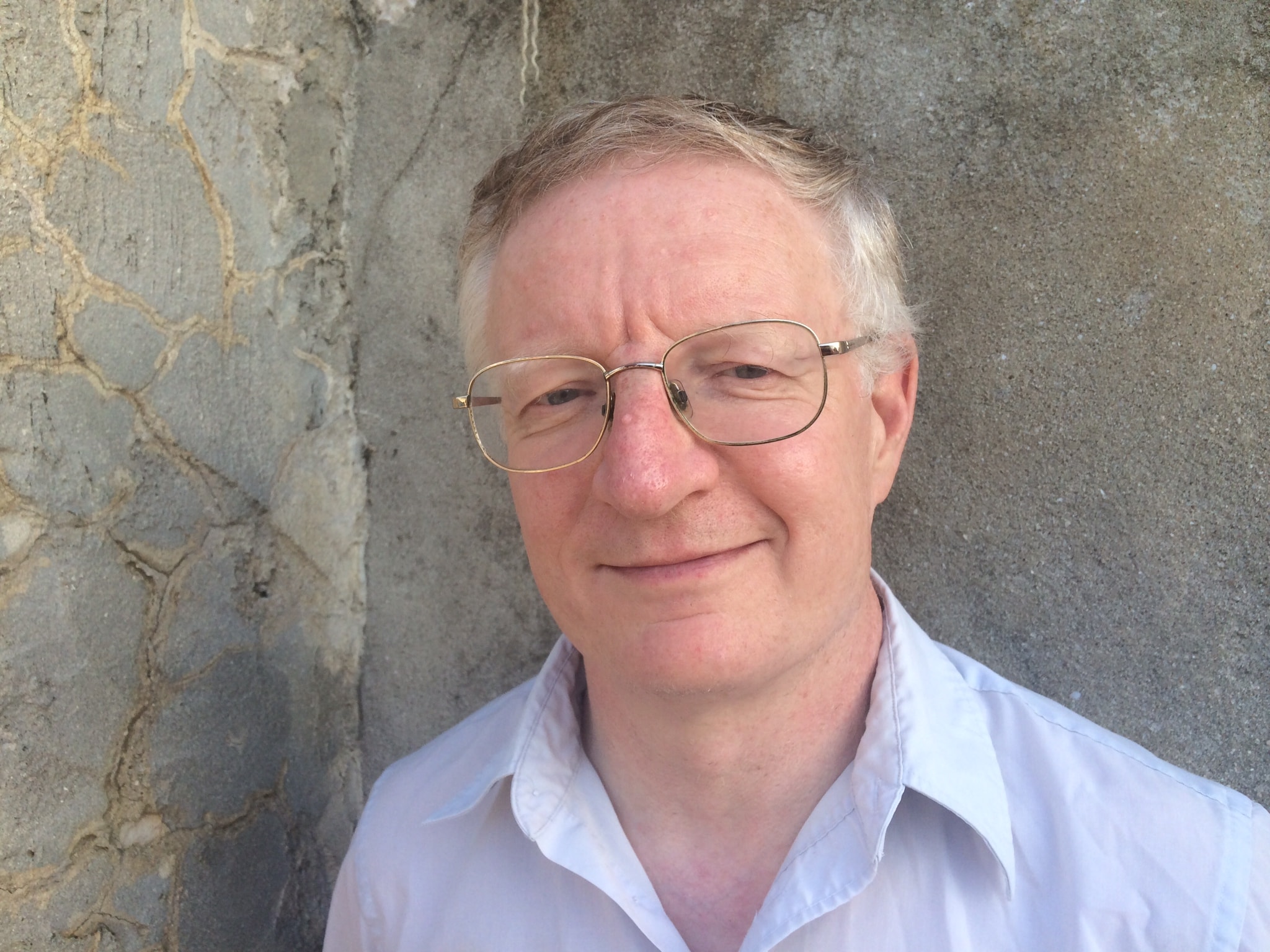
Timothy Williamson, 2014. Photo: A Williamson, CC BY-SA 4.0, via Wikimedia Commons, re-encoded.

Career
- 1955, born in Uppsala, Sweden.
- Educated at the University of Oxford, where he took his doctorate.
- Lectured at Trinity College Dublin, then taught at Oxford.
- 1995-2000, Professor of Logic and Metaphysics, University of Edinburgh.
- 2000-2023, Wykeham Professor of Logic, University of Oxford, and Fellow of New College.
- Has also taught as a visiting professor at Yale.
See this page's graph and discover linked topics
Main works
| Year | Work | Thesis |
|---|---|---|
| 1990 | Identity and Discrimination | The logic of telling things apart, and why indiscriminability is not transitive |
| 1994 | Vagueness (Routledge) | Epistemicism: vague words have sharp boundaries that we cannot know |
| 2000 | Knowledge and Its Limits (Oxford University Press) | Knowledge is the most general factive mental state; evidence is knowledge (E=K) |
| 2007 | The Philosophy of Philosophy (Blackwell) | Philosophy is not about words or concepts but about the world; modal knowledge comes from ordinary counterfactual thinking |
| 2013 | Modal Logic as Metaphysics (Oxford University Press) | Necessitism: necessarily, everything necessarily exists |
| 2015 | Tetralogue: I'm Right, You're Wrong (Oxford University Press) | A dialogue among four travellers on relativism, disagreement and whether anyone can be right |
| 2018 | Doing Philosophy (Oxford University Press) | A short introduction to philosophical method |
| 2020 | Suppose and Tell (Oxford University Press) | The semantics and heuristics of conditionals |
| 2020 | Debating the A Priori, with Paul Boghossian (Oxford University Press) | Whether the a priori/a posteriori distinction is deep |
Key ideas
Knowledge-first epistemology
In Knowledge and Its Limits Williamson argued that knowledge cannot be analysed as justified true belief plus some further condition. Knowledge is a mental state in its own right, the most general factive one, and it explains belief, evidence and justification rather than being built from them. Its signature theses are E=K, the anti-luminosity argument, the safety condition and the knowledge norm of assertion. Full treatment at Knowledge-First Epistemology.
Epistemicism about vagueness
How many grains make a heap? Most philosophers say there is no sharp line. Williamson argued in Vagueness that classical logic should be kept and that there is a sharp line, which we cannot know because our use of vague words leaves no margin for error at the boundary. The same margin-for-error reasoning later drives the anti-luminosity argument.
The philosophy of philosophy
Williamson rejects the idea that philosophy is merely the analysis of concepts or language. Philosophers, on his view, investigate the world with ordinary cognitive capacities, and knowledge of what is possible or necessary is an extension of the everyday capacity to judge what would have happened if things had been otherwise. See Metaphysical vs Logical Modality.
Necessitism
In Modal Logic as Metaphysics Williamson defends the simplest quantified modal logic, including the Barcan formula, and the thesis that necessarily everything necessarily exists. To make this plausible he distinguishes existing (being something) from being concrete. You exist necessarily, on this view, but only contingently as a concrete person; in other possible circumstances you would have been a merely possible, non-concrete thing. The opposing view, contingentism, holds that some things could have failed to be anything at all.
Relevance to apologetics
Williamson does not write as a Christian apologist, and his work should not be enlisted for conclusions he does not draw. Its relevance is indirect but real.
- Knowledge-first in live debate. Atheist debaters sometimes take Williamson's theory as their account of knowledge. A Christian who answers "so knowledge is mind-dependent, so you need God" has misread the view: "conceptually fundamental" is a claim about the order of explanation, not about what grounds minds or truths. The better question is what explains the existence of minds that can be in factive states about a mind-independent world. See Knowledge-First Epistemology and Presuppositionalism.
- Closure and skepticism. Williamson defends closure, the principle that competent deduction from known premises yields knowledge, and offers a reply to Cartesian skepticism through E=K. Both bear on Cartesian Skeptical Argument and Christian Responses and the Closure Principle.
- S5 and the modal ontological argument. Modal Logic as Metaphysics defends a strong modal logic of the kind the Modal Ontological Argument relies on. Williamson does not endorse the ontological argument; the point is only that the S5 premise has serious defenders and is not a theist's private convention.
- Necessitism and the contingency argument. On necessitism every individual exists necessarily, though most are only contingently concrete. A Leibnizian argument from contingency then has to be restated as a question about why there are concrete things, which leaves its force largely intact while changing its wording.
- Relativism. Tetralogue is a sustained argument, in dialogue form, that tolerance does not require relativism and that a person can coherently think others are wrong. That is a useful resource against the slogan that nobody can claim to be right about religion.
See also
- Knowledge-First Epistemology, his best-known program
- Epistemic Fallibilism, and the question whether E=K is fallibilist
- Edmund Gettier, whose counterexamples he reinterprets
- Justified True Belief, the analysis he rejects
- Closure Principle, which he defends
- Modal Logic, the field of Modal Logic as Metaphysics
- Metaphysical vs Logical Modality, on his counterfactual account of modal knowledge
- Modal Ontological Argument, where his defence of S5 is cited
- Epistemology, the master hub