Person
Thomas Oden
Thomas C. Oden, Thomas Clark Oden, OdenIntro
Thomas Oden was an American Methodist theologian who began as a liberal, turned in mid-career to the early church fathers, and spent his later years arguing that Africa shaped the Christian mind. He edited the Ancient Christian Commentary on Scripture, a multi-volume collection of how the fathers read the Bible, and wrote How Africa Shaped the Christian Mind (2007). His Africa work urged African Christians to see the great fathers of North Africa and Egypt as their own ancestors in the faith.
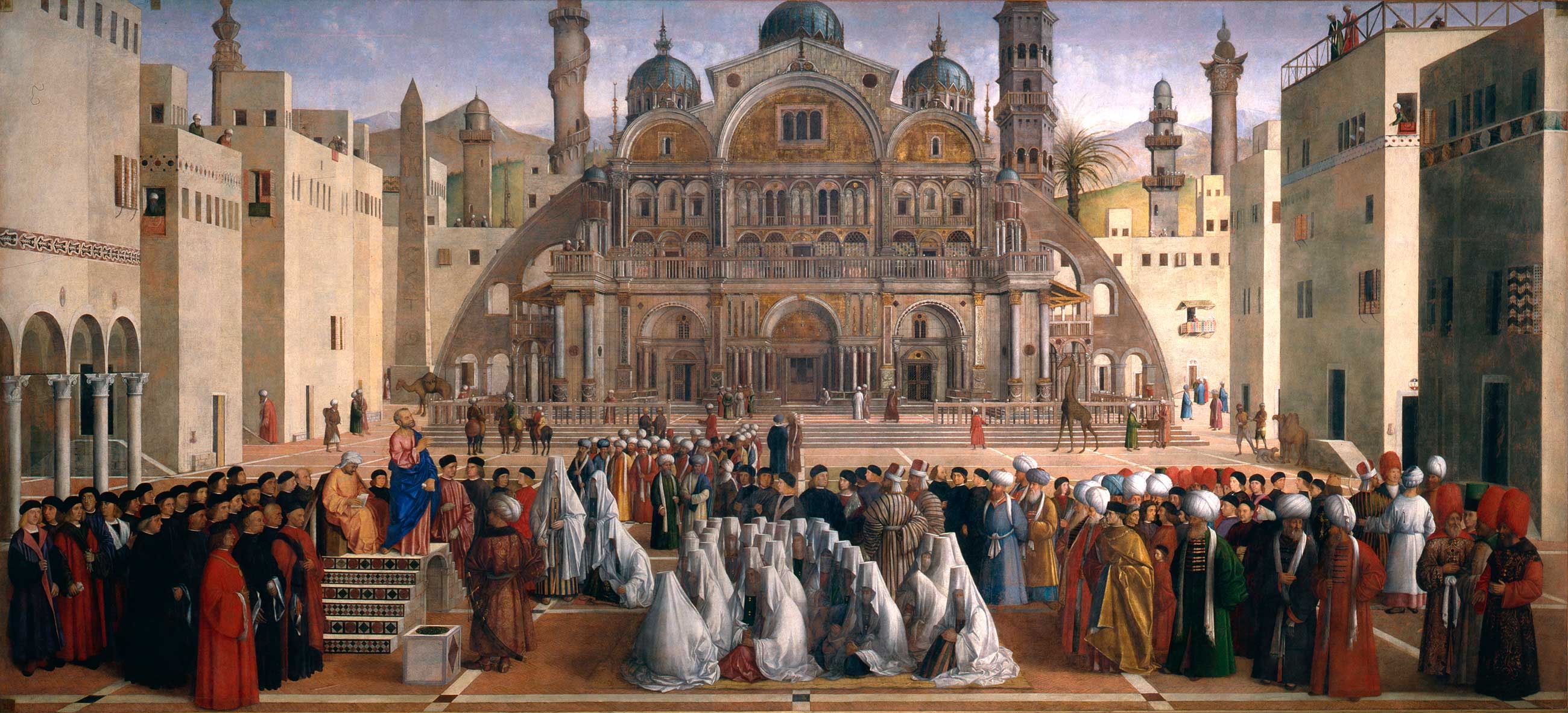 Gentile and Giovanni Bellini, Saint Mark Preaching in Alexandria (c. 1504-1507), the founding tradition Oden defended in The African Memory of Mark. Public domain (Wikimedia Commons), resized.

See this page's graph and discover linked topics
In full
Oden (1931-2016) is often called the father of the paleo-orthodox movement, which calls Protestants back to the consensus of the early church as the guide for reading Scripture and doing theology. In the early 1970s, under the influence of his Jewish colleague Will Herberg, he turned from political and theological liberalism to the patristic writers, describing the result as a commitment to "classic Christianity" or ecumenical orthodoxy. That shift led him to the African fathers. In How Africa Shaped the Christian Mind: Rediscovering the African Seedbed of Western Christianity (2007) he argued that many ideas usually credited to Europe were first worked out in Africa, in Alexandria, Carthage and Hippo. He followed it with The African Memory of Mark (2011) and Early Libyan Christianity (2011), and helped found the Center for Early African Christianity to support African scholars in recovering this heritage. His Africa thesis is examined in detail at How Africa Shaped the Christian Mind.
Life
- Birth. Born 21 October 1931 in Altus, Oklahoma.
- Education. BA, University of Oklahoma (1953); BD, Southern Methodist University (1956); MA (1958) and PhD (1960), Yale University, under H. Richard Niebuhr.
- Liberal years. In his early career he was active in liberal theology and pastoral psychology and in progressive politics.
- Turn to the fathers. In the early 1970s he began reading the early church fathers seriously, encouraged by Will Herberg, and became convinced that the ancient consensus was a better guide than modern theology. He tells the story in his memoir A Change of Heart (2014).
- Drew University. He was Henry Anson Buttz Professor of Theology and Ethics at Drew University from 1980 until he retired in 2004.
- Death. He died on 8 December 2016, aged 85.
The Africa thesis in brief
Oden argued that Africa shaped Western Christianity in at least seven ways:
- The idea of the university, through the catechetical school and libraries of Alexandria
- Christian interpretation of Scripture, through Alexandrian exegesis from Philo to Origen
- Early Christian dogma, through Tertullian, Athanasius, Augustine and Cyril of Alexandria
- The conciliar pattern of settling disputes through councils, prefigured in African synods
- Monasticism, born in the Egyptian desert with Antony the Great and Pachomius (see Desert Fathers and Mothers)
- Christian Neoplatonism, through Alexandrian and African thinkers
- Rhetorical and dialectical skill, through North African teachers of rhetoric such as Augustine
He also defended the Coptic tradition that Mark the Evangelist founded the church of Alexandria, collecting the African memory of Mark as evidence worth weighing alongside Western historical criticism.
Assessment
- Contribution. Oden gave African Christians, and Western Christians, a vivid account of how much the early church owed to Africa. His work is widely cited in replies to the claim that Christianity is a European religion. See Christianity Is the White Mans Religion Objection Defeater and Christian Pre-Colonial African Heritage Argument.
- Critiques. Historians have asked whether Roman North Africa and Greek-speaking Alexandria should be called "African" in the sense modern readers hear, and whether Oden sometimes overstated direct African influence where ideas moved in many directions around the Mediterranean. Others note that his treatment of the Mark tradition gives more weight to late Coptic sources than most historians would. Oden acknowledged that the evidence varied in strength and called for African scholars to test and extend it.
Major works
- Agenda for Theology (1979), later revised as After Modernity... What?
- Systematic Theology, 3 volumes (1987-1992), later Classic Christianity (2009)
- Ancient Christian Commentary on Scripture, general editor (InterVarsity Press)
- How Africa Shaped the Christian Mind (2007)
- The African Memory of Mark (2011)
- Early Libyan Christianity (2011)
- A Change of Heart: A Personal and Theological Memoir (2014)
See also
- How Africa Shaped the Christian Mind, his thesis and its critics in full
- Church Fathers, the tradition Oden returned to
- Augustine, Athanasius and Tertullian, the African fathers at the center of his argument
- Mark the Evangelist, whose Alexandrian tradition Oden defended
- Christian Pre-Colonial African Heritage Argument, the apologetic use of his work
- Africa and Christianity, the master hub
Common questions this page answers
Q: Who was Thomas Oden?
He was an American United Methodist theologian (1931-2016) who moved from liberal theology to the early church fathers, founded the paleo-orthodox movement, edited the Ancient Christian Commentary on Scripture, and wrote How Africa Shaped the Christian Mind (2007).
Q: What is paleo-orthodoxy?
It is the movement associated with Thomas Oden that calls Christians to read Scripture and do theology in line with the consensus of the early church fathers, rather than relying mainly on modern theology.
Q: What does How Africa Shaped the Christian Mind argue?
Oden's 2007 book argues that many foundations of Western Christianity, including the university, biblical interpretation, early doctrine, councils and monasticism, were first worked out in Africa, especially in Alexandria and Carthage.
Q: Why did Thomas Oden change from liberal theology?
In the early 1970s, encouraged by his Jewish colleague Will Herberg, he began reading the early church fathers and concluded that the ancient Christian consensus was a better guide than modern theology. He describes this in his memoir A Change of Heart (2014).
Q: What is The African Memory of Mark?
It is Oden's 2011 book collecting the African, mainly Coptic, tradition that Mark the Evangelist founded the church in Alexandria and had roots in Cyrene in Libya. Oden argued that this tradition deserves serious historical consideration.