Concept
The Way
the way, followers of the way, people of the way, what was christianity called before christians, early christians called the way, the way in acts, hodos, why were christians called the wayIntro
Before Jesus' followers were called "Christians," the book of Acts calls their movement "the Way." When Saul set out for Damascus to arrest believers, he went looking for anyone "of the Way, whether men or women." Years later, standing trial, the same man, now Paul, said he worshipped the God of his fathers "after the Way which they call a sect."
The name fits what Jesus said about himself. He did not say, "I will show you a way." He said, "I am the way, and the truth, and the life: no one cometh unto the Father, but by me." So following the Way never meant following a set of rules or a philosophy. It meant following a person. The early believers were not people who had found a path; they were people who had found him, and walked with him.
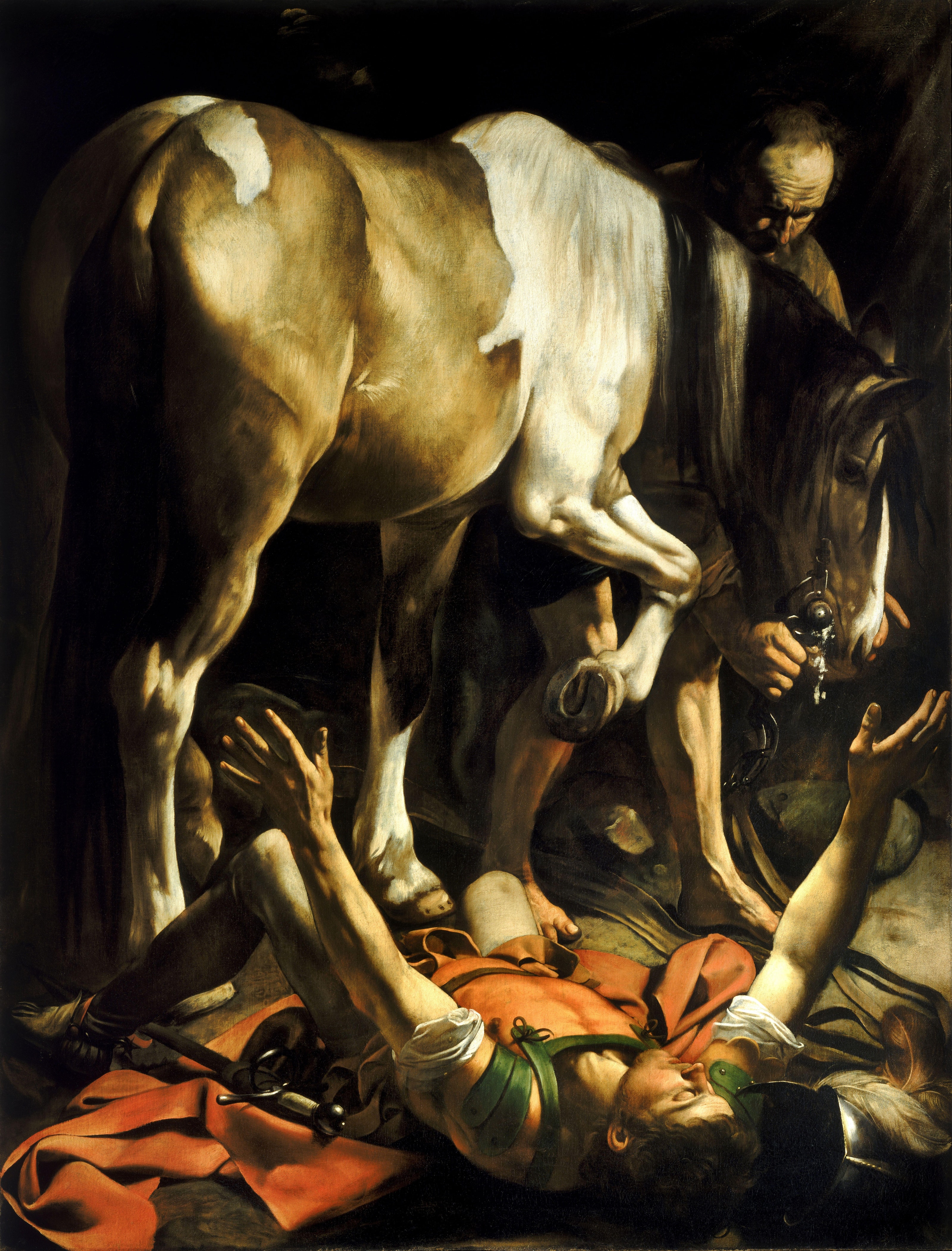
Saul, on his way to Damascus to arrest any "of the Way" (Acts 9:2), is stopped by the risen Jesus. Caravaggio, The Conversion on the Way to Damascus, c. 1600-1601, Cerasi Chapel, Santa Maria del Popolo, Rome. Public domain, via Wikimedia Commons.

See this page's graph and discover linked topics
In full
Hē hodos, "the Way," used absolutely with the article, is the self-designation of the Jesus movement in six passages of Acts (Acts 9:2; 19:9; 19:23; 22:4; Acts 24:14; 24:22), alongside qualified forms: "the way of salvation" (16:17), "the way of the Lord" (18:25), and "the way of God" (18:26). It is attested in Acts before the name Christianoi appears at Antioch (Acts 11:26), and it persists afterward as an insider term, while "Christian" begins as a name applied to the disciples and is later owned by them (1 Peter 4:16). The term draws on three converging sources: the Hebrew Bible's use of derek, "way," for a life ordered by God's covenant ("keep the way of Jehovah," Genesis 18:19); Isaiah 40:3, "Prepare ye in the wilderness the way of Jehovah," which all four Gospels apply to John the Baptist's preparation for Jesus, and which the Qumran Community Rule (1QS VIII, 12-16) also took as the charter for its own withdrawal to the wilderness; and Jesus' self-identification in John 14:6, "I am the way." The designation is therefore Christological, not merely ethical: the Way is the path of discipleship because it is first a Person, and the movement named for the road is the movement that calls on his name (Acts 9:14, 21).
Where Acts uses the name
| Passage | What happens |
|---|---|
| Acts 9:2 | Saul asks for letters to arrest "any that were of the Way, whether men or women" |
| Acts 19:9 | Opponents in Ephesus speak "evil of the Way before the multitude" |
| Acts 19:23 | "There arose no small stir concerning the Way," the silversmiths' riot |
| Acts 22:4 | Paul: "I persecuted this Way unto the death" |
| Acts 24:14 | Paul before Felix: "after the Way which they call a sect, so serve I the God of our fathers" |
| Acts 24:22 | Felix has "more exact knowledge concerning the Way" |
Related qualified uses: "the way of salvation" (16:17, from the slave girl at Philippi), "the way of the Lord" (18:25, of Apollos), and "the way of God" (18:26, as Priscilla and Aquila teach it more accurately).
What the word means
- The Greek. Hodos means a road, a journey, and by extension a manner of life. The New Testament uses it both ways: literally, as when Philip is sent "unto the way that goeth down from Jerusalem unto Gaza" (Acts 8:26), and figuratively, as in the narrow way "that leadeth unto life" (Matthew 7:14).
- The Hebrew background. The Septuagint uses hodos for derek, the ordinary Hebrew word for a road, which also names a pattern of conduct. God chose Abraham "that they may keep the way of Jehovah, to do righteousness and justice" (Genesis 18:19, ASV). A "way" in this sense is a life walked in obedience.
- The prophetic background. Isaiah 40:3 announces, "Prepare ye in the wilderness the way of Jehovah." Matthew, Mark, Luke, and John all apply that verse to John the Baptist, and the one whose way is prepared turns out to be Jesus (see Matthew 3:3). The Qumran Community Rule (1QS VIII, 12-16) cites the same verse as its reason for withdrawing to the wilderness; an English text is in Geza Vermes, The Complete Dead Sea Scrolls in English (1997). A movement that called itself "the Way" was, among other things, claiming to be the people walking the road Isaiah said would be prepared for the Lord himself.
- The personal center. Jesus' own word is decisive: "I am the way, and the truth, and the life" (John 14:6, ASV). He did not offer himself as a guide to a road that exists without him. He named himself the road.
Did Jesus tell people to follow "the Way"?
Not in those words. What Jesus said was "Follow me" (Matthew 4:19; Luke 9:23) and "I am the way." "The Way" as the name of a movement appears in Acts, on the lips of believers, opponents, and officials, after the resurrection. The two belong together: Jesus is the Way, disciples follow Jesus, so following the Way means following him.
The same distinction applies to the word "Christian." Jesus never told anyone to "be a Christian"; the name was first given to the disciples at Antioch (Acts 11:26), and it appears only three times in the New Testament (Acts 11:26; 26:28; 1 Peter 4:16). A name given after the fact is not evidence that the thing named came after the fact. See Jesus Never Founded Christianity Objection Defeater.
Other names the first believers used
The New Testament gives the community several accurate names at once, each stressing something different:
- Disciples (mathētai), learners of a teacher, the most common term in the Gospels and Acts.
- Believers, those who trust in Christ.
- Saints (hagioi), those set apart for God.
- Brethren, the family formed around Jesus.
- The Way, the path of life in him.
- Christians, those belonging to Christ.
- "The sect of the Nazarenes," an outsider's label: the prosecutor Tertullus uses it in Acts 24:5, and Paul's reply in 24:14 quietly corrects it, "the Way which they call a sect," claiming continuity with the God of Israel rather than a breakaway party.
Why the name matters apologetically
- It shows continuity with Israel. Paul's confession before Felix is the clearest statement: following the Way, he serves "the God of our fathers, believing all things which are according to the law, and which are written in the prophets" (Acts 24:14, ASV). The first believers did not think they had left Israel's God. They believed his promises had arrived.
- It shows the movement was centered on Jesus from the start. Saul hunted the people of the Way because they "call upon thy name" (Acts 9:14, 21), meaning the name of Jesus. The Way was never a generic spirituality that later attached itself to a founder.
- It answers the "moral teacher only" reading. If Jesus had meant only to teach a moral path, he would have said "I will show you the way." He said "I am the way," and then made coming to the Father depend on him. Christian ethics flows from relationship with him; it does not replace him.
- It is an authentic first-century term. "The Way" is not a later idealization. It appears in Acts in hostile and official mouths as well as friendly ones, which is how a real name in circulation behaves.
Scholarship
Published academic works this page draws on, each matched to a publisher, index or library catalog record.
- Géza Vermès, The Complete Dead Sea Scrolls in English (1997). Open Library
See also
- Jesus Never Founded Christianity Objection Defeater, on "Jesus never said to be a Christian"
- Church at Antioch, where the disciples were first called Christians
- Great Commission, the mission the people of the Way were sent on
- Paul the Apostle, who persecuted the Way and then walked it
- Dead Sea Scrolls, for the Qumran community's own use of Isaiah 40:3
- John 14.6, "I am the way, and the truth, and the life"
- Christianity, the broader hub
Common questions this page answers
Q: What were Christians called before they were called Christians?
The book of Acts calls the movement "the Way" (Acts 9:2; 19:9; 19:23; 22:4; 24:14; 24:22). Believers were also called disciples, believers, saints, and brethren. The name "Christians" was first given at Antioch (Acts 11:26).
Q: Why were the first Christians called "the Way"?
Because of Jesus' words, "I am the way, and the truth, and the life" (John 14:6), and because of Isaiah 40:3, "Prepare ye in the wilderness the way of Jehovah," which the Gospels apply to the coming of Jesus. In Hebrew and Greek a "way" also means a whole manner of life, so the name described both who they followed and how they lived.
Q: Did Jesus say to be followers of the Way?
Not in those words. Jesus said "Follow me" and "I am the way." The name "the Way" for his movement appears in Acts after the resurrection. Following the Way means following Jesus himself.
Q: Did Jesus ever tell anyone to be a Christian?
No. He told people to follow him and to make disciples. The word "Christian" was first used of his disciples at Antioch and appears only three times in the New Testament. A name applied later does not mean the community it names came later.
Q: Is "the Way" a different religion from Christianity?
No. "The Way" and "Christian" are two names for the same community. Paul, who used both kinds of language, said that following the Way he served the God of his fathers and believed the Law and the Prophets (Acts 24:14).