Person
Steven A. Austin
Steven Austin, Steve Austin (geologist), Dr. Steve Austin, Steven Arthur AustinAmerican geologist and one of the principal field researchers of young-earth Flood Geology. He holds a PhD in geology from Pennsylvania State University (1979) and is best known for Grand Canyon: Monument to Catastrophe (1994) and for using the 1980 eruption of Mount St. Helens as a modern example of rapid layering and erosion. (He is unrelated to the apologist Avery Austin.)
The 30-second version:
Steven Austin is a Penn State-trained geologist who spent many years at the Institute for Creation Research. He edited Grand Canyon: Monument to Catastrophe (1994), the main creationist book on the canyon, and made Mount St. Helens famous as a model of catastrophe, where volcanic deposits were laid down and cut through in hours and days. With colleagues he argued in 2020 that ancient lakes spilling over carved the Grand Canyon quickly. Mainstream geologists accept rapid erosion but date the canyon's history in millions of years.
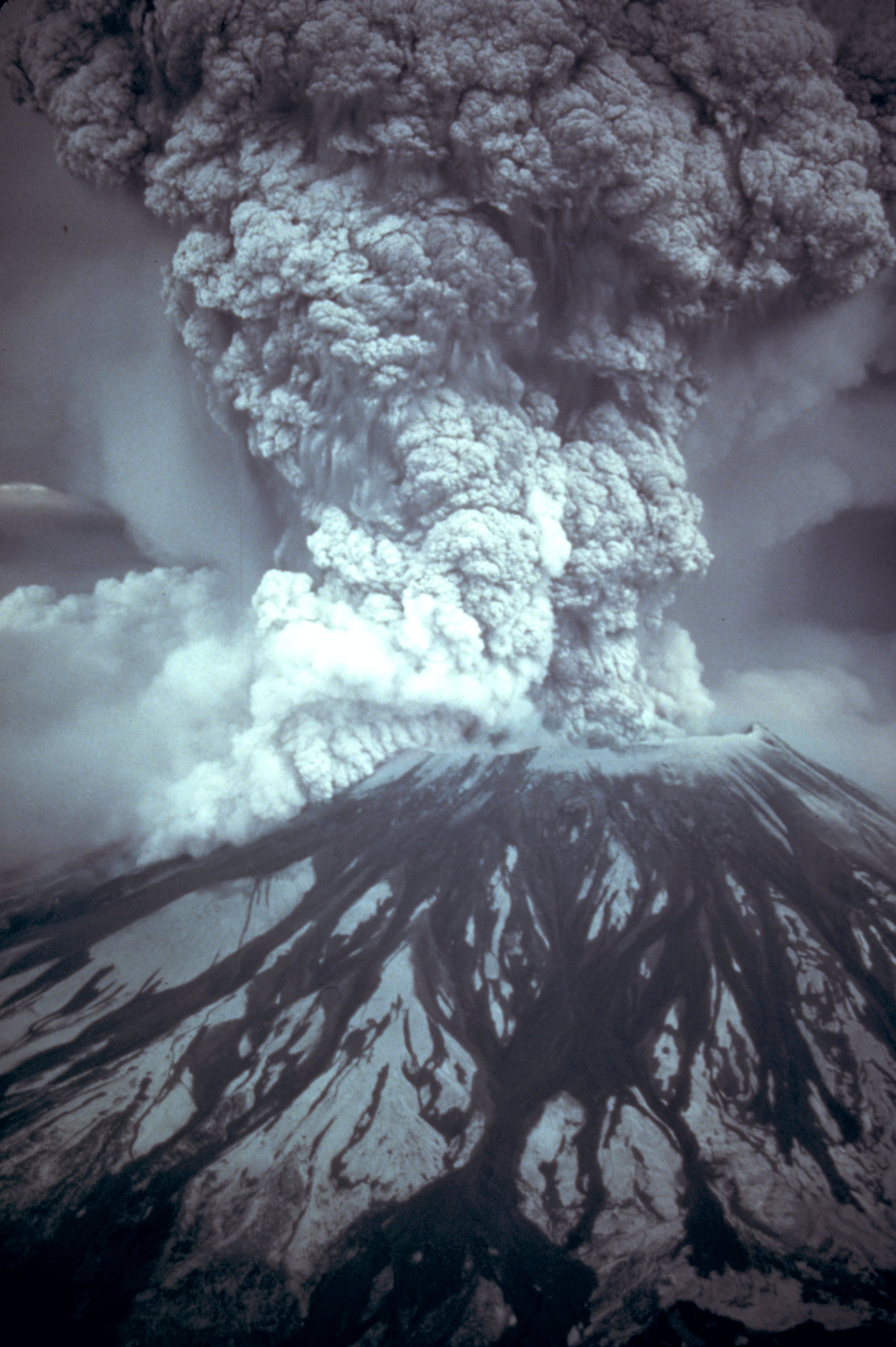
Mount St. Helens erupting, 18 May 1980. Photo: Austin Post, U.S. Geological Survey, public domain, via Wikimedia Commons, resized.
Career
- Training. B.S. in geology (University of Washington), M.S. in geology (San Jose State University) and PhD in geology (Pennsylvania State University, 1979), with a dissertation on the depositional environment of the Kentucky No. 12 coal bed and the origin of coal.
- Creation science. Long associated with the Institute for Creation Research, where he chaired the geology department and led its Grand Canyon research, and later a senior research geologist with Logos Research Associates.
See this page's graph and discover linked topics
Main work
- The Grand Canyon. Grand Canyon: Monument to Catastrophe (Institute for Creation Research, 1994), which he edited, is the fullest creationist field treatment of the canyon's layers, folds and erosion.
- Mount St. Helens. Austin's studies of the 1980 eruption and its aftermath present it as a small-scale analogue for Flood processes: thick, finely layered deposits laid down in hours, and a canyon cut through fresh deposits by a mudflow on 19 March 1982, which creationists call the "Little Grand Canyon of the Toutle River."
- Lake spillover. With Edmond Holroyd and David McQueen, "Remembering spillover erosion of Grand Canyon" (Answers Research Journal 13, 2020) argued that ancient lakes, including Lake Bidahochi, breached their natural dams and carved the canyon rapidly. A USGS-led study in 2026 also gave Lake Bidahochi a spillover role, within a timeline of millions of years. See Grand Canyon Formation.
Critiques
- Mainstream geologists accept that catastrophic erosion happens but argue that radiometric dates, cooling histories and dated river sediments place the Grand Canyon's carving over millions of years.
- His radioisotope work on Grand Canyon lavas has been criticized for how the dates were interpreted.
- Within creationism, Michael Oard has argued that the dam-breach model fails on the field evidence.
See also
- Grand Canyon Formation, the full comparison of the competing accounts
- Flood Geology, the framework his work develops
- Folded Strata Without Fracturing Argument, the folding argument drawing on his Grand Canyon work
- Andrew Snelling, fellow Flood geologist
- John Whitmore, fellow Flood geologist
- Henry Morris, founder of the Institute for Creation Research