Concept
Scientists
Scientists Who Believed in God, Christian Scientists and Skeptics, Scientists and God, Scientists Hub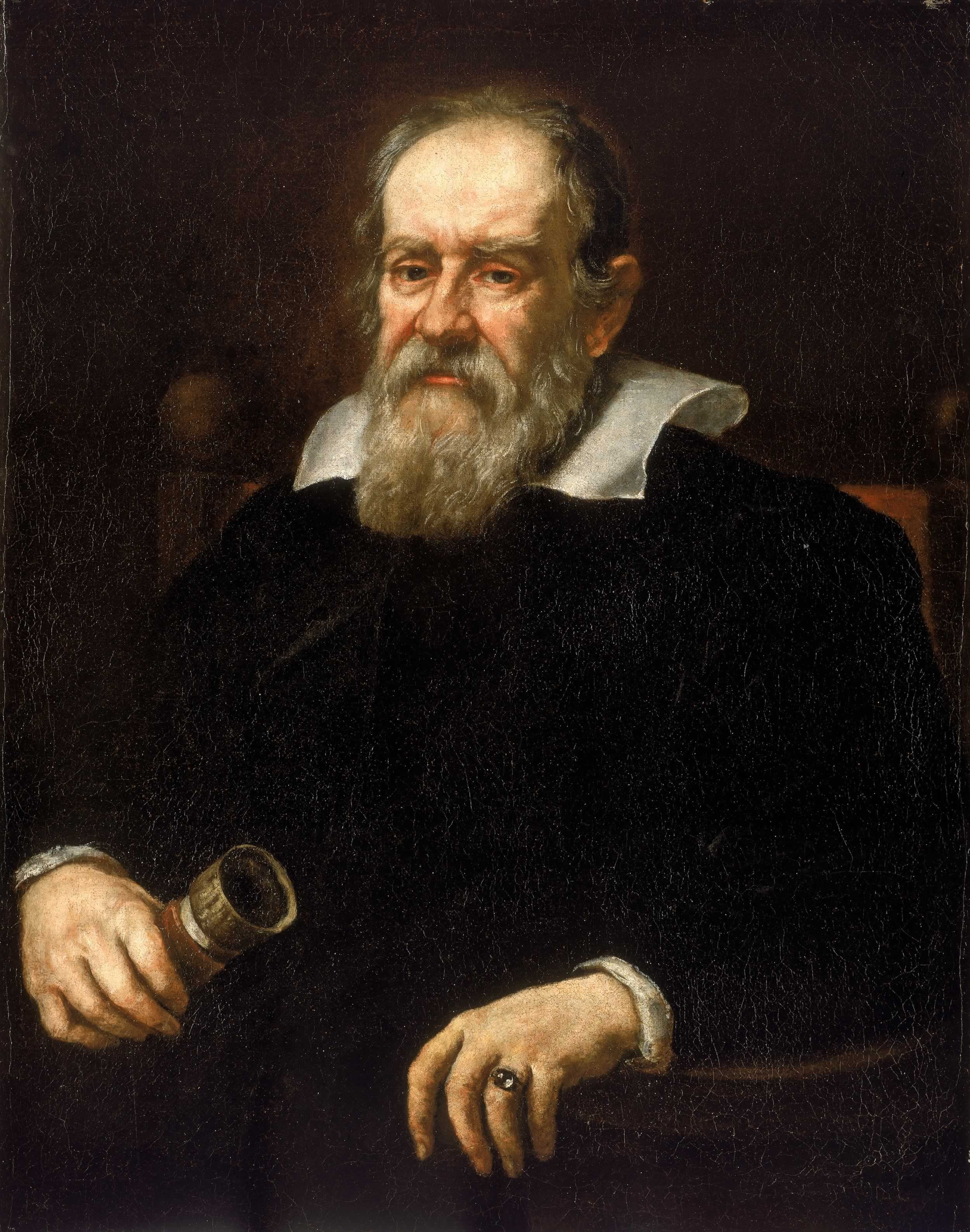
Intro
This page gathers the scientists the codex draws on. Some were devout believers who saw their work as reading God's handiwork. Some were atheists or agnostics whose discoveries still point toward design. Some argue openly for God from inside their fields, and some argue just as openly against.
Scientists matter for apologetics because so many of today's questions about God are framed in scientific terms. Did the universe have a beginning? Could life arise from chemistry alone? Does evolution explain the human mind? Are we finely tuned for existence? The people who did the work behind those questions are the best witnesses to what the evidence shows, and the most honest of them, on every side, are worth hearing in their own words.
The collection also answers a common claim: that science and faith have always been at war. The founders of modern science included committed Christians, and many working scientists today are believers.
The 30-second version:
Many modern questions about God are scientific questions: the beginning of the universe, the origin of life, fine-tuning, and the mind. This page collects the scientists the codex engages, believers and skeptics alike, from Galileo and Pasteur to the origin-of-life chemists and design theorists of today. Their own words show that the evidence is richer than the claim that science has disproved God, and that faith and science have worked side by side from the start.
See this page's graph and discover linked topics
In full
Folder hub for the scientists in the codex's people layer. Entries are grouped by field and by the part each person plays in the science-and-faith debate. Each line gives a one-sentence orientation drawn from the person's own page.
Three threads run through the collection:
- The beginning of the universe. The work of Fred Hoyle, Robert Jastrow and Stephen Hawking on cosmic origins sits behind the Kalam Cosmological Argument and the Fine-Tuning Argument.
- The origin of life and biological information. From Louis Pasteur's law of biogenesis and Stanley Miller's spark-discharge experiment to Hubert Yockey, Eugene Koonin and Robert G Endres, the probability of unguided abiogenesis is the central question, and it is where the Intelligent Design theorists press hardest.
- The age of the earth. Christians disagree here, and the codex presents each view in its strongest form: Hugh Ross for Old Earth Creationism, Francis Collins for theistic evolution, and Henry Morris, Ken Ham and the creation geologists for Young Earth Creationism.
Founders and landmarks
- Galileo Galilei (1564-1642): Catholic astronomer whose telescope discoveries of 1609-1610 overturned the old picture of the heavens and who stands among the founders of modern science.
- Louis Pasteur (1822-1895): Catholic founder of microbiology whose swan-neck flask experiments established the law of biogenesis, "all life comes from life."
- Charles Darwin (1809-1882): naturalist whose On the Origin of Species set out evolution by natural selection, trained for the Anglican ministry and later agnostic.
Physics and cosmology
- John Wheeler (1911-2008): Princeton physicist who coined "black hole" and "it from bit" and proposed a participatory universe.
- Fred Hoyle (1915-2001): astronomer of stellar nucleosynthesis who coined "Big Bang" and whose origin-of-life math led him, a non-believer, to an intelligent cause.
- Robert Jastrow (1925-2008): agnostic founding director of NASA's Goddard Institute, cited for one famous closing paragraph about the theologians and the Big Bang.
- Stephen Hawking (1942-2018): physicist of Hawking radiation and the singularity theorems, whose late claim that the universe can create itself from nothing the codex examines.
- Frank Tipler (b. 1947): Tulane mathematical physicist known for the highly speculative Omega Point Cosmology.
Physicists and astronomers who argue for God
- Gerald Schroeder (b. 1937): MIT-trained physicist and Orthodox Jewish commentator who reads the six days of Genesis 1 through relativistic time dilation.
- Hugh Ross (b. 1945): astronomer and founder of Reasons to Believe, the leading voice of Old Earth Creationism.
- Michael Guillen (b. 1953): Cornell triple Ph.D. and former ABC News Science Editor who moved from atheism to faith through the foundations of his own field.
- Guillermo Gonzalez (b. 1963): astronomer, originator of the Galactic Habitable Zone, and co-author of The Privileged Planet.
- Sarah Salviander: astrophysicist who moved from lifelong atheism to God through physics, and then to Christianity.
Origin of life and molecular biology
- Hubert Yockey (1916-2016): physicist who applied Shannon information theory to biology and argued that the origin-of-life problem remains unsolved.
- James Watson (b. 1928): co-discoverer of the DNA double helix and a lifelong atheist, whose discovery revealed the physical carrier of the genetic code.
- Stanley Miller (1930-2007): chemist whose 1953 spark-discharge experiment founded the primordial-soup hypothesis.
- Francis Collins (b. 1950): director of the Human Genome Project and the NIH, a convert from atheism, and founder of BioLogos.
- Eugene Koonin (b. 1956): leading evolutionary genomicist who calculated vanishingly small odds for even a minimal RNA replication system arising by chance.
- Lee Cronin: Glasgow chemist of the chemputer and Assembly Theory, who holds that chemistry and physics alone can explain life's origin.
- Robert G Endres: Imperial College biophysicist whose 2025 paper finds formidable barriers to the unguided assembly of a basic protocell.
Intelligent Design
- Michael Behe (b. 1952): Lehigh biochemist who coined irreducible complexity in Darwin's Black Box.
- Stephen Meyer (b. 1958): philosopher of science and the leading public voice of Intelligent Design, arguing from the origin of biological information.
- William Dembski (b. 1960): mathematician and philosopher, the leading mathematical theorist of the design movement and of specified complexity.
- Douglas Axe: molecular biologist, founding director of the Biologic Institute, and the most widely cited experimental voice in Intelligent Design.
Young-earth creation science
- Henry Morris (1918-2006): hydraulic engineer who co-wrote The Genesis Flood and founded the Institute for Creation Research.
- John Sanford (b. c. 1950): Cornell geneticist and co-inventor of the gene gun whose Genetic Entropy argues the human genome is degrading.
- Ken Ham (b. 1951): founder of Answers in Genesis, the Creation Museum and the Ark Encounter.
- Andrew Snelling: Sydney-trained geologist who argues that the Grand Canyon layers were laid down and folded during Noah's Flood.
- Steven A. Austin: Penn State-trained geologist of Flood Geology who uses the 1980 Mount St. Helens eruption as a model of rapid layering.
- John Whitmore: Cedarville geologist who argues that the Coconino Sandstone was deposited underwater.
Mind, perception and meaning
- Viktor Frankl (1905-1997): psychiatrist, Holocaust survivor and founder of logotherapy, author of Man's Search for Meaning.
- Donald Hoffman (b. 1955): cognitive scientist whose Fitness Beats Truth theorem argues that evolution tunes our senses for survival over accuracy.
- Justin Barrett (b. 1971): leading figure in the cognitive science of religion, whose research finds belief in God cognitively natural.
See also
- Origins and Science, the parent hub for origins, cosmology and the science-and-faith debate
- Science and Religion Are at War Objection Defeater, the reply to the conflict claim
- Intelligent Design, the design argument from biology
- Fine-Tuning Argument, the argument from the constants of physics
- Kalam Cosmological Argument, the argument from the beginning of the universe
- Philosophers, the philosophers the codex engages
- Skeptics & Atheists, including the scientists among the New Atheists
Common questions this page answers
Q: Which famous scientists believed in God?
Galileo Galilei and Louis Pasteur were Catholics, and Blaise Pascal was a devout Christian. Today Francis Collins, who led the Human Genome Project, astronomer Hugh Ross, physicist Michael Guillen and astrophysicist Sarah Salviander are among the believing scientists covered in the codex.
Q: Are science and Christianity at war?
The codex answers no. Many founders of modern science were Christians, and many working scientists believe in God today. The Science and Religion Are at War Objection Defeater sets out the history and the arguments.
Q: Which scientists became believers because of the evidence?
Francis Collins came to Christianity from atheism during medical school, Michael Guillen moved from atheism to faith through the foundations of physics, and Sarah Salviander came to God through her study of the universe. The philosopher Antony Flew cited the origin of life and the information in DNA among the reasons he came to believe in God.
Q: What do scientists say about the origin of life?
They disagree. Lee Cronin holds that chemistry and physics alone can explain it. Hubert Yockey, Eugene Koonin and Robert G Endres have shown how steep the probabilities are, and design theorists such as Stephen Meyer argue that the information in living cells points to a mind. See Abiogenesis.
Q: Do Christian scientists agree about the age of the earth?
They do not. Hugh Ross defends an old earth, Francis Collins defends theistic evolution, and Henry Morris, Andrew Snelling and John Sanford defend a young earth. The codex presents each view in its own strongest form.
Q: What is Intelligent Design and who are its main scientists?
Intelligent Design argues that some features of nature are best explained by an intelligent cause. Its leading figures are biochemist Michael Behe, philosopher of science Stephen Meyer, mathematician William Dembski and molecular biologist Douglas Axe. See Intelligent Design.