Argument
Science and Religion Are at War Objection Defeater
Conflict Thesis, conflict thesis, Warfare Thesis, Science and Religion Are at War, Science vs Religion Objection, science and religion have always been at war, religion has always opposed science, Draper-White thesisIntro
"Religion has always fought science. Look at Galileo. Look at the Dark Ages. The church thought the earth was flat." This is one of the most common things people say about Christianity, and most of them have never been told where the idea came from.
It came mostly from two books written in the 1800s. John William Draper published History of the Conflict between Religion and Science in 1874, and Andrew Dickson White published A History of the Warfare of Science with Theology in Christendom in 1896. Both authors had causes to fight, and both told the story as a long war. Later historians of science checked their sources and gave up the war picture. The relationship has had real fights in it, but it has had far more cooperation, and the people who built modern science were mostly Christians who thought they were studying God's work.
The short answer has three parts.
- The history does not show a war. Copernicus, Kepler, Boyle, Newton, Faraday, Maxwell, Mendel and Lemaître were believers, several of them clergy.
- The famous stories are mostly myths. Medieval scholars did not think the earth was flat. Galileo was not tortured or executed. Giordano Bruno was condemned chiefly for theology, not astronomy.
- The real conflict sits somewhere else. Science needs an orderly world and a mind that can grasp it. Christianity explains why both should exist. Naturalism has a harder time explaining why our minds should be trusted at all.
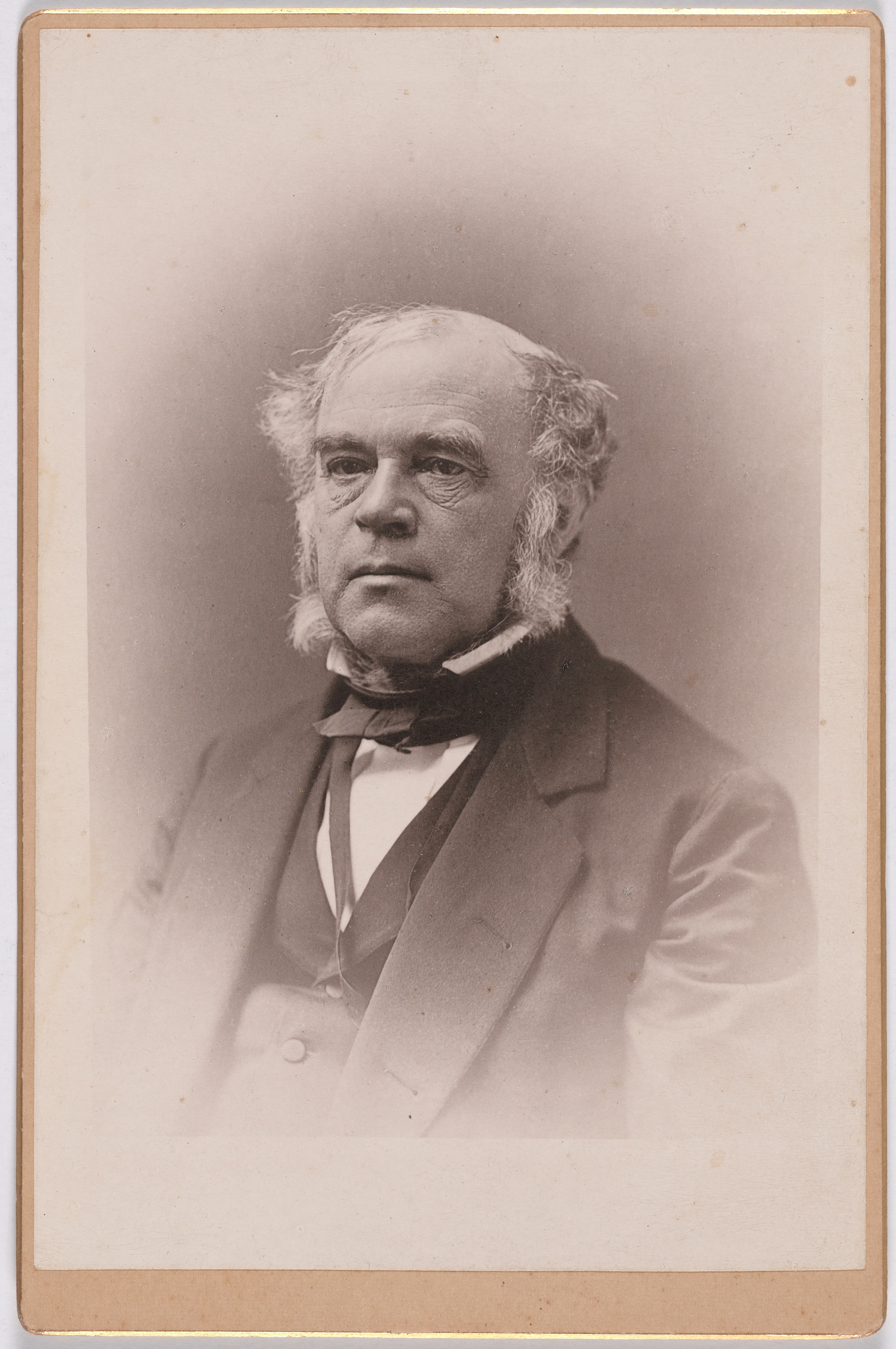
John William Draper, whose 1874 book popularised the "conflict" story, photographed by Edward Bierstadt, c. 1880. National Portrait Gallery, Smithsonian Institution. Image: CC0, via Wikimedia Commons.
See this page's graph and discover linked topics
Cheatsheet
The 30-second reply:
The "war between science and religion" is a story from two 19th-century books, Draper in 1874 and White in 1896, and historians of science stopped believing it decades ago. The people who built modern science, Kepler, Boyle, Newton, Faraday, Maxwell, Mendel, were Christians who saw nature as God's handiwork. The flat-earth church is a myth; medieval scholars taught a round earth. Galileo was a real abuse of church power, but it was a dispute among Catholics, and Galileo himself said faith and science cannot truly conflict. If there is a conflict, it is between science and naturalism, which cannot explain why our minds track the truth.
Fast facts:
- Draper (1874) wrote chiefly against the Catholic Church after the First Vatican Council; White (1896) wrote against "dogmatic theology" after founding Cornell as a non-sectarian university.
- Flat earth: Bede and Sacrobosco's De sphaera taught a spherical earth; the myth of a flat-earth church grew in the 19th century, helped by Washington Irving's 1828 life of Columbus (Jeffrey Burton Russell, Inventing the Flat Earth, 1991).
- Huxley and Wilberforce (1860): no verbatim record exists, and the famous exchange was written up decades later (J. R. Lucas, The Historical Journal 22, 1979).
- Galileo (1633): condemned and confined, not tortured or executed; see Galileo Galilei.
- Scientists today: a 2009 Pew survey of members of the American Association for the Advancement of Science found 33 percent believed in God and another 18 percent in a universal spirit or higher power.
Counter-moves:
- "Galileo proves it." Galileo was a believer and the dispute was among Catholics. It is a case of church authorities abusing power, which Christians can name honestly, and it has no bearing on whether faith and science conflict.
- "Christians reject evolution." Some do and some do not, and they argue the question on the evidence. A disagreement about one theory is a scientific dispute; it does not make a war between two whole fields.
- "Science explains things that used to be attributed to God." Explaining how nature works does not explain why there is an orderly nature to explain. See God of the Gaps Objection Defeater.
Concessions (each collects a larger one):
- Grant that church authorities silenced Galileo and banned his book. Collect that the same century's leading scientists were believers who did their science as believers, so the case cannot stand for "religion versus science."
- Grant that some Christians have resisted particular theories. Collect that scientists have resisted particular theories too, including the expanding universe that the priest-physicist Lemaître proposed, so resistance to a new theory is part of ordinary scientific life.
Closing line:
The war story is a myth with a birthday, 1874. The founders of science saw the world as made by a mind, and that is still the best explanation of why science works.
In full
The conflict thesis (also called the warfare thesis or the Draper-White thesis) holds that science and religion, and in particular science and Christianity, are inherently opposed and have been locked in a historical war in which religion steadily retreats. Its classic statements are John William Draper's History of the Conflict between Religion and Science (1874), aimed chiefly at the Catholic Church after the First Vatican Council, and Andrew Dickson White's two-volume A History of the Warfare of Science with Theology in Christendom (1896), aimed at what White called dogmatic theology.
Modern historians of science have largely abandoned the thesis as a reading of the evidence. John Hedley Brooke's Science and Religion: Some Historical Perspectives (1991) set out the "complexity thesis": the relationship has varied by period, place and question, and neither warfare nor simple harmony describes it. David Lindberg and Ronald Numbers' God and Nature (1986) and Numbers' edited Galileo Goes to Jail and Other Myths about Science and Religion (2009) collected specialists correcting the standard episodes one by one. Peter Harrison (The Territories of Science and Religion, 2015) argued further that "science" and "religion" as two separate, bounded enterprises are themselves modern categories, so projecting a war between them back into earlier centuries is anachronistic.
The defeater has three layers. First, a historiographical correction: the thesis originated in polemical works that misused their sources, and its signature episodes (the flat earth, Galileo's torture, Bruno as a martyr of astronomy, the Huxley-Wilberforce rout) are myths or distortions. Second, a counterexample: the founders of modern science were overwhelmingly believers who framed their work theologically, and sociologists from Robert K. Merton (1938) onward have explored the link between Protestant piety and the rise of English science. Third, a relocation of the real conflict: following Alvin Plantinga (Where the Conflict Really Lies, 2011), the conflict between science and theism is superficial, while there is a deep conflict between science and naturalism, because naturalism undercuts the reliability of the cognitive faculties that science depends on.
The strongest form of the objection is not historical at all. It is the methodological claim, pressed by Jerry Coyne (Faith vs. Fact, 2015), that science and religion are incompatible ways of knowing because religion accepts claims without the testing science demands. That version is answered under P4 below, and at greater length at Scientism and Faith and Reason.
Argument structure
| # | Premise |
|---|---|
| P1 | The conflict thesis originated in 19th-century polemical histories, and historians of science have since abandoned it as a reading of the evidence. |
| P2 | Its signature episodes are myths or distortions: the flat-earth church, Galileo's torture, Bruno as a martyr of astronomy, and the Huxley-Wilberforce rout. |
| P3 | The founders and many leading practitioners of modern science were Christians who framed their science theologically. |
| P4 | Science presupposes an orderly, intelligible nature and reliable minds, which theism explains and naturalism struggles to explain. |
| C | Science and Christianity are not at war. Particular disputes have occurred, but the deep relationship is one of support, and the deeper conflict lies between science and naturalism. |
Form
The defeater is defensive. P1 and P2 are a historiographical correction: they show that the objection rests on a story historians no longer accept. P3 is a counterexample to the universal claim "religion has always opposed science." P4 is a premise exposure and turnabout: it names the hidden assumption that science and naturalism go together, and argues that the opposite pairing fits better.
Its weakest point is overreach in the other direction. The defeater does not claim that Christians have never resisted a scientific finding, or that the church has never abused its authority over scholars. Galileo is a real case and should be conceded. The claim is narrower: that such episodes are particular disputes, and that they do not add up to a law of history.
P1, The conflict thesis came from polemics, and historians have abandoned it
Affirmative case (second-order arguments)
- Draper and White had targets. Draper wrote in the wake of the First Vatican Council (1869-1870) and its definition of papal infallibility, and his book is directed chiefly at Roman Catholicism. White, the co-founder and first president of Cornell, had fought clergy who attacked Cornell's non-sectarian charter, and his Warfare grew out of that fight.
- Their sources do not bear the weight. Specialists working through the episodes White used have repeatedly found misquotation, invented details and selective citation. The essays in Galileo Goes to Jail (2009) are written by historians, most of them not writing as apologists, correcting those claims one at a time.
- The field moved on. Brooke's complexity thesis (1991) became the working consensus among historians of science: the relationship varies by period, place and question.
Anticipated objections
- "Historians just want to be polite to religion." The revision was driven by archival work, and many of the historians involved are not religious.
- "Even if Draper and White exaggerated, the core is true." That needs showing case by case, and the cases are what failed.
Rebuttals
- The motive question cuts both ways: the war story itself was written by men with causes, and the correction came from the specialists who read the documents.
- Once the signature episodes are removed (P2), the "core" has no evidence left to stand on beyond particular disputes, which no one denies.
Live-cite kit
- Scholarly: John Hedley Brooke, Science and Religion: Some Historical Perspectives (1991); Ronald L. Numbers (ed.), Galileo Goes to Jail and Other Myths about Science and Religion (2009); David C. Lindberg and Ronald L. Numbers (eds.), God and Nature (1986).
- Aphorism: "The war story has a birthday, 1874."
Tactical notes
- Ask where the opponent learned the war story. Very often it traces back, through popular books, to Draper and White.
P2, The signature episodes are myths or distortions
Affirmative case (second-order arguments)
- The flat earth. Educated medieval Europeans held that the earth is a sphere. Bede taught it, and Sacrobosco's De sphaera (13th century) was a standard university astronomy text for centuries. The myth that the medieval church taught a flat earth was spread in the 19th century, helped by Washington Irving's romanticised life of Columbus (1828) and by Draper and White themselves (Jeffrey Burton Russell, Inventing the Flat Earth, 1991).
- Galileo. He was tried in 1633, required to abjure, and confined to his villa for the rest of his life. He was not tortured, not imprisoned in a dungeon, and not executed, and the "Eppur si muove" line is a later legend. The dispute was among Catholics about how to read Scripture and whether the evidence was decisive. See Galileo Galilei.
- Giordano Bruno. Bruno was burned in Rome in 1600, a real atrocity. The charges against him were principally theological, including denials of the Trinity and of Christ's divinity; his cosmology of infinite worlds featured, but he was not condemned as an astronomer, and he did no observational science.
- Huxley and Wilberforce. At the 1860 meeting of the British Association in Oxford, Bishop Samuel Wilberforce and Thomas Henry Huxley clashed over Darwin. No verbatim record was made, and the famous exchange about descent from apes was written up decades afterward by Huxley's side (J. R. Lucas, "Wilberforce and Huxley: A Legendary Encounter," The Historical Journal 22, 1979).
Anticipated objections
- "Bruno was still killed by the church." Yes, and that should be condemned plainly.
- "Galileo was still silenced." Yes.
Rebuttals
- Conceding both is correct and costs the defeater nothing. Bruno shows that the Roman Inquisition killed people for heresy, a charge the codex does not defend; it does not show a war on science, because his offence was theological. Galileo shows church authorities settling a scientific question by decree; it does not show Christianity opposed to science, because the scientist was a Christian arguing from Scripture.
Live-cite kit
- Scholarly: Jeffrey Burton Russell, Inventing the Flat Earth: Columbus and Modern Historians (1991); J. R. Lucas, "Wilberforce and Huxley: A Legendary Encounter," The Historical Journal 22 (1979).
- Aphorism: "The flat-earth church is itself a 19th-century invention."
Tactical notes
- Concede the real wrongs first and in full. The listener then hears the corrections as a matter of accuracy.
- For Hypatia, the other common exhibit, see Hypatia Murder Objection Defeater.
P3, The founders of modern science were believers
Affirmative case (second-order arguments)
- The roll call. Copernicus was a canon of the cathedral chapter of Frombork and dedicated his book to Pope Paul III. Kepler was a devout Lutheran who regarded astronomy as a way of honouring the Creator. Robert Boyle endowed by his will a lecture series to defend Christianity. Newton wrote at least as much on theology and prophecy as on physics. Michael Faraday was an elder in a small Christian sect, the Sandemanians. James Clerk Maxwell was a committed Presbyterian; the doors of the original Cavendish Laboratory in Cambridge, which he directed, carry Psalm 111:2 in Latin. Gregor Mendel was an Augustinian friar and abbot. Georges Lemaître, who proposed the expanding universe and the "primeval atom," was a Catholic priest.
- They framed science theologically. The idea that nature follows laws was understood by many early modern scientists as the idea that a lawgiver made it. That is the core of Laws of the Universe as Witness to Design.
- The link has been studied. Robert K. Merton's Science, Technology and Society in Seventeenth-Century England (1938) argued that Puritan values encouraged English science. The thesis is debated in its details, and the debate is over how strongly faith encouraged science.
- Believing scientists are not rare today. In a 2009 Pew survey of AAAS members, 33 percent believed in God and another 18 percent in a universal spirit or higher power. Elaine Howard Ecklund's Science vs. Religion: What Scientists Really Think (2010) found the "war" image far weaker among working scientists than among the public. See Francis Collins.
Anticipated objections
- "They were believers because everyone was then." That explains why they were Christians; it does not explain why they gave theological reasons for their science.
- "Today's elite scientists are mostly unbelievers." Unbelief is higher among elite scientists than in the general public.
Rebuttals
- Kepler, Boyle and Newton did not merely conform; they wrote theology and grounded their method in it. Conformists do not endow lectures in apologetics.
- A higher rate of unbelief among scientists today is a sociological fact with many causes. It does not show that the two fields contradict each other, and the founding generation is the counterexample to the claim that they always have.
Live-cite kit
- Scripture: "The works of Jehovah are great, Sought out of all them that have pleasure therein" (Psalm 111:2, ASV). "It is the glory of God to conceal a thing; But the glory of kings is to search out a matter" (Proverbs 25:2, ASV).
- Scholarly: Robert K. Merton (1938); Elaine Howard Ecklund (2010).
Tactical notes
- Name one figure the opponent respects and ask whether he thinks that scientist was at war with his own faith.
P4, Science presupposes what theism explains
Affirmative case (second-order arguments)
- Science needs an orderly world. Experiments assume that nature behaves uniformly and that its patterns can be described mathematically. Theism expects this, because the world is made by a rational God. On naturalism it is a brute fact.
- Science needs reliable minds. Plantinga argues that if our faculties were shaped only by unguided processes selecting for survival, we would have no reason to trust them on abstract questions like physics, so naturalism undercuts the reasoning science relies on. See Argument from the Reliability of Reason and Alvin Plantinga.
- So the conflict is misplaced. Plantinga's conclusion is that there is superficial conflict between science and theistic religion, but deep concord, and superficial concord between science and naturalism, but deep conflict.
Anticipated objections
- "Science and religion are different ways of knowing, and religion's way is faith without evidence" (Coyne, Faith vs. Fact, 2015).
- "Keep them apart: they are non-overlapping magisteria" (Stephen Jay Gould, Rocks of Ages, 1999).
Rebuttals
- Coyne's argument defines faith as belief without evidence, a definition Christianity itself rejects (1 Thessalonians 5:21; see Faith and Reason). It also assumes that only scientific testing yields knowledge, a claim that cannot itself be scientifically tested. See Scientism.
- Gould's truce concedes that there is no war but buys peace by keeping religion out of claims about the world. Christianity makes claims about history and nature, such as the resurrection and creation, so it cannot accept the truce; it can accept the conclusion that the two fields are not enemies.
Live-cite kit
- Scripture: "The heavens declare the glory of God; And the firmament showeth his handiwork" (Psalm 19:1, ASV). Romans 1:20.
- Scholarly: Alvin Plantinga, Where the Conflict Really Lies: Science, Religion, and Naturalism (2011); Ian Barbour, Religion in an Age of Science (1990), whose fourfold typology (conflict, independence, dialogue, integration) shows that conflict is only one of several models.
Tactical notes
- Turn the question: "Why should the universe be understandable at all, and why should a brain built for survival understand it?"
Conclusion
The war between science and religion is a story with a known origin, two 19th-century books, and historians of science have set it aside. Its famous scenes are myths or distortions, the founders of modern science did their work as believers, and the presuppositions of science fit theism better than naturalism. Particular disputes, including real abuses such as Galileo's trial, belong to the history of both science and the church, and they should be told honestly. They do not make a war.
Master objections to the whole argument
- "The war is ongoing: look at creationism." Christians disagree among themselves about the age of the earth and the mechanisms of biology, and young-earth creationists argue their case on scientific grounds of their own. That is a dispute about particular theories and their interpretation, which is how science normally proceeds. It is not evidence that Christian belief and scientific inquiry are enemies, and many of the disputants on every side are scientists.
- "Religion retreats as science advances." The "retreat" picture assumes that God was ever offered as a rival mechanism. Classical theism holds that God is the ground of the whole order that science describes, so a better description of the order is no retreat. See God of the Gaps Objection Defeater.
Tactical opening / closing
- Opening: "Before we talk about Galileo, can I ask where the idea of a war between science and religion comes from? It has a surprisingly recent birthday."
- Closing: "Kepler, Boyle, Newton, Faraday, Maxwell, Mendel and Lemaître did not think they were at war with God. They thought they were reading his handwriting."
Connection to Scripture
The Bible commends the study of creation as a way of honouring its maker. The works of the LORD are "sought out of all them that have pleasure therein" (Psalm 111:2, ASV), and searching out what God has concealed is called the glory of kings (Proverbs 25:2). Creation declares God's glory (Psalm 19:1) and makes his power and divinity "clearly seen" (Romans 1:20, ASV). God's questions to Job (Job 38:4) set the posture of humility in which inquiry is welcomed, and Paul's "prove all things; hold fast that which is good" (1 Thessalonians 5:21, ASV) rules out faith as a refusal to test.
Scholarship
Published academic works this page draws on, each matched to a publisher, index or library catalog record.
- Ian G. Barbour, Religion in an age of science (1990). Open Library
- John William Draper and Nicolás Salmerón y Alonso, History of the conflict between religion and science (1874). Open Library
- Stephen Jay Gould, Rocks of ages (1999). Open Library
- Peter Harrison, The Territories of Science and Religion (University of Chicago Press, 2015). doi:10.7208/chicago/9780226184517.001.0001
- David C. Lindberg and Ronald L. Numbers, God and nature (1986). Open Library
- David C. Lindberg and Ronald L. Numbers, God and Nature: Historical Essays on the Encounter between Christianity and Science (1986). doi:10.1525/9780520908031
- J. R. Lucas, "Wilberforce and Huxley: a Legendary Encounter," The Historical Journal 22 (1979). doi:10.1017/s0018246x00016848 PubMed 11617072
- Ronald L. Numbers, Galileo Goes to Jail and Other Myths about Science and Religion (Harvard University Press, 2009). Open Library
- Alvin Plantinga, Where the Conflict Really Lies (2011). Open Library
- Jeffrey Burton Russell, Inventing the flat earth (1991). Open Library
- Andrew Dickson White, A history of the warfare of science with theology in Christendom (1896). Open Library
See also
- Galileo Galilei, the affair most often cited for the conflict thesis, told accurately
- Hypatia Murder Objection Defeater, the other standard exhibit
- Faith and Reason, the harmony tradition the founders of science worked within
- Scientism, the claim that only science yields knowledge
- God of the Gaps Objection Defeater, why explaining nature does not explain God away
- Laws of the Universe as Witness to Design, the lawgiver behind natural law
- Argument from the Reliability of Reason, why naturalism undercuts science's own faculties
- Bible Scientific Errors Objection Defeater, the companion objection about the Bible's own statements
Common questions this page answers
Q: Have science and religion always been at war?
No. The idea of a permanent war was popularised by two 19th-century books, John William Draper's (1874) and Andrew Dickson White's (1896). Historians of science have since abandoned it: the relationship has included real disputes but far more cooperation, and most founders of modern science were Christians.
Q: What is the conflict thesis?
The conflict thesis is the claim that science and religion are inherently opposed and have always been at war, with religion steadily retreating. Its classic statements are Draper and White. Modern historians, following John Hedley Brooke (1991), describe a complex relationship that varies by period and question.
Q: Did the medieval church teach that the earth was flat?
No. Educated medieval Europeans, including Bede and the university astronomy text De sphaera, held that the earth is a sphere. The myth of a flat-earth church grew up in the 19th century, as Jeffrey Burton Russell showed in Inventing the Flat Earth (1991).
Q: Doesn't the Galileo affair prove the church opposed science?
It shows church authorities wrongly settling a scientific question by decree in 1633, and that should be admitted. But Galileo was a believer, the dispute was among Catholics, and he was not tortured or executed. One abuse of authority does not make a war between faith and science.
Q: Were the founders of modern science Christians?
Most were. Copernicus, Kepler, Boyle, Newton, Faraday, Maxwell, Mendel and Lemaître were believers, and several gave theological reasons for their science. Mendel was an Augustinian friar and Lemaître a Catholic priest.
Q: Where does the real conflict lie, according to Christian philosophers?
Alvin Plantinga argues that the conflict between science and theism is superficial, while the deep conflict is between science and naturalism. Science depends on reliable minds and an orderly world, and naturalism gives little reason to expect either.