Person
Salome Daughter of Herodias
Salome, Salome (daughter of Herodias), the daughter of Herodias, Salome daughter of Herodias, Queen Salome of Armenia Minor, Salome the dancerIntro
Salome was the daughter of Herodias. The Gospels never give her name. They call her "the daughter of Herodias", the girl who danced at Herod Antipas' birthday banquet and, prompted by her mother, asked for the head of John the Baptist. Her name comes from the Jewish historian Josephus, who lists her in the Herodian family tree.
She later married her uncle, Philip the Tetrarch, and after his death a cousin, Aristobulus, who became a king. Coins struck by Aristobulus carry her portrait and the title "Queen Salome", which makes her one of the very few people connected with the Gospels whose face survives on an object from her own lifetime.
She is a different person from the Salome who followed Jesus and stood at the cross (Mark 15:40; 16:1).
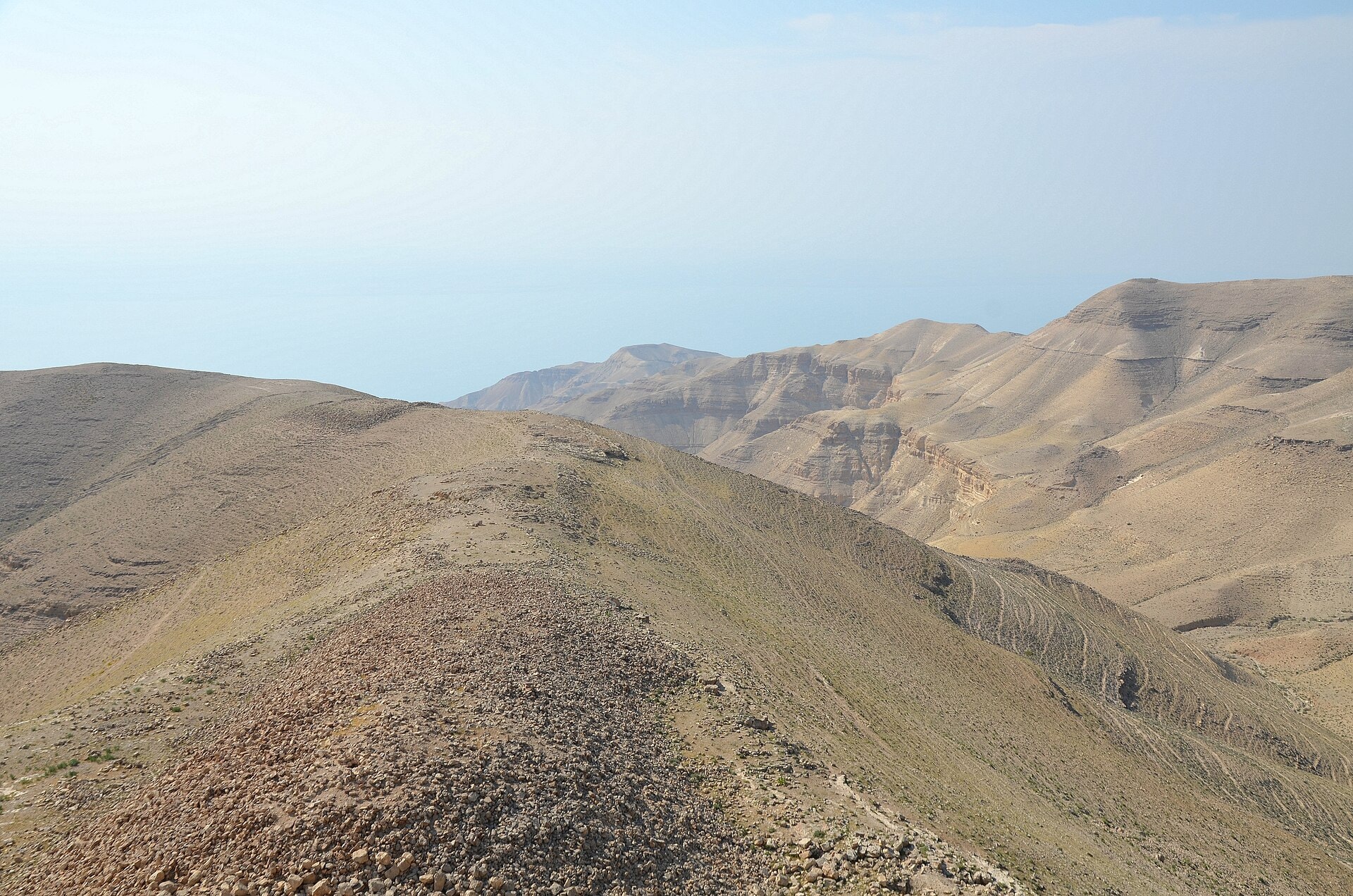
The hill of Machaerus (modern Mukawir, Jordan), the Herodian fortress where Josephus places the imprisonment and death of John the Baptist, the setting the Gospels tie to Salome's dance. Photo: Carole Raddato, CC BY-SA 2.0, via Wikimedia Commons, resized.

See this page's graph and discover linked topics
In full
Josephus records her in his account of the descendants of Herod the Great:
- Parentage. Herodias was married to Herod, the son of Herod the Great by Mariamne, the daughter of Simon the high priest, and they had a daughter, Salome (Antiquities 18.136).
- First marriage. Salome married Philip, son of Herod and tetrarch of Trachonitis. He died childless (Antiquities 18.137).
- Second marriage. She then married Aristobulus, son of Herod king of Chalcis and grandson of Aristobulus IV, therefore her cousin. They had three sons, Herod, Agrippa and Aristobulus (Antiquities 18.137).
- Queen. In AD 54 Nero made Aristobulus king of Armenia Minor (Antiquities 20.158; Tacitus, Annals 13.7), and he later also ruled Chalcis. Salome thus became a queen.
In the Bible
The Gospels tell her part without naming her.
But when Herod's birthday came, the daughter of Herodias danced in the midst, and pleased Herod. (Matthew 14:6, ASV)
- The dance and the oath. In Mark's fuller account, "the daughter of Herodias herself came in and danced, she pleased Herod and them that sat at meat with him; and the king said unto the damsel, Ask of me whatsoever thou wilt, and I will give it thee" (Mark 6:22, ASV). He swore to give her up to half his kingdom (Mark 6:23).
- The request. "She went out, and said unto her mother, What shall I ask? And she said, The head of John the Baptizer" (Mark 6:24, ASV). Matthew says she was "put forward by her mother" (Matthew 14:8, ASV). She asked for it "forthwith... on a platter" (Mark 6:25), and the executioner "brought his head on a platter, and gave it to the damsel; and the damsel gave it to her mother" (Mark 6:28, ASV).
- Her age. Mark calls her korasion, "damsel" or "little girl", the same word used for Jairus' twelve-year-old daughter (Mark 5:42). On Josephus' genealogy she was probably in her early to mid teens at the time, about AD 28-29.
- A textual problem. In Mark 6:22 several of the oldest manuscripts, including Codex Sinaiticus and Codex Vaticanus, read "his daughter Herodias" instead of "the daughter of Herodias herself". The Nestle-Aland critical text prints that harder reading; the ASV, KJV and most translations follow the reading that agrees with Matthew and with Josephus. Bruce Metzger's Textual Commentary discusses the choice. The variant does not change the identification: the girl was Herodias' daughter and Antipas' step-daughter.
Family and lineage
- Mother: Herodias, granddaughter of Herod the Great.
- Father: Herod, son of Herod the Great by Mariamne II (called Philip in Mark 6:17).
- Step-father: Herod Antipas, her great-uncle by blood.
- First husband: Philip the Tetrarch, her father's half-brother. No children.
- Second husband: Aristobulus of Chalcis, king of Armenia Minor, her cousin. Three sons: Herod, Agrippa and Aristobulus.
- Great-grandfather on both sides: Herod the Great.
Historical and archaeological evidence
- Coins of Aristobulus and Salome. Bronze coins of Aristobulus show his diademed bust with the legend "of King Aristobulus" and, on the reverse, a diademed and draped bust of a woman with the legend "of Queen Salome" (Basilissēs Salōmēs). The specimen photographed on Commons is dated to his thirteenth regnal year, about AD 66/67 (catalogued as RPC I 3840). The coins are rare. Grade: direct for Queen Salome; the identification of the queen with the dancing girl of the Gospels rests on Josephus' genealogy.
- Josephus. Antiquities 18.136-137 names her, her parents and both husbands, and supplies the name the Gospels omit. See Josephus.
- Mykytiuk counts her among the thirty New Testament figures confirmed outside the Bible, citing Josephus and her husband's coins. See Biblical Figures Confirmed by Archaeology.
Grade: very strong. She is named on coins of her own lifetime, and the link to the Gospel narrative is made by an independent first-century historian.
Scholarly consensus
- Identity. Scholars generally accept that the unnamed daughter of Mark 6:22 and Matthew 14:6 is the Salome of Josephus. Those who prefer the variant "his daughter Herodias" in Mark 6:22 debate whether Mark thought the girl was named Herodias and was Antipas' own daughter; most still hold that the historical girl was Salome.
- The dance. The Gospels say only that she danced and pleased the guests. The "dance of the seven veils" and the sensual figure of later art come from Oscar Wilde's play Salomé (1891) and Richard Strauss's opera (1905), not from the text.
- Historicity of the banquet. Some scholars, noting parallels with the banquets of Esther and with Herodotus' story of Xerxes' oath (Histories 9.108-113), regard the scene as a literary composition. Others note that Josephus independently confirms the execution, the marriage that provoked it and the people involved, and that a Herodian birthday feast for the officers and chief men of Galilee (Mark 6:21) fits what is known of Antipas' court.
Theological significance
- A child used as an instrument. In both Gospels the girl acts on her mother's direction. The narrative lays the guilt on Herodias' resentment and Antipas' oath, and shows how the powerful use others to carry out their will.
- Rash oaths. Antipas' oath to a girl at a feast, kept at the cost of an innocent life, is a sharp example of the danger Jesus warns against in Matthew 5:33-37.
Church Fathers
John Chrysostom, Homilies on Matthew 48, preaches on the dance and the oath ("he swore with an oath to give her whatsoever she would ask"), treating the scene as a warning about drunken feasting and the corrupting influence of the mother on the daughter. See John Chrysostom. The Fathers do not use her name; it enters Christian tradition from Josephus.
See also
- People of the Bible, the full list of biblical people by book of first mention
- Herodias, her mother
- Herod Antipas, her step-father
- Philip the Tetrarch, her first husband
- Herod the Great, her great-grandfather
- Biblical Figures Confirmed by Archaeology, Mykytiuk's list
- Josephus, the historian who names her
Common questions this page answers
Q: What was the name of Herodias' daughter who danced for Herod?
Salome. The Gospels call her only "the daughter of Herodias" (Matthew 14:6; Mark 6:22). Her name comes from Josephus, Antiquities 18.136-137, who lists her as Herodias' daughter by her first husband.
Q: Is there archaeological evidence for Salome?
Yes. Bronze coins of her second husband, King Aristobulus of Armenia Minor, carry her portrait and the Greek legend "of Queen Salome". The link between this queen and the girl in the Gospels is made by Josephus' family record.
Q: How old was Salome when she danced?
The Gospels call her a korasion, a girl, the word used for Jairus' twelve-year-old daughter. Based on Josephus' genealogy, she was probably in her early to mid teens at the time.
Q: Did Salome do the dance of the seven veils?
The Bible does not say so. It says only that she danced and pleased Herod and his guests. The "dance of the seven veils" comes from Oscar Wilde's 1891 play Salomé and Richard Strauss's opera based on it.
Q: Is Salome the daughter of Herodias the same as Salome the disciple?
No. Another Salome was among the women who followed Jesus, watched the crucifixion and came to the tomb (Mark 15:40; 16:1). She is a different person.