Person
Philip the Tetrarch
Philip, Philip the tetrarch, Herod Philip II, Philip son of Herod, Philip tetrarch of Ituraea, PhilipposIntro
Philip the Tetrarch was a son of Herod the Great who ruled the lands northeast of the Sea of Galilee for thirty-seven years. Luke names him once, as one of the rulers in power when John the Baptist began to preach. He is remembered mostly through the city he rebuilt and named: Caesarea Philippi, "Philip's Caesarea", where Peter confessed that Jesus is the Christ.
Josephus describes him as a mild and fair ruler, unlike his brothers. He married Salome, the girl whose dance led to John the Baptist's death. His coins are the first coins of any Herodian ruler to carry a portrait, both of the emperor and of Philip himself.
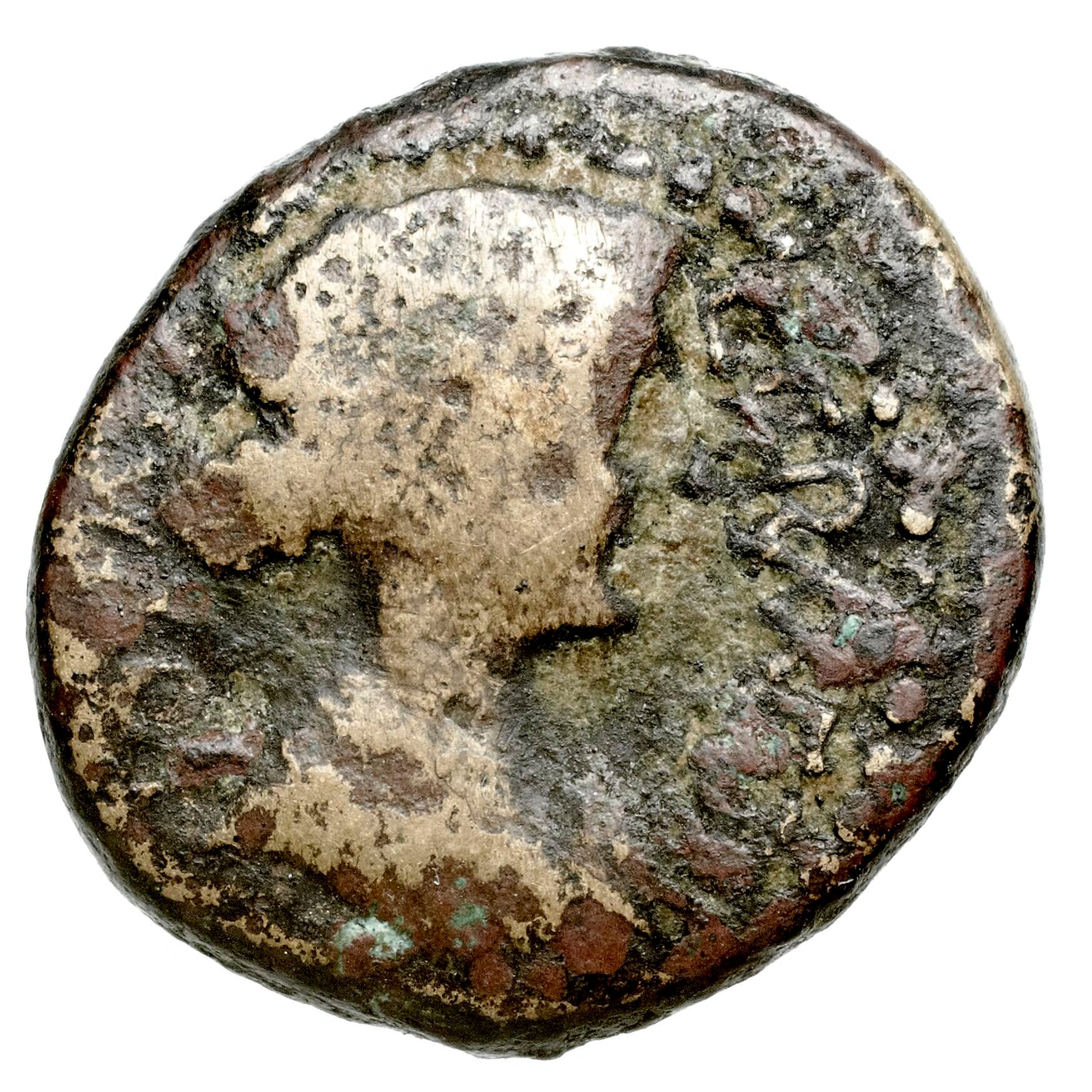
Bronze coin of Herod Philip, tetrarch of Iturea and Trachonitis (4 BC to AD 34), struck at Caesarea Panias; he was the first Jewish ruler to put a human portrait on his coins. Bibliothèque nationale de France, Cabinet des médailles. Public domain, via Wikimedia Commons, resized.

See this page's graph and discover linked topics
In full
Philip was a son of Herod the Great by Cleopatra of Jerusalem. Under Herod's will, confirmed by Augustus, he received the northeastern districts of the kingdom: Gaulanitis, Trachonitis, Batanea, Auranitis and parts of Iturea (Josephus, Antiquities 17.189, 17.319). His subjects were mostly non-Jews, which is why he could put portraits on his coins without giving the offense such images would have caused in Judea or Galilee.
- Builder. He rebuilt Paneas, at the springs of the Jordan, as Caesarea, and raised the village of Bethsaida to a city, naming it Julias after Augustus' daughter (Antiquities 18.28; Jewish War 2.168).
- Ruler. Josephus praises him as moderate and quiet, a ruler who traveled his territory with a few companions and gave judgment on the spot wherever someone asked for it (Antiquities 18.106-107).
- Death. He died in the twentieth year of Tiberius, AD 33/34, after ruling thirty-seven years, and was buried in a tomb he had built. Having no children, his territory was added to the province of Syria (Antiquities 18.106-108), and later given by Caligula to Herod Agrippa I (Antiquities 18.237).
- Marriage. He married Salome, daughter of Herodias (Antiquities 18.137).
In the Bible
Philip is named once:
Now in the fifteenth year of the reign of Tiberius Cæsar, Pontius Pilate being governor of Judæa, and Herod being tetrarch of Galilee, and his brother Philip tetrarch of the region of Ituræa and Trachonitis, and Lysanias tetrarch of Abilene, (Luke 3:1, ASV)
- Accurate title and territory. Luke gives him the correct title and names two of his districts. Iturea and Trachonitis are exactly the kind of regional labels a writer close to the period would use.
- Caesarea Philippi. Matthew and Mark place Peter's confession in "the parts of Cæsarea Philippi" (Matthew 16:13, ASV; Mark 8:27). The name, which distinguishes it from Caesarea on the coast, is Philip's.
- Bethsaida. Jesus taught and healed at Bethsaida, the home of Philip, Andrew and Peter (John 1:44; Mark 8:22). The feeding of the five thousand is placed near it (Luke 9:10). This was Philip's city of Julias, or near it.
- Not Herodias' first husband. Mark 6:17 and Matthew 14:3 call Herodias' first husband "Philip". Josephus identifies her first husband as a different son of Herod, by Mariamne II, and says that Philip the tetrarch later married her daughter. Whether the Gospels are naming the same man by a second name or confusing him with the tetrarch is discussed under Herodias.
Family and lineage
- Father: Herod the Great. Mother: Cleopatra of Jerusalem.
- Half-brothers: Herod Archelaus, Herod Antipas, and Herod the son of Mariamne II, Herodias' first husband.
- Wife: Salome, his half-brother's daughter, so also his niece.
- Children: none. His tetrarchy lapsed to Rome at his death.
Historical and archaeological evidence
- Coins. Philip minted bronze coins, mainly at Caesarea Paneas, bearing the portraits of Augustus and later Tiberius with their names, and on some issues his own portrait with the legend "of Philip the tetrarch". The reverse often shows the facade of the temple of Augustus that Herod had built at Paneas. Dated by his regnal years, they run to year 37 (AD 33/34), matching Josephus' length of reign. Specimens are in the Bibliothèque nationale de France and other collections. Grade: direct.
- Caesarea Philippi (Banias). The excavated sanctuary of Pan and the city site at Banias, at the foot of Mount Hermon, preserve the place he refounded.
- Bethsaida-Julias. Its location is debated between et-Tell and el-Araj on the northern shore of the lake; both have been excavated, and the identification is not settled.
- Josephus. Antiquities 17-18 and Jewish War 2 record his inheritance, building, character and death. See Josephus.
- Mykytiuk lists Philip among the thirty New Testament figures confirmed outside the Bible, on the basis of Josephus and his coins. See Biblical Figures Confirmed by Archaeology.
Scholarly consensus
His existence, title, territories and dates are uncontested. The main debate connected with his name is the identity of Herodias' first husband in Mark 6:17 (see Herodias). His death in AD 33/34 is sometimes used as a chronological marker: since Luke 3:1 lists him as alive in the fifteenth year of Tiberius, the year must fall before his death, which fits every proposed reckoning of that year (AD 26 to 29).
Theological significance
- The setting of the great confession. The question "Who do men say that the Son of man is?" (Matthew 16:13) was asked in a city named for Caesar and for a son of Herod, near a shrine to Pan. The Gospel writers did not comment on the setting, but many interpreters since have noted that the claim "Thou art the Christ, the Son of the living God" was made in a place devoted to the emperor and the gods.
- Luke's public history. Philip is one of the names Luke uses to tie the beginning of the gospel to the political world, so that it can be checked.
Church Fathers
Eusebius, Church History 1.9, lists Philip's tetrarchy, with those of Herod Antipas and Lysanias, in setting out the rulers at the time of Christ's ministry, following Luke 3:1 and Josephus. See Eusebius of Caesarea. No fuller patristic comment on him is known.
See also
- People of the Bible, the full list of biblical people by book of first mention
- Herod the Great, his father
- Herod Antipas and Herod Archelaus, his half-brothers
- Salome, his wife, and Herodias, her mother
- Lysanias, another tetrarch named in Luke 3:1
- Tiberius and Augustus, the emperors on his coins
- Biblical Figures Confirmed by Archaeology, Mykytiuk's list
- New Testament Archaeology Evidence Catalog, the graded catalog of NT evidence
Common questions this page answers
Q: Who was Philip the tetrarch in Luke 3:1?
A son of Herod the Great who ruled the districts northeast of the Sea of Galilee, including Iturea and Trachonitis, from 4 BC until his death in AD 34. Luke names him among the rulers when John the Baptist began preaching.
Q: Why is it called Caesarea Philippi?
Philip rebuilt the town of Paneas at the source of the Jordan and named it Caesarea in honor of the emperor. It was called Caesarea Philippi, Philip's Caesarea, to distinguish it from Caesarea on the Mediterranean coast. Peter's confession took place in its district (Matthew 16:13).
Q: Is Philip the tetrarch the same Philip who married Herodias?
According to Josephus, no. Herodias' first husband was another son of Herod, by Mariamne II, and Philip the tetrarch later married Herodias' daughter Salome. The Gospels call Herodias' first husband Philip, which scholars explain either as a second name or as a confusion.
Q: Is there archaeological evidence for Philip the tetrarch?
Yes. His bronze coins, minted at Caesarea Paneas, name him as tetrarch and carry portraits of Augustus, Tiberius and himself. They are dated by his regnal years up to year 37, matching the length of reign Josephus gives.