Concept
Perseverance and Apostasy
Perseverance of the Saints, Eternal Security, Once Saved Always Saved, OSAS, Conditional Security, Can you lose your salvation, Can a Christian lose salvation, Falling from grace, Apostasy, BackslidingIntro
Once a person is truly saved, can anything pull him away from God? Christians agree on half the answer. Nothing outside the believer can tear him out of God's hand: not death, not demons, not persecution (Romans 8:38-39; John 10:28-29).
They disagree on the other half. Can a true believer himself walk away from Christ for good? One side says no. God keeps those who are really his, so a person who leaves for good was never truly saved (1 John 2:19). The other side says yes. Salvation is held by faith, and a believer can finally turn away in unbelief, which is why the New Testament gives so many warnings (Hebrews 6:4-6; 10:26-29).
Both sides take the warnings seriously, and both take God's keeping power seriously. They disagree about how the two fit together. This page lays out each position, the key texts, what Scripture says can draw a believer away and what cannot, and where the traditions agree more than their labels suggest.
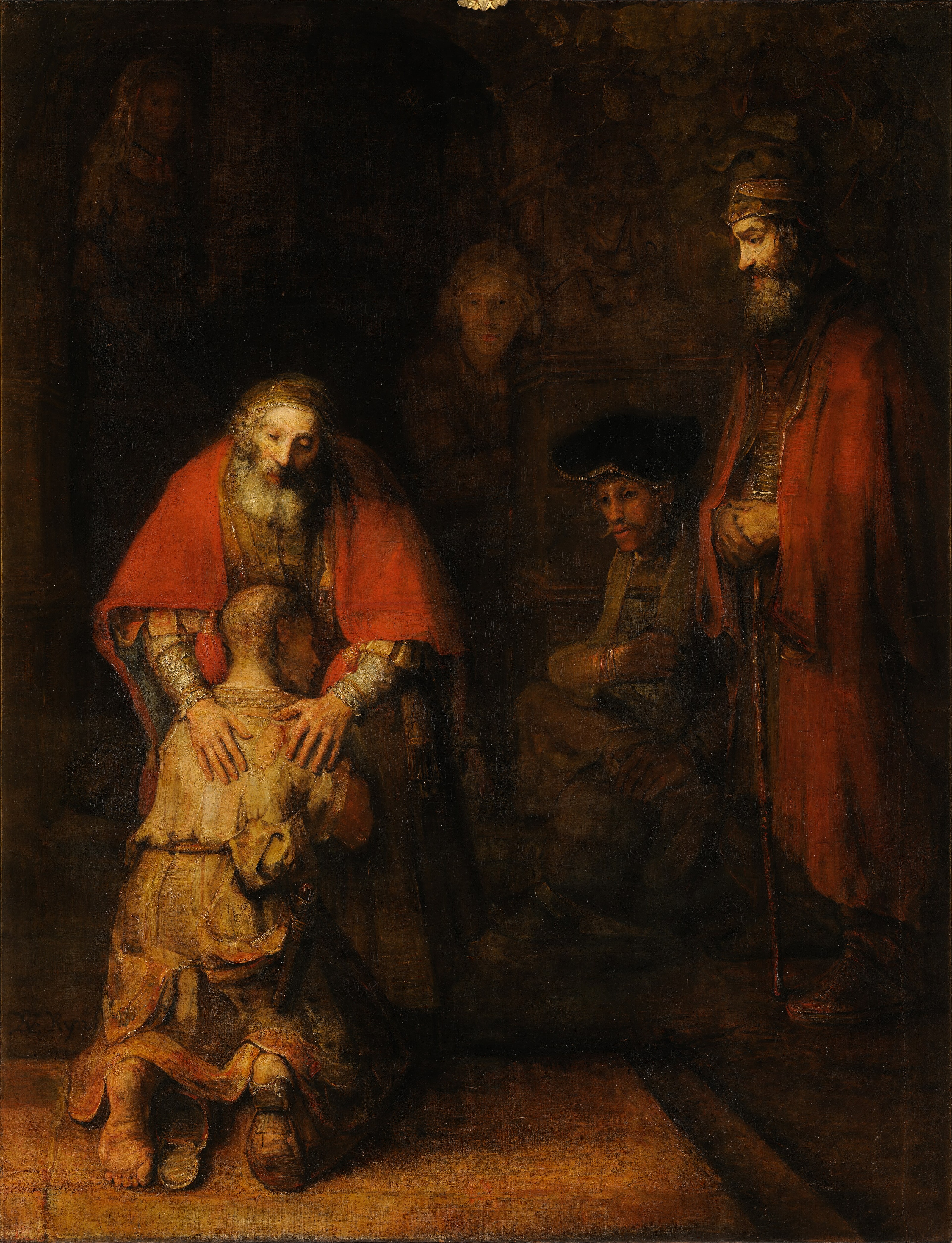 The Return of the Prodigal Son by Rembrandt, about 1668, State Hermitage Museum, Saint Petersburg. The parable (Luke 15:11-32) is read by every tradition as a picture of the Father's welcome to the one who comes home. Public domain (Wikimedia Commons), resized.

See this page's graph and discover linked topics
In full
The doctrine of perseverance asks whether those who are genuinely regenerate and justified will certainly continue in faith to final salvation. Perseverance of the saints (Reformed; Canons of Dort, Fifth Head; Westminster Confession, chapter 17) holds that they will, because God preserves them through the means he has appointed. Eternal security in its popular Baptist and Free Grace forms holds that a person who has once believed is secure regardless of later belief or conduct. Conditional security (Arminian, Wesleyan, Holiness and most classical Pentecostal bodies) holds that believers are secure while they continue in faith, and that apostasy, a deliberate and final turning from Christ, is possible. Confessional Lutheranism holds that a justified person can lose faith and the Holy Spirit (Augsburg Confession, Article XII). Roman Catholic teaching holds that sanctifying grace is lost by any mortal sin and restored through the sacrament of Penance (Trent, Session 6, chapters 14 and 15). Eastern Orthodox teaching likewise holds that a baptized believer can fall away.
The decisive texts on the security side are John 6:37-40, John 10:27-29, Romans 8:29-39, Philippians 1:6, 1 Peter 1:5 and 1 John 2:19. On the conditional side they are John 15:6, Romans 11:22, 1 Corinthians 9:27, Galatians 5:4, Colossians 1:23, Hebrews 3:12-14, 6:4-6 and 10:26-29, and 2 Peter 2:20-22. Each side has a reading of the other's texts. The debate is distinct from the question of present assurance, treated at Assurance of Salvation.
Three things the debate is not about
- Whether believers still sin. All sides agree they do (1 John 1:8 to 2:1), and that a believer who sins can confess and be forgiven (1 John 1:9).
- Whether a believer can drift and come back. All sides recognize backsliding and restoration. Peter denied Jesus, and Jesus had prayed "that thy faith fail not" (Luke 22:32, ASV); Peter was restored (John 21:15-19).
- Whether outside forces can defeat God. All sides affirm Romans 8:38-39 and John 10:28-29. The disputed case is narrower: a believer who himself finally renounces Christ.
The positions
Perseverance of the saints (Reformed)
The truly regenerate "can neither totally nor finally fall away from the state of grace, but shall certainly persevere therein to the end" (Westminster Confession 17.1). The ground is not the believer's strength but God's unchangeable election, Christ's intercession, and the Spirit who remains in them (17.2). The Canons of Dort (Fifth Head) add that believers can fall into serious sin and grieve the Spirit, yet God does not let them fall away wholly or finally, and renews them to repentance.
This is not the claim that conduct does not matter. Reformed theology says the elect are kept through faith, not apart from it. A person who finally abandons Christ shows that his faith was never saving faith. The patristic root is Augustine, who taught in On Rebuke and Grace that some who believe, are baptized and live rightly for a time do not persevere, read 1 John 2:19 of them ("they were not of us"), and called perseverance to the end a distinct gift (On the Gift of Perseverance). See Calvinism and Canons of Dort.
Eternal security and the Free Grace view
Popular "once saved, always saved" teaching, widespread in Baptist and independent evangelical churches, holds that a person who has truly trusted Christ cannot be lost. Many who use the phrase mean what the Reformed mean by perseverance. The Free Grace position goes further. Zane Hodges argued that saving faith is trust in Christ's promise of eternal life, that the one who has believed has that life permanently, and that the warning passages threaten loss of reward and divine discipline, not loss of salvation. Charles Stanley's Eternal Security: Can You Be Sure? (1990) includes a chapter titled "For Those Who Stop Believing," arguing that even such a person remains secure. Critics in both the Reformed and Arminian camps reject this: the Reformed because it detaches salvation from persevering faith, the Arminian because it ignores the warnings. See Lordship Salvation.
Conditional security (Arminian, Wesleyan, Pentecostal)
Jacobus Arminius himself was cautious. In his Declaration of Sentiments (1608) he said he had never taught that a true believer can totally or finally fall away, while admitting that some passages seemed to him to point that way. The Remonstrance of 1610 left the question open (Article 5). Later Arminian and Wesleyan theology affirmed the possibility of apostasy.
The view holds that believers are kept by the power of God "through faith" (1 Peter 1:5), that the faith is the believer's own response enabled by grace, and that a believer can finally abandon it. Wesleyan theology has generally allowed that such a person may repent and return. Reformed Arminians in the Free Will Baptist tradition, such as Robert Picirilli (Hold Fast), hold that apostasy comes only through unbelief and, on their reading of Hebrews 6:4-6, cannot be undone. See Arminianism.
Classical Pentecostal teaching
Classical Pentecostalism, which grew from the Wesleyan-Holiness stream, holds conditional security. The Assemblies of God position paper The Assurance of Salvation (2017) is a clear statement:
- The General Council "disapproves of the unconditional security position which holds that it is impossible for a person once saved to be lost."
- At regeneration the Holy Spirit brings assurance of forgiveness (Romans 8:16), and believers who confess their sins need never doubt their salvation.
- Believers "are not in a revolving door, moving in and out of the grace of God," and Romans 8:38-39 holds.
- Continued, unrepented sin "will finally destroy faith," and salvation "may be forfeited or abandoned by willfully turning away from Christ." The paper cites Luke 8:13, Hebrews 6:4-6 and 2 Peter 2:20-21.
- The church should never conclude too soon that a struggling believer is beyond hope: "If the father did not give up on the lost son (Luke 15:11-31), neither should the Church."
The position is not that a believer loses salvation with each sin. It is that a believer who keeps resisting the Spirit can come to the point of turning from Christ altogether.
Lutheran
Confessional Lutheranism is monergist about conversion yet holds that a justified person can fall away. The Augsburg Confession (1530), Article XII, condemns those "who deny that those once justified can lose the Holy Ghost." The believer who falls can be restored through repentance and the promise of the gospel.
Roman Catholic
The Council of Trent taught that the grace of justification is lost "not only by infidelity whereby even faith itself is lost," but by any mortal sin, even where faith remains (Session 6, chapter 15), and that one who falls "may be again justified" through the sacrament of Penance (chapter 14). Trent also condemned the claim that "a man once justified can sin no more, nor lose grace, and that therefore he that falls and sins was never truly justified" (canon 23). A mortal sin requires grave matter, full knowledge and deliberate consent (Catechism of the Catholic Church 1857). See Council of Trent.
Eastern Orthodox
Eastern Orthodox teaching treats salvation as a lifelong participation in God (see Theosis) and holds that a baptized believer can fall away, while the door of repentance remains open throughout life.
The positions side by side
| Position | Can a true believer finally fall away? | How is a fallen believer restored? | Main texts |
|---|---|---|---|
| Reformed perseverance | No; God keeps the elect through faith | God renews the elect to repentance | John 10; Romans 8; Philippians 1:6 |
| Free Grace eternal security | No, even if belief later ceases | Discipline and loss of reward, not loss of life | John 3:16; John 5:24; John 10 |
| Wesleyan conditional security | Yes, by final unbelief | Repentance and renewed faith | Hebrews 3, 6, 10; John 15 |
| Reformed Arminian | Yes, by unbelief only | Apostasy is irremediable (Hebrews 6:4-6) | Hebrews 6, 10 |
| Classical Pentecostal | Yes, by willfully turning from Christ | Repentance; the church does not give up on the backslider | Luke 8:13; Hebrews 6, 10 |
| Lutheran | Yes | Repentance and the gospel promise | Augsburg Confession XII |
| Roman Catholic | Yes, by any mortal sin | Sacrament of Penance | Trent, Session 6 |
| Eastern Orthodox | Yes | Repentance within the life of the church | The warning texts read with the whole tradition |
The key texts, read both ways
Texts cited for security
- John 10:27-29. "They shall never perish, and no one shall snatch them out of my hand" (John 10:28, ASV). The Greek uses the emphatic double negative ou mē with "perish," the strongest form of denial in the language. Security reading: Christ's promise is absolute. Conditional reading: the sheep are described as those who "hear my voice" and "follow me" (10:27), present-tense marks of continuing discipleship, and the promise guards against being snatched by another, not against a sheep's own departure.
- Romans 8:38-39. Nothing "shall be able to separate us from the love of God, which is in Christ Jesus our Lord" (Romans 8:39, ASV), including "any other creature," that is, any other created thing. Security reading: the believer is himself a created thing, so the list leaves nothing out. Conditional reading: the list names outside powers ranged against the believer, and Paul elsewhere warns believers against falling (Romans 11:22).
- Philippians 1:6. "He who began a good work in you will perfect it until the day of Jesus Christ" (ASV). Security reading: God finishes what he starts. Conditional reading: Paul is expressing confidence about a congregation whose fruit he has seen (1:5, 7), and the same letter tells them to "work out your own salvation with fear and trembling" (2:12).
- 1 John 2:19. "They went out from us, but they were not of us; for if they had been of us, they would have continued with us" (ASV). Security reading: final departure reveals that a person was never truly a member. Conditional reading: John is describing a specific group of false teachers (the antichrists of 2:18), not making a rule about every person who ever leaves.
- 1 Peter 1:5. Believers are those "who by the power of God are guarded through faith unto a salvation ready to be revealed" (ASV). Both sides claim it: the security side stresses "the power of God," the conditional side "through faith."
Texts cited for the possibility of apostasy
-
Hebrews 6:4-6. Those "once enlightened," who "tasted of the heavenly gift, and were made partakers of the Holy Spirit," and "then fell away" cannot be renewed to repentance (ASV). The Greek describes the falling away with a participle in the same series as the other participles; the KJV's "If they shall fall away" renders it as a condition, while the ASV renders it as a plain description. Five readings are held:
- Genuine believers who lose salvation, the Wesleyan and Pentecostal reading, with or without the possibility of return.
- Genuine believers whose apostasy is irremediable, the Reformed Arminian reading (Picirilli).
- Professing believers who were never regenerate, people who experienced the Spirit's work in the church without saving faith; argued in detail by Wayne Grudem in The Grace of God, the Bondage of the Will (1995).
- The means view: the warnings are the means God uses to keep the elect persevering, so they are real warnings that the elect heed; Thomas Schreiner and Ardel Caneday, The Race Set Before Us (2001).
- Loss of reward or discipline, the Free Grace reading.
The writer immediately adds, "But, beloved, we are persuaded better things of you, and things that accompany salvation" (Hebrews 6:9, ASV).
-
Hebrews 10:26-29. "If we sin wilfully after that we have received the knowledge of the truth, there remaineth no more a sacrifice for sins" (Hebrews 10:26, ASV). The participle "sin" is present tense, describing a continuing course, and verse 29 defines the sin as treading underfoot the Son of God and counting his blood unholy. The text is about a settled repudiation of Christ, not the ordinary sins of a struggling believer.
-
Hebrews 3:12. "Take heed, brethren, lest haply there shall be in any one of you an evil heart of unbelief, in falling away from the living God" (ASV). The verb is aphistēmi, to depart or withdraw, the root of the English word apostasy. The writer addresses "brethren," and names unbelief as the route.
-
John 15:6. "If a man abide not in me, he is cast forth as a branch, and is withered" (ASV). Conditional reading: branches truly in the vine can be cut off. Security reading: the image distinguishes fruit-bearing branches from those attached only outwardly.
-
Romans 11:22. God's goodness is "toward thee... if thou continue in his goodness: otherwise thou also shalt be cut off" (ASV). Security reading: Paul addresses Gentiles as a people group, not individual believers.
-
Galatians 5:4. "Ye are severed from Christ, ye who would be justified by the law; ye are fallen away from grace" (ASV). The context is a specific error: seeking justification by works of the law. Conditional reading: believers can abandon grace for another gospel. Security reading: Paul means they have left the principle of grace as a way of righteousness, not that their salvation is lost.
-
2 Peter 2:20-22. Those who "escaped the defilements of the world through the knowledge of the Lord and Saviour Jesus Christ" and are "again entangled therein" end worse than before; Peter applies the proverb of the dog returning to its vomit. Security reading: a dog and a sow never changed their nature; these were false teachers who never were sheep.
-
Colossians 1:22-23. Christ will present them holy "if so be that ye continue in the faith, grounded and stedfast" (ASV). Both sides agree continuance is required. They differ on whether the condition is something the elect will certainly meet or something a believer may fail to meet.
What can draw a believer away, and what cannot
What Scripture names as dangers
- Unbelief. "An evil heart of unbelief" (Hebrews 3:12). On every view, faith is the hinge.
- Deliberate, continuing sin. Sin persisted in hardens the heart (Hebrews 3:13) and, in the language of the Assemblies of God paper, will "finally destroy faith" if not repented of. Hebrews 10:26-29 marks the end of that road.
- False teaching. "Some shall fall away from the faith, giving heed to seducing spirits and doctrines of demons" (1 Timothy 4:1, ASV). Galatians shows the danger of a works-based gospel; 2 Peter 2, the danger of teachers who promise freedom while living in corruption.
- Persecution and testing. The rocky soil "for a while believe, and in time of temptation fall away" (Luke 8:13, ASV); in Matthew's account, "when tribulation or persecution ariseth because of the word, straightway he stumbleth" (Matthew 13:21, ASV).
- The cares of life. The thorny soil are those "choked with cares and riches and pleasures of this life" who "bring no fruit to perfection" (Luke 8:14, ASV).
- Drift and neglect. "We ought to give the more earnest heed to the things that were heard, lest haply we drift away from them" (Hebrews 2:1, ASV). Hebrews 10:24-25 sets meeting together as the guard against it.
What Scripture says cannot
"Who shall separate us from the love of Christ? shall tribulation, or anguish, or persecution, or famine, or nakedness, or peril, or sword?" (Romans 8:35, ASV). Paul's answer runs through death, life, angels, principalities, things present and to come, powers, height, depth "nor any other creature" (8:38-39). No outside power, no circumstance and no spiritual enemy can take a believer from God. Every tradition on this page affirms that much.
Peter and Judas
Both disciples failed Jesus on the same night. Peter wept, turned back and was restored (Luke 22:62; John 21:15-19). Judas despaired and died (Matthew 27:3-5). The security side notes that John calls Judas a thief long before the betrayal (John 12:6) and that Jesus knew from the beginning who would betray him (John 6:64), and concludes Judas never truly believed. The conditional side notes that Judas was chosen and sent out with the Twelve (Matthew 10:1-4) and is called "the son of perdition" in a prayer about those the Father gave the Son (John 17:12). The pastoral contrast is shared by all: the difference between the two men was not the size of the sin but what each did next.
Where the traditions agree
- The warnings are real. No major tradition treats them as empty. They are written to be heeded.
- God's keeping power is real. No major tradition denies that God guards his people.
- Persevering faith marks the saved. The Reformed say it is the evidence of election; the Arminian says it is the condition of final salvation. Both say that the one who endures to the end will be saved (Matthew 24:13).
- The counsel to the one walking away is the same. The Calvinist says, "If you leave and stay away, you show you were never his." The Arminian says, "If you leave and stay away, you will lose what you had." Both say: come back now. The Father in the parable runs to meet the son who comes home (Luke 15:20).
- No one should presume, and no one should despair. Presumption ignores the warnings; despair ignores the promises.
Tensions
- Reformed Arminians and apostasy. The Arminianism page and the comparison table on Calvinism vs Arminianism vs Molinism vs Open Theism describe Reformed Arminians (Picirilli, Forlines) as functionally affirming security or holding perseverance of the saints. Picirilli's Hold Fast argues the opposite: that Hebrews 6:4-6 teaches a real, irremediable apostasy through unbelief. The statement on those pages needs review against the primary sources.
- "Once saved, always saved" means two different things. For many who use the phrase it means Reformed perseverance (the saved will persevere); for Free Grace writers it means security even if faith ceases. Arguments for or against the slogan often talk past each other because of this.
- Restoration after apostasy. Wesleyan and Pentecostal teaching generally holds that a backslider can return; the Reformed Arminian reading of Hebrews 6:4-6 holds that true apostasy cannot be undone. Both are conditional-security positions, and they disagree here.
Scholarship
Published academic works this page draws on, each matched to a publisher, index or library catalog record.
- Thomas R. Schreiner, The race set before us (2001). Open Library
See also
- Assurance of Salvation, how a believer can know he is saved now
- Calvinism, the Reformed system that includes perseverance of the saints
- Arminianism, the system that includes conditional perseverance
- Calvinism vs Arminianism vs Molinism vs Open Theism, the wider comparison
- Canons of Dort, the Fifth Head on perseverance
- Council of Trent, loss of grace by mortal sin and restoration by Penance
- Lordship Salvation, the Free Grace debate over faith and fruit
- Witness of the Holy Spirit, the inward ground of assurance
- Repentance, the way back for the one who has drifted
- Peter the Apostle, the disciple who fell and was restored
Common questions this page answers
Q: Can a Christian lose their salvation?
Christians disagree. Reformed theology teaches that true believers will persevere, so one who finally leaves was never truly saved (1 John 2:19). Arminian, Wesleyan, most Pentecostal, Lutheran, Catholic and Orthodox teaching holds that a believer can finally fall away (Hebrews 6:4-6; 10:26-29), though they differ on how and on the way back.
Q: Is "once saved, always saved" biblical?
It depends on what the phrase means. If it means that God keeps those who truly belong to him through persevering faith, it matches the Reformed doctrine of perseverance (John 10:28-29; Philippians 1:6). If it means a person is secure even after abandoning faith, most traditions reject it because of the New Testament warnings.
Q: What does Hebrews 6:4-6 mean?
It warns that those who were enlightened, tasted the heavenly gift and shared in the Holy Spirit, and then fell away, cannot be renewed to repentance. It is read as describing believers who lose salvation, believers whose apostasy is final, professing believers who were never regenerate, or warnings God uses to keep the elect. The writer adds that he is confident of better things for his readers (6:9).
Q: What can pull you away from God after you are saved?
Scripture names unbelief, deliberate continuing sin, false teaching, persecution, the cares and pleasures of life, and drifting through neglect. It also says no outside power, circumstance or spiritual enemy can separate a believer from God's love (Romans 8:35-39).
Q: What do the Assemblies of God believe about eternal security?
The Assemblies of God rejects unconditional security. Its 2017 position paper teaches that the Holy Spirit gives believers assurance, that they are not moving in and out of grace, and that salvation may be forfeited or abandoned by willfully turning away from Christ.
Q: What is the difference between backsliding and apostasy?
Backsliding is a believer's drift into sin or coldness from which he can return, as Peter did after his denial. Apostasy is a deliberate and final renunciation of Christ. Traditions differ on whether a true believer can commit apostasy, but all call the backslider to repent and come home.
Q: If nothing can separate us from God's love, how can anyone fall away?
The security view answers that no one truly in Christ will fall away, because the believer is included in "any other creature" (Romans 8:39). The conditional view answers that Romans 8 lists outside powers, and that the warnings show a believer can himself turn from Christ in unbelief.