Person
Omri
Omri king of Israel, King Omri, Humri, Omri of Israel, House of Omri, Bit-HumriIntro
Omri was an army commander who became king of the northern kingdom of Israel after a short civil war, and he founded a dynasty that ruled for about forty years. He built Samaria as his new capital. The Bible gives him only a few verses, but his enemies remembered him for much longer. The king of Moab named him on the Mesha Stele, and for more than a century Assyrian scribes called the whole kingdom of Israel "the house of Omri."
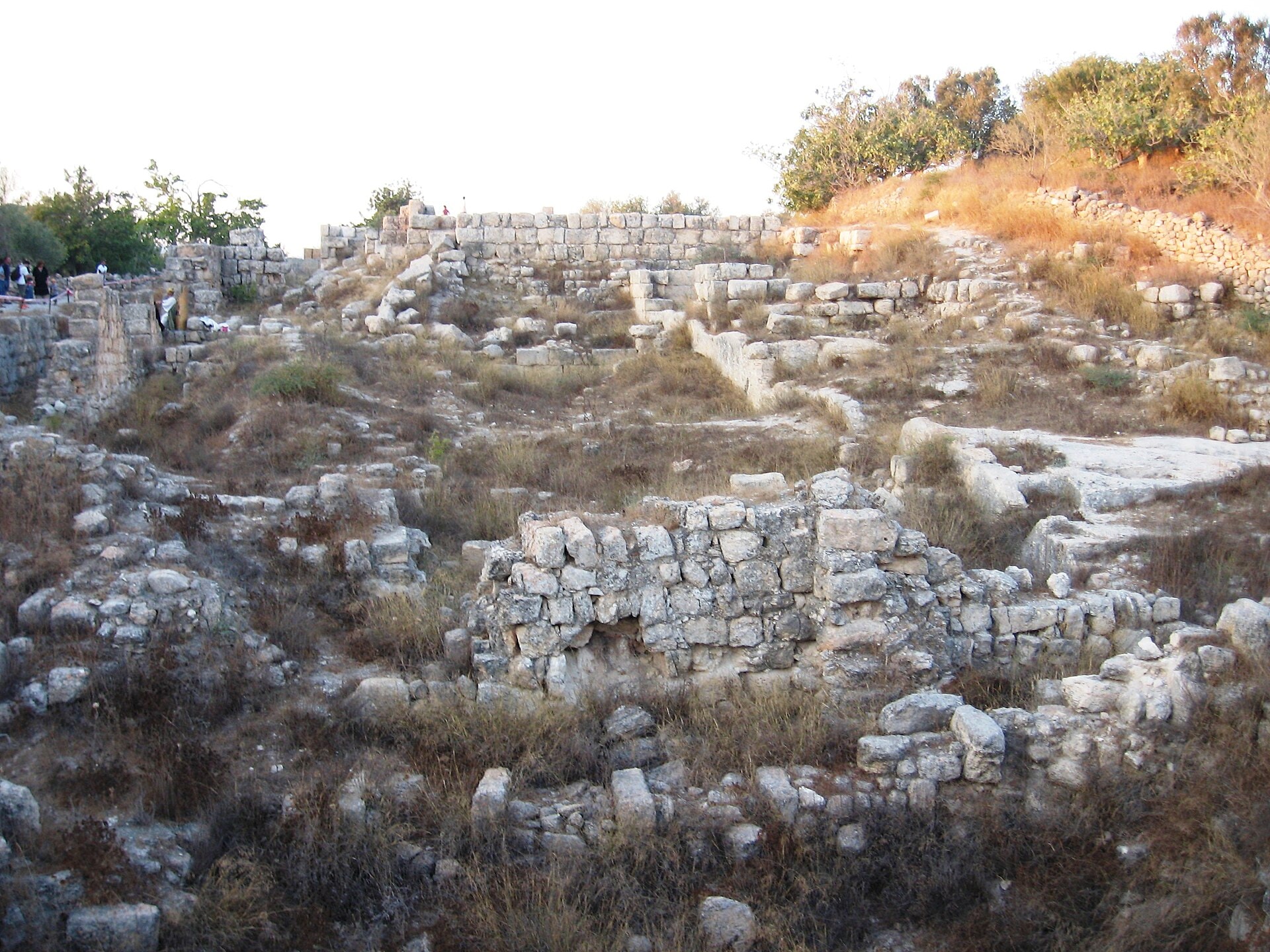
The Israelite royal acropolis at Samaria (modern Sebastia), the city Omri founded and where he was buried. Photo: Daniel Ventura, CC BY-SA 2.5, via Wikimedia Commons, resized.

The 30-second version:
Omri seized the throne of Israel around 884 BC, moved the capital to a new city he built at Samaria, and founded the dynasty of Ahab. Scripture judges him harshly in six verses. Outside the Bible he is one of the best-attested kings of Israel: the Mesha Stele names him as the king who oppressed Moab, and Assyrian records call Israel "the land of Omri" long after his family was gone.
See this page's graph and discover linked topics
In full
Omri (Hebrew ʿOmri; Akkadian Ḫumrî) was "the captain of the host" of Israel when Zimri murdered King Elah at Tirzah (1 Kings 16:8-16). The army in the field proclaimed Omri king; he besieged Tirzah, Zimri died in the burning palace, and a four-year struggle with a rival claimant, Tibni son of Ginath, ended with Tibni's death (1 Kings 16:21-22). Lawrence Mykytiuk dates his reign to 884-873 BC; other chronologies place it a year or so earlier.
His lasting acts were political. He bought the hill of Samaria and built a fortified capital there (1 Kings 16:24), a site excavated by Harvard (1908-1910) and by a joint British-led expedition (1931-1935), which exposed a royal acropolis with fine ashlar masonry that most excavators assign to the Omride kings. He brought Moab under tribute, and his son's marriage to Jezebel, daughter of the king of Sidon, tied Israel to Phoenicia. The narrator of Kings sums up his reign religiously: he "dealt wickedly above all that were before him" (1 Kings 16:25, ASV).
The contrast between the Bible's brevity and the external record is itself telling. Kings refers readers to "the book of the chronicles of the kings of Israel" for "his might that he showed" (1 Kings 16:27, ASV). The monuments of Moab and Assyria confirm that his might was real and long remembered.
In the Bible
- 1 Kings 16:15-28. Omri is acclaimed king in the camp (1 Kings 16:16), takes Tirzah, defeats Tibni, reigns twelve years (six in Tirzah), buys the hill of Samaria from Shemer for two talents of silver, and dies there. "So Omri slept with his fathers, and was buried in Samaria; and Ahab his son reigned in his stead" (1 Kings 16:28, ASV).
- The dynasty's name. Later kings are dated or identified through him: Ahab is "the son of Omri" (1 Kings 16:29-30), and Athaliah, mother of Ahaziah of Judah, is called "the daughter of Omri" (2 Kings 8:26; 2 Chronicles 22:2), meaning his descendant.
- Micah 6:16. Two centuries later the prophet Micah rebukes Judah because "the statutes of Omri are kept, and all the works of the house of Ahab" (ASV). Omri's name had become shorthand for a whole system of rule and worship.
Family and lineage
- Origins. Scripture gives no father and no tribe. Unlike most kings of Israel, he is introduced only by his office, "the captain of the host."
- Son and successor. Ahab, who married Jezebel daughter of Ethbaal of Sidon.
- Grandchildren. Ahaziah of Israel and Joram of Israel, who reigned after Ahab; and Athaliah, who married Jehoram of Judah and later seized Judah's throne (2 Kings 11).
- Great-grandson. Ahaziah of Judah, son of Athaliah, through whom Omri's blood entered the line of David.
- End of the line. Jehu wiped out the house of Ahab in about 841 BC (2 Kings 9-10).
Historical and archaeological evidence
- The Mesha Stele (Moabite Stone). Basalt victory monument of Mesha king of Moab, about 840 BC, found at Dhiban in Jordan in 1868, now in the Louvre, Paris. Mesha writes that Omri was king of Israel and oppressed Moab many days because Chemosh was angry with his land, that Omri had taken the land of Medeba, and that his son after him intended to do the same. Grade: direct and contemporary within a generation. Lawrence Mykytiuk lists Omri as confirmed, citing lines 4-5 and 7.
- Assyrian records. The Assyrians named Israel Bīt-Ḫumri, "the house of Omri," and called later Israelite kings "son of Omri," meaning a ruler of Omri's land. Shalmaneser III calls Jehu, who destroyed Omri's dynasty, "Jehu son of Omri" (Black Obelisk and other inscriptions, about 841 BC), and Tiglath-pileser III and Sargon II still use "land of Omri" in the late 8th century. A dynastic founder whose name outlived his dynasty by a century is good evidence of a powerful founder. Grade: indirect but firm.
- Samaria. Excavations at Sebastia uncovered a royal enclosure and palace with ashlar masonry usually dated to the Omride period, consistent with 1 Kings 16:24 that Samaria was a new royal foundation. Grade: archaeological context; the building does not carry his name.
Scholarly consensus
Omri's historicity is not disputed. He is one of the kings of Israel most securely anchored in non-biblical texts, and scholars across the spectrum, from Kenneth Kitchen to Israel Finkelstein, treat the Omride kingdom as the first northern Israelite state that left a large archaeological footprint. Finkelstein, in particular, argues that the Omrides built much of what earlier archaeologists credited to Solomon; that is a debate about the 10th century, and it assumes rather than questions Omri's reality.
Two points remain debated. First, the Mesha Stele says Israel occupied Medeba for "forty years," during Omri's days and half the days of his son, while 2 Kings 3:5 places Moab's revolt after Ahab's death; the usual answers are that "son" can mean grandson or successor and that "forty years" is a round figure for a generation. Second, the exact dates of his reign vary by a year or two among chronologies.
Theological significance
- Political success does not equal approval. Kings reports that Omri founded a capital and a dynasty and still judges him by one standard: whether he led Israel to worship the LORD. The writer refers readers elsewhere for his military record and spends his words on Omri's sin.
- A dynasty under judgment. Omri's house produced Ahab and Jezebel, the Baal crisis that Elijah confronted, and the bloody end under Jehu that fulfilled Elijah's word.
- The promise survives a dangerous marriage. Through Athaliah, Omri's descendant nearly destroyed the line of David (2 Kings 11:1). One infant, Joash, was hidden and survived, and the Davidic promise continued.
Church Fathers
No sustained patristic commentary on Omri himself has been located with a verifiable locator.
See also
- People of the Bible, every attested person by the book that first names them
- Ahab, his son and successor
- Mesha Stele, the Moabite king's monument that names Omri
- Mesha, the king of Moab who rebelled against Omri's house
- Jehu, the usurper whom Assyria still called "son of Omri"
- Biblical Figures Confirmed by Archaeology, Omri among the 53 Hebrew Bible people confirmed in inscriptions
- 1 Kings, where his reign is recorded
Common questions this page answers
Q: Who was King Omri in the Bible?
Omri was the army commander who became king of Israel around 884 BC, after Zimri killed King Elah. He built Samaria as Israel's capital and founded the dynasty of his son Ahab. His reign is told in 1 Kings 16:15-28.
Q: Is there archaeological evidence for King Omri?
Yes. The Mesha Stele, set up by the king of Moab about 840 BC, names Omri as the king of Israel who oppressed Moab. Assyrian kings also called Israel "the house of Omri" and its kings "son of Omri" for more than a century.
Q: Why did the Assyrians call Jehu "son of Omri"?
The Assyrians named the kingdom of Israel after Omri, its most prominent founder, as Bīt-Ḫumri, "the house of Omri." "Son of Omri" meant a king of Omri's land. Jehu was not Omri's descendant; he had destroyed Omri's dynasty.
Q: What does Micah mean by "the statutes of Omri"?
In Micah 6:16 the phrase stands for the religious and social practices of the Omride dynasty, especially the Baal worship and injustice associated with Ahab's house. Micah warns Judah that copying them will bring the same ruin.