Person
Nergal-sharezer
Nergal-sharezer the Samgar, Nergal-sharezer the Rab-mag, Nergal-sharri-usur, Nergal-sharru-usur, Neriglissar, NeriglissarosIntro
Nergal-sharezer was a senior Babylonian commander at the fall of Jerusalem in 587/586 BC. Jeremiah lists him first among the officers who sat in the city's Middle Gate after the wall was breached, and again among the officials who released Jeremiah from the court of the guard and handed him over to Gedaliah.
His name is Babylonian, Nergal-sharru-usur, "Nergal, protect the king." A clay prism listing Nebuchadnezzar's court officials names a Nergal-sharru-usur with the title simmagir, a high provincial office, which matches the Hebrew "Samgar" in Jeremiah 39:3. Many historians also identify him with Neriglissar, who married Nebuchadnezzar's daughter and became king of Babylon in 560 BC.
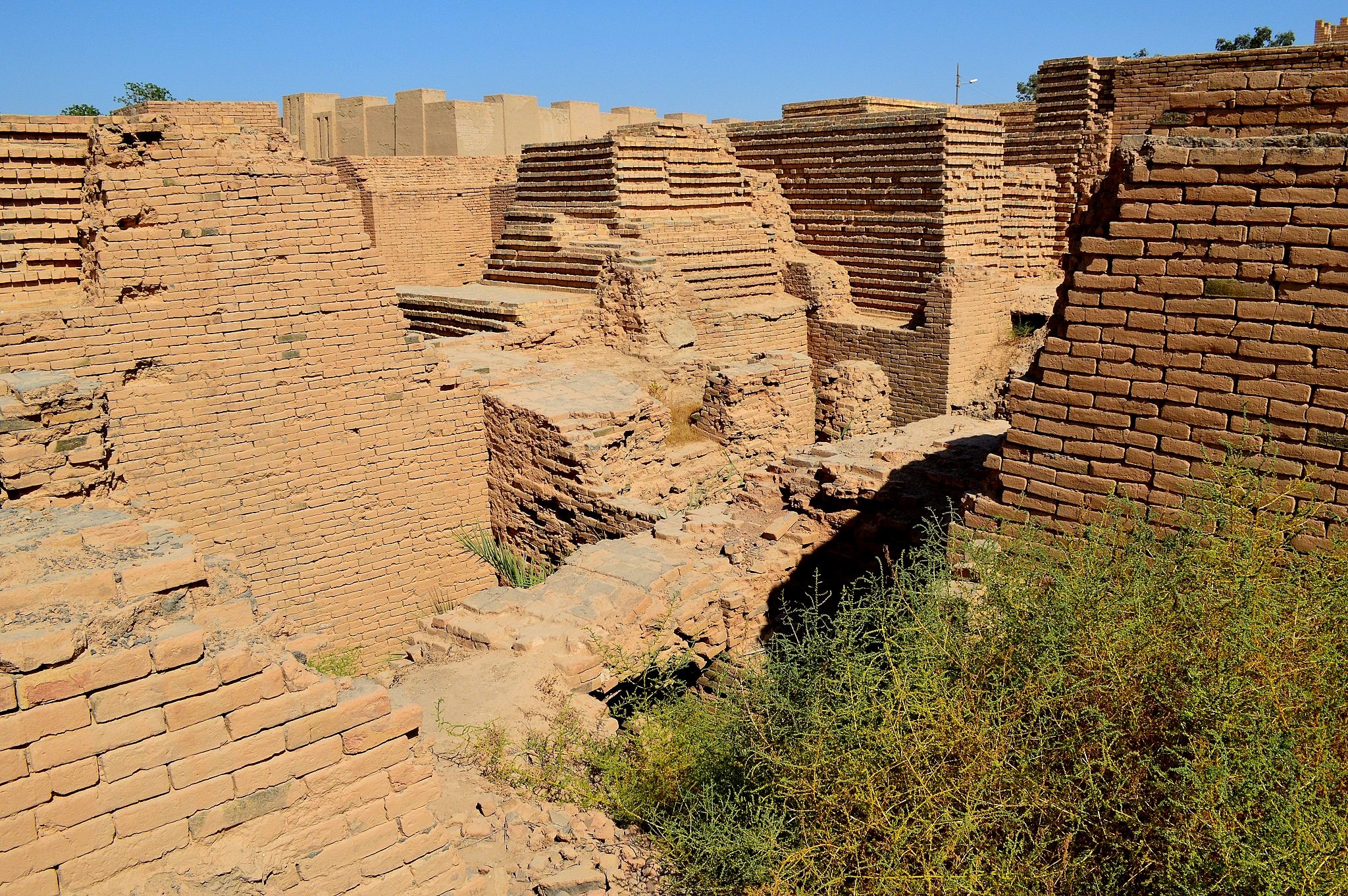
Mud-brick ruins of Nebuchadnezzar II's Babylon, near Hillah, Iraq, the capital whose court Nergal-sharezer served and whose throne Neriglissar later seized. Photo: Osama Shukir Muhammed Amin FRCP(Glasg), CC BY-SA 4.0, via Wikimedia Commons, resized.

The 30-second version:
Nergal-sharezer was a Babylonian commander who sat in Jerusalem's gate when it fell and later helped free Jeremiah (Jeremiah 39:3, 13). Nebuchadnezzar's court prism in Istanbul names Nergal-sharru-usur the simmagir, the same name and title Jeremiah gives as "Nergal-sharezer the Samgar." Lawrence Mykytiuk added him to his list of confirmed Bible people in 2017. Many historians identify him with Neriglissar, Nebuchadnezzar's son-in-law, who seized the throne in 560 BC.
See this page's graph and discover linked topics
In full
Nergal-sharezer (Hebrew Nērgal Śarʾeṣer) transcribes Babylonian Nergal-šarru-uṣur. Jeremiah 39:3 names the officers who entered Jerusalem; under the modern word division they are Nergal-sharezer the Samgar (Babylonian simmagir), Nebo-sarsekim the Rab-saris, and Nergal-sharezer the Rab-mag. Jeremiah 39:13 names Nergal-sharezer the Rab-mag among those sent with Nebuzaradan to release Jeremiah. Nebuchadnezzar II's prism EŞ 7834 in the Istanbul Archaeology Museums, a building inscription from Babylon that closes with a list of the king's officials (Rocío Da Riva's 2013 edition in Zeitschrift für Assyriologie 103), names Nergal-šarru-uṣur, the simmagir among the high officials of the provinces. Frauke Weiershäuser describes the simmagir as governor of a large province east of the Tigris. Mykytiuk ("Archaeology Confirms 3 More Bible People," BAR 43:3, 2017) counts this officer as confirmed. The later king Neriglissar (reigned 560-556 BC), who according to Berossus killed his brother-in-law Amel-Marduk (biblical Evil-merodach) and took the throne, is widely identified with him; Michael Jursa treats the officer of Jeremiah 39 as the later king Neriglissar.
In the Bible
- Jeremiah 39:3. "that all the princes of the king of Babylon came in, and sat in the middle gate, to wit, Nergal-sharezer, Samgar-nebo, Sarsechim, Rab-saris, Nergal-sharezer, Rab-mag, with all the rest of the princes of the king of Babylon" (ASV). The name occurs twice.
- Jeremiah 39:13-14. "So Nebuzaradan the captain of the guard sent, and Nebushazban, Rab-saris, and Nergal-sharezer, Rab-mag, and all the chief officers of the king of Babylon; they sent, and took Jeremiah out of the court of the guard, and committed him unto Gedaliah the son of Ahikam, the son of Shaphan" (ASV).
- One man or two. Jeremiah 39:3 either names two officers called Nergal-sharezer, one the Simmagir and one the Rab-mag, or names one man twice with two titles. Both readings are held; the name was common.
Family and lineage
- If identified with Neriglissar: son of a man named Bel-shum-ishkun, according to Neriglissar's own inscriptions; husband of a daughter of Nebuchadnezzar, according to Berossus (who calls Amel-Marduk his wife's brother); father of Labashi-Marduk, the boy-king murdered after a few months in 556 BC.
- Otherwise: nothing is known of the family of the officer of Jeremiah 39.
Historical and archaeological evidence
- Nebuchadnezzar II's prism (EŞ 7834). A clay prism from Babylon, in the Istanbul Archaeology Museums, sometimes called the Hofkalender or court list. After describing building works it lists Nebuchadnezzar's court and provincial officials, including Nergal-šarru-uṣur the simmagir. Rocío Da Riva dates the text to 598 BC at the latest; other scholars have argued for dates in the 590s or later. Edited by Da Riva (2013); older English translation by A. Leo Oppenheim in ANET, pp. 307-308. Grade: very strong; Mykytiuk's confirmed list since 2017.
- Neriglissar's royal inscriptions and documents. As king, Neriglissar left building inscriptions recording work at Babylon and Borsippa, contracts dated by his regnal years, and a Babylonian chronicle (Grayson's Chronicle 6) describing his campaign into Cilicia (Pirindu) in his third year. These securely attest the king; whether he is the officer of Jeremiah 39 is the identification question.
- Berossus in Josephus. Against Apion 1.20 names Neriglissar as the man who conspired against Evilmaraduch, his sister's husband in Berossus' phrasing, killed him, and reigned four years.
Scholarly consensus
- The officer: very strong. The match of name and Babylonian title between Jeremiah 39:3 and the prism, at the right time and in the right court, satisfies Mykytiuk's criteria. Weiershäuser notes that the prism's simmagir is the official mentioned in Jeremiah 39:3.
- The king: probable. That the simmagir later became King Neriglissar is the majority view, held for example by Jursa, but the name Nergal-šarru-uṣur was common and the identification rests on rank and timing rather than an explicit text.
- Which title. Some scholars link the king with the Rab-mag of Jeremiah 39:3 and 39:13 rather than the Simmagir. The prism attests the Simmagir.
Theological significance
- The prophet spared by his conquerors. The same officers who sat in judgment in Jerusalem's gate were sent to take Jeremiah out of custody and place him under Gedaliah's protection (Jeremiah 39:11-14). The narrator sets the fulfillment of Jeremiah's warnings and the protection of the prophet side by side.
- Kings raised and removed. If the officer is Neriglissar, the man who helped execute God's judgment on Jerusalem later took Babylon's throne by murder and reigned only four years, and his son only months, a small instance of the instability that ended the dynasty within a generation of Nebuchadnezzar, as Daniel 4:17 says, God "giveth it to whomsoever he will."
See also
- Nebo-Sarsekim and Nebuzaradan, his fellow officers in Jeremiah 39
- Nebo-Sarsekim Tablet, the second cuneiform match for the officers of Jeremiah 39:3
- Evil-merodach, the king Neriglissar killed
- Nebuchadrezzar, the king he served
- Babylonian Chronicle and the Capture of Jerusalem, Babylon's record of the campaigns
- Biblical Figures Confirmed by Archaeology, Mykytiuk's list
- People of the Bible, every person on the hub, grouped by book of first mention
Common questions this page answers
Q: Who was Nergal-sharezer in the Bible?
He was a Babylonian commander present at the fall of Jerusalem in 587/586 BC. Jeremiah 39:3 lists him among the officers who sat in the Middle Gate, and Jeremiah 39:13 among those who released Jeremiah from custody.
Q: Is there archaeological evidence for Nergal-sharezer?
Yes. A prism of Nebuchadnezzar II in the Istanbul Archaeology Museums lists his officials, including Nergal-sharru-usur the simmagir, matching Jeremiah's "Nergal-sharezer the Samgar." Lawrence Mykytiuk added him to his list of confirmed Bible people in 2017.
Q: Is Nergal-sharezer the same as King Neriglissar?
Probably. Many historians identify the officer with Neriglissar, Nebuchadnezzar's son-in-law, who killed Amel-Marduk (Evil-merodach) and reigned from 560 to 556 BC. The name was common, so the identification is likely rather than certain.
Q: Why is Nergal-sharezer named twice in Jeremiah 39:3?
Either two different officers shared the name, one with the title Simmagir and one with the title Rab-mag, or one man is listed twice with two titles. Scholars hold both views.