Person
Moses the Black
Moses the Ethiopian, Abba Moses, Moses the Robber, Moses Murin, Saint Moses the Black, Moses the Strong, Abba Moses the BlackIntro
Moses the Black was a runaway slave and the leader of a gang of robbers in Egypt who became one of the most loved holy men of the early church. The ancient sources call him an "Ethiopian", a dark-skinned African, and they do not hide his violent past.
After his conversion he lived as a monk in the desert of Scetis, became a priest, and was remembered for his humility: he refused to judge other sinners because he knew how much he had been forgiven. When raiders attacked his monastery he refused to fight back and was killed. His story is one of the clearest pictures in early Christian history of what grace does to a hardened man.
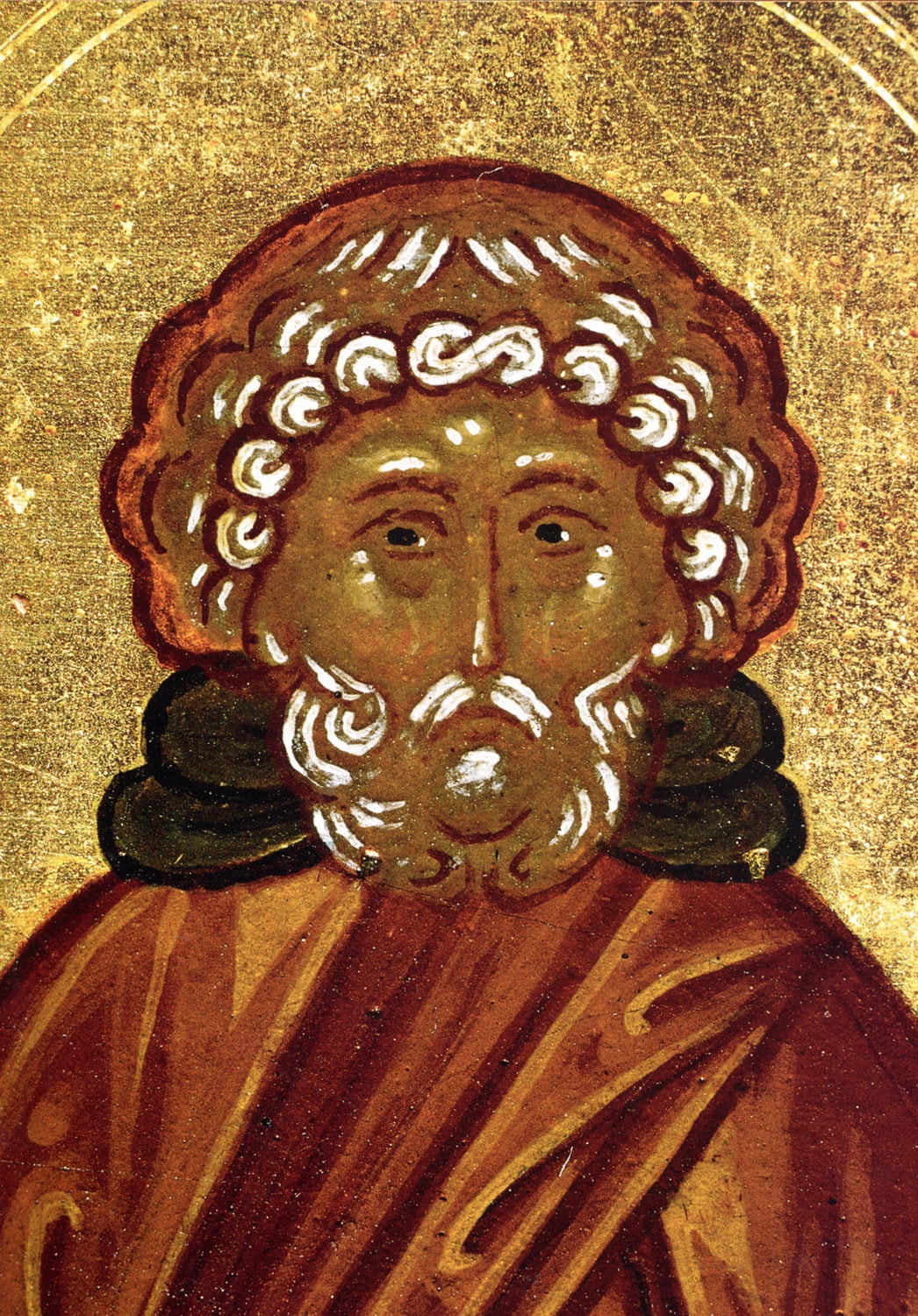 Moses the Black (Moses Murin), detail of a Novgorod icon, late 15th century. Public domain (Wikimedia Commons), resized.

See this page's graph and discover linked topics
In full
Moses, called "the Ethiopian" or "the Black" (c. 330-405), was a monk and presbyter of Scetis (the Wadi Natrun, west of the Nile Delta). The earliest sources are Palladius's Lausiac History (chapter 19, c. 420), the Ecclesiastical History of Sozomen (6.29), and the Greek alphabetical collection of the Apophthegmata Patrum (the "Sayings of the Desert Fathers"), which preserves a series of sayings under his name. According to Palladius he had been the slave of an official, was expelled for theft and suspected murder, and became the leader of a robber band notorious in the Nile valley. Converted and received into the community at Scetis, he was trained by Abba Isidore, struggled for years with violent passions, was ordained presbyter, and gathered disciples. Around 405 he was killed with seven companions in a raid by Mazices (Berber nomads) after refusing to flee or resist. His relics are venerated at the Paromeos (Baramus) Monastery in the Wadi Natrun. He is commemorated on 28 August in the Eastern Orthodox and Catholic calendars and on 24 Paoni (1 July) in the Coptic Orthodox calendar.
Life
- Slave and robber. Palladius describes him as a household slave dismissed by his master for his crimes, who then led a band of robbers. One story has him swimming the flooded Nile with a sword in his teeth to take revenge on a shepherd whose dog had foiled a robbery.
- Conversion. The sources do not give a detailed conversion account. He came to the monks of Scetis, was moved by their life, and asked to stay. He was baptized and put himself under the direction of Abba Isidore.
- Struggle. Palladius records years of battle against the old passions. Isidore told him the struggle would not be won quickly; the morning light comes only slowly. He worked through the nights carrying water to the cells of older monks.
- The robbers in his cell. Four robbers once broke into his cell. Moses overpowered them, tied them up, and carried them to the church to ask the brothers what to do with them, since he was not allowed to harm anyone. The robbers, learning who he was, were converted and became monks.
- Priest and elder. He was ordained presbyter and became a spiritual father to many at Scetis.
- Death (c. 405). Warned that raiders were coming, he told his disciples to escape, but stayed himself, saying he had long waited for the day when Christ's words would be fulfilled in him: "all they that take the sword shall perish with the sword" (Matthew 26:52, KJV). Seven brothers stayed with him and were killed.
Sayings
The alphabetical Apophthegmata preserves the core of his remembered teaching. In paraphrase:
- The leaking jug. Summoned to a council to judge a brother's sin, Moses at first refused, then came carrying a leaking jug of water (in another version a basket of sand). Asked why, he answered that his own sins were running out behind him where he could not see them, and yet he had come to judge another's. The council forgave the brother.
- The test about his color. The clergy, on the archbishop's instruction, insulted him to test him, ordering the "black man" out of the sanctuary. He left saying, in effect, that they were right: he was dark-skinned and unworthy. Afterward the archbishop ordained him, telling him he had become wholly white within. The story reflects the ethnic prejudice of its world as much as Moses's humility; its point in the collection is that he would not be provoked.
- The cell. To a brother seeking a word: go and sit in your cell, and your cell will teach you everything.
- Hiding a brother's fault. Several sayings teach the monk to cover his brother's sin and to mourn his own.
Why he matters
- An African saint of the early church. Moses is explicitly identified as a black African in sources from within a generation of his death, and he is honored in every ancient Christian tradition. See Christianity Is the White Mans Religion Objection Defeater.
- Grace for the worst. A thief and violent gang leader became a teacher of humility and a peacemaker who died refusing violence. The pattern is the gospel's: see 1 Timothy 1:15.
- Nonviolence and martyrdom. His death is a deliberate act of obedience to Christ's word to Peter in Gethsemane.
- A modern patron. In recent decades he has been widely invoked in prison ministry, addiction recovery and racial reconciliation work across Orthodox, Catholic and Protestant circles.
Tensions
- Legend and history. The robber stories in Palladius are vivid and partly legendary in form. The core, a former criminal from the margins of Egyptian society who became a respected elder at Scetis, is consistent across independent sources.
- Reading the color sayings. Some modern readers find the "made white within" language offensive; others note that it reproduces the conventions of its period and that the sayings themselves present the clergy's taunts as a test that Moses passed, not as the collection's view of him. Both observations can be true at once.
See also
- Desert Fathers and Mothers, the movement Moses belonged to
- Antony the Great, the father of the desert monks
- Pachomius, founder of communal monasticism
- Monasticism, the wider history
- Coptic Orthodox Church, which keeps his relics at Wadi Natrun
- Christianity Is the White Mans Religion Objection Defeater, early African saints as evidence
- Africa and Christianity, the master hub
Common questions this page answers
Q: Who was Saint Moses the Black?
A 4th-century African monk of the Egyptian desert of Scetis (c. 330-405), formerly a slave and the leader of a robber gang, who became a priest and spiritual father known for humility and was killed by raiders after refusing to fight.
Q: Was Moses the Black really black?
Yes. The ancient Greek sources call him an "Ethiopian", the usual term for a dark-skinned African, and several of his sayings turn on his skin color. He is one of the clearest examples of a black African saint in early Christianity.
Q: What is the story of Moses the Black and the leaking jug?
Asked to judge a sinning brother, he came carrying a leaking jug of water and explained that his own sins were running out behind him unseen, yet he was being asked to judge someone else. The brothers forgave the offender.
Q: How did Moses the Black die?
Around 405 Berber raiders attacked Scetis. He sent his disciples away but stayed, citing Jesus's words that those who take the sword perish by the sword, and was killed with seven companions who chose to remain.
Q: Where are the relics of Moses the Black?
At the Paromeos (Baramus) Monastery in the Wadi Natrun in Egypt, a monastery of the Coptic Orthodox Church.
Q: What are the sources for Moses the Black's life?
Palladius's Lausiac History (chapter 19), Sozomen's Ecclesiastical History (6.29), and the sayings under his name in the Apophthegmata Patrum, the Sayings of the Desert Fathers.