Concept
Malabsorption and Seizures Healing (Romez 2024)
Malabsorption Healing, TPN Healing Case Report, Romez 2024 Case Report, Boy Healed of Malabsorption and Seizures, GMRI Malabsorption Case Report, Eleven Years on TPN Healed After PrayerIntro
A baby boy was born healthy and breastfed well. At five months old his parents started him on solid food, and everything went wrong. He had terrible stomach pain and stopped developing normally. His body could not absorb food. Doctors put him on total parenteral nutrition, or TPN, which means all his nutrition went straight into his bloodstream through a vein.
Over the years his doctors recorded more problems: low white blood cells, low antibodies, weak muscles that kept wasting away, and at age five, epilepsy. Genetic test after genetic test failed to name the cause, and no one expected him to recover.
Eleven years after his symptoms began, someone prayed for him in person, one time. He felt nothing unusual. But from that moment he could eat by mouth without pain. His medical records afterward show the TPN stopped, the seizures stopped, and the seizure medicine stopped. His blood counts, weight and muscles kept getting better.
In 2024 a research team published his case in a peer-reviewed medical journal indexed in MEDLINE. That is why this entry sits in the top tier. As is normal for a case report, his name is withheld.
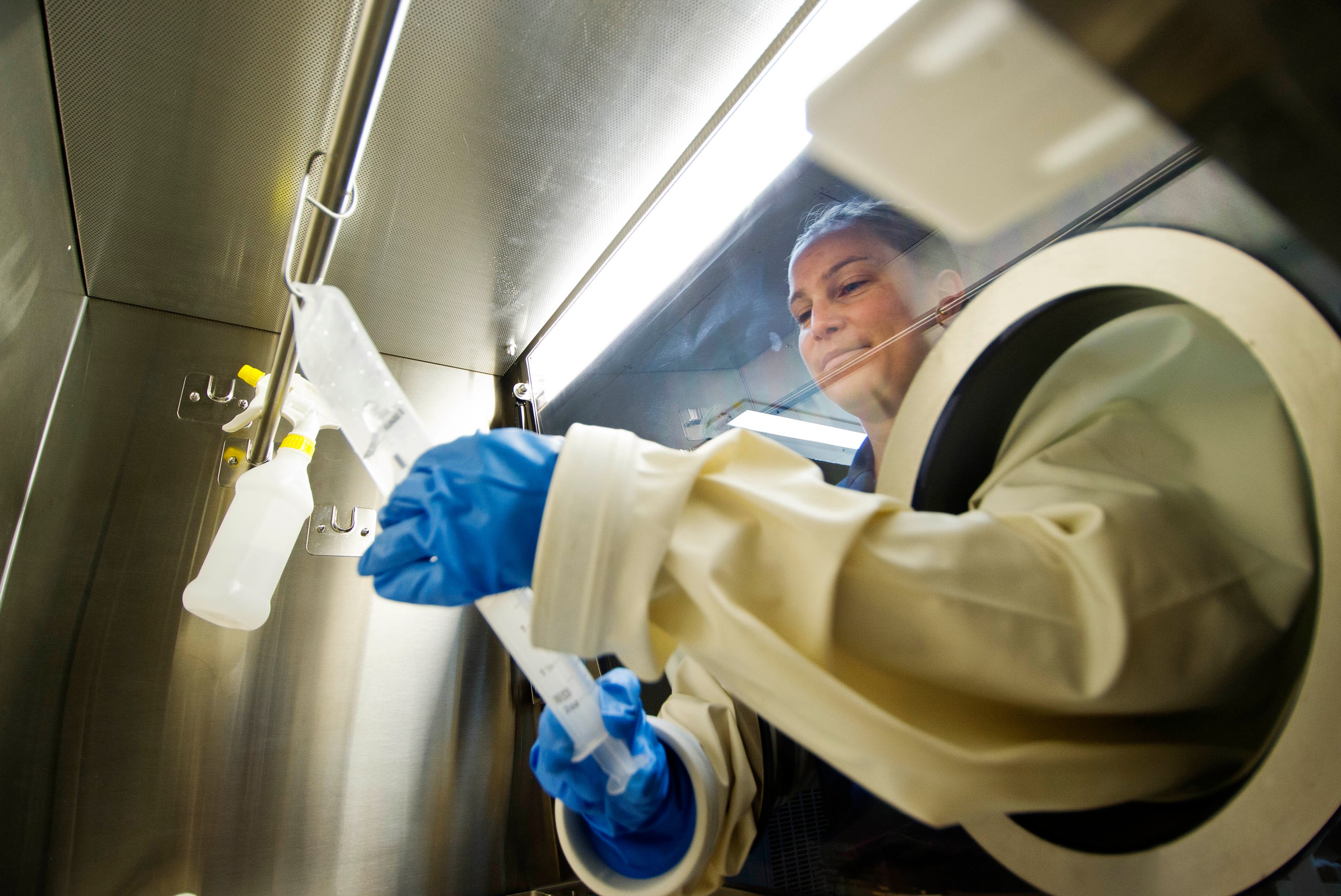
A pharmacist aboard the hospital ship USNS Mercy fills an intravenous bag inside a sterile compounding cabinet, the kind of preparation intravenous feeding depends on. Photo: Mass Communication Specialist 3rd Class Laurie Dexter, U.S. Navy, public domain, via Wikimedia Commons, resized.

The 30-second version: A boy whose gut could not absorb food was fed entirely through a vein for years, and also developed immune deficiencies, muscle wasting and epilepsy that no genetic test could explain. Eleven years after his illness began he received a single session of hands-on prayer. From then on he ate by mouth without pain, and his records show his intravenous feeding, his seizures and his seizure medication all discontinued. The case was published in Advances in Mind-Body Medicine in 2024.
See this page's graph and discover linked topics
In full
Clarissa Romez, Aline Correia da Silva, Chrisandra Corneliussen, Gabrielle Cunha and Joshua W. Brown of the Global Medical Research Institute (GMRI) published the case as "Case Report of 11 Years of Severe Malabsorption, Muscular Atrophy, Seizures, and Immunodeficiency Resolved After Proximal Intercessory Prayer" in Advances in Mind-Body Medicine 38, no. 2 (Spring 2024), pages 40-55, PubMed 38837782, indexed as a case report. Per the published abstract, a male infant born at term and breastfed developed severe abdominal pain and impaired development when solid food was introduced at five months. Neocate, an amino-acid-based formula, and total parenteral nutrition were prescribed; the Neocate was withdrawn because of pain and diarrhea, and he became completely dependent on TPN. The working diagnosis was chronic, idiopathic, severe malabsorption. Neutropenia, hypogammaglobulinemia and hypotonia were recorded, the records document muscular atrophy with progressive deterioration, and frontal lobe epilepsy was detected at age five. Several genetic tests were performed; mitochondriopathies and Shwachman-Diamond syndrome were suggested, no diagnosis was confirmed, and no prognosis of recovery was given. Eleven years after onset he received proximal intercessory prayer, hands-on prayer by someone physically present, in a single session. He tolerated oral feeding immediately and from then on. Post-prayer records show TPN, seizures and seizure medication discontinued, with progressive improvement in the blood disorders, body mass index and muscular symptoms. The case meets the Tier 1 standard as a peer-reviewed report built on medical records. Its limits are stated below: the patient, place, date and the person who prayed are not given in the material available, and the full text is not open access.
Summary
An anonymous boy, dependent on total parenteral nutrition from infancy for chronic idiopathic malabsorption, with neutropenia, hypogammaglobulinemia, progressive muscular atrophy and frontal lobe epilepsy, tolerated food by mouth immediately after a single session of proximal intercessory prayer eleven years after his symptoms began. His later medical records show TPN, seizures and seizure medication discontinued and steady improvement in his blood counts, weight and muscles. The case was investigated by the Global Medical Research Institute and published in the peer-reviewed, MEDLINE-indexed journal Advances in Mind-Body Medicine in 2024.
The event
A healthy start. The abstract records that he was born at term, breastfed, and had appeared healthy.
Five months old. With the introduction of solid food at five months, he developed severe abdominal pain and his development stalled. His doctors prescribed Neocate, an elemental formula used when a child cannot tolerate ordinary proteins, together with total parenteral nutrition. The Neocate was stopped because it caused pain and diarrhea. In the abstract's words, "the patient became completely dependent on TPN." The conclusion reached was "chronic, idiopathic, severe malabsorption," idiopathic meaning that no cause was found.
A widening illness. Over the following years the records show neutropenia, a shortage of the white blood cells that fight bacterial infection; hypogammaglobulinemia, low levels of antibodies; and hypotonia, low muscle tone. The abstract says the "Medical records document atrophy and progressive deterioration of muscular symptoms." At five he was found to have frontal lobe epilepsy.
No diagnosis. Several genetic tests were run. Doctors considered mitochondrial disorders and Shwachman-Diamond syndrome, a rare inherited condition that affects the pancreas, bone marrow and skeleton, but they could not confirm an underlying condition, and, as the abstract puts it, "no prognosis of recovery was given." The authors describe his symptoms as "likely related to a genetic disorder."
The prayer. "Eleven years following the initial presentation of symptoms, proximal intercessory prayer (PIP) was administered in a single session." By that timeline he was about eleven or twelve years old; the abstract does not state his age. "The patient reported no unusual sensations during prayer."
Afterward. The abstract continues: "However, oral feedings were immediately tolerated without discomfort from that time onward. Post-PIP medical records indicate discontinuation of TPN, seizures, and seizure medications. Progressive improvement in the hematological disorders, BMI, and muscular symptoms was also observed."
Witnesses + documentation
- The patient, whose report that he felt nothing unusual during the prayer is recorded in the abstract. His identity is withheld, as is standard in a medical case report.
- His treating physicians, whose records of the TPN dependence, the immune and muscular findings, the epilepsy, the genetic workup and the post-prayer course form the basis of the report. They are not named in the material available.
- The investigating team: Clarissa Romez (MSc), Aline Correia da Silva (MD), Chrisandra Corneliussen, Gabrielle Cunha (PT) and Joshua W. Brown (PhD), of the Global Medical Research Institute; degrees as listed in the institute's summary of the paper.
- Publication: Advances in Mind-Body Medicine 38.2 (Spring 2024): 40-55, ISSN 1470-3556, PubMed 38837782, indexed in MEDLINE as a case report. No DOI is listed in the PubMed record.
Verification
- The dependence is documented by its nature. Total parenteral nutrition is prescribed, prepared and monitored by a hospital team, so years of complete TPN dependence leave a paper trail by their nature.
- The severity is a matter of record. Neutropenia, hypogammaglobulinemia and epilepsy are laboratory and clinical findings, and the abstract states that the medical records document the muscular deterioration.
- The recovery is a matter of record. The abstract rests the outcome on "Post-PIP medical records," which show the TPN and the seizure medication discontinued. Stopping intravenous nutrition and anti-seizure drugs are physician decisions, made on clinical evidence.
- Peer review and indexing. The paper passed review at a journal indexed in MEDLINE, and the record is classed by the National Library of Medicine as a case report.
Naturalistic explanations considered:
- Placebo or expectation. The patient reported no unusual sensations during the prayer, so the case offers no emotional peak to which a placebo response could be attached. Placebo responses are also not known to restore absorption in a gut that had failed for over a decade, or to correct white cell and antibody counts.
- Growing out of it. Some infant feeding intolerances ease with age, and that is a fair question. It fits poorly with eleven years of complete TPN dependence ending on a single day, with immediate tolerance of oral feeding and the epilepsy resolving at the same point.
- Undiagnosed condition with a natural course. Because no diagnosis was confirmed, a skeptic can argue that an unknown condition simply ran its course. The authors themselves describe their finding as "a novel association," and do not claim the record proves a cause.
Caveats and remaining uncertainties:
- Anonymity and missing particulars. The abstract and GMRI's published summary do not give the country, the hospitals, the date of the prayer, who prayed, or the church or tradition involved. The author names suggest a Portuguese-speaking setting, which is speculation and is not stated anywhere. This entry therefore cannot say whether the prayer was Protestant, Catholic or other.
- Full text not read. The paper is not open access, and GMRI's library offers the full text only by request. This entry is built from the PubMed record and GMRI's summary; the specific tests, values and length of follow-up are in the full paper and were not checked here.
- The journal and the institute. Advances in Mind-Body Medicine publishes integrative and mind-body research, and GMRI exists to investigate healing after prayer. Hands-on prayer by someone present cannot be blinded, a limit critics raise against this whole line of research. No published rebuttal of this case's facts has been located.
- One case. A single case report cannot establish how often such recoveries happen. It establishes that this one is on the medical record.
Source disagreement. PubMed and GMRI both give the citation as volume 38, issue 2, pages 40-55. The BVS/Fiocruz index lists the same paper as volume 28. The National Library of Medicine record is the authority here, and 38 is used on this page.
Apologetic value
- A record that does not depend on feelings. Many healing testimonies rest on what the person felt. This boy felt nothing. The before is years of TPN, laboratory abnormalities and epilepsy, and the after is discontinued TPN and discontinued seizure medication, both in the records.
- The Gospel pattern. When Jesus raised Jairus's daughter he "commanded that something should be given her to eat" (Mark 5:43, ASV; compare Luke 8:55). A boy who had been fed through a vein for eleven years ate by mouth the day he was prayed for. The prayer itself follows the pattern of James 5:14-16.
- An answer to Hume. David Hume argued that testimony to a miracle can never outweigh uniform experience. Here nearly the whole case is medical record; the only testimony is the boy's report that he felt nothing.
- How to deploy it. Lead with the record: complete TPN dependence from infancy, immune deficiencies, progressive muscle wasting, epilepsy at five, genetic tests without a diagnosis, then a single prayer, oral feeding that day, and TPN and seizure medication stopped. Concede the anonymity, the missing date and place, and the journal's orientation before the listener raises them. Pair it with the same team's Gastroparesis Healing (Romez 2019), another child fed artificially for years who ate after prayer, and with STEPP Mozambique Study (Brown 2010) for the controlled-study side of research on proximal prayer.
See also
- Miracles, master hub
- _schema, the vetting standard this entry follows
- Gastroparesis Healing (Romez 2019), the same research team's report on a boy fed by tube for sixteen years
- Juvenile Macular Degeneration Healing (Romez 2020), the same team's case report on restored sight
- STEPP Mozambique Study (Brown 2010), peer-reviewed study of proximal intercessory prayer
- Parkinson Disease Healing (Kruijthoff 2021), another peer-reviewed healing after prayer, reviewed by an independent Dutch panel
- Argument from Miracles, the argument this case supports
- David Hume, whose argument against miracle testimony this case presses
- Naturalism, the worldview such cases press against
Common questions this page answers
Q: Has a medical journal published a case of a child taken off IV feeding after prayer?
Yes. In 2024 Advances in Mind-Body Medicine published a case report by Romez and colleagues on a boy completely dependent on total parenteral nutrition for severe malabsorption that began at five months old. After a single session of hands-on prayer eleven years later, he tolerated food by mouth immediately, and his records show the TPN discontinued.
Q: What conditions did the boy in the 2024 prayer case report have?
Chronic, idiopathic, severe malabsorption with complete TPN dependence, neutropenia, hypogammaglobulinemia, hypotonia, muscular atrophy with progressive deterioration, and frontal lobe epilepsy found at age five. Genetic testing suggested mitochondrial disorders or Shwachman-Diamond syndrome but confirmed no diagnosis, and no prognosis of recovery was given.
Q: Did the boy feel anything when he was prayed for?
No. The abstract states that he reported no unusual sensations during the prayer. The change showed in what happened next: he ate by mouth without discomfort from that time on, and his seizures and seizure medication were later discontinued.
Q: Could the recovery have been a placebo effect?
That is unlikely on the facts reported. He felt nothing during the prayer, and placebo responses are not known to restore absorption in a gut that failed for eleven years or to resolve epilepsy and immune deficiencies. The authors still describe their finding cautiously, as a novel association between prayer and lasting resolution.
Q: What are the weaknesses of the malabsorption healing case?
The patient, place, date and the person who prayed are not given in the abstract or the institute's summary, the full text is not open access, and the journal and research institute both focus on mind-body and prayer research. No published rebuttal of the case's facts has been found.