Person
Lamin Sanneh
Sanneh, Lamin O. Sanneh, Lamin Ousman SannehIntro
Lamin Sanneh was a Gambian-born historian who grew up Muslim, became a Christian, and spent most of his career at Yale explaining why Christianity took root so deeply in Africa. His central idea was that Christianity spreads by translation: by putting the Bible into every language, it strengthens local cultures and gives believers the authority to read God's word for themselves. He argued that this made African Christianity African, not a colonial leftover.
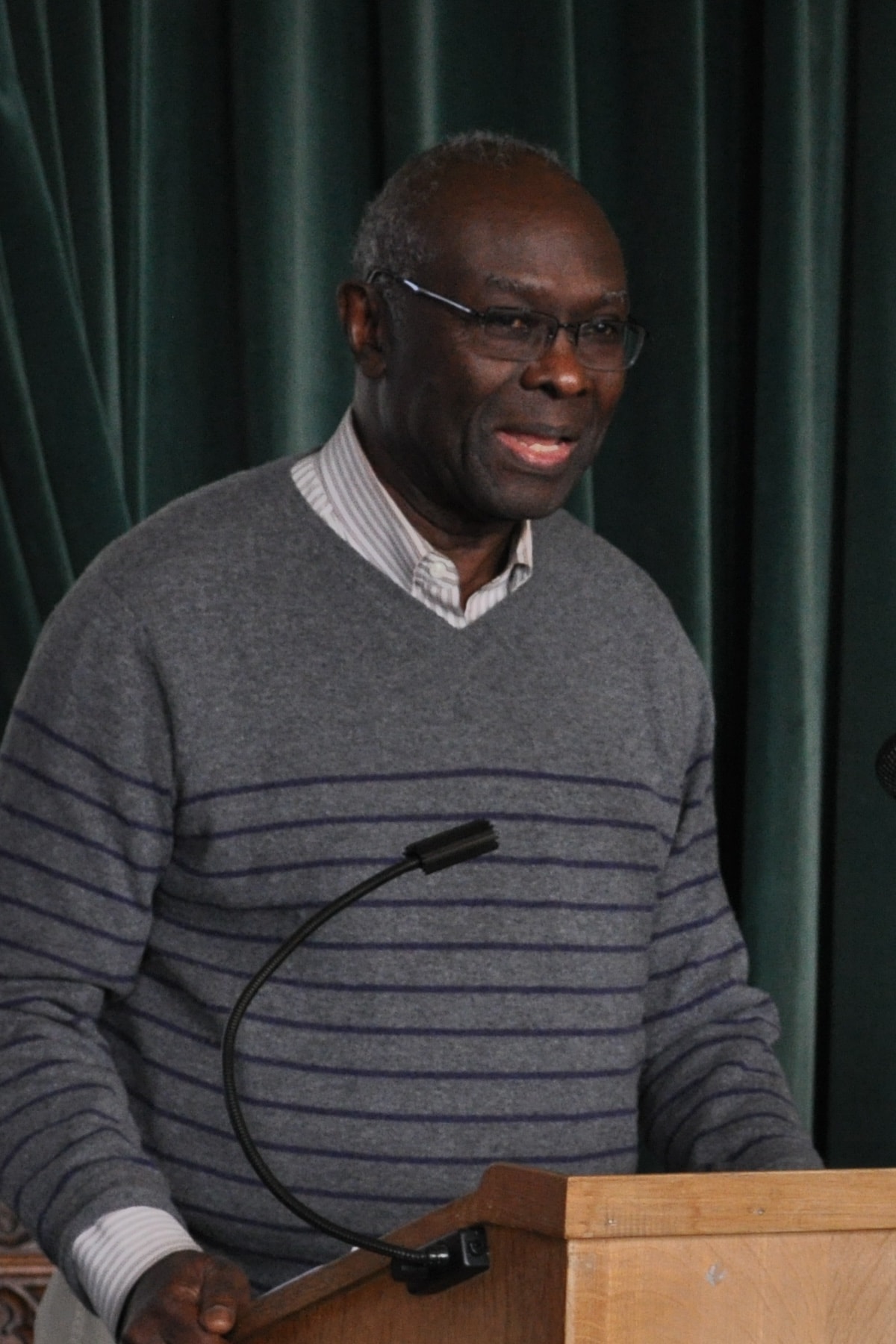 Lamin Sanneh at the Yale-Edinburgh Conference, 2014. Photo: Caorongjin, CC BY-SA 4.0 (Wikimedia Commons), resized.

See this page's graph and discover linked topics
In full
Sanneh (1942-2019) was among the most influential scholars of world Christianity of his generation, and also a respected historian of West African Islam. His books Translating the Message: The Missionary Impact on Culture (1989) and Whose Religion Is Christianity? The Gospel Beyond the West (2003) reframed the debate about missions and colonialism. Against the view that missionaries were simply agents of cultural imperialism, he argued that their commitment to vernacular translation set loose forces that undermined both missionary paternalism and colonial rule. He was careful to say this was often an unintended consequence. His work is widely cited in apologetic replies to the charge that Christianity is a Western import, including on this codex at Christianity Is the White Mans Religion Objection Defeater and Most of the World Was Colonized by Christians Objection Defeater.
Life
- Birth. Born 24 May 1942 at Abuko in the Gambia, into a Muslim family that traced its descent from an old royal lineage.
- Conversion. As a young man he became a Christian, a story he tells in his memoir Summoned from the Margin: Homecoming of an African (2012). He was first a Protestant and later became a Roman Catholic.
- Education. He studied at the University of Birmingham, studied Arabic and Islam at the Near East School of Theology in Beirut, and earned a doctorate in Islamic history at the University of London.
- Career. He taught at the University of Ghana (1975-1978) and the University of Aberdeen (1978-1981), then at Harvard (1981-1989), and from 1989 until his death at Yale, as D. Willis James Professor of Missions and World Christianity and professor of history.
- Honors. He served on pontifical commissions for historical sciences and for relations with Muslims, and the Sanneh Institute at the University of Ghana was founded in his name in 2018.
- Death. He died on 6 January 2019, after a stroke.
Key ideas
- Translatability. Christianity has no sacred language. From the start it moved from Aramaic to Greek and then into Syriac, Coptic, Latin, Ge'ez and countless others. Translation is not a concession but the faith's native mode. See Missionary Translation and African Languages.
- Vernacular revitalization. Translating the Bible into African languages gave those languages dignity, written form and new life. Sanneh argued it did more to preserve African cultures than to erase them.
- Mission against empire. Because translation put Scripture in African hands, Africans could judge missionaries and colonizers by the Bible itself. African independent churches and nationalist movements drew on that authority. See Christianity and Colonialism in Africa.
- "World Christianity" versus "global Christianity." In Whose Religion Is Christianity? he distinguished world Christianity, the many indigenous forms the faith takes in cultures that receive it, from global Christianity, the export of one Western form. He argued that African Christianity is mostly the former.
- The names of God. Missionaries' use of African names for God, such as Olorun or Nyame, implied that Africans had prior knowledge of God that the gospel fulfilled.
- Christianity and Islam. He contrasted Christianity's translation model with the place of Arabic in Islam, a contrast drawn from his own scholarship of West African Islam. This comparison is his interpretation, and some scholars of Islam contest it.
Major works
- West African Christianity: The Religious Impact (1983)
- Translating the Message: The Missionary Impact on Culture (1989; second edition 2009)
- The Crown and the Turban: Muslims and West African Pluralism (1997)
- Whose Religion Is Christianity? The Gospel Beyond the West (2003)
- Disciples of All Nations: Pillars of World Christianity (2008)
- Abolitionists Abroad: American Blacks and the Making of Modern West Africa (1999)
- Summoned from the Margin: Homecoming of an African (2012)
- Beyond Jihad: The Pacifist Tradition in West African Islam (2016)
Critiques
- Too sunny on missions? Some historians argue that Sanneh's emphasis on translation underplays the cultural damage missions did. Sanneh replied that he was describing the effects of translation, not excusing missionary attitudes.
- The Islam contrast. Scholars of Islam point out that Muslims translate the meaning of the Quran widely and that Islam has also indigenized deeply in Africa. Sanneh's point concerned the status of Arabic as the language of the revealed text in worship.
See also
- Missionary Translation and African Languages, the translation principle in full
- Christianity and Colonialism in Africa, where Sanneh's thesis is applied
- Kwame Bediako, fellow architect of the study of African Christianity
- Samuel Ajayi Crowther, whom Sanneh held up as a model of mother-tongue mission
- Christianity Is the White Mans Religion Objection Defeater, which draws on Sanneh's work
- Africa and Christianity, the master hub
Common questions this page answers
Q: Who was Lamin Sanneh?
He was a Gambian-born historian (1942-2019) who converted from Islam to Christianity and taught at Yale as D. Willis James Professor of Missions and World Christianity. He is best known for arguing that Christianity spreads by translation and that African Christianity is genuinely African.
Q: What is Lamin Sanneh's book Translating the Message about?
Published in 1989, it argues that Christianity's commitment to translating the Bible into every language made it at home in many cultures, strengthened African languages and gave Africans the authority to read Scripture for themselves, often undercutting missionary and colonial control.
Q: What does "Whose Religion Is Christianity?" argue?
Sanneh's 2003 book argues that Christianity's center has moved to the non-Western world and that African and other non-Western Christians practice "world Christianity," indigenous forms of the faith, rather than an imported Western "global Christianity."
Q: Was Lamin Sanneh a Muslim?
He was born into a Muslim family in the Gambia and became a Christian as a young man. He later became a Roman Catholic and remained a respected scholar of West African Islam.
Q: Did Lamin Sanneh think missionaries were colonialists?
He did not deny missionary paternalism, but he argued that missionary translation of the Bible often worked against colonial control, because it gave Africans the Scriptures in their own languages and the means to judge both missionaries and colonizers.