Person
Kwame Bediako
Bediako, Kwame Bediako (theologian)Intro
Kwame Bediako was a Ghanaian theologian who argued that Christianity in Africa is not a foreign import but the renewal of a non-Western religion. An atheist in his student years in France, he became a Christian, studied under the historian Andrew Walls, and founded a research institute in his hometown of Akropong. He compared modern African Christians with the early church fathers, who also had to work out how the gospel related to the culture and religion they came from.
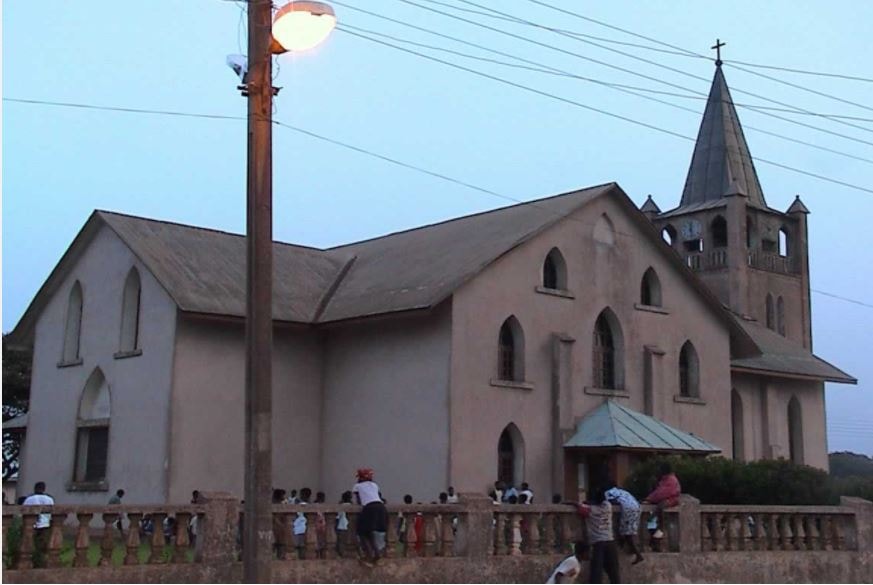 Christ Presbyterian Church, Akropong, Ghana, the town where Bediako was born and where he led the Akrofi-Christaller Institute. Photo: Kandymotownie, CC BY-SA 4.0 (Wikimedia Commons), resized.

See this page's graph and discover linked topics
In full
Bediako (1945-2008) was one of the leading African theologians of his generation and, with Lamin Sanneh, a central figure in the study of world Christianity. His doctoral work, published as Theology and Identity: The Impact of Culture upon Christian Thought in the Second Century and in Modern Africa (1992), set second-century Christian writers such as Tatian, Justin, Tertullian and Clement of Alexandria beside twentieth-century African theologians such as Bolaji Idowu, John Mbiti, Mulago and Byang Kato. Both groups, he argued, faced the same question: how does the gospel relate to the religious past of a people who have just embraced it? His answer was that African Christians, like the early fathers, must neither discard their past nor baptize it uncritically, but read it in the light of Christ.
Life
- Birth. Born 7 July 1945 in Akropong, in the Akuapem area of the Gold Coast (now Ghana).
- Education and conversion. He attended Mfantsipim School and went on to the University of Bordeaux in France, where he earned a master's degree and, in 1973, a doctorate in francophone African literature. During these years he had embraced atheism under the influence of French existentialism, and in France he returned to faith in Christ.
- Theological training. He studied at London Bible College (now London School of Theology) and then at the University of Aberdeen under Andrew Walls, completing a second doctorate in 1983.
- The Akrofi-Christaller Institute. In 1987 he became the first rector of what grew into the Akrofi-Christaller Institute of Theology, Mission and Culture at Akropong, named after a Ghanaian linguist and a German missionary who together worked on the Twi language. It became a center for research on African Christianity and mother-tongue theology.
- Death. He died on 10 June 2008, aged 62.
Key ideas
- A non-Western religion. In Christianity in Africa: The Renewal of a Non-Western Religion (1995) he argued that Christianity was never essentially Western. Its Western phase was one chapter, and Africa's embrace of the faith restores its original non-Western character.
- Theology and identity. African theology is, at bottom, the work of integrating a Christian present with an African past. That is the same task the second-century apologists faced with Greek philosophy and pagan religion.
- Continuity with the African religious past. He held that the African primal religions were a kind of preparation for the gospel, so that African Christians need not treat their whole heritage as demonic. He was careful to say that Christ judges as well as fulfills. See African Traditional Religion and Christianity.
- Christ as ancestor. He explored how Jesus could be spoken of as the supreme ancestor, the one who truly mediates between God and people, displacing the ancestral cult rather than joining it. He grounded this in Hebrews, where Christ is the great high priest who has passed into the heavens (Hebrews 4:14).
- Mother-tongue theology. Following Sanneh, he insisted that hearing God in one's own language is theologically significant, and he championed the Twi prayers of Afua Kuma as genuine African Christology. See Missionary Translation and African Languages.
- The African church fathers. He reminded African Christians that Tertullian, Cyprian of Carthage, Augustine and Athanasius were Africans too, so modern Africans stand in a long African Christian tradition. See How Africa Shaped the Christian Mind.
Major works
- Theology and Identity: The Impact of Culture upon Christian Thought in the Second Century and in Modern Africa (1992)
- Christianity in Africa: The Renewal of a Non-Western Religion (1995)
- Jesus in Africa: The Christian Gospel in African History and Experience (2000), also published as Jesus and the Gospel in Africa
Assessment
- Strengths. Bediako gave African Christians a way to own both their faith and their heritage without choosing between them, and grounded it in the precedent of the early church. Evangelicals appreciate his high view of Christ and Scripture.
- Questions. Critics in the line of Byang Kato ask whether the "preparation for the gospel" reading of African religion gives too much ground to the ancestral cult. The ancestor Christology is debated even among its admirers, since the biblical Christ is not a deceased human elder but the eternal Son. Bediako's own position was that Christ fulfills the ancestors' role by surpassing and replacing it.
See also
- Lamin Sanneh, his close ally in the study of world Christianity
- John Mbiti, whom he discussed at length in Theology and Identity
- Byang Kato, whose evangelical critique of Mbiti he weighed
- African Traditional Religion and Christianity, continuity and discontinuity with the African past
- Missionary Translation and African Languages, mother-tongue theology
- How Africa Shaped the Christian Mind, the African patristic inheritance
- Africa and Christianity, the master hub
Common questions this page answers
Q: Who was Kwame Bediako?
He was a Ghanaian theologian (1945-2008) who argued that Christianity in Africa is the renewal of a non-Western religion, not a Western import. He studied under Andrew Walls at Aberdeen and was the first rector of the Akrofi-Christaller Institute at Akropong, Ghana.
Q: What did Kwame Bediako mean by "Christianity as a non-Western religion"?
He argued that Christianity began in the Middle East and was African and Asian early, so its long Western phase was only one chapter. Africa's large-scale embrace of Christianity restores the faith's original non-Western character.
Q: What is Bediako's book Theology and Identity about?
Published in 1992, it compares second-century Christian writers such as Justin and Tertullian with modern African theologians such as John Mbiti and Byang Kato. Both groups had to relate the gospel to the religious past of their own people.
Q: Did Kwame Bediako see Jesus as an ancestor?
He explored speaking of Jesus as the supreme ancestor, the true mediator between God and people, who fulfills and replaces the role Africans gave to ancestors. He grounded the idea in Hebrews, which presents Christ as the great high priest.
Q: How did Kwame Bediako become a Christian?
He embraced atheism under the influence of French existentialism while studying at the University of Bordeaux, and returned to faith in Christ while still in France. He then trained in theology in London and Aberdeen.