Person
Joram of Israel
Jehoram of Israel, Joram son of Ahab, Jehoram son of Ahab, King Joram of Israel, Joram king of Israel, Yoram son of AhabIntro
Joram (also spelled Jehoram) was a son of Ahab and Jezebel and the last king of the dynasty of Omri. He ruled Israel for about twelve years, fought the king of Moab and the kings of Aram, and was shot dead by Jehu at Jezreel. An Aramean victory monument found at Tel Dan in 1993 most likely names him: its broken lines boast of killing "[Jo]ram son of [Ahab], king of Israel."
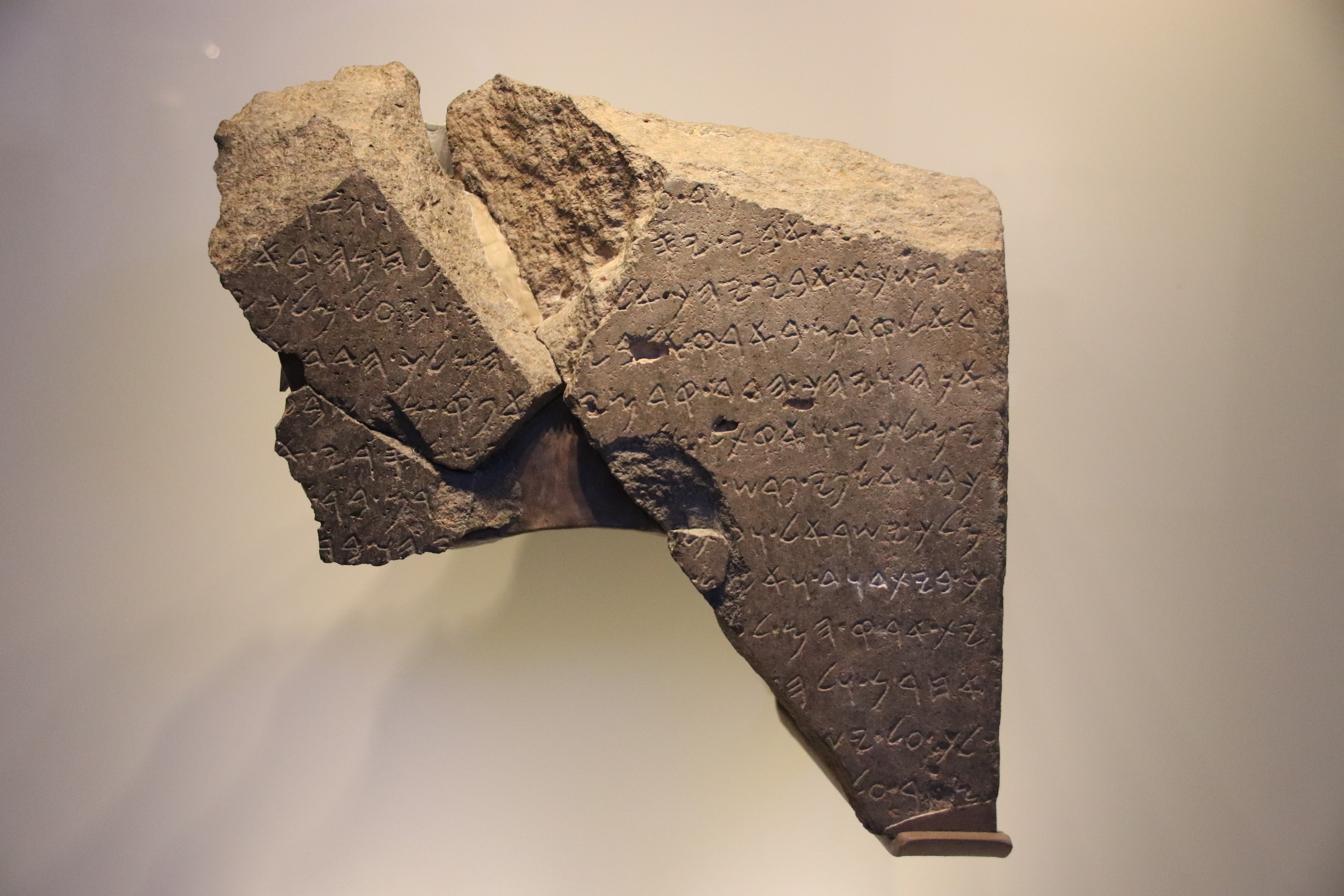
The Tel Dan Stele fragments, Aramaic, 9th century BC, found at Tel Dan in 1993 and 1994, now in the Israel Museum, Jerusalem. Image: CC0, via Wikimedia Commons.
The 30-second version:
Joram son of Ahab became king of Israel after his brother Ahaziah died, and reigned about 852-841 BC. He led the campaign against Mesha of Moab, lived through the Aramean sieges of Samaria in Elisha's day, and was wounded fighting Hazael at Ramoth-gilead. While he recovered at Jezreel, Jehu rode in and killed him in Naboth's field. The Tel Dan Stele, from the Aramean side, claims the death of "[Jo]ram son of [Ahab] king of Israel," the most likely reading of a partly broken line.
See this page's graph and discover linked topics
In full
Joram was the second son of Ahab to reign. His brother Ahaziah of Israel died after a fall, without a son, and "Jehoram began to reign in his stead" (2 Kings 1:17, ASV). 2 Kings 3:1-3 gives the formal notice: he reigned twelve years in Samaria; he "did that which was evil in the sight of Jehovah, but not like his father, and like his mother; for he put away the pillar of Baal that his father had made," yet he kept the calf worship of Jeroboam (2 Kings 3:2-3, ASV).
His reign is the backdrop of much of the Elisha cycle. He called Judah and Edom to war against Mesha of Moab (2 Kings 3). He is probably the unnamed "king of Israel" warned by Elisha of Aramean ambushes (2 Kings 6:8-23) and the king in besieged Samaria during the famine (2 Kings 6:24-7:20). He restored the Shunammite woman's land after hearing Elisha's deeds from Gehazi (2 Kings 8:1-6). Finally he joined his nephew Ahaziah of Judah against Hazael at Ramoth-gilead, was wounded, and withdrew to Jezreel to heal (2 Kings 8:28-29).
There the army commander Jehu, anointed by a messenger from Elisha, rode against him. "Is it peace, Jehu?" Joram asked. Jehu answered, "What peace, so long as the whoredoms of thy mother Jezebel and her witchcrafts are so many?" (2 Kings 9:22, ASV). "Jehu drew his bow with his full strength, and smote Joram between his arms; and the arrow went out at his heart" (2 Kings 9:24, ASV), and his body was thrown into Naboth's plot of ground, as Elijah had foretold.
In the Bible
- 2 Kings 1:17; 3:1-3, accession and verdict.
- 2 Kings 3:4-27, the war against Mesha of Moab.
- 2 Kings 5-8 (unnamed "king of Israel" in several episodes, most likely Joram), Naaman's letter (5:7), the Aramean raids (6:8-23), the siege of Samaria (6:24-7:20), the Shunammite's land (8:1-6).
- 2 Kings 8:28-29; 2 Chronicles 22:5-6, Ramoth-gilead and his wound.
- 2 Kings 9:14-26; 2 Chronicles 22:7, his death at Jezreel.
- A name shared across the border. Judah had a king of the same name at the same time, Jehoram son of Jehoshaphat, who married Joram's sister Athaliah (2 Kings 8:16-18). Both spellings, Joram and Jehoram, are used for both kings, so readers must follow the father's name.
Family and lineage
- Father and mother. Ahab and Jezebel.
- Grandfather. Omri.
- Brother. Ahaziah of Israel, his predecessor (2 Kings 1).
- Sister. Athaliah, queen of Judah, mother of Ahaziah of Judah (2 Kings 8:18, 8:26).
- End of the line. Jehu killed Joram, Jezebel, and the seventy sons of Ahab's house in Samaria (2 Kings 9-10). No son of Joram is named.
Historical and archaeological evidence
- The Tel Dan Stele. Old Aramaic basalt victory stela, fragment A found in July 1993 and fragments B1 and B2 in June 1994 by Avraham Biran's excavation at Tel Dan; now in the Israel Museum, Jerusalem. Dated to the second half of the 9th century BC and most often attributed to Hazael. Line 8 preserves the end of a name, -rm, followed by "son of" and a gap, then "king of Israel"; Biran and Joseph Naveh restored "[Jeho]ram son of [Ahab] king of Israel." Grade: strong but restored. Lawrence Mykytiuk does not include Joram among his confirmed figures because the name survives only in part.
- No Assyrian mention. Shalmaneser III fought Damascus repeatedly during Joram's reign (849, 848, 845 BC) but names no Israelite king between Ahab (853) and Jehu (841). Whether Israel stayed in the anti-Assyrian coalition after Ahab is unknown.
- Jezreel. The fortified royal enclosure at Tel Jezreel, excavated by David Ussishkin and John Woodhead, fits the biblical setting of Joram's convalescence and death. Grade: context.
Scholarly consensus
Most scholars accept the Biran-Naveh restoration of line 8, which fits the known kings of the period and the parallel line naming "[Ahaz]iah son of [Joram] king of the House of David." Dissent concerns how fragments B1 and B2 join fragment A. George Athas (2003) argued for a different arrangement and a different historical setting, and some scholars have questioned whether the B fragments belong to the same stele at all. If the restoration is right, the stele and 2 Kings agree on the names and the event and disagree on who struck the blow; see Hazael and Jehu for the proposals.
The chronology of Joram's reign is also complex because 2 Kings synchronizes him with two Judahite kings (Jehoshaphat and Jehoram) and probably reflects a co-regency in Judah. Most chronologies place his death in 841 BC, the same year Jehu paid tribute to Shalmaneser III.
Theological significance
- Partial reform is not repentance. Joram removed his father's Baal pillar and still kept the calves of Bethel and Dan (2 Kings 3:2-3). Kings measures him by the whole covenant and finds him wanting.
- A king beside a prophet. Few kings received as many mercies through a prophet as Joram did: water in the desert, warnings of ambush, and deliverance from a siege. The narrative presents these as grace to Israel through Elisha, which the king did not answer with faithfulness.
- The word fulfilled in Naboth's field. Jehu throws Joram's body into the plot of Naboth, quoting the LORD: "I will requite thee in this plat" (2 Kings 9:26, ASV). The judgment Elijah spoke to Ahab is carried out on his son, as 1 Kings 21:29 said it would be.
Church Fathers
No patristic commentary focused on Joram of Israel has been located with a verifiable locator.
See also
- People of the Bible, every attested person by the book that first names them
- Ahab, his father
- Jehu, who killed him
- Ahaziah of Judah, his nephew and ally, killed the same day
- Hazael, the Aramean king he fought, probable author of the Tel Dan Stele
- Mesha, the Moabite king he campaigned against
- Elisha, the prophet of his reign
- Tel Dan Stele, where his name is most likely restored
Common questions this page answers
Q: Who was Joram king of Israel?
Joram, also called Jehoram, was a son of Ahab and Jezebel who ruled Israel for about twelve years in the mid 9th century BC. He was the last king of Omri's dynasty and was killed by Jehu at Jezreel (2 Kings 9:24).
Q: Is Joram of Israel mentioned in the Tel Dan Stele?
Most likely. Line 8 of the Aramaic stele preserves the end of a royal name and the words "king of Israel," and the standard restoration reads "[Jo]ram son of [Ahab]." Because the name is partly restored, cautious scholars such as Lawrence Mykytiuk do not count it as a firm confirmation.
Q: Why are there two kings named Jehoram at the same time?
Joram son of Ahab ruled Israel while Jehoram son of Jehoshaphat ruled Judah, and the two families were joined by marriage: Judah's Jehoram married Joram's sister Athaliah. The Bible uses both spellings for both men, so the father's name tells you which king is meant.
Q: Why did Jehu kill Joram?
Jehu was anointed by a prophet sent from Elisha to destroy the house of Ahab for its Baal worship and for the blood of the prophets and of Naboth (2 Kings 9:6-10). He killed Joram in Naboth's field as the fulfillment of Elijah's word.