Person
Jehoiachin
Jeconiah, Jechoniah, Coniah, Joiachin, King Jehoiachin, Jehoiachin king of Judah, Ya'u-kinu, YaukinIntro
Jehoiachin was the next-to-last king of Judah from the line of David. He came to the throne at eighteen, ruled Jerusalem for only three months, and surrendered the city to Nebuchadnezzar of Babylon in 597 BC. He was taken to Babylon with his mother, his officials and thousands of Judah's leading people, and he spent the rest of his life there.
The Bible ends the books of Kings with him. After thirty-seven years as a captive, a new Babylonian king brought him out of prison, gave him a seat of honor, and fed him at the royal table for the rest of his life. Babylonian palace records found in the ruins of Babylon list oil rations for "Ya'u-kinu, king of the land of Yahudu." That is Jehoiachin, king of Judah, named by his captors.
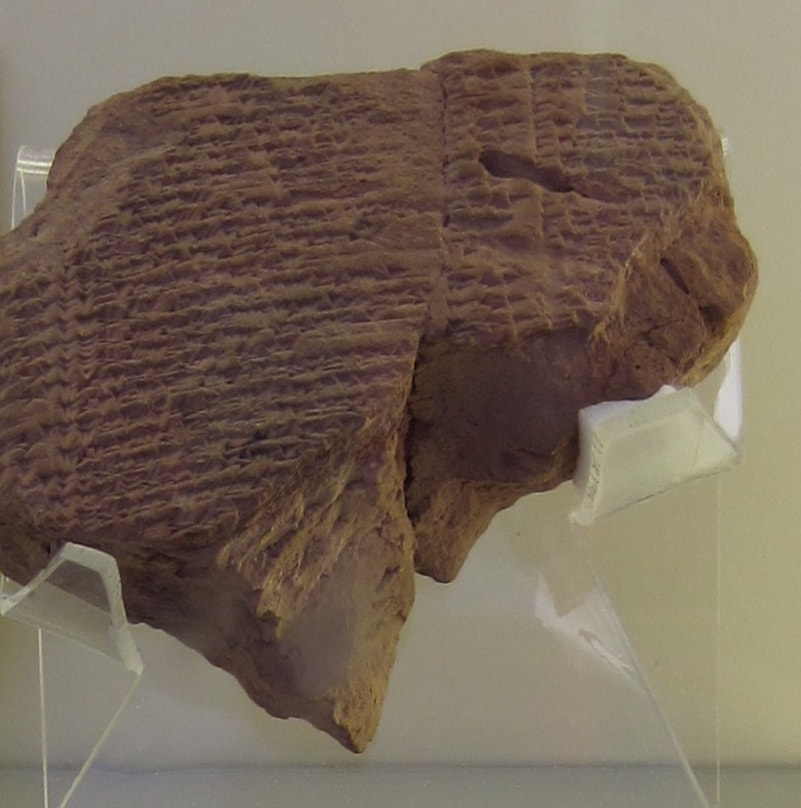
A ration tablet from the palace archive at Babylon that lists oil for Jehoiachin, king of Judah, early 6th century BC, Pergamon Museum, Berlin. Photo: Scallaham, CC BY-SA 4.0, via Wikimedia Commons, cropped and resized.

The 30-second version:
Jehoiachin, also called Jeconiah and Coniah, was a king of Judah who reigned three months before surrendering Jerusalem to Babylon in 597 BC. He lived out his life as a royal captive in Babylon. The Babylonian Chronicle records the capture of Jerusalem and its king, and palace ration tablets from Babylon name "Ya'u-kinu, king of the land of Yahudu." Jeremiah pronounced that none of his descendants would sit on David's throne, yet his name stands in Matthew's genealogy of Jesus, through Joseph.
See this page's graph and discover linked topics
In full
Jehoiachin (Hebrew Yehoyakhin, "YHWH establishes"; also Yekhonyah, Jeconiah, and the short form Konyahu, Coniah) was the son of Jehoiakim and Nehushta daughter of Elnathan (2 Kings 24:8). He succeeded his father late in 598 BC, as Nebuchadnezzar's army closed on a rebellious Jerusalem, and surrendered in the month Adar of Nebuchadnezzar's seventh year, a date the Babylonian Chronicle (BM 21946) fixes to 2 Adar, that is, 15/16 March 597 BC. He was deported with the queen mother, his wives, officials, craftsmen and some ten thousand captives (2 Kings 24:12-16), and his uncle Mattaniah was installed as Zedekiah (2 Kings 24:17). Neo-Babylonian administrative tablets from the South Palace at Babylon, published by Ernst Weidner in 1939, record oil rations for Ya'u-kīnu, king of the land of Yahudu and for the king's sons, one tablet dated to Nebuchadnezzar's thirteenth year (592/591 BC). In 561 BC Amel-Marduk (biblical Evil-merodach) released him and gave him a pension for life (2 Kings 25:27-30; Jeremiah 52:31-34). He is the hinge of two theological threads: Jeremiah's oracle that no descendant of his would rule on David's throne (Jeremiah 22:24-30) and the continuation of the Davidic line through his grandson Zerubbabel (1 Chronicles 3:17-19; Haggai 2:23; Matthew 1:12). Lawrence Mykytiuk lists him among the 53 Hebrew Bible persons confirmed by archaeology.
In the Bible
- 2 Kings 24:6-17. His accession, three-month reign, surrender and deportation. "Jehoiachin was eighteen years old when he began to reign; and he reigned in Jerusalem three months: and his mother's name was Nehushta the daughter of Elnathan of Jerusalem. And he did that which was evil in the sight of Jehovah, according to all that his father had done" (2 Kings 24:8-9, ASV).
- 2 Kings 25:27-30. His release by Evil-merodach in the thirty-seventh year of his captivity; the closing scene of the book of Kings.
- 1 Chronicles 3:16-18. The genealogy of "Jeconiah, the captive" and his sons, Shealtiel and six others.
- 2 Chronicles 36:9-10. A short account of his reign. The ASV, following the Masoretic Text, gives his age as eight; 2 Kings 24:8 reads eighteen, and some Hebrew manuscripts and the Septuagint of Chronicles also read eighteen, so most commentators treat "eight" as a copying slip.
- Esther 2:6. Mordecai's family went into exile "with Jeconiah king of Judah."
- Jeremiah. Named as Coniah in the oracle of 22:24-30; as Jeconiah in 24:1, 27:20, 28:4 and 29:2; as Coniah in 37:1; and as Jehoiachin in 52:31-34, which repeats the release account. Hananiah's false prophecy in Jeremiah 28 promised his return within two years.
- Ezekiel 1:2. Ezekiel dates his visions by "king Jehoiachin's captivity," the exiles' own calendar.
- Matthew 1:11-12. "Jechoniah" in the genealogy of Jesus, at the hinge of the deportation to Babylon.
Family and lineage
- Father: Jehoiakim, son of Josiah, king of Judah (609-598 BC).
- Mother: Nehushta daughter of Elnathan of Jerusalem (2 Kings 24:8). The queen mother is singled out in the deportation (2 Kings 24:12, 15; Jeremiah 22:26).
- Uncle and successor: Mattaniah, renamed Zedekiah by Nebuchadnezzar (2 Kings 24:17). 1 Chronicles 3:16 also lists a Zedekiah among Jehoiakim's sons; whether this is the same man counted differently is debated.
- Sons: Shealtiel, Malchiram, Pedaiah, Shenazzar, Jekamiah, Hoshama and Nedabiah (1 Chronicles 3:17-18).
- Grandson: Zerubbabel, called the son of Shealtiel in Ezra 3:2, Haggai 1:1 and Matthew 1:12, and the son of Pedaiah in 1 Chronicles 3:19. Common explanations are a levirate marriage or a legal adoption; the text does not say.
- Line of David: Jehoiachin is the eighteenth generation from David in Matthew's list and the link between the kings of Judah and the post-exilic heirs.
Historical and archaeological evidence
- The Babylonian Chronicle (BM 21946). A Babylonian chronicle covering Nebuchadnezzar's early years records that in his seventh year he besieged "the city of Judah," captured it on the second day of Adar, seized its king, appointed a king of his own choosing, and took heavy tribute to Babylon. The king is not named, but the date and circumstances match the surrender of Jehoiachin and the appointment of Zedekiah. Published by D. J. Wiseman (1956); British Museum, London. Grade: secure. See Babylonian Chronicle and the Capture of Jerusalem.
- The ration tablets from Babylon. Four tablets from an archive of some three hundred ration lists found by Robert Koldewey's expedition in the palace area at Babylon name Ya'u-kīnu (with spelling variants), "king of the land of Yahudu," along with the king's sons and other Judeans. The archive runs from Nebuchadnezzar's tenth to thirty-fifth years, and the one Jehoiachin tablet with a preserved date belongs to his thirteenth year (592/591 BC). Published by Ernst Weidner (1939); English translation by A. Leo Oppenheim in ANET, p. 308. One tablet is VAT 16378 in the Vorderasiatisches Museum, Berlin. Grade: direct; Mykytiuk's confirmed list. See Jehoiachin Ration Tablets.
- The Al-Yahudu tablets. Later business documents from a settlement of Judean exiles in Babylonia named Āl-Yāhūdu, "the town of Judah," published by Laurie Pearce and Cornelia Wunsch (2014), do not name Jehoiachin but show that the deportees of his generation were settled as communities and kept their identity, the setting presupposed by Ezekiel and Jeremiah 29. Grade: background.
- A withdrawn identification. W. F. Albright once read stamp impressions of "Eliakim, steward of Yawkin" from Tell Beit Mirsim and Beth Shemesh as the seal of Jehoiachin's steward. Later stratigraphic work dated these impressions to the late eighth century BC, a century too early, and the link is no longer used by specialists. It is listed here so it is not recycled.
Scholarly consensus
- Existence and captivity: settled. Maximalists and minimalists alike accept that Jehoiachin was a historical king of Judah deported to Babylon. The ration tablets are excavated, published and in a public museum.
- The release. No Babylonian text yet records the release by Amel-Marduk. Most historians accept it as plausible, since a new king's amnesty fits Babylonian practice and Jehoiachin was already a provisioned royal hostage; Irving Finkel's reading of a literary prayer as the work of Amel-Marduk while himself imprisoned has led some to suggest the two princes knew each other in custody, but that is a conjecture. See Evil-merodach.
- "Prison" and provisions. Some commentators, such as the Center for Online Judaic Studies, read the generous rations of 592 BC as evidence of relative freedom, which raises the question of when he was put in the prison from which Kings says he was released. Proposals include a later confinement after Zedekiah's revolt; the sources do not settle it.
- Kings as a literary ending. Martin Noth read 2 Kings 25:27-30 as a bleak footnote; Gerhard von Rad and many since read it as a deliberate note of hope that the Davidic line survived. Both readings are held by critical and conservative scholars.
Theological significance
- Judgment on the house of David. Jeremiah's oracle is severe: "though Coniah the son of Jehoiakim king of Judah were the signet upon my right hand, yet would I pluck thee thence" (Jeremiah 22:24, ASV), and "Write ye this man childless, a man that shall not prosper in his days; for no more shall a man of his seed prosper, sitting upon the throne of David, and ruling in Judah" (Jeremiah 22:30, ASV). "Childless" is clarified by the next clause: he had sons (1 Chronicles 3:17), but none of them reigned.
- The signet restored. Haggai uses the same image in reverse for his grandson: "I will take thee, O Zerubbabel, my servant, the son of Shealtiel, saith Jehovah, and will make thee as a signet; for I have chosen thee" (Haggai 2:23, ASV). Many interpreters, Jewish and Christian, read this as God lifting or limiting the curse; others hold that Zerubbabel was a governor, never a king, so the oracle stood.
- Jeconiah and the virgin birth. Matthew places Jechoniah in Joseph's line (Matthew 1:11-12). Christian interpreters since the second century have noted that Jesus inherits David's throne legally through Joseph while not being Jeconiah's physical seed. See Davidic Inheritance Physical Seed Objection Defeater and Two Genealogies Contradiction Objection Defeater.
- Hope at the end of Kings. The last words of Kings leave the Davidic heir alive, honored and eating at a king's table, a small sign that God's promise to David (2 Samuel 7) had not lapsed in exile. See Davidic Covenant.
- The good figs. Jeremiah 24 calls the exiles taken with Jeconiah the good figs God would bring back, against the expectation that those left in Jerusalem were the favored ones.
Church Fathers
- Irenaeus of Lyon argues that if Jesus had been Joseph's natural son he could not be the promised king, because "Jechoniah, and all his posterity, were disinherited from the kingdom," citing Jeremiah 22 (Against Heresies 3.21.9). He uses Jeremiah's oracle as evidence for the virgin birth.
See also
- Jehoiachin Ration Tablets, the Babylonian palace records that name him
- Babylonian Chronicle and the Capture of Jerusalem, the dated record of his surrender
- Evil-merodach, the Babylonian king who released him
- Nebuchadrezzar, his captor
- Davidic Covenant, the promise his exile tested
- Davidic Inheritance Physical Seed Objection Defeater, Jeconiah's curse and Jesus' legal descent
- Two Genealogies Contradiction Objection Defeater, Matthew's and Luke's lines
- Jeremiah's Seventy Years, the exile he began
- Biblical Figures Confirmed by Archaeology, Mykytiuk's list
- People of the Bible, every person on the hub, grouped by book of first mention
Common questions this page answers
Q: Is there archaeological evidence for King Jehoiachin?
Yes. Ration tablets excavated at Babylon and published in 1939 list oil for "Ya'u-kinu, king of the land of Yahudu," that is, Jehoiachin, king of Judah, and for his sons. The Babylonian Chronicle also records Nebuchadnezzar capturing the city of Judah and its king in March 597 BC.
Q: Are Jehoiachin, Jeconiah and Coniah the same person?
Yes. Jehoiachin and Jeconiah are two forms of the same Hebrew name, both meaning roughly "YHWH establishes," and Coniah is a shortened form used by Jeremiah. Matthew's genealogy uses the Greek form Jechoniah.
Q: What was the curse on Jeconiah?
In Jeremiah 22:30 God says that no descendant of his would prosper "sitting upon the throne of David, and ruling in Judah." None of his sons became king. Christians note that Jesus is Jeconiah's heir legally through Joseph but not his physical descendant, because of the virgin birth.
Q: Was Jehoiachin eight or eighteen when he became king?
2 Kings 24:8 says eighteen and 2 Chronicles 36:9 in the Masoretic Text says eight. Some Hebrew manuscripts and the Septuagint of Chronicles read eighteen, and 2 Kings mentions his wives, so most scholars treat "eight" as a scribal error in transmission.
Q: Who released Jehoiachin from prison?
Evil-merodach (Babylonian Amel-Marduk), son and successor of Nebuchadnezzar, in the first year of his reign, about 561 BC (2 Kings 25:27-30; Jeremiah 52:31-34). He gave Jehoiachin a place of honor and a daily allowance for life.