Person
Jehoash of Israel
Joash of Israel, Jehoash king of Israel, Joash king of Israel, Jehoash son of Jehoahaz, Joash son of Jehoahaz, Iu'asu the Samarian, Joash the SamarianIntro
Jehoash (also called Joash) was a king of the northern kingdom of Israel around 800 BC, the grandson of Jehu. He wept at the deathbed of the prophet Elisha, won back the towns his father had lost to Aram, and defeated the king of Judah in battle, breaking down part of Jerusalem's wall. An Assyrian stone monument found in Iraq in 1967 lists the tribute of "Joash the Samarian," one of the clearest mentions of an Israelite king outside the Bible.
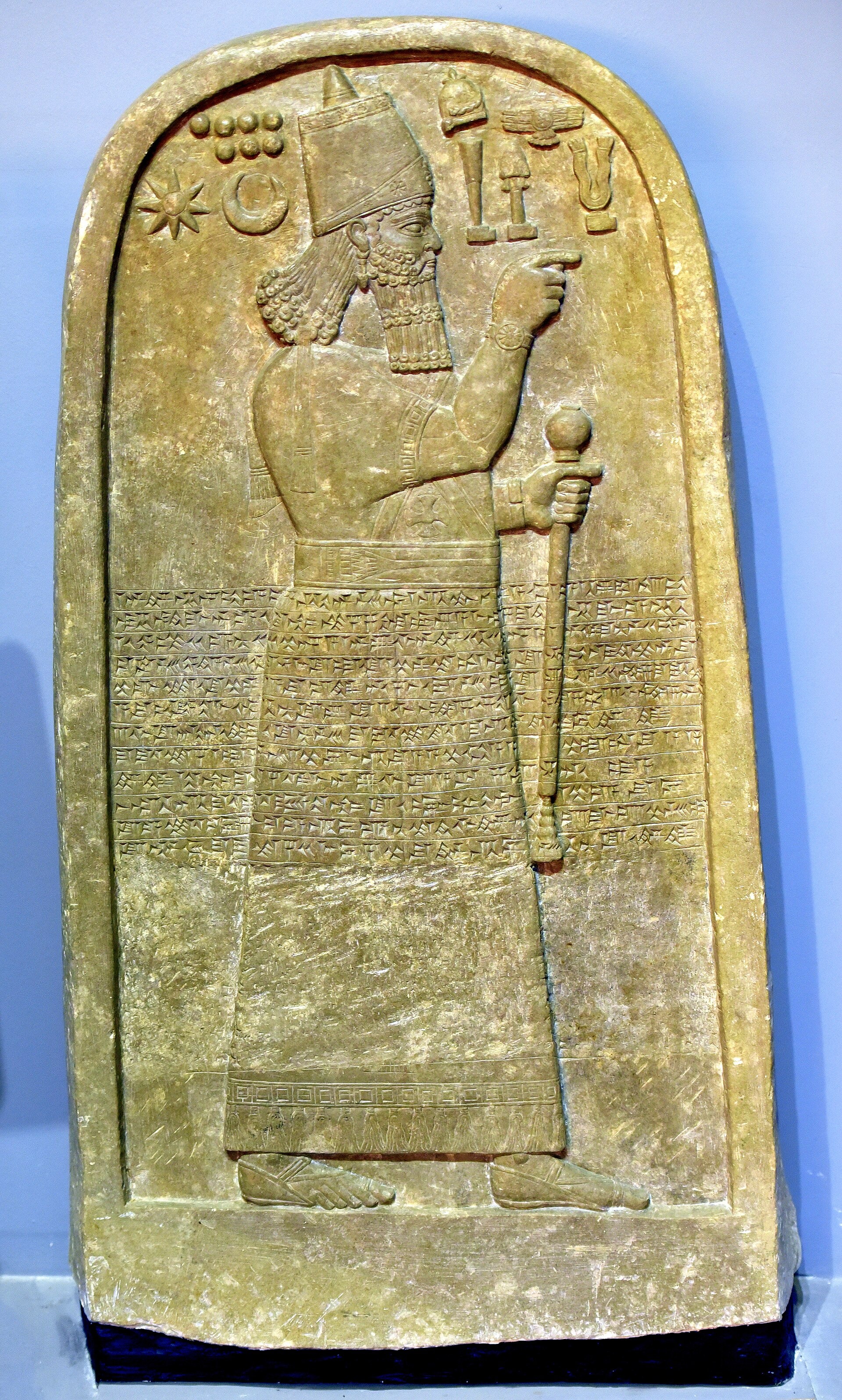
The Tell al-Rimah Stele of the Assyrian king Adad-nirari III, about 800 BC, Iraq Museum, Baghdad (IM 70543). Its inscription records the tribute of "Joash the Samarian." Photo: Osama Shukir Muhammed Amin, CC BY-SA 4.0, via Wikimedia Commons, resized.

The 30-second version:
Jehoash son of Jehoahaz ruled Israel for sixteen years around 800 BC. Elisha, on his deathbed, had him shoot an arrow of victory and strike the ground with arrows; he struck three times, and Elisha promised exactly three victories over Aram. Jehoash then recovered Israel's lost cities from Ben-hadad son of Hazael and later crushed Amaziah of Judah at Beth-shemesh. The Tell al-Rimah Stele of Adad-nirari III records that "Joash the Samarian" paid tribute to Assyria.
See this page's graph and discover linked topics
In full
Jehoash came to the throne when Israel was at its weakest. Under his father Jehoahaz, Hazael of Aram had left Israel only "fifty horsemen, and ten chariots, and ten thousand footmen" (2 Kings 13:7, ASV). 2 Kings 13:10 dates his accession to the thirty-seventh year of Joash of Judah and gives him sixteen years. The verdict is the standard one for the house of Jehu: he did evil and did not depart from the sins of Jeroboam son of Nebat (13:11).
The best-known scene of his reign is at Elisha's deathbed. The king came down and wept over the dying prophet: "My father, my father, the chariots of Israel and the horsemen thereof!" (2 Kings 13:14, ASV), the words Elisha himself had cried when Elijah was taken. Elisha had him shoot an arrow eastward, "Jehovah's arrow of victory, even the arrow of victory over Syria" (13:17, ASV), and then told him to strike the ground with arrows. He struck three times and stopped. "Thou shouldest have smitten five or six times: then hadst thou smitten Syria till thou hadst consumed it; whereas now thou shalt smite Syria but thrice" (13:19, ASV). After Hazael's death, "Three times did Joash smite him, and recovered the cities of Israel" from Ben-Hadad son of Hazael (13:25, ASV).
Later Amaziah of Judah, flushed with a victory over Edom, challenged him. Jehoash answered with a fable of a thistle that asked a cedar for its daughter and was trampled by a wild beast (2 Kings 14:9). Amaziah would not listen; Jehoash defeated him at Beth-shemesh, captured him, broke down four hundred cubits of Jerusalem's wall, and carried off the temple and palace treasures and hostages to Samaria (2 Kings 14:11-14; 2 Chronicles 25:17-24). He was succeeded by his son Jeroboam II, under whom Israel reached its greatest extent.
In the Bible
- 2 Kings 13:9-13, first named at his father's death and given his regnal summary.
- 2 Kings 13:14-19, Elisha's deathbed and the arrows.
- 2 Kings 13:22-25, recovery of the cities from Ben-hadad son of Hazael.
- 2 Kings 14:8-16; 2 Chronicles 25:17-25, the war with Amaziah of Judah.
- Hosea 1:1 and Amos 1:1, which date those prophets to the days of "Jeroboam the son of Joash."
- Not to be confused with his contemporary Jehoash (Joash) of Judah, the boy-king saved from Athaliah (2 Kings 11-12). Both names are spelled both ways in Kings.
Family and lineage
- Father. Jehoahaz son of Jehu (2 Kings 13:1, 13:9).
- Grandfather. Jehu, founder of the dynasty.
- Son and successor. Jeroboam II (2 Kings 13:13; 14:16), whose son Zechariah was the "fourth generation" promised to Jehu (2 Kings 15:12).
Historical and archaeological evidence
- The Tell al-Rimah Stele of Adad-nirari III. A stone stele found in 1967 at Tell al-Rimah, west of Mosul in northern Iraq during excavations there and published by Stephanie Page in Iraq 30 (1968); now in the Iraq Museum, Baghdad (IM 70543). In its account of a western campaign, Adad-nirari III (reigned 810-783 BC) records receiving "the tribute of Joash (Iu'asu) the Samarian" (line 8), in the same text that records the tribute of Mari' of Damascus. Most scholars date the event to about 796 BC. Grade: direct and contemporary. Lawrence Mykytiuk lists Jehoash as confirmed on this text.
- "The Samarian." This is the first Assyrian text to describe an Israelite king by his capital, Samaria, rather than as "son of Omri." The usage became common later in the 8th century.
- The Aramean side. Adad-nirari's inscriptions record his own heavy tribute from Damascus under a king called Mari', whom Mykytiuk and others identify, tentatively, with Ben-Hadad son of Hazael. Assyrian pressure on Damascus in these years fits the biblical report that Jehoash could recover his cities from Aram.
Scholarly consensus
The identification of Iu'asu the Samarian with Jehoash of Israel is accepted by virtually all scholars, and it is one of the anchor points for synchronizing the chronology of the kings of Israel with Assyrian records. William Shea discussed the stele's implications for that chronology in the Journal of Cuneiform Studies (1978). The date of Jehoash's accession is debated within a few years: Mykytiuk gives 805-790 BC, Edwin Thiele's widely used chronology 798-782 BC; a tribute paid in 796 fits either if Jehoash was on the throne by then.
A related debate concerns "the saviour" God gave Israel under Jehoahaz, "so that they went out from under the hand of the Syrians" (2 Kings 13:5, ASV). Many historians identify this deliverer with Adad-nirari III, whose campaigns broke Damascus's power; others point to Jehoash himself or to Jeroboam II, through whom God "saved them" (2 Kings 14:27, ASV). The text does not name him.
Theological significance
- Faith measured by persistence. The arrows scene turns on half-hearted obedience: the king did what he was told and stopped at three. Elisha's anger is about a limited expectation of what God would do. Interpreters across the centuries have used the scene to teach that God's servants should ask and act wholeheartedly.
- A king who honored a prophet. Though Kings judges Jehoash for keeping Jeroboam's calves, he weeps over Elisha and calls him "the chariots of Israel." The scene shows that the prophet, more than the army, was Israel's true defense.
- Mercy to a sinful kingdom. The recovery of Israel's cities comes because "Jehovah was gracious unto them... because of his covenant with Abraham, Isaac, and Jacob" (2 Kings 13:23, ASV), not because of the king's merit.
- Pride before a fall. The thistle-and-cedar fable is a warning against overreaching, which Amaziah ignored to Judah's cost.
Church Fathers
No patristic commentary focused on Jehoash of Israel has been located with a verifiable locator.
See also
- People of the Bible, every attested person by the book that first names them
- Jehu, his grandfather and founder of the dynasty
- Elisha, whose deathbed prophecy shaped his reign
- Ben-Hadad, the son of Hazael from whom he recovered Israel's cities
- Hazael, who had taken those cities
- Biblical Figures Confirmed by Archaeology, Jehoash among the confirmed kings
Common questions this page answers
Q: Is King Jehoash of Israel mentioned outside the Bible?
Yes. The Tell al-Rimah Stele of the Assyrian king Adad-nirari III, found in Iraq in 1967 and now in the Iraq Museum, records "the tribute of Joash the Samarian," usually dated to about 796 BC.
Q: What is the story of Elisha and the arrows?
On his deathbed Elisha had King Jehoash shoot an arrow as a sign of victory over Aram and then strike the ground with arrows. Jehoash struck only three times, so Elisha said he would defeat Aram only three times instead of completely (2 Kings 13:14-19). He did win three victories.
Q: Are Jehoash of Israel and Joash of Judah the same person?
No. They were contemporaries with the same name, which the Bible spells both Jehoash and Joash. Joash of Judah was the boy-king hidden from Athaliah; Jehoash of Israel was Jehu's grandson, who later defeated Joash of Judah's son Amaziah.
Q: Who was the "saviour" of Israel in 2 Kings 13:5?
The text does not say. Many historians identify him with the Assyrian king Adad-nirari III, whose campaigns weakened Damascus; others suggest Jehoash or his son Jeroboam II, through whom 2 Kings 14:27 says God saved Israel.