Passage
Isaiah 6.5-7
5. Then said I, Woe is me! for I am undone; because I am a man of unclean lips, and I dwell in the midst of a people of unclean lips: for mine eyes have seen the King, Jehovah of hosts. 6. Then flew one of the seraphim unto me, having a live coal in his hand, which he had... (ASV)Book: Isaiah · ASV / WEB / KJV / YLT
Immediate context (±2 verses)
ASV
3. And one cried unto another, and said, Holy, holy, holy, is Jehovah of hosts: the whole earth is full of his glory. 4. And the foundations of the thresholds shook at the voice of him that cried, and the house was filled with smoke.
5. Then said I, Woe is me! for I am undone; because I am a man of unclean lips, and I dwell in the midst of a people of unclean lips: for mine eyes have seen the King, Jehovah of hosts. 6. Then flew one of the seraphim unto me, having a live coal in his hand, which he had taken with the tongs from off the altar: 7. and he touched my mouth with it, and said, Lo, this hath touched thy lips; and thine iniquity is taken away, and thy sin forgiven.
- And I heard the voice of the Lord, saying, Whom shall I send, and who will go for us? Then I said, Here am I; send me. 9. And he said, Go, and tell this people, Hear ye indeed, but understand not; and see ye indeed, but perceive not. (Isaiah 6:3-9, ASV)
WEB
3. One called to another, and said, “Holy, holy, holy, is Yahweh of Armies! The whole earth is full of his glory!” 4. The foundations of the thresholds shook at the voice of him who called, and the house was filled with smoke.
5. Then I said, “Woe is me! For I am undone, because I am a man of unclean lips, and I dwell among a people of unclean lips: for my eyes have seen the King, Yahweh of Armies!” 6. Then one of the seraphim flew to me, having a live coal in his hand, which he had taken with the tongs from off the altar. 7. He touched my mouth with it, and said, “Behold, this has touched your lips; and your iniquity is taken away, and your sin forgiven.”
- I heard the Lord’s voice, saying, “Whom shall I send, and who will go for us?” Then I said, “Here I am. Send me!” 9. He said, “Go, and tell this people, ‘You hear indeed, but don’t understand; and you see indeed, but don’t perceive.’ (Isaiah 6:3-9, WEB)
KJV
3. And one cried unto another, and said, Holy, holy, holy, is the LORD of hosts: the whole earth is full of his glory. one: Heb. this cried to this the whole: Heb. his glory is the fulness of the whole earth 4. And the posts of the door moved at the voice of him that cried, and the house was filled with smoke. door: Heb. thresholds
5. Then said I, Woe is me! for I am undone; because I am a man of unclean lips, and I dwell in the midst of a people of unclean lips: for mine eyes have seen the King, the LORD of hosts. undone: Heb. cut off 6. Then flew one of the seraphims unto me, having a live coal in his hand, which he had taken with the tongs from off the altar: having: Heb. and in his hand a live coal 7. And he laid it upon my mouth, and said, Lo, this hath touched thy lips; and thine iniquity is taken away, and thy sin purged. laid: Heb. caused it to touch
- Also I heard the voice of the Lord, saying, Whom shall I send, and who will go for us? Then said I, Here am I; send me. Here: Heb. behold me 9. And he said, Go, and tell this people, Hear ye indeed, but understand not; and see ye indeed, but perceive not. indeed, but understand: or, without ceasing, etc: Heb. in hearing, etc (Isaiah 6:3-9, KJV)
YLT
3. And this one hath called unto that, and hath said: 'Holy, Holy, Holy, [is] Jehovah of Hosts, The fulness of all the earth [is] His glory.' 4. And the posts of the thresholds are moved by the voice of him who is calling, and the house is full of smoke.
5. And I say, 'Woe to me, for I have been silent, For a man, unclean of lips [am] I, And in midst of a people unclean of lips I am dwelling, Because the King, Jehovah of Hosts, have my eyes seen.' 6. And flee unto me doth one of the seraphs, and in his hand a burning coal, (with tongs he hath taken [it] from off the altar,) 7. and he striketh against my mouth, and saith: 'Lo, this hath stricken against thy lips, And turned aside is thine iniquity, And thy sin is covered.'
- And I hear the voice of the Lord, saying: 'Whom do I send? and who doth go for Us?' And I say, 'Here [am] I, send me.' 9. And He saith, 'Go, and thou hast said to this people, Hear ye, to hear, and ye do not understand, And see ye, to see, and ye do not know. (Isaiah 6:3-9, YLT)
See this page's graph and discover linked topics
Setting
- Speaker: Isaiah son of Amoz, narrating his own vision in the first person; within it, a seraph speaks verse 7
- Audience: Judah, the people to whom Isaiah is about to be sent (6:9-10); the call narrative explains the authority of the prophet whose oracles fill the book
- Location: the temple, seen as the throne room of the LORD, "high and lifted up," with His train filling the house (6:1); the altar of verse 6 belongs to that temple scene
- Time period: "In the year that king Uzziah died" (6:1), usually dated c. 740-739 BC
- Narrative context: Isaiah sees the Lord enthroned, hears the seraphim cry "Holy, holy, holy," and feels the thresholds shake (6:1-4). Verses 5-7 are his response and God's answer: confession of unclean lips, a coal from the altar, and a declaration of forgiveness. Verse 8 follows at once with the commission, "Whom shall I send?", and Isaiah's "Here am I; send me."
Theological reading
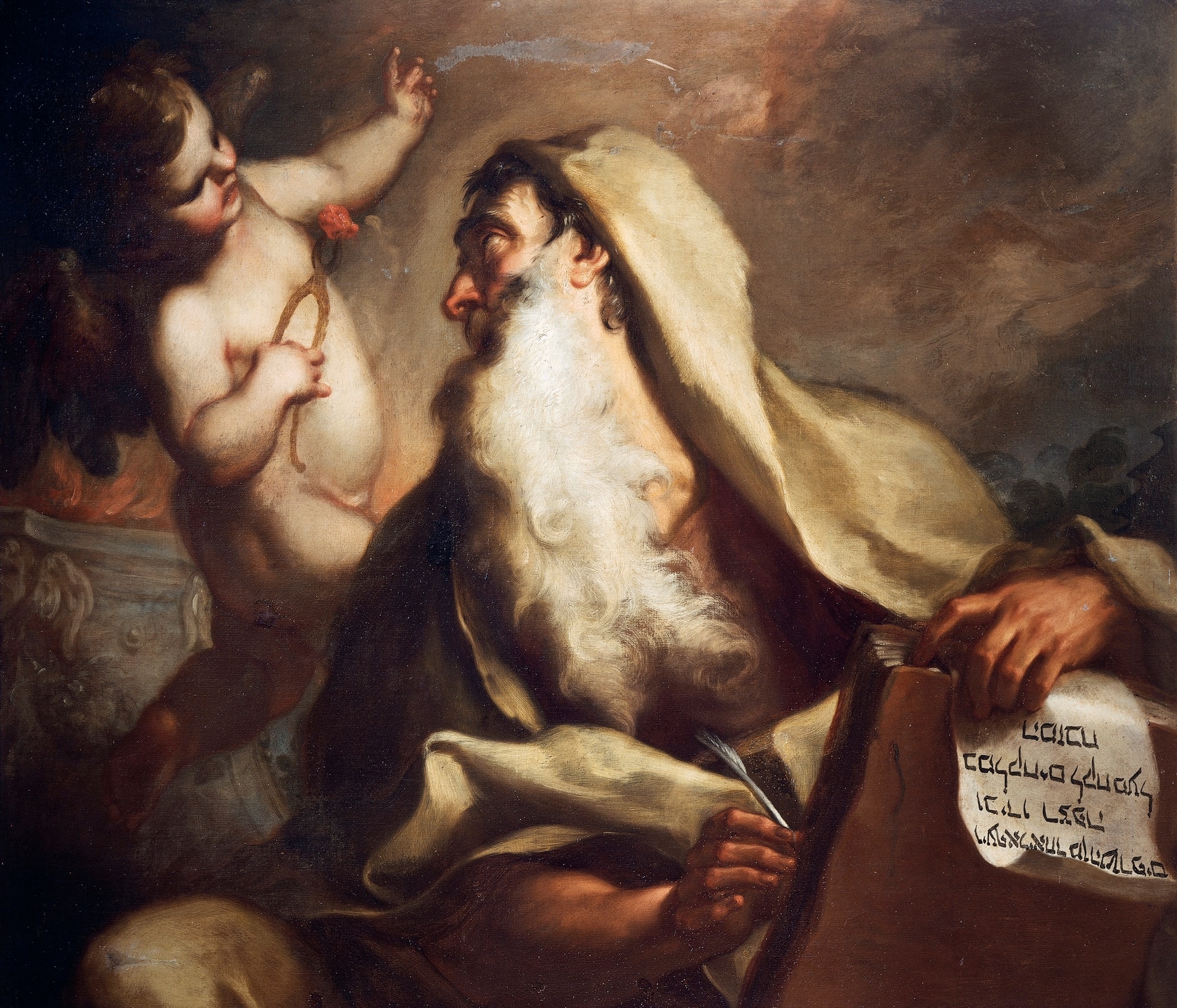
A seraph brings a burning coal from the altar with tongs, to touch Isaiah's lips (Isaiah 6:6-7). Antonio Balestra, The Prophet Isaiah, 18th century. Public domain, via Wikimedia Commons.
Isaiah 6:5-7 is the hinge of the Bible's best-known prophetic call. The vision of God's holiness produces not ecstasy but dread, and the dread is answered not by Isaiah's effort but by God's provision. The sequence runs conviction, cleansing, forgiveness, commission, and the order matters: Isaiah volunteers in verse 8 only after he has been cleansed in verse 7.
"Woe is me! for I am undone"
The verb Isaiah uses (nidmeti) can be read from a root meaning "to be cut off, destroyed" or from one meaning "to be silent." The translations on this page show both: ASV and WEB "I am undone," the KJV margin "cut off," YLT "I have been silent." Either way the cry is a confession of ruin in the presence of holiness, and it is specifically about lips. The seraphim have just used their lips to praise; Isaiah, a man "of unclean lips" among "a people of unclean lips," has nothing fit to say. He does not claim to be worse than his people. He includes himself among them.
The reason he gives is the vision itself: "mine eyes have seen the King, Jehovah of hosts." Seeing God was understood to be fatal for a sinner (compare Exodus 33:20), so his fear is not exaggerated. The Gospel of John later says that Isaiah "saw his glory; and he spake of him" (John 12:41), reading the King of Isaiah 6 as the pre-incarnate Christ. See Old Testament Christology.
The coal from the altar
The seraph takes "a live coal" (ritspah, a glowing stone or coal) "with the tongs from off the altar." Three details carry the meaning:
- The altar. The coal comes from the place of sacrifice, so the cleansing is tied to atonement rather than to a mere ritual of purity. Whether this is the altar of burnt offering or the incense altar is debated; both belonged to the sanctuary's provision for approaching God.
- The tongs. Even the seraph does not handle the coal directly. The holiness of the altar is not diminished to make the cleansing easy.
- The mouth. The coal touches the very organ Isaiah confessed was unclean, and the organ his calling will use. God cleanses the point of confession.
The text does not say Isaiah's mouth was burned, and it does not describe the coal as a punishment. The fire here purifies. See Fire of God in Scripture.
"Thine iniquity is taken away, and thy sin forgiven"
Verse 7 uses two of the Old Testament's main words for wrongdoing, avon (iniquity, guilt) and chattath (sin), and two verbs for dealing with them. The guilt "departs" or "turns aside" (YLT: "turned aside is thine iniquity"), and the sin is atoned for, from the verb kaphar, the vocabulary of the Day of Atonement (YLT: "thy sin is covered"). The form is passive. Isaiah does nothing in verses 6-7 except receive. See H3722 - kaphar, H5771 - avon and H2403 - chattath.
How the church has read it
- Christological. Following John 12:41, Christian interpreters from the early centuries onward read the enthroned King as the Son, and Isaiah's cleansing as an anticipation of the forgiveness Christ provides.
- Sacramental. In Eastern Christian tradition the coal became an image of the Eucharist. John of Damascus compares receiving the sacrament to Isaiah's coal (Exposition of the Orthodox Faith IV.13), and in the Byzantine Divine Liturgy the priest repeats the words of verse 7 after communion.
- Vocational. Jerome devoted a letter to the vision of Isaiah 6 (Letter 18), and preachers in every period have used the passage as the pattern of Christian calling: no one is fit to speak for God until God has dealt with his sin, and God deals with it before He sends.
Apologetic use
The passage is a compact answer to the charge that biblical religion is self-flattering. Isaiah's first response to God is not "I am chosen" but "I am undone." The text locates the problem in the prophet himself, provides the remedy from God's altar rather than from human merit, and only then hands out a mission. See Argument from Forgiveness and Atonement.
Key words
Theologically-loaded Greek or Hebrew words in this verse may have entries in the lexicon. Curated to roughly 100 contested terms across the corpus, not every word.
- H3722 - kaphar, kaphar, Strong's H3722
- H5771 - avon, avon, Strong's H5771
- H2403 - chattath, chattath, Strong's H2403
- H6635 - tzevaot, tzevaot, Strong's H6635
- H0259 - echad, echad, Strong's H0259
- H3068 - YHWH, YHWH, Strong's H3068
Quoted in
Arguments and defeaters:
- Argument from Awe and Wonder
- Argument from Forgiveness, via Isaiah 6.5
- Cumulative Case for the Deity of Christ, via Isaiah 6.1-10
Concepts:
- Angels, via Isaiah 6.1-8
- Christ is God, via Isaiah 6.1-5
- Christs Deity, via Isaiah 6.1-10
- Fire of God in Scripture
- No Longer Sinners, via Isaiah 6.7
- Old Testament Christology, via Isaiah 6.1-10
- Old Testament Witness to the Deity of Christ, via Isaiah 6.1-10
- Two Powers in Heaven, via Isaiah 6.1-10
People:
Lexicon:
- H3068 - YHWH, via Isaiah 6.1-10
- H3722 - kaphar, via Isaiah 6.7
Notes
Your annotations.
Why these four translations
ris3n chose ASV, WEB, KJV, and YLT for two reasons together. They are the most literal English translations available (formal-equivalence: word-for-word renderings that preserve the Hebrew and Greek grammar rather than smoothing it into modern dynamic-equivalence idiom). And they are in the public domain in the United States, which means fair-use quotation at any length requires no publisher license. Modern licensed translations (NASB95, ESV, NIV) restrict volume of quotation under their copyright terms, so they are not used at stub-level coverage here. NASB95 appears only on hand-curated rich passage hubs under Lockman Foundation's fair-use allowance.
The four:
- ASV (American Standard Version, 1901). The basis of the modern critical-text English tradition.
- WEB (World English Bible, contemporary). Public-domain revision in the ASV line, in current English.
- KJV (King James Version, 1611). Reformation-era, Textus Receptus base.
- YLT (Young's Literal Translation, Robert Young, 1862). Hyper-literal preservation of Hebrew and Greek grammar; useful for word-study work even where English reads stiff.
See Bibles for the full per-translation history, translators, textual basis, strengths, and weaknesses.