Concept
How Africa Shaped the Christian Mind
African Seedbed of Western Christianity, Oden Thesis, Oden's African Seedbed Thesis, Early African Christianity Thesis, Africa Shaped the Christian MindIntro
How Africa Shaped the Christian Mind is a 2007 book by the American theologian Thomas Oden, and the name has become shorthand for its big idea: in the early centuries of Christianity, the most important ideas flowed from Africa northward into Europe, not the other way round.
Oden points out that many of the church's greatest early thinkers lived and worked in Africa: Tertullian, Cyprian of Carthage and Augustine in the Roman provinces of North Africa, Clement of Alexandria, Origen, Athanasius and Cyril of Alexandria in Egypt. Monasticism began in the Egyptian desert. The way Christians read the Bible, settle doctrine in councils, and think about God was worked out to a striking degree by Africans. Oden argued that African Christians today should claim this heritage as their own, and that the idea of Christianity as a "white man's religion" brought to Africa by Europeans gets history backwards. Critics agree on much of the history but question how "African" these Greek- and Latin-speaking thinkers were in any sense that matters today.
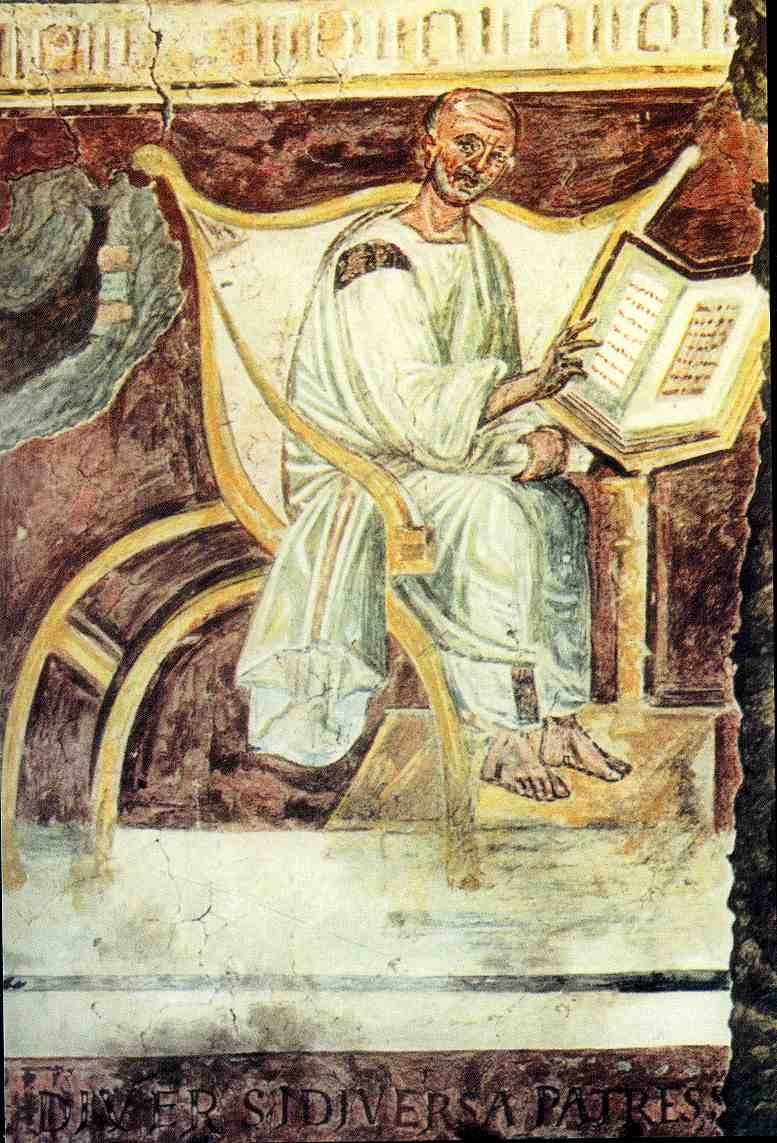 The oldest surviving portrait of Augustine of Hippo, a 6th-century fresco in the Lateran, Rome. Public domain (Wikimedia Commons), resized.

See this page's graph and discover linked topics
In full
In How Africa Shaped the Christian Mind: Rediscovering the African Seedbed of Western Christianity (IVP Books, 2007), Thomas C. Oden (1931-2016), a Methodist theologian at Drew University best known as general editor of the Ancient Christian Commentary on Scripture, argued that the formative intellectual history of early Christianity ran largely "south to north": that decisive patterns of Christian thought were first worked out on the African continent, especially in Alexandria and Carthage, and only later received in Europe. He identified seven areas of formative African influence: (1) the Western idea of the university, through Alexandria's library and catechetical school; (2) Christian exegesis of Scripture; (3) the shaping of early Christian doctrine (Tertullian, Origen, Cyprian, Athanasius, Augustine); (4) conciliar patterns of ecumenical decision-making, modeled in African councils; (5) the birth and development of monasticism; (6) Christian Neoplatonism; and (7) the development of rhetorical and dialectical skill. Oden presented the book less as a finished demonstration than as a research program and a call for African scholars to recover and claim this "seedbed", and he pursued it in later works including The African Memory of Mark (2011) and Early Libyan Christianity (2011). The thesis has been welcomed as a corrective to histories that treat early Christianity as essentially European, and criticized for stretching the category "African" and for overstating particular claims.
Oden's seven ways
| # | Claim | Representative evidence Oden cites |
|---|---|---|
| 1 | The university | The Alexandrian library and museum; the catechetical school of Pantaenus, Clement and Origen as a model of Christian higher learning |
| 2 | Biblical exegesis | Philo's and Origen's methods of interpretation; Alexandrian and African commentary traditions |
| 3 | Doctrine | Tertullian's Latin Trinitarian vocabulary; Athanasius on the Trinity and canon; Cyril on Christ; Augustine on grace |
| 4 | Conciliar decision-making | The many councils of the North African church under Cyprian and Augustine as a pattern for later ecumenical councils |
| 5 | Monasticism | Antony the Great, Pachomius and the Desert Fathers and Mothers |
| 6 | Christian Neoplatonism | Alexandrian philosophy, and Plotinus, born in Egypt, as the background to Christian Platonism from Origen to Augustine |
| 7 | Rhetoric and dialectic | The schools of Carthage and Alexandria that trained Tertullian, Augustine and others |
The case for the thesis
- Geography is not in dispute. Carthage, Hippo, Thagaste, Alexandria and the Egyptian desert are in Africa. The thinkers Oden names were born, trained and buried there, and they called their churches African.
- The order of influence is real. Tertullian and Cyprian wrote Latin theology before Rome produced comparable writers; Alexandrian exegesis shaped Jerome, Ambrose and the Cappadocians; Augustine shaped the whole Latin West; the monastic life spread from Egypt outward.
- Not only the coast. Oden stresses that Christian Africa included inland Numidia, Coptic Upper Egypt, Christian Nubia and Aksum, not just Greek and Roman port cities. See Kingdom of Aksum.
- A corrective to a distorted story. Many modern textbooks treat these figures as simply "Western" or "patristic", which erases where they lived. Oden's claim is that the history, rightly told, makes Africa a giver and not merely a receiver of Christian thought. See Christianity Is the White Mans Religion Objection Defeater and Christian Pre-Colonial African Heritage Argument.
Objections and critiques
- "African" is an anachronism. In the Roman world "Africa" was a province around Carthage, and the educated elites of Alexandria and Carthage thought of themselves as Greek or Roman. Critics argue that calling them "African" in the modern, continental and often racial sense imports a category they did not use. Defenders reply that the same objection would forbid calling them "European", which is how they are usually claimed, and that their own self-description shows locality mattered to them: Augustine, writing to a pagan who mocked Punic names, describes himself as an African writing to Africans (Letter 17).
- North Africa is not sub-Saharan Africa. Reviewers have named this the biggest objection: most of today's African Christians live south of the Sahara and descend from peoples with no tie to Roman Carthage or Greek Alexandria. Defenders answer that the Nile and Red Sea churches (Egypt, Nubia, Aksum) did reach deep into the continent, and that continental heritage is not limited to bloodlines.
- The thesis is overstated. A Dallas Seminary reviewer, while appreciative, judged that "the case that North African theology was distinctly African may be overstated." Others call the book an outline of an argument more than an argument, a description Oden partly accepted by framing it as a call for further research.
- Particular claims are stretched. Tracing the European university to Alexandria skips many centuries and intermediaries. Plotinus, though born in Egypt, was a pagan philosopher, so "Christian Neoplatonism" was an African contribution only in part.
- Who is doing the claiming? Some critics note the irony of a white American theologian announcing Africa's intellectual heritage. Oden himself framed the project as one for African scholars to carry forward.
How to use the thesis fairly
- Strong and safe: Christianity was deeply rooted in Africa for centuries before European colonialism, and African churches produced some of the most influential theologians, institutions and practices in Christian history.
- Arguable: That this influence was distinctively "African" in culture, rather than Mediterranean thought produced on African soil.
- Avoid: Claiming the Church Fathers for any modern racial category; the sources rarely describe their skin color, and the argument does not need it.
Tensions
- Oden vs his critics on identity. Oden treats birthplace and residence as sufficient to call these figures African; critics treat cultural self-identification as decisive. The codex records both views; the historical facts of location and influence are not in dispute.
- Overlap with the decline story. If African Christianity was so formative, why did the Latin church of North Africa disappear? Oden's critics press this; his defenders point to the survival of Coptic, Ethiopian and (for centuries) Nubian Christianity. See Decline of North African Christianity.
Scholarship
Published academic works this page draws on, each matched to a publisher, index or library catalog record.
- Thomas C. Oden, The African memory of mark (2011). Open Library
- Thomas C. Oden, Early Libyan Christianity: Uncovering a North African Tradition (2011). Open Library
See also
- Thomas Oden, the author of the thesis
- Augustine, Tertullian, Cyprian of Carthage, the Latin African fathers
- Athanasius, Origen, Clement of Alexandria, Cyril of Alexandria, the Alexandrian fathers
- Church at Alexandria, the intellectual center Oden emphasizes
- Desert Fathers and Mothers, monasticism as an African contribution
- Decline of North African Christianity, why much of this heritage was lost
- Christian Pre-Colonial African Heritage Argument, the apologetic use of this history
- Africa and Christianity, the master hub
Common questions this page answers
Q: What is How Africa Shaped the Christian Mind about?
It is a 2007 book by Thomas Oden arguing that many of Christianity's formative ideas and institutions, from biblical interpretation and doctrine to monasticism, were first developed in Africa, especially Alexandria and Carthage, and then received in Europe.
Q: What are Oden's seven ways Africa shaped Christianity?
The idea of the university, Christian exegesis of Scripture, early Christian doctrine, conciliar decision-making, monasticism, Christian Neoplatonism, and rhetorical and dialectical skill.
Q: Were the early Church Fathers African?
Many lived and worked in Africa: Tertullian, Cyprian and Augustine in Roman North Africa; Clement, Origen, Athanasius and Cyril in Alexandria. They were African by birth and residence; whether they were African in culture or identity in the modern sense is debated.
Q: Was Augustine African?
Yes. He was born in Thagaste in Numidia (modern Algeria), was bishop of Hippo (modern Annaba, Algeria), and spoke of himself and his people as Africans. His mother Monica bore a name many scholars connect to local Berber culture.
Q: Did Christianity come to Africa from Europe?
No. Christianity was established in Egypt, North Africa, Nubia and Ethiopia centuries before most of northern Europe was evangelized, and African churches shaped the theology Europe later received. European missions of the colonial era came much later.
Q: What are the main criticisms of Oden's thesis?
That "African" is used anachronistically for Greek- and Latin-speaking Roman elites, that North African history is not the heritage of most sub-Saharan Christians, and that some specific claims, such as the origin of the university, are overstated.