Person
Hophra
Pharaoh Hophra, Apries, Wahibre, Wahibre Haaibre, Ouaphris, Hophra king of EgyptIntro
Hophra is the Bible's name for Apries, king of Egypt from 589 to 570 BC. He was the pharaoh Judah's last king, Zedekiah, counted on when he rebelled against Babylon. Hophra's army marched out while Babylon was besieging Jerusalem, the Babylonians pulled back for a moment, and then the Egyptians went home and the siege resumed. Jerusalem fell in 587/586 BC.
Jeremiah, taken to Egypt against his will by the survivors, named Hophra in a final warning: God would hand Pharaoh Hophra over to his enemies, to those who wanted him dead, as he had handed Zedekiah to Nebuchadnezzar. Egyptian records and the Greek historian Herodotus say Apries lost his throne to his own general Amasis and was killed.
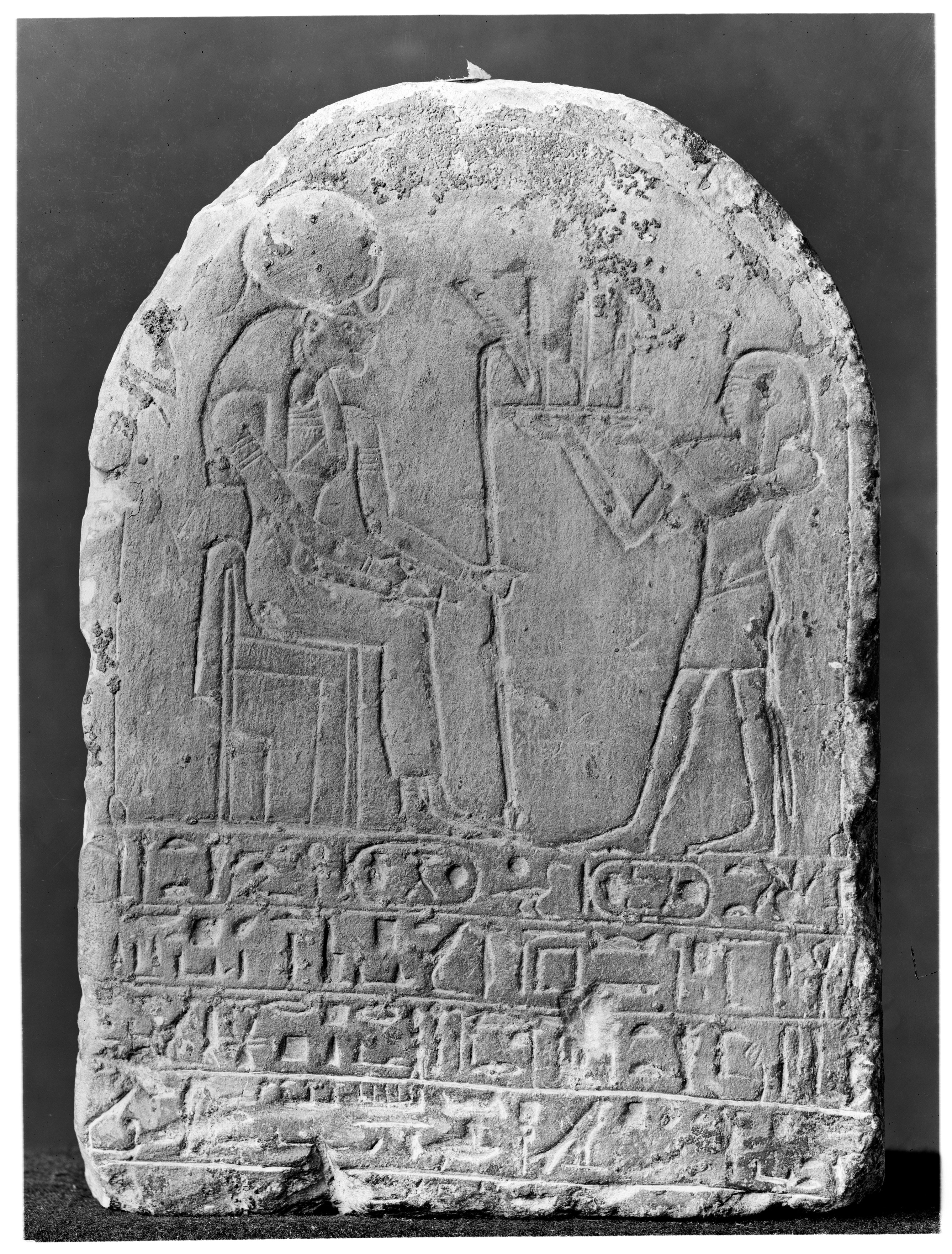
Donation stela of Apries recording a gift of land to the goddess Bastet, Dynasty 26, Metropolitan Museum of Art, New York (04.2.11). Image: CC0, via Wikimedia Commons, resized.

The 30-second version:
Hophra is Apries, pharaoh of Egypt from 589 to 570 BC, the ally Zedekiah trusted when he rebelled against Babylon. His army briefly drew the Babylonians away from Jerusalem, then withdrew, and the city fell. Jeremiah foretold that God would give Hophra into the hands of those who sought his life. Apries is known from his own monuments, from an inscription of his successor Amasis, and from Herodotus, who says the Egyptians strangled him after Amasis took the throne.
See this page's graph and discover linked topics
In full
Hophra (Hebrew Ḥophraʿ) renders the Egyptian throne-name element Wahibre (Wꜣḥ-ib-Rꜥ), the personal name of the fourth king of the Saite Twenty-Sixth Dynasty, known in Greek as Apries and in Manetho's lists as Ouaphris. Son of Psamtik II, he reigned 589-570 BC. He backed the Levantine revolt against Nebuchadnezzar II, and his relief force caused the temporary lifting of the siege of Jerusalem (Jeremiah 37:5-11). A disastrous expedition against Greek Cyrene around 570 BC triggered an army mutiny that made his general Ahmose II (Amasis) king. The Elephantine stela of Amasis, republished by Karl Jansen-Winkeln (2014), records the fighting between the two and Apries' death and burial, with a later attempt to restore him supported by "Asiatics" that Ivan Ladynin (2006) identified as Babylonian troops. Herodotus (Histories 2.161-169) says Apries was defeated at Momemphis, handed over by Amasis to the Egyptians, strangled, and buried in his family's tomb at Sais. Jeremiah 44:30 is the only verse that names him. Lawrence Mykytiuk lists him among the 53 Hebrew Bible persons confirmed by archaeology.
In the Bible
- Jeremiah 44:30, the only verse that names him: "Thus saith Jehovah, Behold, I will give Pharaoh Hophra king of Egypt into the hand of his enemies, and into the hand of them that seek his life; as I gave Zedekiah king of Judah into the hand of Nebuchadrezzar king of Babylon, who was his enemy, and sought his life" (ASV). It is spoken to the Judeans who had fled to Egypt after the murder of Gedaliah, as a sign that the disaster announced for them would come.
- Jeremiah 37:5-11, unnamed but dated to his reign: "Pharaoh's army was come forth out of Egypt; and when the Chaldeans that were besieging Jerusalem heard tidings of them, they brake up from Jerusalem" (37:5, ASV). Jeremiah warns that the army "shall return to Egypt into their own land" (37:7, ASV) and the Babylonians will come back.
- Ezekiel 17:15, Zedekiah's embassy to Egypt for "horses and much people," the alliance Hophra answered.
- Ezekiel 29-32, the oracles against "Pharaoh king of Egypt," dated from the tenth to the twelfth year of Jehoiachin's exile (c. 587-585 BC), fall within his reign. Ezekiel 29:3 pictures him as "the great monster that lieth in the midst of his rivers, that hath said, My river is mine own" (ASV), and Ezekiel 30:21 says, "I have broken the arm of Pharaoh king of Egypt" (ASV), usually read as the failure of the relief army.
- Jeremiah 43:8-13 and 46:13-26, oracles that Nebuchadrezzar would strike Egypt, delivered at Tahpanhes during his reign.
Family and lineage
- Father: Psamtik II (595-589 BC). Grandfather: Necho II, the pharaoh who killed Josiah at Megiddo (2 Kings 23:29) and lost to Nebuchadnezzar at Carchemish (Jeremiah 46:2).
- Sister: Ankhnesneferibre, installed as God's Wife of Amun at Thebes during his reign, according to Livius.org's summary of the Saite evidence.
- Successor: Ahmose II (Amasis), his own general, who first ruled alongside him and then replaced him.
Historical and archaeological evidence
- His own monuments. Apries is one of the better-documented Saite kings. Objects carrying his name include the donation stela pictured above (Metropolitan Museum of Art), a sphinx of Apries in the Louvre (N 515), and the small obelisk he set up at Sais, which was later taken to Rome and now stands on Bernini's elephant in front of Santa Maria sopra Minerva. Building work in his name is recorded at Sais, Memphis, Athribis and other sites; at Memphis Flinders Petrie excavated a palace complex associated with him. Grade: direct.
- The Elephantine stela of Amasis. A granite victory stela of his successor, formerly in the Egyptian Museum, Cairo, and now in the Nubian Museum, Aswan, describes the conflict between Amasis and Apries and Apries' death and burial. Karl Jansen-Winkeln's 2014 republication dates the final battle to Amasis' fourth year (c. 567 BC). Ivan Ladynin (2006) argued that the "Asiatics" in the text who came to restore Apries were Babylonians, which would put Nebuchadnezzar behind the deposed pharaoh. Mykytiuk cites this inscription, describing Apries' burial by his successor, as the basis for the identification. Grade: direct.
- Herodotus, Histories 2.161-169. The fullest narrative. Herodotus says Apries reigned twenty-five years, fought Sidon and Tyre, lost his army against Cyrene, faced a revolt that made Amasis king, and was defeated at Momemphis. He was kept for a time in the palace at Sais, then handed over to the Egyptians, who strangled him and buried him in the family tomb in the temple of Athena (Neith) at Sais (2.169). Herodotus also reports that Apries believed not even a god could remove him from his kingdom. Herodotus wrote about 120 years later from Egyptian informants, so details are weighed against the Egyptian sources. Grade: literary, consistent with the stela on the main outcome.
- The Lachish Letters. Lachish Letter 3 reports that the Judean commander Coniah son of Elnathan had gone down to Egypt, usually read as part of Zedekiah's appeal for help in Hophra's reign. It does not name the pharaoh. See Lachish Letters.
Scholarly consensus
- Identification: settled. Hebrew Hophra and Egyptian Wahibre are accepted across scholarship as the same king, and the reign dates match the fall of Jerusalem.
- How he died. Herodotus' strangling account and the stela's battle-and-burial account are both read by Egyptologists as pointing to a violent death around 567 BC. Ian Shaw and Paul Nicholson favor death in battle; Herodotus has him captured and later killed. On either reading he fell into the hands of those who sought his life.
- Babylon's role. Whether Nebuchadnezzar backed Apries' attempted return depends on Ladynin's identification of the "Asiatics" and on a fragmentary Babylonian text about a campaign against Amasis in Nebuchadnezzar's thirty-seventh year (BM 33041). The second text is secure; its link to Apries is debated.
- The date of Jeremiah 44:30. Scholars who date Jeremiah's prose sermons late read the verse as written after Apries fell; those who date it to Jeremiah's lifetime read it as prediction. The verse sits in a chapter set shortly after 586 BC, some fifteen to twenty years before his death.
Theological significance
- The broken reed. The prophets warned for a century that Egypt was no refuge (Isaiah 30-31; 2 Kings 18:21). Hophra is the last chapter of that story: his army raised hopes in Jerusalem, withdrew, and the city fell. Jeremiah's word that Pharaoh's army "shall return to Egypt" came true within weeks.
- A sign for the exiles in Egypt. Jeremiah 44 addresses Judeans who had fled to Egypt and returned to the worship of the queen of heaven. The fall of the pharaoh they trusted was given as the sign that God's word against them would stand.
- Pride before a fall. Ezekiel's portrait of Pharaoh claiming the Nile as his own creation (Ezekiel 29:3) and Herodotus' report that Apries thought no god could unseat him make the same point from two directions: a king who thought himself secure was removed by his own servants.
See also
- Prophecies Against the Nations, the oracles against Egypt in Jeremiah and Ezekiel
- Nebuchadrezzar, the Babylonian king Hophra opposed
- Lachish Letters, Judah's last days and the appeal to Egypt
- Babylonian Chronicle and the Capture of Jerusalem, Babylon's own record of the campaigns
- Taharqa, an earlier pharaoh who marched to help Judah, against Assyria
- Biblical Figures Confirmed by Archaeology, Mykytiuk's list
- People of the Bible, every person on the hub, grouped by book of first mention
- Necho II, his predecessor on the Egyptian throne
Common questions this page answers
Q: Who was Pharaoh Hophra in the Bible?
He was Apries, king of Egypt from 589 to 570 BC, of the Saite Twenty-Sixth Dynasty. He was Zedekiah's ally during the Babylonian siege of Jerusalem and is named in Jeremiah 44:30.
Q: Did Jeremiah's prophecy against Pharaoh Hophra come true?
Jeremiah said God would give Hophra into the hands of those who sought his life. Apries was overthrown by his general Amasis after a mutiny around 570 BC and was killed about 567 BC, either in battle, as the Egyptian stela suggests, or by strangling after capture, as Herodotus reports.
Q: Is there archaeological evidence for Pharaoh Hophra?
Yes. Apries left many monuments with his name, including stelae, a sphinx in the Louvre and an obelisk now in Rome, and his successor's Elephantine stela records his defeat and burial. Lawrence Mykytiuk counts him among the Bible figures confirmed by archaeology.
Q: Why did the Babylonians lift the siege of Jerusalem?
Because Pharaoh's army, sent by Hophra, came out of Egypt (Jeremiah 37:5). The pause was brief. Jeremiah warned that the Egyptians would go home and the Babylonians would return and burn the city, which happened in 587/586 BC.