Person
Herod Archelaus
Archelaus, Herod Archelaus of Judea, Archelaus the ethnarch, Herod the EthnarchIntro
Herod Archelaus was the son of Herod the Great who ruled Judea after his father died. Matthew mentions him once: when Joseph brought Mary and the child Jesus back from Egypt, he heard that Archelaus was ruling Judea and was afraid to go there, so the family settled in Nazareth in Galilee.
Joseph had good reason to be afraid. Josephus reports that Archelaus began his reign by sending soldiers into the Temple courts at Passover, where about three thousand people were killed. After ten years of harsh rule his own subjects complained to Rome, and the emperor Augustus removed him and sent him into exile in Gaul. His coins still survive.
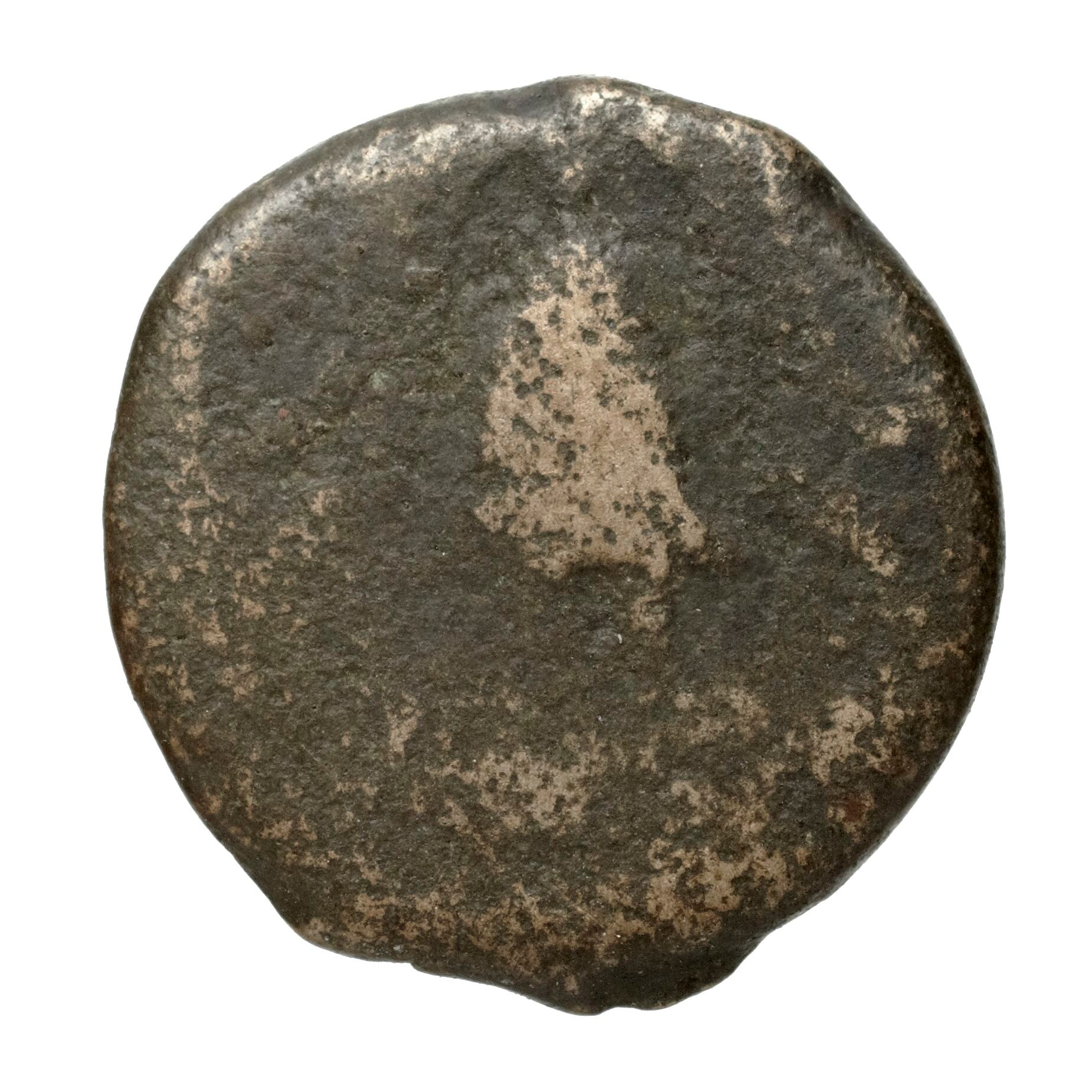
Bronze prutah of Herod Archelaus, ethnarch of Judea (4 BC to AD 6), Bibliothèque nationale de France, Cabinet des médailles. Public domain, via Wikimedia Commons, resized.

See this page's graph and discover linked topics
In full
Archelaus was a son of Herod the Great by Malthace, a Samaritan, and the full brother of Herod Antipas. Herod's final will named him king of the core of the realm. Augustus confirmed him over Judea, Samaria and Idumea, about half the kingdom, but gave him the lesser title ethnarch, promising the royal title if he proved worthy (Josephus, Antiquities 17.317-320; Jewish War 2.93-94).
His reign was troubled from the start:
- The Passover killings. Before he had even left for Rome, protests in the Temple over Herod's last executions were put down by his troops, and Josephus says about three thousand were killed at the festival (Antiquities 17.213-218; Jewish War 2.10-13).
- The journey to Rome. He sailed to Rome to have the will confirmed. A delegation of fifty Jews, supported by thousands of Jews living in Rome, followed him and asked Augustus not to make him king at all (Antiquities 17.299-314).
- Scandal. He divorced his wife to marry Glaphyra, the widow of his half-brother Alexander, a marriage Jewish law forbade because she had children by Alexander (Antiquities 17.341).
- Deposition. In about AD 6, after complaints from both Jews and Samaritans, Augustus summoned him, deposed him and banished him to Vienne in Gaul (Antiquities 17.342-344; Jewish War 2.111). His territory became a Roman province under a prefect, and the legate of Syria, Quirinius, carried out a census of its property (Antiquities 17.355; 18.1-2).
In the Bible
Archelaus is named once:
But when he heard that Archelaus was reigning over Judæa in the room of his father Herod, he was afraid to go thither; and being warned of God in a dream, he withdrew into the parts of Galilee, (Matthew 2:22, ASV)
- Why Nazareth. The verse explains why Jesus grew up in Galilee, under Antipas, instead of in Judea near Bethlehem. Galilee and Judea had been split between two of Herod's sons, and Matthew's detail assumes that division accurately.
- "Reigning." Matthew uses the verb for ruling as a king. Archelaus' official title was ethnarch, but Josephus shows that he acted as king from his father's death and that people called him so; the usage is natural and does not misstate his office.
- The parable of the pounds. Many commentators, including Joachim Jeremias (The Parables of Jesus), have seen in Luke 19:12-27 an echo of Archelaus' journey: "A certain nobleman went into a far country, to receive for himself a kingdom, and to return" (Luke 19:12, ASV), followed by citizens who "sent an ambassage after him, saying, We will not that this man reign over us" (Luke 19:14, ASV). The parable does not name him, and the identification is an inference, but the story would have reminded a first-century Judean audience of recent events.
Family and lineage
- Father: Herod the Great.
- Mother: Malthace, a Samaritan.
- Full brother: Herod Antipas. Half-brother: Philip the Tetrarch, and others among Herod's many sons.
- Wives: a first wife named Mariamne (divorced), then Glaphyra, daughter of Archelaus king of Cappadocia and widow of his half-brother Alexander.
- Succession: none. After his removal Judea passed under direct Roman governors, the line of prefects that includes Pontius Pilate.
Historical and archaeological evidence
- Coins. Archelaus struck small bronze coins in Judea inscribed in Greek "of Herod" on one side and "ethnarch" on the other. He used his dynastic name, Herod, on his coinage, which helps explain why the Gospels and Josephus can call more than one of Herod's sons simply "Herod". Specimens are held in major collections, including the Bibliothèque nationale de France. Grade: direct.
- Josephus. Antiquities 17 and Jewish War 2 narrate his reign, embassy and banishment, with dates and names. See Josephus.
- Dio Cassius (Roman History 55.27.6) also records that Herod of Palestine was banished beyond the Alps and his territory made public property, in AD 6.
- Mykytiuk lists Archelaus among the thirty New Testament figures confirmed outside the New Testament, on the basis of Josephus and his coins. See Biblical Figures Confirmed by Archaeology.
Scholarly consensus
His existence, title, territory and deposition in AD 6 are uncontested. Historians differ only on details of chronology, such as whether the deposition fell in his ninth or tenth year (Josephus gives both). His reign matters for New Testament study chiefly as a fixed point: it ends the Herodian rule of Judea and opens the period of Roman prefects and of the census of AD 6 that Acts 5:37 mentions. On the relation of that census to Luke 2:2, see Quirinius Census Contradiction Objection Defeater.
Theological significance
- Providence in the details of politics. Matthew presents the move to Nazareth as directed by God through a dream and through the political map left by Herod's will. The family's settling in Galilee leads to Matthew's comment that Jesus "should be called a Nazarene" (Matthew 2:23).
- The kind of kingship Jesus refused. Archelaus sought a throne at Rome and was rejected by his own people. Jesus, offered kingship on the world's terms, refused it (Matthew 4:8-10; John 6:15), and was crowned with thorns.
Church Fathers
Eusebius, Church History 1.9 ("The Times of Pilate"), records from Josephus that Archelaus succeeded Herod and that after his removal the government passed to Roman governors, with the tetrarchies held by Herod's other sons, setting the scene for Luke 3:1. See Eusebius of Caesarea. No fuller patristic comment on him is known.
See also
- People of the Bible, the full list of biblical people by book of first mention
- Herod the Great, his father
- Herod Antipas, his brother, ruler of Galilee where Jesus grew up
- Philip the Tetrarch, his half-brother
- Augustus, who confirmed and then deposed him
- Quirinius, who took the census after his removal
- Matthew-Luke Birth Narrative Timeline, the return from Egypt
- Biblical Figures Confirmed by Archaeology, Mykytiuk's list
Common questions this page answers
Q: Who was Archelaus in Matthew 2:22?
Herod Archelaus was the son of Herod the Great who ruled Judea, Samaria and Idumea from 4 BC to AD 6. Joseph heard he was ruling Judea and settled the family in Nazareth in Galilee instead.
Q: Why was Joseph afraid of Archelaus?
Archelaus had a reputation for brutality from the start of his reign. Josephus reports that his soldiers killed about three thousand people in the Temple at Passover, and after about ten years Augustus deposed him for misrule.
Q: Is the parable of the pounds about Archelaus?
Many commentators think Luke 19:12-27 echoes his trip to Rome to receive his kingdom and the delegation of his subjects who opposed him. The parable does not name him, so the link is a likely allusion, not a stated identification.
Q: What happened to Herod Archelaus?
Augustus removed him in about AD 6 after complaints from his subjects and exiled him to Vienne in Gaul. Judea became a Roman province governed by prefects, and Quirinius, the legate of Syria, took a census of the new province.