Person
Gamaliel
Gamaliel the Elder, Rabban Gamaliel the Elder, Gamaliel I, Rabban Gamaliel, GamlielIntro
Gamaliel was the most honored Jewish teacher of his generation, a Pharisee and member of the council in Jerusalem. He appears twice in the book of Acts. When the council wanted to kill the apostles, Gamaliel stood up and warned them to leave these men alone: if their work was merely human it would fail, "but if it is of God, ye will not be able to overthrow them; lest haply ye be found even to be fighting against God" (Acts 5:39, ASV). Years later Paul told a Jerusalem crowd that he had been "brought up in this city, at the feet of Gamaliel" (Acts 22:3, ASV).
Jewish tradition remembers him as Rabban Gamaliel the Elder, the grandson of the great teacher Hillel. The Mishnah, compiled around AD 200, records his rulings and says that when he died "the glory of the Law" ceased.
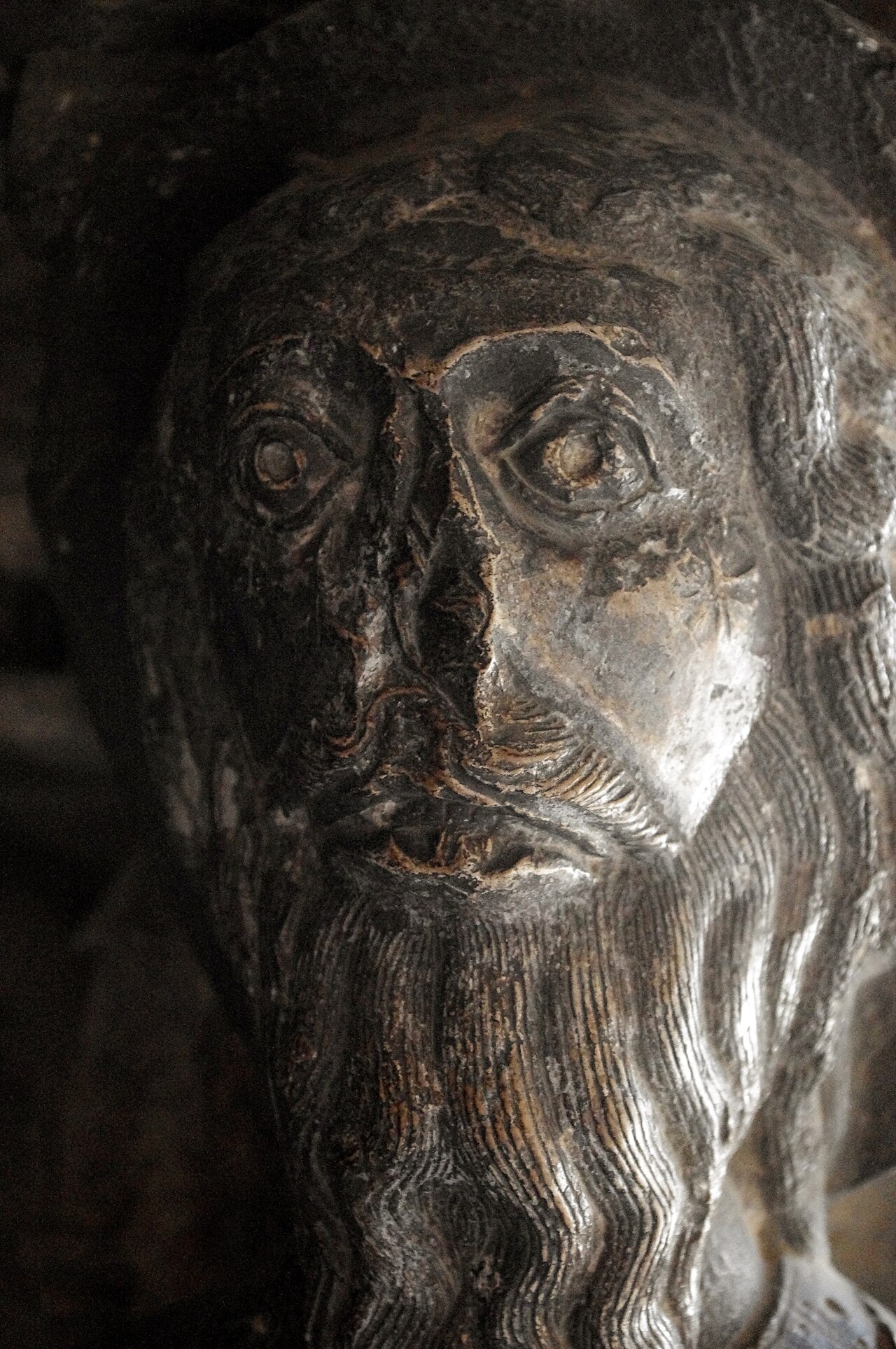
Head of Gamaliel, 12th-century Romanesque sculpture in the east gallery of the cloister of Saint-Trophime, Arles, France. Photo: Danielclauzier, CC BY-SA 3.0, via Wikimedia Commons, resized. The carving is a medieval imagining, not a portrait.

The 30-second version:
Gamaliel was a leading Pharisee and teacher of the Law, honored by all the people. In Acts 5 he persuades the council to spare the apostles, arguing that a movement from God cannot be stopped and a merely human one will collapse on its own, as the followers of Theudas and Judas of Galilee had. Paul was his student. Jewish sources remember him as Rabban Gamaliel the Elder, grandson of Hillel, and Josephus names his son Simon as a leading Pharisee of the next generation.
See this page's graph and discover linked topics
In full
Gamaliel the Elder (Hebrew Gamliel, "God is my reward") was a Pharisaic scholar active in Jerusalem in the second quarter of the first century AD. Acts calls him "a Pharisee, named Gamaliel, a doctor of the law, had in honor of all the people" (Acts 5:34, ASV) and gives him a speech before the Sanhedrin that cites two failed revolutionaries, Theudas and Judas of Galilee, as precedent for leaving the apostles alone (Acts 5:35-39). Paul names him as his teacher (Acts 22:3). Rabbinic literature knows him as Rabban Gamaliel the Elder (ha-Zaqen), distinguishing him from his grandson Gamaliel II of Yavneh; it credits him with legal enactments on divorce documents and the calendar, and remembers him as a descendant of Hillel. Josephus does not name Gamaliel himself but names his son, Simon son of Gamaliel, as a leading Pharisee during the revolt of AD 66-70. The combination makes his existence well established, though the evidence is literary rather than archaeological, and the rabbinic sources are later.
In the Bible
- Acts 5:33-40, the council and the apostles. When the council "were minded to slay them," Gamaliel has the apostles put out, then argues: "Refrain from these men, and let them alone: for if this counsel or this work be of men, it will be overthrown: but if it is of God, ye will not be able to overthrow them" (Acts 5:38-39, ASV). The council is persuaded, beats the apostles and releases them.
- His precedents. He reminds the council that "before these days rose up Theudas, giving himself out to be somebody... who was slain; and all, as many as obeyed him, were dispersed," and that "after this man rose up Judas of Galilee in the days of the enrolment... he also perished" (Acts 5:36-37, ASV). See Judas of Galilee.
- Acts 22:3, Paul's teacher. "I am a Jew, born in Tarsus of Cilicia, but brought up in this city, at the feet of Gamaliel, instructed according to the strict manner of the law of our fathers" (ASV). Sitting "at the feet" was the posture of a disciple. Paul elsewhere calls himself "a Pharisee, a son of Pharisees" (Acts 23:6) and "as touching the law, a Pharisee" (Philippians 3:5).
Family and lineage
- Ancestry. Rabbinic tradition makes him the son of Simeon and grandson of Hillel the Elder; the Babylonian Talmud lists Hillel, Simeon, Gamaliel and Simeon as holding the leadership in the century before the temple's destruction (Shabbat 15a). Many historians accept the descent from Hillel; some regard the tidy succession of "patriarchs" as a later construction.
- Son. Simon (Shimon) son of Gamaliel, a leader of the Pharisees in Jerusalem during the revolt, named by Josephus (Life 190-192; Jewish War 4.159) and remembered in the Mishnah as Rabban Shimon ben Gamaliel.
- Grandson. Rabban Gamaliel II, head of the academy at Yavneh after AD 70 and a central figure of early rabbinic Judaism.
- Student. Saul of Tarsus, the apostle Paul.
Historical and archaeological evidence
The Mishnah and Talmud
The Mishnah (c. AD 200) cites "Rabban Gamaliel the Elder" in several places, including:
- Gittin 4:2-3. Enactments "for the sake of the social order," for example that a bill of divorce must give all the names by which husband and wife are known, to protect the woman's ability to remarry.
- Rosh Hashanah 2:5. A ruling allowing witnesses who came to testify to the new moon to walk two thousand cubits in any direction on the Sabbath.
- Sotah 9:15. A summary of the great sages: when Rabban Gamaliel the Elder died, the glory of the Torah ceased and purity and separateness died.
These sources were compiled more than a century after his death and attach some material to him that may belong to his grandson, so scholars use them cautiously. They establish a strong and early tradition of a Jerusalem sage of this name and standing.
Josephus
Josephus does not mention Gamaliel, but describes his son: "Simon, the son of Gamaliel... This Simon was of the city of Jerusalem, and of a very noble family; of the sect of the Pharisees; which are supposed to excel others in the accurate knowledge of the laws of their countrey. He was a man of great wisdom, and reason" (Life 190-191, Whiston). Josephus treats the family as distinguished, which fits Acts' description of the father as "had in honor of all the people."
No artifact
No inscription naming Gamaliel the Elder is known. A burial inscription from Beth Shearim naming a Rabbi Gamaliel belongs to a much later member of the family.
Grade. Strong. Mykytiuk lists Gamaliel the Elder among the 30 New Testament persons confirmed outside the Bible, on the Mishnah and Josephus' Life (see Biblical Figures Confirmed by Archaeology). The evidence is entirely literary.
Scholarly consensus
- Historicity. Accepted. Gamaliel is attested independently in rabbinic tradition, and his son in Josephus.
- Paul as his student. Most scholars accept that Paul trained in Jerusalem as a Pharisee; some, noting that Paul's letters never name Gamaliel and that his Greek education was substantial, think Luke may have strengthened the connection. The claim fits Paul's own account of his zeal for "the traditions of my fathers" (Galatians 1:14) and his rabbinic methods of argument.
- The speech. Acts' speeches are Luke's compositions in the manner of ancient historians, and scholars debate how closely this one reflects what was said. Its tolerant stance fits what rabbinic sources say about the school of Hillel.
- The Theudas problem. Gamaliel's speech, around AD 34, mentions Theudas before Judas of Galilee (AD 6). Josephus describes a Theudas who led followers to the Jordan under the procurator Fadus, about AD 44-46, after the speech (Antiquities 20.97-98). Three explanations are held:
- A different Theudas. Josephus says that after Herod's death in 4 BC Judea was full of rebel leaders, most unnamed (Ant. 17.269-285); a Theudas among them would fit Gamaliel's order. Theudas (a short form of names like Theodotus) was not rare. Conservative scholars often take this view.
- An error in Acts. Many critical scholars hold that Luke misplaced the later Theudas; some, such as Steve Mason, argue that Luke knew and misread Josephus, though this requires a late date for Acts.
- An error in Josephus. A minority view; Josephus' chronology is not infallible, but his date for Theudas under Fadus is specific. The question is unresolved; the codex records it as open.
Theological significance
- Gamaliel's principle. "If it is of God, ye will not be able to overthrow them" is a test of history, and Luke presents the rest of Acts as the answer. The followers of Theudas and Judas scattered after their leaders died; the followers of Jesus, after his death, multiplied. Origen draws exactly this lesson (see below). See Messiahs Before Jesus Objection Defeater.
- Fighting against God. Gamaliel's warning that the council might be found "fighting against God" (Greek theomachoi) is echoed in the conversion of his own student, who heard, "it is hard for thee to kick against the goad" (Acts 26:14, ASV).
- A fair-minded opponent. Luke gives a Pharisee the role of the voice of caution, which fits the more measured portrait of Pharisees in Acts (see also Acts 23:9) and cautions against reading the Gospels' conflicts as a verdict on all Pharisees.
Church Fathers
- Origen (c. AD 248) quotes "the extremely wise observation of that Gamaliel named in the book of Acts" and applies it to Theudas, Judas the Galilean and Dositheus: each "paid the penalty," and their followers dispersed, while Christ's teaching endured (Against Celsus 1.57, ANF translation).
- The Clementine Recognitions (a third- or fourth-century Christian romance, not a Father's own work) claims that Gamaliel, "a chief of the people... was secretly our brother in the faith, but by our advice remained among them" (Recognitions 1.65, ANF translation). This is legend with no historical support.
- Later tradition. In AD 415 a priest named Lucian reported a dream in which Gamaliel revealed the burial place of Stephen, and said Gamaliel had buried Stephen on his own estate. Eastern and Western churches later commemorated Gamaliel as a saint. These stories are late and unhistorical in their details.
See also
- Paul the Apostle, his most famous student
- Judas of Galilee, one of the two failed leaders he cited
- Messiahs Before Jesus Objection Defeater, Gamaliel's test applied to every claimant of the period
- Peter the Apostle, whose release he secured
- Josephus, who names his son Simon
- Annas and Caiaphas, the high-priestly family that led the council
- Origen, who drew the lesson from Gamaliel's speech
- Acts as History (Ramsay's Verification), Luke's checkable details
- Biblical Figures Confirmed by Archaeology, where Gamaliel stands on Mykytiuk's list
- People of the Bible, every person on the list, by book of first mention
Common questions this page answers
Q: Who was Gamaliel in the Bible?
Gamaliel was a respected Pharisee and teacher of the Law on the Jerusalem council. In Acts 5 he persuaded the council not to kill the apostles, and in Acts 22:3 Paul says he was trained "at the feet of Gamaliel."
Q: What did Gamaliel say about the apostles?
He told the council to leave them alone: "if this counsel or this work be of men, it will be overthrown: but if it is of God, ye will not be able to overthrow them; lest haply ye be found even to be fighting against God" (Acts 5:38-39).
Q: Was Gamaliel a real person?
Yes. Jewish sources remember him as Rabban Gamaliel the Elder, grandson of Hillel; the Mishnah records his rulings and mourns his death (Sotah 9:15), and Josephus describes his son Simon as a leading Pharisee from a very noble Jerusalem family.
Q: Did Gamaliel become a Christian?
There is no evidence that he did. A later Christian romance, the Clementine Recognitions, claims he was secretly a believer, and medieval tradition honored him as a saint, but these are legends. Jewish tradition remembers him as a great rabbi.
Q: Is Acts wrong about Theudas?
Scholars disagree. Gamaliel mentions a Theudas before Judas of Galilee (AD 6), while Josephus describes a Theudas around AD 45. Some think Luke made a chronological error; others think Gamaliel meant an earlier rebel of the same fairly common name from the unrest after Herod's death.