Lexicon
G5331 - pharmakeia
pharmakeia, φαρμακεία, G5331, pharmacia, sorcery (Greek), witchcraft (Greek), does pharmakeia mean drugs, pharmakeia drugsStrong's: G5331 · BLB lookup Pronunciation: far-mak-i'-ah Part of speech: feminine noun Root: from pharmakeus (G5332), from pharmakon (φάρμακον), "drug, medicine, poison, potion, charm" NT occurrences: Galatians 5:20; Revelation 18:23; and Revelation 9:21 in the Byzantine text (the critical text there reads the related noun pharmakōn, "their drugs" or "their sorceries") Related forms: pharmakeus (G5332) and pharmakos (G5333), "sorcerer," in Revelation 21:8 and Revelation 22:15
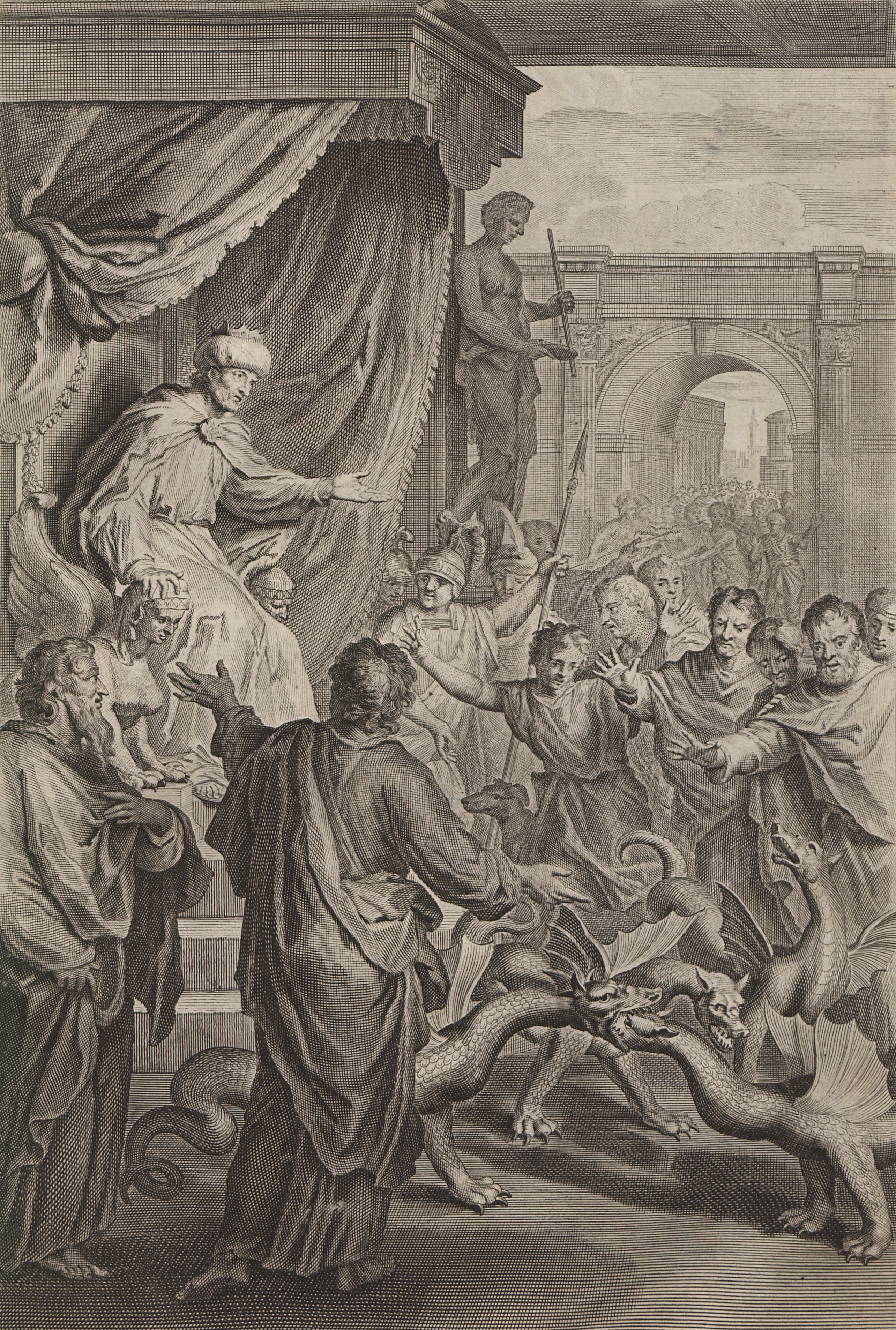
Pharaoh's magicians match Aaron's sign with their "enchantments," and Aaron's rod swallows their rods (Exodus 7:11-12). Gerard Hoet and others, Figures de la Bible (The Hague, 1728); scan from the National Library of Poland. Public domain, via Wikimedia Commons.
Semantic range (Thayer / BDAG / LSJ)
- The use or administering of drugs, including medicines and poisons. This is the root sense, from pharmakon.
- Poisoning.
- Sorcery, magic, witchcraft: the use of potions, charms and spells to manipulate unseen powers or other people. This is the sense the major New Testament lexicons give for every New Testament occurrence.
The base noun pharmakon was morally neutral. It could mean a physician's remedy, a poison or a magic charm, and the ancient world did not separate these as sharply as the modern one does, because many remedies were administered with incantations and many spells used herbs. Pharmakeia carries that whole cluster, and context decides which part is in view.
See this page's graph and discover linked topics
Old Testament background (Septuagint)
The Septuagint uses the word group for the magic of Israel's enemies.
- Egypt's magicians. When Aaron's rod becomes a serpent, Pharaoh calls "the wise men and the sorcerers: and they also, the magicians of Egypt, did in like manner with their enchantments" (Exodus 7:11, ASV). The Greek renders the "enchantments" with pharmakeiai, and does so again at Exodus 7:22.
- Babylon's sorceries. Isaiah's oracle against Babylon says loss of children and widowhood will come "in the multitude of thy sorceries, and the great abundance of thine enchantments" (Isaiah 47:9, ASV), and taunts, "Stand now with thine enchantments, and with the multitude of thy sorceries" (Isaiah 47:12, ASV). The Hebrew is the kashaph family, the standard word group for sorcery, and the Greek translates it with the pharmakeia family.
In both settings the word names occult practice that rivals the God of Israel. Neither has anything to do with drug use for pleasure.
Theological force
- Galatians 5:20. Among the works of the flesh Paul lists "idolatry, sorcery, enmities, strife" (ASV). Pharmakeia stands next to idolatry, and the two belong together as sins of false religion, before the list moves on to sins of social conflict. Drunkenness (methai) appears separately in verse 21, which tells against reading pharmakeia as Paul's word for intoxication.
- Revelation 9:21. Those who survive the plagues "repented not of their murders, nor of their sorceries, nor of their fornication, nor of their thefts" (ASV). The previous verse names worship of demons and idols, so the context is again false worship.
- Revelation 18:23. Of Babylon: "with thy sorcery were all the nations deceived" (ASV). Here the word is figurative: the city's seductive power over the nations is pictured as a bewitching spell.
- Revelation 21:8 and 22:15. "Sorcerers" stand among those excluded from the city, beside idolaters and murderers.
The claim that pharmakeia means drugs
A popular argument runs: pharmakeia gives us the English word "pharmacy," so when the Bible condemns pharmakeia it condemns drugs, including recreational drugs such as marijuana.
- What is right in it. The root does involve drugs, and in the ancient world sorcery often involved potions. A practitioner of pharmakeia might well use psychoactive or poisonous substances.
- Where it overreaches. The New Testament contexts put the word among sins of false worship, not of intoxication, and the Septuagint uses it for Egyptian and Babylonian magic. The lexicons render the New Testament occurrences as sorcery or magic. English derivation ("pharmacy") cannot fix the meaning of a first-century word; that would make the Bible condemn pharmacists as well.
- A defensible middle. Some scholars note that potions used to harm (poisons, and in early Christian sources abortifacients) fall within the word's range. The Didache (2.2) sets "you shall not practice sorcery" (ou pharmakeuseis) between "you shall not practice magic" and "you shall not murder a child by abortion." That supports reading pharmakeia as including the occult or harmful use of drugs. It does not support reading it as a general ban on substances.
The honest conclusion is that pharmakeia condemns sorcery, which may involve drugs, and that the ethics of recreational drug use must be argued from other texts: sobriety, self-control, drunkenness and stewardship of the body. See Marijuana and the Bible.
Notable verses
- Exodus 7:11 and 7:22, the magicians of Egypt and their enchantments (Septuagint pharmakeiai)
- Isaiah 47:9, 12, the "multitude of thy sorceries" in the oracle against Babylon
- Galatians 5:19-21, "idolatry, sorcery" among the works of the flesh
- Revelation 9:21, "nor of their sorceries"
- Revelation 18:23, "with thy sorcery were all the nations deceived"
- Revelation 21:8; 22:15, "sorcerers" outside the city
See also
- Marijuana and the Bible, where the "pharmakeia means drugs" argument is weighed
- Occult contact, occult practice as a spiritual gateway
- Idolatry, the sin pharmakeia is listed beside in Galatians 5:20
- Demonology, the powers sorcery seeks to manipulate
- G4561 - sarx, the "flesh" whose works include sorcery