Lexicon
G4352 - proskuneo
proskuneo, proskyneo, proskyneō, προσκυνέω, proskynesis, G4352, to worship, to bow down, to do obeisanceStrong's: G4352 · BLB lookup Pronunciation: pros-koo-neh'-o Part of speech: verb Etymology: pros (toward) + kyneō (to kiss). The word began as the gesture of bowing down, sometimes kissing the ground or the hand or feet, before someone greater. Hebrew equivalent (LXX): the verb usually rendered shachah (H7812), "to bow down, prostrate oneself," used more than 170 times in the Old Testament, of bowing to God and of bowing to people. NT distribution: about sixty occurrences, concentrated in Matthew, John and above all Revelation.
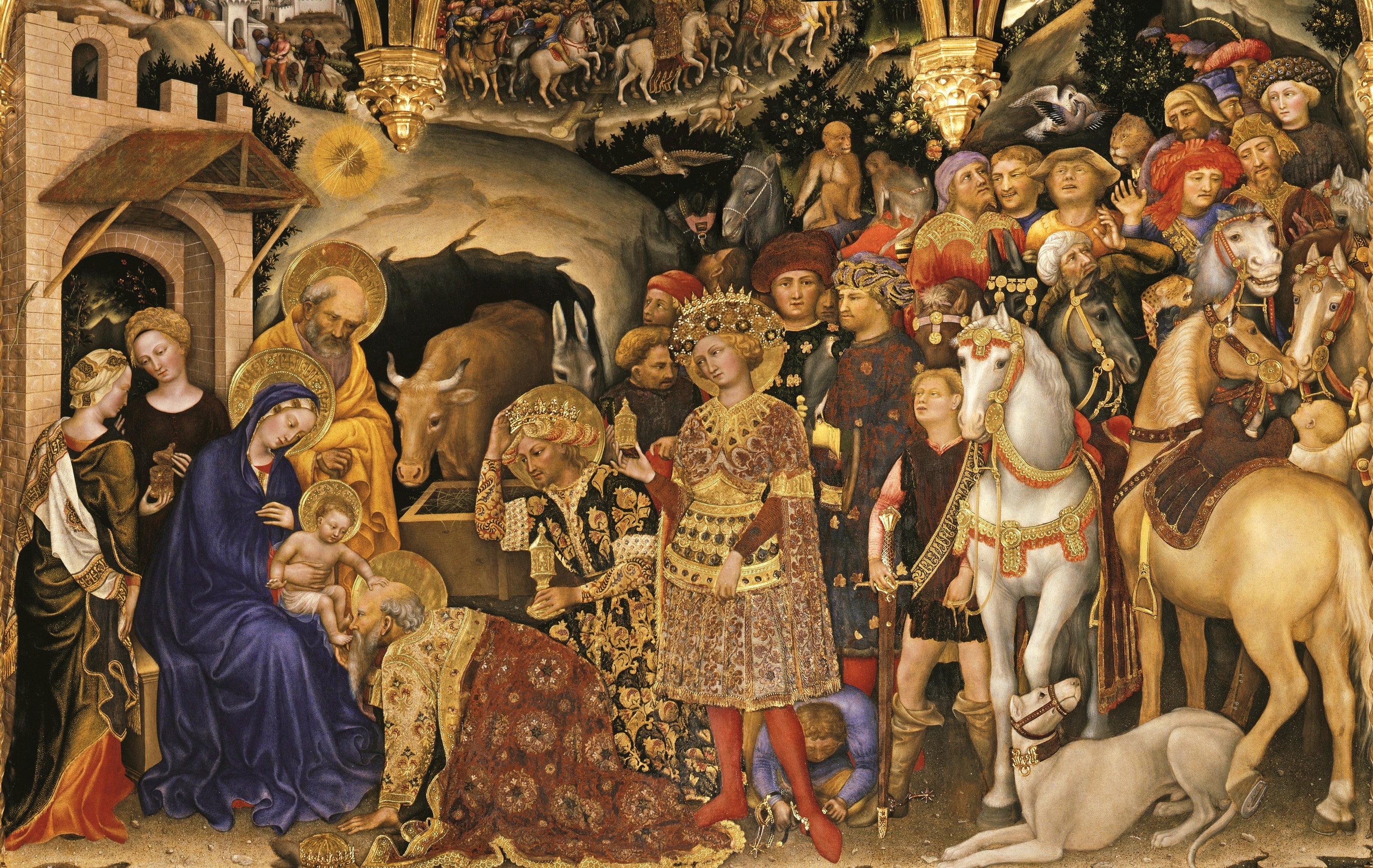
Gentile da Fabriano, Adoration of the Magi, 1423, Uffizi, Florence. "They fell down and worshipped him" (Matthew 2:11, ASV): the verb is proskuneō. Image: public domain, via Wikimedia Commons.
Semantic range (Thayer / BDAG)
- To bow down, prostrate oneself before a superior, the physical act.
- To do obeisance, pay homage to a king, master or person of rank. The servant in Jesus' parable "fell down and worshipped" his master (Matthew 18:26, ASV); the risen Christ promises that opponents will "come and worship before thy feet" in Philadelphia (Revelation 3:9, ASV), an act of humbled acknowledgment before the church, not divine worship.
- To worship God or a god, the religious act of adoration. "Thou shalt worship the Lord thy God, and him only shalt thou serve" (Matthew 4:10, ASV). Also of false objects of worship: the dragon and the beast (Revelation 13:8), idols and demons (Revelation 9:20).
See this page's graph and discover linked topics
Theological force
The same verb, two senses: context decides
Proskuneō, like the Hebrew shachah, covers both honor shown to a human superior and worship given to God. The word alone does not tell you which. Recipient, intention and setting do. That is why the verb sits at the center of two debates:
- Whether Jesus received worship. Unitarian and Jehovah's Witness readers argue that proskuneō of Jesus means only obeisance, the homage due to a king, and the New World Translation renders it "do obeisance" when Jesus is the object. Trinitarians answer that this is an equivocation the New Testament itself closes off (below).
- The image controversy. John of Damascus distinguished latreia, adoration owed to God alone, from proskynēsis in the sense of honor, in defending the veneration of icons. Protestants reject the veneration he defended, but his distinction between worship and honor is one every reader of the verb must make.
How the New Testament marks divine worship of Jesus
- Refused by creatures, accepted by Jesus. When Cornelius falls at Peter's feet and "worshipped him," Peter raises him: "Stand up; I myself also am a man" (Acts 10:25-26, ASV). When John falls before the angel, the angel refuses twice: "See thou do it not... worship God" (Revelation 19:10; 22:8-9, ASV). Jesus receives proskuneō from the disciples in the boat (Matthew 14:33), the healed blind man (John 9:38) and the disciples after the resurrection (Matthew 28:9, 17) and never refuses it.
- Commanded by God for the Son. "Let all the angels of God worship him" (Hebrews 1:6, ASV) applies to the Son an Old Testament summons whose object is God (Deuteronomy 32:43 in the Greek tradition; compare Psalm 97:7). Angels who refuse proskuneō for themselves are ordered to give it to the Son.
- Shared with the One on the throne. In Revelation 5:13-14 every creature ascribes blessing, honor, glory and dominion "unto him that sitteth on the throne, and unto the Lamb," and the elders fall down and worship. In the book where angels forbid worship of anyone but God, the Lamb receives it alongside God.
- Jesus Himself restricts worship to God. He quotes "Thou shalt worship the Lord thy God, and him only shalt thou serve" (Matthew 4:10) and then accepts proskuneō. Either He contradicts Himself or He belongs within "the Lord thy God."
Worship in spirit and truth
In John 4:23-24 the verb appears repeatedly as Jesus moves worship from a place (Gerizim or Jerusalem) to a manner: "the true worshippers shall worship the Father in spirit and truth" (ASV). Worship is no longer bound to a mountain, but it is bound to the truth about the Father.
Notable verses
Honor to people
- Matthew 18:26, the servant before his master (parable)
- Acts 10:25-26, Cornelius before Peter, refused
- Revelation 3:9, opponents before the church at Philadelphia
Worship of God
- Matthew 4:10, "him only"
- John 4:23-24, in spirit and truth
- Revelation 19:10; 22:8-9, "worship God"
Worship of Jesus
- Matthew 2:11, the Magi
- Matthew 14:33, "Of a truth thou art the Son of God"
- John 9:38, "Lord, I believe. And he worshipped him"
- Matthew 28:9, 28:17, the risen Lord
- Hebrews 1:6, the angels commanded
- Revelation 5:13-14, with the One on the throne
False worship
- Matthew 4:9, the devil's offer
- Revelation 13:8, the beast
Patristic / scholarly note
Richard Bauckham argues that in Second Temple Judaism worship was the decisive marker of the one God's unique identity, so that the early Christian worship of Jesus placed Him within that identity (Jesus and the God of Israel, 2008). Larry Hurtado traced the same pattern historically, arguing that devotion to Jesus alongside God appears in the earliest Christian sources (Lord Jesus Christ: Devotion to Jesus in Earliest Christianity, 2003). John of Damascus's distinction between latreia and honor is set out in his Three Treatises on the Divine Images.
Verses in this codex
See Obsidian's backlinks pane for every verse page linking here.
See also
- Worship, the concept hub: what worship is and how it differs from honor
- John of Damascus, the worship-and-honor distinction in the image controversy
- Jesus Never Claimed to Be God Objection Defeater, where the worship texts are used
- Jehovah's Witnesses vs the Christian God, the "obeisance" translation question
- Trinity, the doctrine the worship of Jesus implies
- Idolatry, worship given to what is not God