Lexicon
G3485 - naos
naos, ναός, G3485, sanctuary, inner temple, temple sanctuaryStrong's: G3485 · BLB lookup Pronunciation: nah-os' Part of speech: masculine noun Related term: ἱερόν (hieron, G2411), the whole temple precinct with its courts NT occurrences: 46, in 40 verses
The 30-second version:
Naos is the sanctuary itself, the building where God was said to dwell, as distinct from hieron, the whole temple area with its courts. Zechariah the priest enters the naos while the crowd prays outside. Jesus calls His body a naos, and Paul calls the church and the believer's body a naos of the Spirit. In Revelation the naos is God's sanctuary in heaven, and the great multitude of Revelation 7 serves God there "day and night."
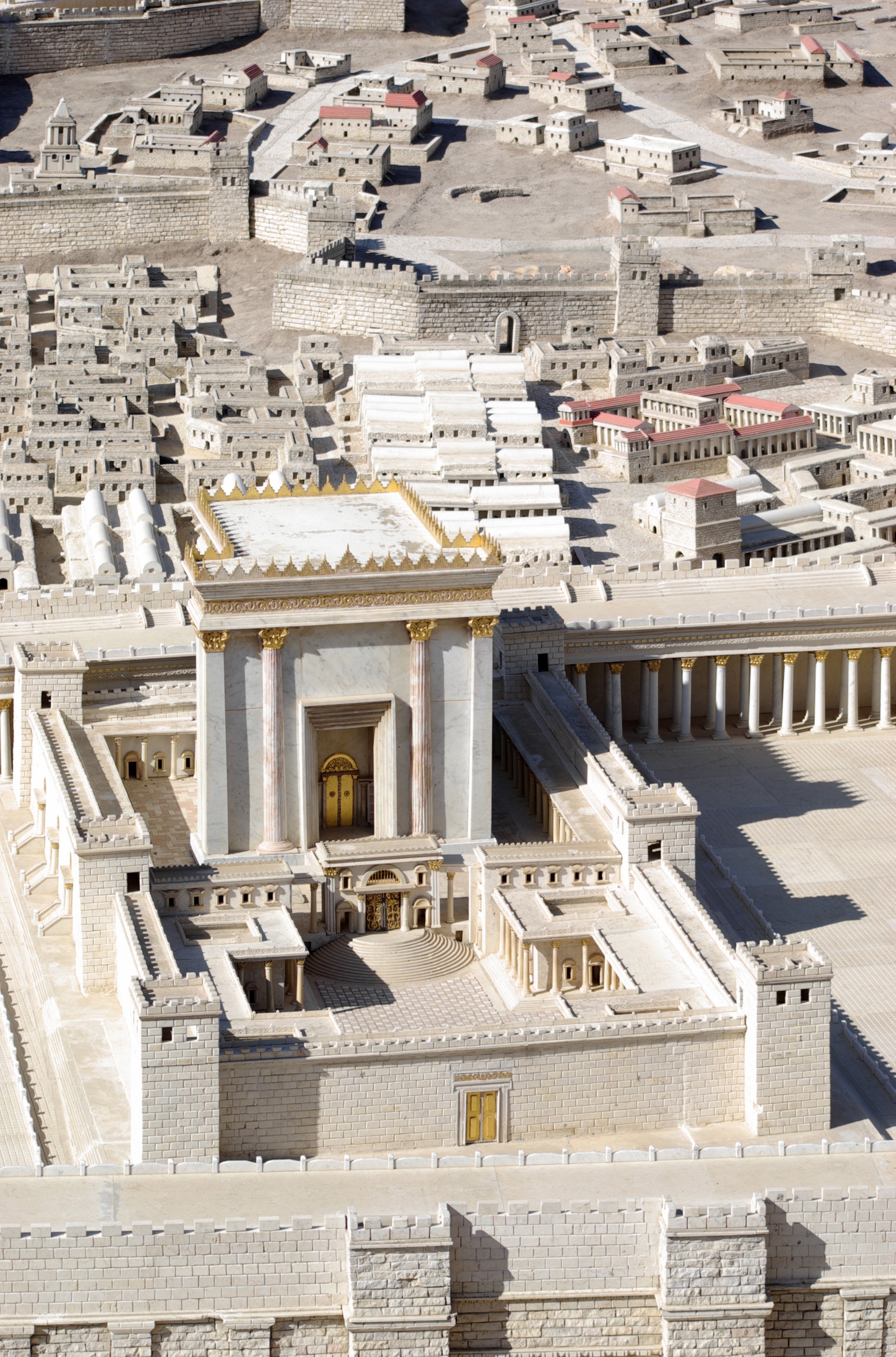 The sanctuary building of the Second Temple, rising above its courts, in the Holyland Model of Jerusalem at the Israel Museum. The building itself corresponds to the naos; the courts around it belong to the wider hieron. Photo: Berthold Werner, public domain, via Wikimedia Commons, resized.
Semantic range
- The sanctuary building of the Jerusalem temple, the holy place and most holy place, entered only by priests. Zechariah's lot was "to enter into the temple of the Lord and burn incense," while "the whole multitude of the people were praying without" (Luke 1:9-10, ASV). The veil "of the temple" that tore at Jesus' death hung in the naos (Matthew 27:51).
- A pagan shrine or temple. God "dwelleth not in temples made with hands" (Acts 17:24, ASV); Demetrius made "silver shrines" of Artemis (Acts 19:24).
- Figuratively, the dwelling of God among His people. Jesus' body (John 2:19-21); the church (1 Corinthians 3:16; Ephesians 2:21); the believer's body (1 Corinthians 6:19).
- The heavenly sanctuary in Revelation (3:12; 7:15; 11:19; 14:15, 17; 15:5-8; 16:1, 17), and finally no naos at all in the new Jerusalem, "for the Lord God the Almighty, and the Lamb, are the temple thereof" (Revelation 21:22, ASV).
Boundary cases. In a few places naos appears to cover more than the inner building. In John 2:20, "Forty and six years was this temple in building," the whole Herodian project is in view, and in Matthew 27:5 Judas casts the silver "into the sanctuary," which some read as the wider temple area because he was not a priest. The usual distinction from hieron is therefore strong but not absolute.
See this page's graph and discover linked topics
Theological force
- God's dwelling, relocated. The New Testament moves the naos from a building to a person and a people: Christ's body, then the church indwelt by the Spirit. The temple language of the prophets is fulfilled in God dwelling with His people.
- Revelation 7:15 and the great multitude. The innumerable multitude "serve him day and night in his temple (naos)" (Revelation 7:15, ASV). Revelation elsewhere distinguishes the naos from "the court which is without the temple" (11:1-2), which bears on the Jehovah's Witness teaching that the great crowd serves in an earthly courtyard. Witness writers point to the boundary cases above; the reply is that 7:15 still places the multitude "before the throne of God." See Only 144000 Will Be Saved Objection Defeater.
- The end of the temple. The final vision has no naos because God and the Lamb are its temple (21:22), the complete form of Revelation 21:3, "the tabernacle of God is with men."
Notable verses
The Jerusalem sanctuary
- Luke 1:9-10, the priest inside the naos, the people outside
- Matthew 27:51, the veil of the naos torn
- Matthew 27:5, Judas and the thirty pieces of silver (a boundary case)
Christ, the church and the believer
- John 2:19-21, "he spake of the temple of his body"
- 1 Corinthians 3:16, "ye are a temple of God"
- 1 Corinthians 6:19, "your body is a temple of the Holy Spirit"
- Ephesians 2:21, the church "groweth into a holy temple in the Lord"
Revelation
- Revelation 7:15, the great multitude serving "in his temple"
- Revelation 11:19, "the temple of God that is in heaven," with the ark of His covenant
- Revelation 21:22, no temple in the city, because God and the Lamb are its temple
Patristic / scholarly note
The distinction between naos and hieron is a standard point in the Greek lexicons and in commentary on the Gospels, where it explains why the tearing of the veil in the naos (Matthew 27:51) and the cleansing of the hieron courts (Matthew 21:12; John 2:14) use different words. In Revelation, G. K. Beale (The Book of Revelation, NIGTC, 1999) reads the multitude of 7:15 as the whole people of God serving before Him in the heavenly sanctuary, with priestly overtones.
Verses in this codex
See Obsidian's backlinks pane for every verse page linking here. Anchor: Revelation 7.15 (the great multitude in the sanctuary); John 2.19-21 (the temple of His body); Revelation 21.22 (no temple in the city).
See also
- Only 144000 Will Be Saved Objection Defeater, where naos in Revelation 7:15 is argued
- Jehovah's Witnesses vs the Christian God, the wider comparison and the hope of one people
- Heaven, the Christian hope of dwelling with God
- G3933 - parthenos, the other Greek word at issue in the 144,000 debate (Revelation 14:4)