Lexicon
G0703 - arete
arete, aretē, ἀρετή, G703, aretai, virtue (Greek), excellence (Greek)Strong's: G0703 · BLB lookup Pronunciation: ar-et-ay' Part of speech: feminine noun Root: of uncertain derivation; Strong's links it with the root of arrhēn (G0730), suggesting an original sense of manly excellence or valour NT occurrences: 5, in 4 verses: Philippians 4:8; 1 Peter 2:9; 2 Peter 1:3; 2 Peter 1:5 (twice)
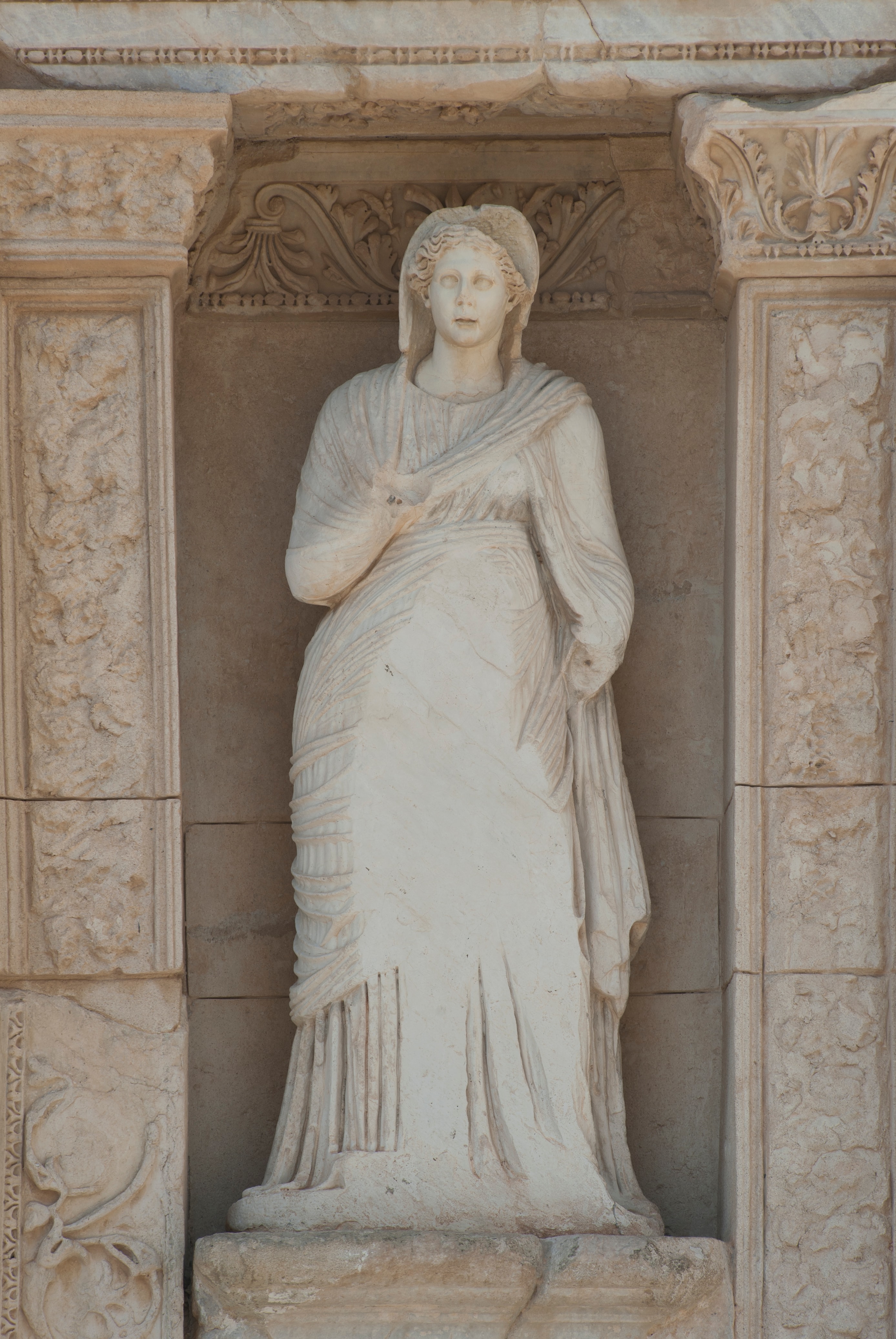
Arete, virtue personified, one of four statues of the virtues on the façade of the Library of Celsus at Ephesus (2nd century AD). Photo: Dosseman, CC BY-SA 4.0, via Wikimedia Commons, re-encoded.

Semantic range (Thayer / BDAG)
- Excellence of any kind, the quality that makes a thing good at being what it is. In classical Greek a horse, a knife or a soldier could each have its aretē.
- Moral excellence, virtue, a good quality of character, or goodness of life as a whole (Philippians 4:8; 2 Peter 1:5).
- Of God, His excellence displayed, His glorious character and the mighty deeds that show it, and so the praise due to Him (1 Peter 2:9; 2 Peter 1:3).
The third sense comes through the Greek Old Testament. In the Septuagint aretē renders Hebrew words for glory and praise. Isaiah 43:21, where God forms a people "that they might set forth my praise" (ASV), reads in the Septuagint tas aretas mou diēgeisthai, "to declare my excellencies". 1 Peter 2:9 echoes that verse directly.
See this page's graph and discover linked topics
Theological force
Aretē was the central word of Greek moral philosophy. For Aristotle, human aretē is the excellence of a rational animal, acquired by habituation and expressed in a flourishing life. The New Testament uses the word sparingly, and when it does, it relocates it.
- God's excellence first. Two of the five uses describe God. "His divine power hath granted unto us all things that pertain unto life and godliness, through the knowledge of him that called us by his own glory and virtue" (2 Peter 1:3, ASV). Human virtue is a response to a prior divine excellence, not a self-made achievement.
- The people of God display God's aretai. "That ye may show forth the excellencies of him who called you out of darkness into his marvellous light" (1 Peter 2:9, ASV). The church's calling is to make known God's virtues, the plural used of His saving acts.
- Virtue on the ladder of faith. "In your faith supply virtue; and in your virtue knowledge" (2 Peter 1:5, ASV). Here aretē is the moral excellence that faith must go on to produce, the second rung of a ladder that ends in love (2 Peter 1:5-7). The verb epichorēgeō, "supply", pictures a generous patron funding a chorus: faith is not left bare but furnished.
- Paul's single use. "If there be any virtue, and if there be any praise, think on these things" (Philippians 4:8, ASV). This is the only occurrence in Paul. Commentators often note how rarely Paul uses the word, perhaps because of its association with self-achieved excellence; when he does, in a list drawn from the moral vocabulary of his culture, he redirects it to the mind of the believer.
The pattern is consistent: the New Testament keeps the idea of excellence but grounds it in God's character and God's calling, and it describes the believer's virtues elsewhere as the fruit of the Spirit (Galatians 5:22-23). See Virtue Ethics.
Notable verses
- Philippians 4:8, "if there be any virtue, and if there be any praise, think on these things"
- 1 Peter 2:9, "that ye may show forth the excellencies of him who called you"
- 2 Peter 1:3, "him that called us by his own glory and virtue"
- 2 Peter 1:5, "in your faith supply virtue; and in your virtue knowledge"
Outside the New Testament
- The Septuagint and Apocrypha. Besides Isaiah 43:21, the word is frequent in the books written in Greek. Wisdom of Solomon 8:7 says that wisdom's labours are virtues (aretai) and names the four that later became the cardinal virtues: temperance, prudence, justice and fortitude. 4 Maccabees uses the word throughout its argument that devout reason masters the passions.
- Greek philosophy. Plato's dialogues ask whether aretē can be taught (Meno), and Aristotle defines it as a settled disposition lying in a mean (Nicomachean Ethics II.6). The modern term aretaic ethics derives from the word.
See also
- Virtue Ethics, the moral theory named after the word
- Aristotle, whose account of aretē shaped the tradition
- Sanctification, the growth in character the New Testament describes
- agapē, the love at the top of the ladder of 2 Peter 1:5-7
- G5056 - telos, the end by which an excellence is measured