Person
Frumentius
Abba Salama, Abune Selama, Frumentius of Aksum, Frumentius of Axum, Saint Frumentius, Kesate Birhan, Frumentius of EthiopiaIntro
Frumentius was a young Christian from Tyre (in modern Lebanon) whose ship was attacked on the Red Sea coast of Africa when he was a boy. He survived and ended up serving at the royal court of Aksum, the great kingdom of what is now Ethiopia and Eritrea. Instead of escaping home when he was freed, he helped the Christian community grow there, then travelled to Alexandria and asked for a bishop to be sent. The bishop of Alexandria, Athanasius, sent Frumentius himself.
He became the first bishop of Aksum, and the Ethiopian church still honors him as Abba Salama, "Father of Peace", and Kesate Birhan, "Revealer of Light". Through him the Ethiopian church was joined to the church of Alexandria, a bond that lasted sixteen centuries.
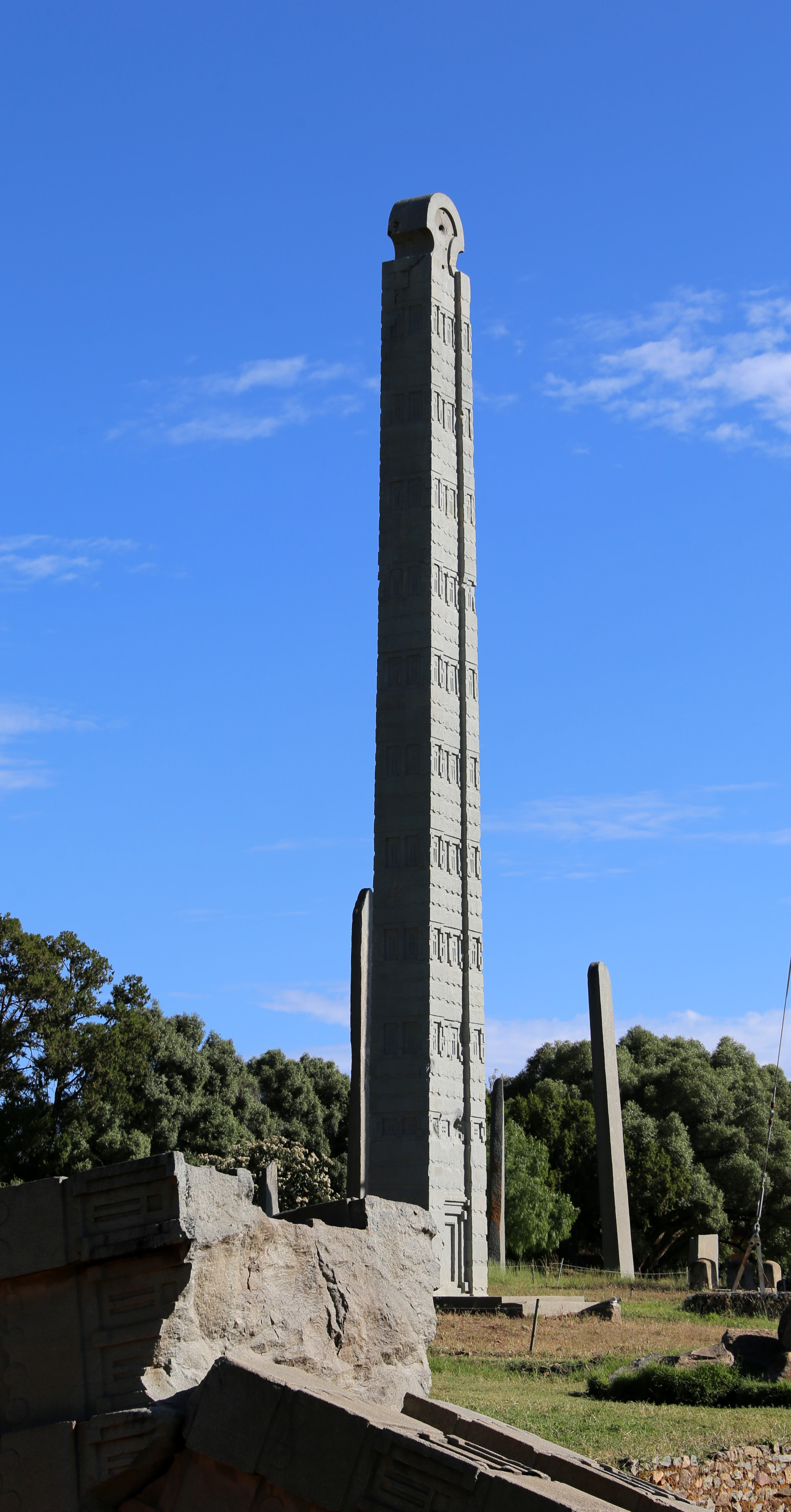 Stele 2, the "Obelisk of Aksum", at the royal stelae field of Aksum, the city where Frumentius served at court. Photo: Sailko, CC BY 3.0 (Wikimedia Commons), resized.

See this page's graph and discover linked topics
In full
Frumentius (died after c. 356) was a Syrian Greek Christian of Tyre and the first bishop of Aksum. The principal account is that of Rufinus of Aquileia, Ecclesiastical History 10.9-10 (written c. 402), who says he heard the story from Frumentius's brother Aedesius in person at Tyre; it was repeated by Socrates, Sozomen and Theodoret. Captured as a youth after an attack on a merchant ship, Frumentius rose to become a trusted official of the Aksumite court, used his position to support Roman Christian merchants and their worship, and later asked Athanasius of Alexandria to provide a bishop for the region. Athanasius consecrated Frumentius himself, sometime between his own accession in 328 and the mid-340s. Independent confirmation comes from Athanasius's Apology to Constantius 31, which preserves a letter of the Arian-leaning emperor Constantius II (c. 356) to the Aksumite rulers "Aizanas and Sazanas", demanding that Frumentius be sent to Alexandria to be examined by the Arian bishop George. That letter makes Frumentius one of the best-attested figures of 4th-century African Christianity. Ethiopian tradition identifies the king of his time with Ezana of Axum, whose later coins and inscriptions turn from the old gods to the cross and the "Lord of Heaven".
The story in Rufinus
- The voyage. Meropius, a philosopher of Tyre, sailed to "India", a term Roman writers used loosely for lands around the Red Sea and beyond, taking two young relatives, Frumentius and Aedesius.
- The attack. When the ship put in at a port on the African coast, local people, then at odds with Rome, killed the crew and passengers. The two boys, found studying under a tree, were spared and taken to the king.
- At court. Aedesius became the king's cupbearer and Frumentius his secretary and treasurer.
- Regent's adviser. When the king died, he freed them, but the queen mother begged them to stay and help govern until the young heir came of age. Frumentius effectively directed the kingdom's affairs.
- Building the church. He sought out Christian merchants among the Romans trading at Aksum, gave them rights to meet, provided places for prayer, and encouraged them to worship openly. Local people began to join them.
- Alexandria. When the prince came of age, Aedesius went home to Tyre. Frumentius went to Alexandria and asked Athanasius to send a bishop to the growing Christian community.
- Consecration. Athanasius, after consulting his clergy, judged that no one was better suited than Frumentius himself, consecrated him, and sent him back, where, Rufinus says, he converted many and performed signs of an apostolic kind.
Confirmation from Athanasius
The letter of Constantius II preserved by Athanasius (Apology to Constantius 31) is the critical outside witness. The emperor writes to the rulers of Aksum warning them that Frumentius had been made bishop by Athanasius, a man the emperor considered deposed, and asks that Frumentius be sent to George of Alexandria for examination of his faith. Three things follow:
- Frumentius was a real bishop in Aksum by the 350s.
- He was consecrated by Athanasius, as Rufinus says.
- The Aksumite church was significant enough for the Roman emperor to try to bring it into line with his own Arian-leaning policy, and there is no sign that Aksum complied. See Arianism.
Why he matters
- Ethiopian Christianity is ancient and African-led in its growth. Frumentius came from outside, but the community he served grew under an African king, and the Ethiopian church that followed developed its own language of worship (Ge'ez), canon, monasteries and culture. See Ethiopian Orthodox Church and Kingdom of Aksum.
- Before Europe's conversion. Aksum's official turn to Christianity in the 4th century came before most of northern Europe heard the gospel. See Christianity Is the White Mans Religion Objection Defeater.
- The Alexandrian link. From Frumentius until 1959, the head of the Ethiopian church (the Abuna) was a bishop consecrated by the Coptic patriarch of Alexandria, usually an Egyptian monk. The arrangement bound Ethiopia to the Church at Alexandria for sixteen centuries.
- A Nicene church. Consecrated by Athanasius and resisted by an Arian emperor, the Ethiopian church began firmly on the side of the Council of Nicaea.
Tensions
- Which king? Rufinus names no king. Ethiopian tradition gives the brothers Abreha and Atsbeha, while the coins and inscriptions point to Ezana, the "Aizanas" of Constantius's letter. Many historians identify Rufinus's young prince with Ezana; the identification is probable but not certain.
- When was he consecrated? Athanasius became bishop in 328 and was in exile for long stretches afterward. Dates proposed for the consecration range from about 328 to the mid-340s.
- Ethiopian tradition and Rufinus. Later Ge'ez texts, including the synaxarium, expand the story with miracles and details not found in Rufinus. Historians treat Rufinus and the Constantius letter as the primary evidence and the Ethiopian traditions as the church's memory built upon them.
See also
- Ezana of Axum, the Aksumite king most associated with the conversion
- Kingdom of Aksum, the state Frumentius served
- Athanasius, who consecrated him
- Ethiopian Orthodox Church, the church he founded as its first bishop
- Ezana Stone and Aksumite Coins, the material evidence of Aksum's turn to Christ
- Church at Alexandria, the mother church of Ethiopian Christianity
- Africa and Christianity, the master hub
Common questions this page answers
Q: Who was Frumentius?
A 4th-century Christian from Tyre who, captured as a youth, rose to high office at the court of Aksum in Ethiopia, helped Christianity take root there, and was consecrated by Athanasius of Alexandria as the first bishop of Aksum.
Q: Who brought Christianity to Ethiopia?
Christianity reached Ethiopia through traders and travelers, and Acts 8 records an Ethiopian official baptized in the first century. Its establishment as the religion of the Aksumite court is credited to Frumentius and King Ezana in the 4th century.
Q: Why is Frumentius called Abba Salama?
Abba Salama means "Father of Peace" in Ge'ez. It is the name under which the Ethiopian Orthodox Church honors him, along with Kesate Birhan, "Revealer of Light".
Q: Is there historical evidence for Frumentius?
Yes. Besides Rufinus, who heard the story from Frumentius's brother, Athanasius preserves a letter of Emperor Constantius II to the rulers of Aksum, around 356, naming Frumentius and demanding he be sent to Alexandria.
Q: Who consecrated the first bishop of Ethiopia?
Athanasius of Alexandria consecrated Frumentius, beginning a link in which the Coptic patriarch of Alexandria appointed the head of the Ethiopian church until 1959.
Q: Which Ethiopian king did Frumentius serve?
Rufinus does not name him. Most historians identify the young king of Frumentius's time with Ezana, who appears with his brother as "Aizanas and Sazanas" in Constantius's letter; Ethiopian tradition remembers the brothers as Abreha and Atsbeha.