Argument
Forever Slavery Objection Defeater
Slave Forever Objection, Permanent Slavery in the Bible, Serve Him For Ever Objection, Leviticus 25:46 forever slaves, Exodus 21:6 forever meaning, does forever mean forever in the Bible, olam slavery objectionIntro
The objection goes like this. Exodus 21:6 says a servant who chooses to stay with his master "shall serve him for ever," and Leviticus 25:46 says Israel could take bondmen from the nations "for ever." So the Bible approves of permanent, never-ending slavery, and that settles it.
The answer starts with one word. The Hebrew word behind "for ever" is olam, and in Hebrew it takes its length from the thing it describes. When it describes God, it means without beginning or end. When it describes a person, it means for that person's life. The Bible says so itself. Hannah promises to give little Samuel to the LORD "for ever," and a few verses later explains what she meant: "as long as he liveth" (1 Samuel 1:22, 28). Jonah says the earth's bars closed on him "for ever," and he was in the fish three days (Jonah 2:6; 1:17). A "life sentence" works the same way in English. It is permanent, and it is also as long as one life.
Then comes the bigger point. How long an arrangement lasts is one question. What the master was allowed to do is a different question, and the law answered it with hard limits: no kidnapping, freedom for a knocked-out tooth, a runaway could not be sent back, and everyone rested on the Sabbath. "For ever" never meant "anything goes."
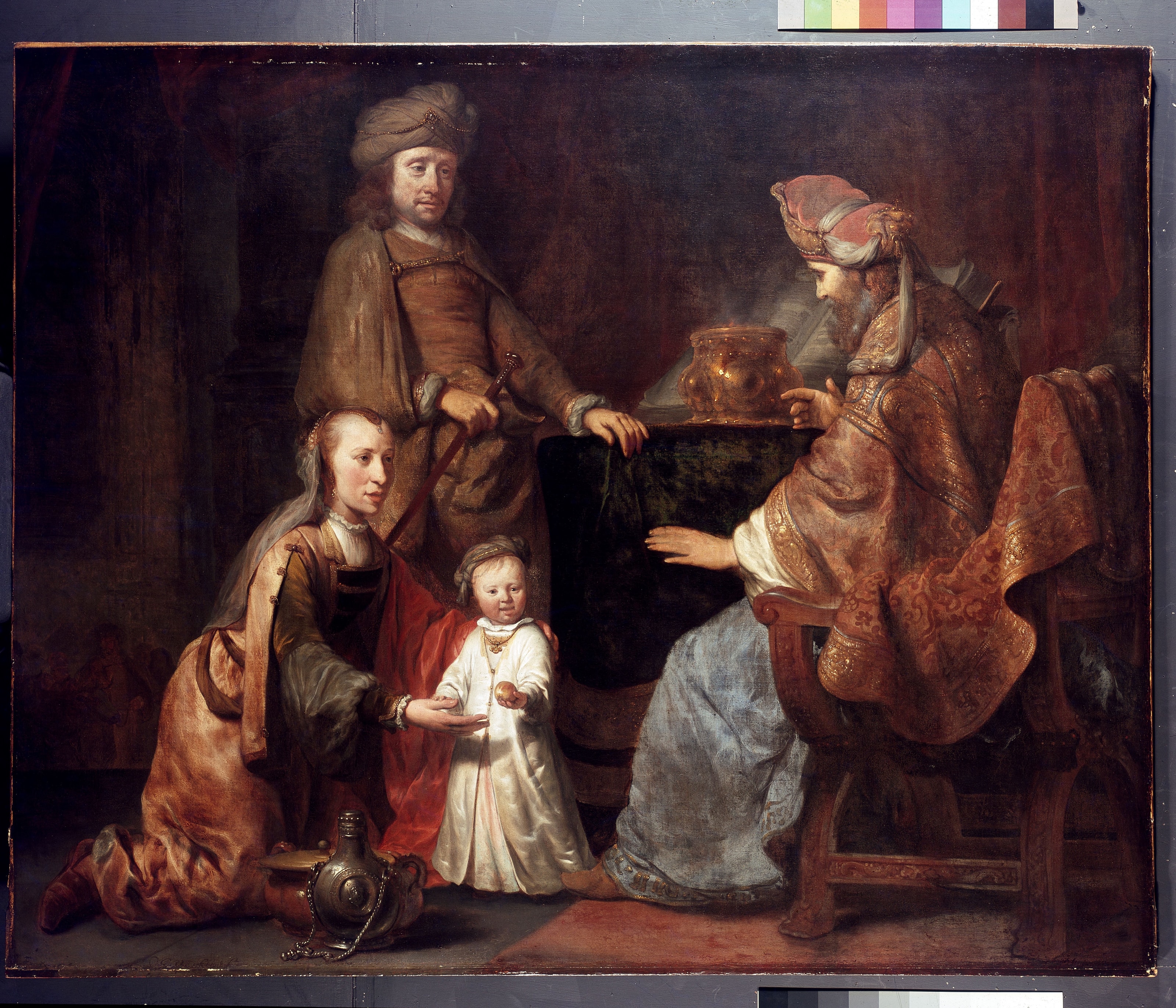
Hannah brings the young Samuel to Eli, by Gerbrand van den Eeckhout, 1665. Hannah's "for ever" (1 Samuel 1:22) is glossed in the same chapter as "as long as he liveth" (1:28). Image: public domain, via Wikimedia Commons.

See this page's graph and discover linked topics
Cheatsheet
The 30-second reply:
"For ever" in those verses translates olam, and olam takes its length from its subject. Scripture shows you: Hannah dedicates Samuel "for ever" and then says "as long as he liveth" (1 Samuel 1:22, 28). Jonah was shut in "for ever" for three days (Jonah 2:6). Applied to a servant and a master, two mortal people, it means for the life of that relationship, which is why Jewish law even read Exodus 21:6 as "until the Jubilee." And length is not power. The same law executed kidnappers, freed a servant for a lost tooth, and forbade returning a runaway. "For ever" sets how long, never how much.
The fast facts:
- Scripture glosses its own "for ever." 1 Samuel 1:22 says Samuel will abide before Jehovah "for ever"; 1:28 says "as long as he liveth he is granted to Jehovah."
- Jonah's "for ever" lasted three days. Jonah 2:6 uses olam (H5769) of his confinement; Jonah 1:17 gives three days and three nights.
- Even a pagan king uses it of a lifetime. Achish says David "shall be my servant for ever" (1 Samuel 27:12), the same word.
- Exodus 21:6 is voluntary. The servant must "plainly say, I love my master, my wife, and my children; I will not go out free" (Exodus 21:5; compare Deuteronomy 15:16).
- Jewish law read it as a term. The Mekhilta and the Talmud (Kiddushin 15a), followed by Rashi on Exodus 21:6, read le'olam there as "until the Jubilee."
- The scope was limited by law. Kidnapping was capital (Exodus 21:16), injury freed the servant (21:26-27), runaways were not returned (Deuteronomy 23:15-16), and servants rested "as well as thou" (Deuteronomy 5:14).
The 3 strongest counter-moves:
- "Could the servant die? Could the master die?" Then "for ever" cannot mean infinite years for that pair. The only question is what it does mean, and Scripture tells you.
- "What does Hannah mean by 'for ever' in 1 Samuel 1:22?" Verse 28 answers it in her own words.
- "Is a life sentence infinite?" No one thinks so, yet it is "permanent." English already has the category the objection says Hebrew lacks.
Reciprocal concessions (grant the small point, then collect a bigger one):
- Grant: Leviticus 25:46 allowed foreign bondservants to be held for life and passed on to heirs, unlike Israelites, who went out at the Jubilee. Now collect: the protective laws on injury, rest, Passover, kidnapping and fugitives draw no line between foreign and Israelite servants, so the difference was in release date, not in whether the person had rights.
- Grant: olam can mean genuinely everlasting. Now collect: it does so when its subject is everlasting, God (Psalm 90:2) or the life of the age to come (Daniel 12:2), which is precisely why it cannot mean that when its subject is a mortal household arrangement.
- Grant: the text uses real property language, "possession" (Leviticus 25:45-46). Now collect: the same law makes a master forfeit the servant for a tooth (Exodus 21:27), which no one does with property, so the possession was of service, not of the person. See Israelite Slavery Possession-vs-Ownership Defeater.
The closing line:
"For ever" told you how long the arrangement could last. The rest of the law told you what the master could never do. The objection reads one word and skips the law.
In full
The objection argues: Exodus 21:6 ("he shall serve him for ever") and Leviticus 25:46 ("of them shall ye take your bondmen for ever") prescribe unending servitude; therefore biblical law sanctions perpetual enslavement of human beings without limit.
The defeat is an equivocation defeater with a second, independent prong. On the first prong, the objection trades on two senses of "for ever": unbounded duration, and the full span of whatever is being described. Hebrew olam (H5769) carries both, with the sense fixed by the referent, and Scripture glosses the human-span sense explicitly (1 Samuel 1:22, 28). Applied to a legal relation between mortals, le'olam denotes a status with no fixed release date that lasts for the life of the relation; the rabbinic tradition went further and read Exodus 21:6 as running only to the Jubilee. On the second prong, duration and scope are distinct legal questions. Whatever the duration, the Torah bounded the master's rights by capital penalties for man-stealing, manumission for bodily injury, asylum for fugitives, Sabbath rest and cultic inclusion. The conclusion that "for ever" licensed unlimited dominion over a person does not follow on either prong.
| Sense of "for ever" | What it means | Where Scripture uses it |
|---|---|---|
| A. Unbounded | Without beginning or end, or without end | Of God, "from everlasting to everlasting" (Psalm 90:2); of the resurrection life (Daniel 12:2) |
| B. The full span of its subject | As long as the person, office, house or arrangement lasts | Samuel's dedication (1 Samuel 1:22, 28); David as Achish's servant (1 Samuel 27:12); the servant of Exodus 21:6 |
The objection needs sense A. The texts it cites are sense B.
Grammar and hermeneutics
The objection falls on the reading of one word and one legal formula, before any wider argument about slavery is needed.
- Same word, different spans, fixed by the subject. Exodus 21:6, Deuteronomy 15:17, Leviticus 25:46, 1 Samuel 1:22, 1 Samuel 27:12 and Jonah 2:6 all use olam (Strong's H5769, per the tagged ASV). In Jonah 2:6 its span is three days (1:17). In 1 Samuel 1:22 its span is Samuel's life (1:28). Psalm 90:2 uses the same word of God's eternity. A word whose length varies this much cannot carry "infinite" into a text on its own.
- The canon supplies an explicit gloss. Hannah's "that he may appear before Jehovah, and there abide for ever" (1 Samuel 1:22) is restated in her own words at the dedication: "as long as he liveth he is granted to Jehovah" (1:28). Scripture defines the human-span use of olam by paraphrase in the same chapter.
- Exodus 21:5-6 is a conditional with a voluntary protasis. "If the servant shall plainly say, I love my master, my wife, and my children; I will not go out free," then the ear-piercing follows and "he shall serve him for ever." The default in 21:2 is release in the seventh year "for nothing." The "for ever" clause is the consequence of the servant's own declared choice, not a sentence imposed on him.
- Deuteronomy's version names the motive and the parties. "If he say unto thee, I will not go out from thee; because he loveth thee and thy house, because he is well with thee" (Deuteronomy 15:16), and the rite applies "also unto thy maid-servant" (15:17). The arrangement is built on the servant's attachment to the household.
- Leviticus 25:46 contrasts release timing, not personhood. The verse sets foreign bondservants against "your brethren the children of Israel," over whom "ye shall not rule, one over another, with rigor." What differs is the Jubilee release of 25:40-41. The verse sets no exemption from the protective statutes elsewhere in the Torah.
- The ancient Jewish reading confirms the term sense. The Mekhilta and Kiddushin 15a, followed by Rashi, read le'olam in Exodus 21:6 as "until the Jubilee," reasoning that fifty years is called olam. One need not adopt that ruling to see the point: the people who read the Hebrew natively did not hear "infinite" in it.
- The surrounding statutes bound the scope. "He that stealeth a man, and selleth him, or if he be found in his hand, he shall surely be put to death" (Exodus 21:16). An eye or a tooth destroyed sets the servant free "for his eye's sake" (21:26-27). "Thou shalt not deliver unto his master a servant that is escaped from his master unto thee ... in the place which he shall choose" (Deuteronomy 23:15-16). The servant rests "as well as thou" (Deuteronomy 5:14). The text that says "for ever" also says all of this.
On the subject-determined span of olam, the explicit gloss at 1 Samuel 1:28, the voluntary conditional of Exodus 21:5-6, and the scope limits in the same body of law, "for ever" in these statutes cannot mean unending, unlimited ownership of a person.
Argument structure
| Premise | Notes | |
|---|---|---|
| P1 | Hebrew olam takes its length from its subject, and Scripture explicitly glosses its human-span use as "as long as he liveth." | Lexical |
| P2 | Applied to a legal relation between mortal people, "for ever" means for the life of that relation, not infinite time, as the life-sentence analogy and the rabbinic "until the Jubilee" reading both show. | Legal-institutional |
| P3 | Duration is not scope. Whatever its length, the master's authority was bounded by statutes protecting the servant's life, body, freedom of flight, rest and worship. | Scope |
| C | "Serve him for ever" does not teach endless or unlimited slavery. The objection equivocates on "for ever" and then mistakes a duration term for a grant of power. |
Master objections to the whole argument
MO1: "If olam doesn't mean forever here, then it doesn't mean forever for hell or heaven either. You've just undercut eternal life."
- No. The principle is that olam takes its span from its subject, and that principle cuts exactly where it should. A servant and a master are mortal, so their arrangement has a mortal span. God is everlasting (Psalm 90:2), and the resurrection life of Daniel 12:2 is the life of the age that does not end, so the word there carries its full sense. The New Testament pairs aiōnios life and aiōnios punishment in one sentence (Matthew 25:46), which is a question about that subject, treated on Hell and Eternal Punishment and H5769 - olam. Reading a word by its referent is not a threat to any doctrine. Reading every occurrence identically is what produces nonsense, like an infinite stay inside a fish.
MO2: "A slave who stays for life is still a slave for life. Shortening 'forever' to 'lifetime' doesn't make it moral."
- Correct that the lexical point alone does not settle the ethics, and the page does not pretend it does. It defeats the specific charge that the text prescribes endless servitude. The ethics are carried by P3 and by the wider case on Biblical Slavery Objection Defeater. But note what Exodus 21:6 actually describes: a servant whose default is release in year seven, who chooses to stay because he loves his master and his family (21:5). Calling that "enslavement for life" against his will reverses the text.
MO3: "Leviticus 25:46 has no love-your-master clause. Foreigners were held and inherited."
- Granted, and it is the harder text. The answer is P3: the protections that bound the master did not distinguish foreign from Israelite servants. Kidnapping was capital whoever the victim was (Exodus 21:16, "he that stealeth a man"); the eye-and-tooth release says "his servant" without qualification (21:26-27); the fugitive law protects "a servant that is escaped from his master" with no ethnic test (Deuteronomy 23:15-16); bought servants, once circumcised, ate the Passover (Exodus 12:44). A foreign servant held for life still could not be maimed with impunity, still rested, still worshipped, and could still leave. See Israelite Slavery Possession-vs-Ownership Defeater for the full treatment of "possession."
Premise 1, Olam takes its length from its subject
Affirmative case
- Jonah 2:6. "The earth with its bars closed upon me for ever," of a confinement of "three days and three nights" (Jonah 1:17). If olam meant infinite duration every time, the verse would be false.
- 1 Samuel 1:22 and 1:28. "For ever" and "as long as he liveth" describe the same dedication in the same chapter, from the same speaker.
- 1 Samuel 27:12. Achish expects David to be "my servant for ever," meaning for the rest of his life in Philistine service, not for eternity.
- The same word is used of God. "From everlasting to everlasting, thou art God" (Psalm 90:2). The word is elastic, and its subject sets the stretch.
Anticipated objections
- "Jonah 2:6 is poetry. Poets exaggerate."
- "These are a handful of exceptions. The normal meaning is forever."
Rebuttals
- 1 Samuel 1:22 is prose, and it is glossed. Grant the poetic register of Jonah 2. Hannah's vow is narrative prose, and the narrator records her own paraphrase. The pattern holds in both registers. Failure mode: answering one example while leaving the decisive one untouched.
- "Normal meaning" is exactly what a lexicon reports as a range. The standard Hebrew lexicons list both long duration and perpetuity under olam, and the codex's H5769 - olam hub sets out the range. The question is never "what does the word usually mean?" but "what does it mean of this subject?" Failure mode: treating a word's most famous use as its only use.
Live-cite kit
- Scripture: 1 Samuel 1:22, 28 (the gloss); Jonah 2:6 with 1:17 (three days); 1 Samuel 27:12 (Achish); Psalm 90:2 (God's eternity)
- Aphorism: "In Hebrew, 'for ever' is as long as the thing it's about."
Tactical notes
- Lead with Hannah. It is prose, it is self-glossed, and it is a mother's vow everyone understands.
- Then Jonah for the punchline: "Was Jonah in the fish forever?"
Premise 2, Applied to mortals, "for ever" means for the life of the relationship
Affirmative case
- Both parties die. A servant cannot serve an individual master for infinite years when both are mortal. "For ever" in a household statute necessarily means "with no set end date, for as long as this relationship can last."
- The life-sentence analogy. A life sentence is permanent and yet finite. Courts can even hand down several consecutive life sentences, which shows that "life" names a span tied to a person, not mathematical infinity. Hebrew le'olam in a legal setting works the same way.
- The rabbinic reading made it shorter still. The Mekhilta and the Talmud (Kiddushin 15a), followed by Rashi on Exodus 21:6, held that le'olam there means "until the Jubilee," because the Jubilee proclaimed "liberty throughout the land" (Leviticus 25:10) and fifty years can be called olam.
Anticipated objections
- "The rabbis were embarrassed by the text and invented a loophole."
- "Lifelong is still bad."
Rebuttals
- They were reading their own language. The Mekhilta is an early halakhic midrash; its authors had no apologetic stake in a modern Western debate about slavery. Their reading shows that native readers heard olam in a legal statute as a term, not as infinity. One need not follow their ruling to accept the linguistic fact it reveals. Failure mode: attributing motive instead of answering the reading.
- "Lifelong" in Exodus 21 is chosen. The default is freedom in the seventh year (21:2). The lifetime arrangement exists only when the servant declares he will not go out because he loves his master and family (21:5; Deuteronomy 15:16). An objection to someone choosing permanent membership of a household he loves is not an objection to slavery.
Live-cite kit
- Scripture: Exodus 21:2, 5-6; Deuteronomy 15:16-17; Leviticus 25:10 (the Jubilee)
- Scholarly: Rashi on Exodus 21:6, after the Mekhilta and Kiddushin 15a ("until the Jubilee")
- Aphorism: "A life sentence is permanent. Nobody thinks it's infinite."
Tactical notes
- Force-commit: "Could the master die? Then what does 'for ever' mean in his household?"
- Use the life-sentence analogy, then move straight to P3. The duration point is a door, not the house.
Premise 3, Duration is not scope
Affirmative case
- Man-stealing was capital. "He that stealeth a man, and selleth him, or if he be found in his hand, he shall surely be put to death" (Exodus 21:16). Both selling and holding a kidnapped person were capital crimes. A human being could not be turned into lawful property by seizure. Paul lists "menstealers" among the lawless in 1 Timothy 1:10.
- Injury dissolved the master's claim. If a master destroyed a servant's eye or knocked out a tooth, "he shall let him go free for his eye's sake ... for his tooth's sake" (Exodus 21:26-27). Property does not acquire claims against its owner.
- Runaways had asylum. "Thou shalt not deliver unto his master a servant that is escaped from his master unto thee: he shall dwell with thee ... in the place which he shall choose ... thou shalt not oppress him" (Deuteronomy 23:15-16). Where a person may leave and choose where to live, "for ever" cannot mean inescapable.
- Servants rested and worshipped. "That thy man-servant and thy maid-servant may rest as well as thou" (Deuteronomy 5:14); a bought servant, once circumcised, ate the Passover (Exodus 12:44).
Anticipated objections
- "Exodus 21:21 says the slave 'is his money.' That's property, period."
- "Deuteronomy 23:15 probably only applies to foreign slaves fleeing into Israel."
Rebuttals
- The clause is about the master's financial loss, inside a law that makes killing a servant punishable. Exodus 21:20 punishes a master whose servant dies under the rod; 21:21 addresses the case where the servant survives, and the master's loss of the servant's labour is the point of "he is his money." The same chapter then frees a servant for a lost tooth. See Israelite Slavery Possession-vs-Ownership Defeater. Failure mode: isolating one clause from the statute around it.
- Take the narrowest reading, and it still defeats "inescapable." Even if the verse addressed only servants fleeing from foreign masters, Israel was commanded to harbour them, let them choose where to live, and not oppress them. A law that treats escape from servitude as something to protect is not a law that treats servitude as endless by right. And the text itself gives no ethnic qualifier.
Live-cite kit
- Scripture: Exodus 21:16 (man-stealing capital); Exodus 21:26-27 (eye and tooth); Deuteronomy 23:15-16 (fugitives); Deuteronomy 5:14 (rest "as well as thou"); 1 Timothy 1:10 ("menstealers")
- Scholarly: Walter Kaiser, Toward Old Testament Ethics (1983); Christopher J. H. Wright, Old Testament Ethics for the People of God (2004); Paul Copan, Is God a Moral Monster? (2011)
- Aphorism: "'For ever' tells you how long. The rest of the law tells you how far. The objection quotes the first and hides the second."
- Analogy: a contract-for-deed buyer holds a real, enforceable interest in a property without holding the whole title. Words like "possession" and "ownership" name bundles of rights, and the Torah spells out which rights the master did not have.
Tactical notes
- Ask: "Does your chair go free when you damage it? Can your car run away and pick where it lives, with the law forbidding you to fetch it?" The answers show the servant was not property in the objector's sense.
- What not to defend: do not say Israelite servitude was pleasant or ideal. Defend the precise point: "for ever" did not mean endless or unlimited, and the law said so.
Live-cite kit
Scripture:
- 1 Samuel 1:22, 28, "for ever" glossed as "as long as he liveth"
- Jonah 2:6 with 1:17, "for ever" of a three-day confinement
- Exodus 21:2, 5-6, release by default, "for ever" only by the servant's own choice
- Exodus 21:16, 26-27 and Deuteronomy 23:15-16, the limits on the master
Scholarly:
- Rashi on Exodus 21:6, with the Mekhilta and Kiddushin 15a, le'olam "until the Jubilee"
- Christopher J. H. Wright, Old Testament Ethics for the People of God (2004), the Torah's protective servitude law
- Paul Copan, Is God a Moral Monster? (2011), the duration and scope of Hebrew servitude
Aphorism:
- "In Hebrew, 'for ever' is as long as the thing it's about."
- "Jonah was in the fish 'for ever.' For three days."
- "Duration and scope are two questions. 'For ever' answers only one."
Tactical notes
- Order: Hannah (P1), "could the master die?" (P2), then the tooth and the runaway (P3).
- Equivocation frame: say it plainly. "You need 'for ever' to mean infinite and unlimited. The text uses it to mean for the life of the arrangement, and the law limits the arrangement on every side."
- What not to defend: do not claim olam never means everlasting. It does, when its subject is everlasting. Do not deny that Leviticus 25:46 is property language. Concede it, then show its limits.
- Pastoral pivot: the same law that bounded the master's power taught Israel to remember "thou wast a bondman in the land of Egypt" (Deuteronomy 15:15). The trajectory runs toward the gospel, where in Christ "there can be neither bond nor free" (Galatians 3:28).
Scholarship
Published academic works this page draws on, each matched to a publisher, index or library catalog record.
- Paul Copan, Is God a Moral Monster? (2011). Open Library
- Walter C. Kaiser, Toward Old Testament ethics (1983). Open Library
- Christopher J. H. Wright, Old Testament Ethics for the People of God (2004). Open Library
See also
- Biblical Slavery Objection Defeater, the main defeater on servitude in the Torah
- Israelite Slavery Possession-vs-Ownership Defeater, what "possession" did and did not mean
- Biblical Slavery Objection, the concept hub
- Slavery, the search-landing page
- H5769 - olam, the lexicon hub for the word behind "for ever"
- Hell and Eternal Punishment, where the span of olam and aiōnios matters for eternity
- Jonah Swallowed By A Whale Fiction Defeater, the Jonah narrative
- Arguments, master index
Common questions this page answers
Q: Does "serve him for ever" in Exodus 21:6 mean slavery without end?
No. "For ever" translates Hebrew olam, which takes its length from what it describes. Applied to a servant and master, both mortal, it means for the life of that arrangement. The servant only entered it by choice, after declaring "I love my master, my wife, and my children; I will not go out free" (Exodus 21:5), and Jewish tradition (the Mekhilta and Rashi) read it as running only until the Jubilee.
Q: Does olam always mean forever in the Bible?
No. Its span is set by its subject. Of God it means "from everlasting to everlasting" (Psalm 90:2). Of a person it can mean a lifetime: Hannah gives Samuel to the LORD "for ever" and explains it as "as long as he liveth" (1 Samuel 1:22, 28). Jonah says the earth closed on him "for ever," and he was in the fish three days (Jonah 2:6; 1:17).
Q: Did Leviticus 25:46 allow permanent slavery of foreigners?
It allowed foreign bondservants to serve for life and be passed to heirs, unlike Israelites, who went free at the Jubilee. But the protections in the law did not distinguish them: kidnapping was a capital crime (Exodus 21:16), a lost eye or tooth meant freedom (21:26-27), a runaway was not to be returned (Deuteronomy 23:15-16), and all servants rested on the Sabbath. Life-long service under those limits is not unlimited ownership.
Q: If forever can mean a lifetime, does eternal punishment really mean eternal?
The rule is that the word takes its span from its subject, so it cuts both ways. A mortal household arrangement has a mortal span. God is everlasting, and the life of the age to come does not end, so when the word describes those it carries its full force. The question for final judgment is about that subject, and it is treated on its own terms on the codex's pages on hell.
Q: Is a "life sentence" a good analogy for biblical "forever" slavery?
Yes, as an analogy for the word's span. A life sentence is permanent and also finite, because it is measured by one person's life. Biblical "for ever" in a household law works the same way. The analogy only covers how long; how much power the master had was limited separately by the Torah's protective laws.