Concept
Epistemic Fallibilism
fallibilism, Fallibilism, epistemic fallibilism, fallibilist, fallibilist epistemology, infallibilism, concessive knowledge attributionsIntro
Fallibilism is the idea that you can really know something even though it is possible, in principle, that you are wrong. You know your own name, you know the sun rose this morning, and you know your friend is not a robot, even though you could invent a story in which you are mistaken about each one.
The opposite view, infallibilism, says that knowledge needs a guarantee: if there is any chance you are wrong, you do not know. Almost no philosopher today holds that view across the board, because it would leave us knowing almost nothing.
Fallibilism matters in debates about God because both sides sometimes misuse it. Skeptics say "you could be wrong" as if that ended the discussion. Some Christians demand that unbelievers reach total certainty, then treat the admission "I could be wrong" as a win. Neither move works. The Bible itself pictures human knowledge as real but limited, and it does so long before the philosophers gave the idea a name.
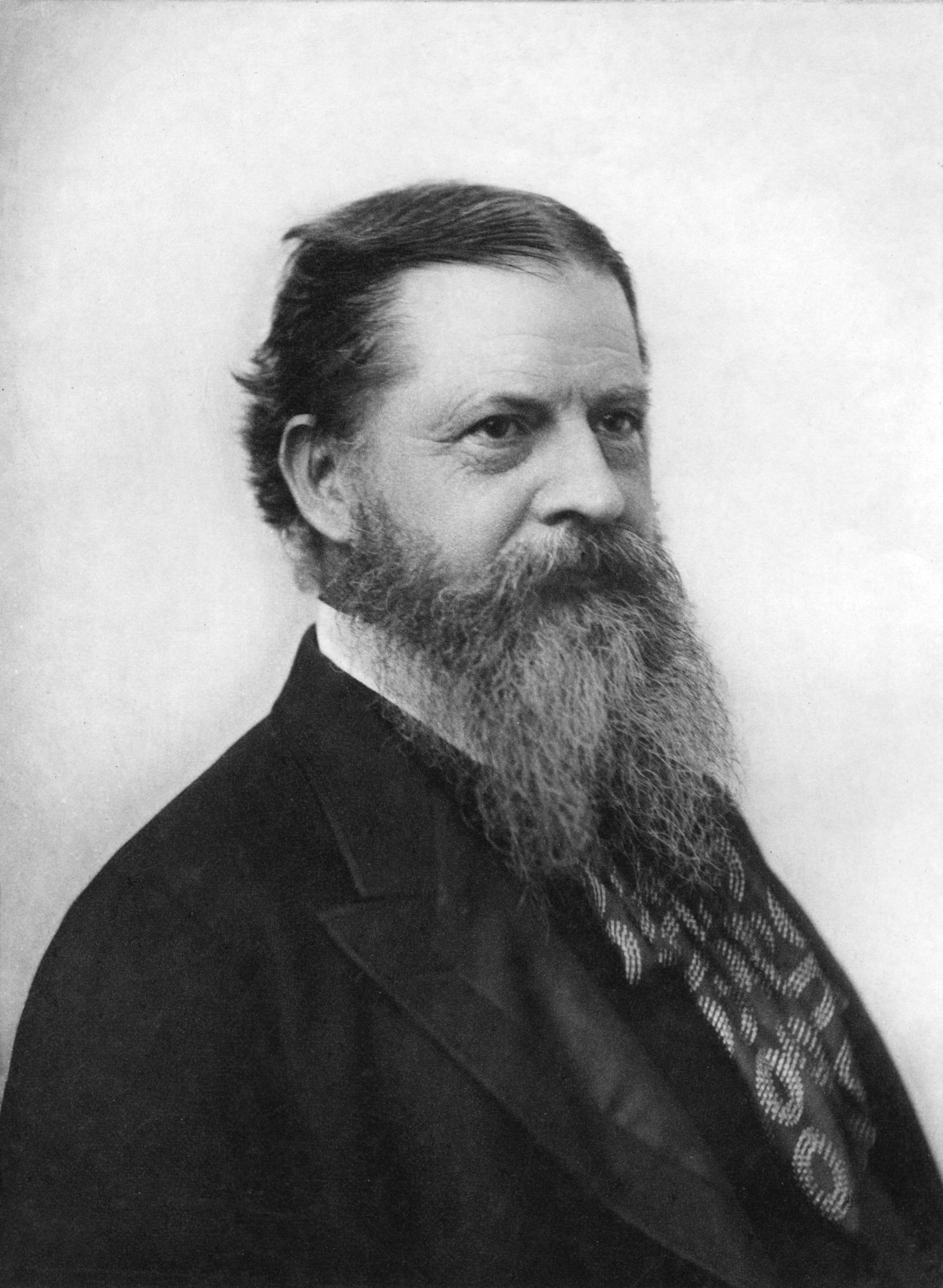
Charles Sanders Peirce (1839-1914), the American philosopher who coined the term "fallibilism." Photograph by Napoleon Sarony, 1891. Public domain, via Wikimedia Commons.
See this page's graph and discover linked topics
In full
Epistemic fallibilism is the thesis that a subject can know that p even though the subject's justification, evidence or grounds for p do not guarantee that p is true. Put another way: knowledge is compatible with the logical or metaphysical possibility of error. The term "fallibilism" is due to Charles Sanders Peirce, and the position was developed in different ways by Karl Popper, the critical rationalists, and most contemporary analytic epistemologists. Its denial, infallibilism, holds that knowledge requires grounds that entail the truth of what is known.
Three distinctions are needed to use the term correctly:
- Fallible grounds versus fallible knowers. Fallibilism concerns the grounds of a belief. That human beings make mistakes is uncontroversial; the question is whether knowledge requires error-proof grounds.
- Possibility of error versus probability of error. That error is logically possible is not evidence that error is likely in this case.
- Certainty of the object versus certainty of the knower. A truth may be necessary, and God may be wholly trustworthy, while a human's grasp of that truth remains finite and fallible.
Why "you could be wrong" does not defeat a knowledge claim
The phrase "you could be wrong" carries much less weight than it sounds. Five points show why:
- It proves too much. If the bare possibility of error defeated knowledge, nobody would know anything about the external world, the past or other minds. The objector would not know the premises of his own objection.
- It confuses possibility with evidence. A defeater is a reason to think a belief is false or unreliably formed. "It is conceivable that you are mistaken" is not such a reason; it is a description of the human condition.
- It applies to the objector equally. Every argument for skepticism about God is made by a fallible reasoner using fallible faculties. See Self-refutation.
- Concessive knowledge claims are coherent. Sentences such as "I know it, though I suppose I could be wrong" sound awkward. David Lewis ("Elusive Knowledge", 1996) found them close to contradictory, but many fallibilists, including Trent Dougherty and Patrick Rysiew ("Fallibilism, Epistemic Possibility, and Concessive Knowledge Attributions", Philosophy and Phenomenological Research, 2009), argue the awkwardness is conversational, not logical.
- Real defeaters must be specific. To dislodge a claim, the critic must show why this belief, formed this way, is likely mistaken. That is a burden the critic carries. See Burden of Proof.
Varieties and sharper statements
- Stewart Cohen, "How to Be a Fallibilist" (Philosophical Perspectives 2, 1988), argued that fallibilism is the only alternative to skepticism and connected the problem with the contextualist response. See Epistemic Contextualism.
- Baron Reed, "How to Think about Fallibilism" (Philosophical Studies, 2002), surveyed the attempts to define the view and the difficulty of stating it for necessary truths, which cannot be false in any case.
- Jessica Brown, Fallibilism: Evidence and Knowledge (Oxford University Press, 2018), defended fallibilism against its main contemporary challenges.
- Timothy Williamson's E=K thesis complicates the picture. If evidence is what one knows, evidence entails everything known, which makes the view a kind of infallibilism about evidence, while it remains fallibilist in the sense that knowers cannot always tell a good case from a bad one. See Knowledge-First Epistemology.
Fallibilism and moderate foundationalism
Most contemporary foundationalists are fallibilists. Moderate (or modest) foundationalism holds that basic beliefs, such as perceptual and memory beliefs, are justified without being inferred from other beliefs, and that this justification can be defeated by further evidence. Classical foundationalism, in Rene Descartes's form, wanted basic beliefs to be indubitable. The shift from one to the other is the shift from infallibilism to fallibilism about foundations. Reformed Epistemology belongs to the moderate camp: belief in God can be properly basic and still be open to defeat in principle.
The fallibilist challenge to presuppositional arguments
Some forms of Presuppositionalism seem to require certainty. The challenge has two parts:
- Against the method. If the Christian says "you cannot know anything unless you are certain, and only Christianity supplies certainty", the opponent answers that knowledge does not require certainty, so the premise is false.
- Against the arguer. If the Christian's own grasp of revelation is fallible (he misreads texts, he changes his mind on doctrine, sincere believers disagree), then the Christian does not enjoy the certainty he demands of others.
Strong presuppositionalism: Van Til and Bahnsen
Cornelius Van Til held that the Christian position does not offer a merely probable case. He spoke of an absolutely certain proof of God, namely that unless God is presupposed there is no proof of anything. Greg Bahnsen put the same idea as the argument from the impossibility of the contrary, and in his 1985 debate with Gordon Stein argued that the proof of God's existence is that without Him one could not prove anything at all.
Read carefully, this is a claim about the ontological status of the argument's conclusion and the transcendental role of God, not a claim that each believer's every belief is psychologically certain. Van Til also insisted on the Creator-creature distinction, and his tradition never claimed human knowledge was exhaustive. But in debate the language of certainty is easily heard as an epistemic demand, and that is where it breaks.
Modest transcendental arguments
Other defenders state the argument in forms that grant fallibilism:
- John Frame (Apologetics to the Glory of God, 1994; Cornelius Van Til: An Analysis of His Thought, 1995) argued that a transcendental conclusion can be supported by many ordinary arguments, including evidential ones, rather than by one knock-down demonstration, and he criticised Van Til at points where Van Til's rhetoric outran his argument.
- James N. Anderson and Greg Welty ("The Lord of Noncontradiction: An Argument for God from Logic", Philosophia Christi 13.2, 2011) present a deductively valid argument whose premises are defended as more plausible than their denials. That is a standard analytic form which needs no claim of certainty.
- Barry Stroud's objection to transcendental arguments ("Transcendental Arguments", 1968) pushes defenders toward stating clearly whether they claim to show what we must believe or what must be true. See Stroud Objection to Transcendental Arguments Defeater.
How a careful transcendental argument grants fallibilism
A transcendental argument can be stated so that fallibilism is a premise it uses, not a threat it fears:
- Fallibilism presupposes truth. To be fallible is to be capable of missing the truth. That requires a standard of truth independent of the knower.
- It presupposes norms. To say a belief ought to be revised in the light of evidence is to treat epistemic norms as binding. See Argument from Epistemic Normativity.
- It presupposes reliability on the whole. Error can only be detected against a background of beliefs mostly got right.
- The transcendental question is then: what must reality be like for fallible minds to be mostly reliable, bound by norms, and answerable to mind-independent truth? The Christian answer is a rational Creator who made human minds in His image for a world He ordered.
On this framing, the opponent's fallibilism is not a concession to be pounced on. It is a datum to be explained.
Human finitude and the noetic effects of sin
Christian doctrine is not merely compatible with fallibilism. It predicts it.
Finitude
Human knowledge is real but partial, because humans are creatures:
For now we see in a mirror, darkly; but then face to face: now I know in part; but then shall I know fully even as also I was fully known. (1 Corinthians 13:12, ASV)
The secret things belong unto Jehovah our God; but the things that are revealed belong unto us and to our children for ever, that we may do all the words of this law. (Deuteronomy 29:29, ASV)
Reformed theology expressed this with the distinction, drawn by Franciscus Junius (De theologia vera, 1594), between God's archetypal knowledge and human ectypal knowledge: ours is a true copy, never the original. Van Til's Creator-creature distinction builds on the same idea.
The noetic effects of sin
Sin damages not only the will but the mind. Paul describes people "darkened in their understanding" (Ephesians 4:18, ASV), and Jeremiah asks of the human heart, "who can know it?" (Jeremiah 17:9, ASV). John Calvin (Institutes II.2.12) taught that sin corrupted the natural gifts, reason included, without destroying them. Merold Westphal ("Taking St. Paul Seriously: Sin as an Epistemological Category", 1990) argued that philosophers should treat this as a real factor in how people form beliefs about God.
A person who believes this cannot consistently claim that his own judgments are immune to error. Even the believer's self-assessment is not final: "For I know nothing against myself; yet am I not hereby justified: but he that judgeth me is the Lord" (1 Corinthians 4:4, ASV).
Certainty that is real but given
Scripture still speaks of assurance. Luke writes "that thou mightest know the certainty concerning the things wherein thou wast instructed" (Luke 1:4, ASV), and John writes "that ye may know that ye have eternal life" (1 John 5:13, ASV). The certainty is grounded in testimony and in God's faithfulness, not in the believer's infallibility. The Westminster Confession states both sides together: assurance is the work of the Spirit (XVIII.2), and yet true believers may have it "shaken, diminished, and intermitted" (XVIII.4). That is fallibilism about the knower held together with confidence in the One known.
Better lines for live debate
- When the opponent says "you could be wrong": "Yes, and so could you. That is not a defeater. Do you have a specific reason to think this belief is false or badly formed?"
- When the opponent admits "it is logically possible I'm wrong": do not treat it as a win. Ask instead: "What makes your fallible faculties mostly reliable, and what makes it true that you ought to correct your errors? Those are the facts I think need explaining."
- When asked whether you are certain: "I am not claiming my mind is infallible. Scripture says I know in part. I am claiming that the God who made my mind is the reason it can know anything at all."
Scholarship
Published academic works this page draws on, each matched to a publisher, index or library catalog record.
- James N. Anderson, Greg Welty and Evangelical Philosophical Society, "The Lord of Noncontradiction: An Argument for God from Logic," Philosophia Christi 13 (2011). doi:10.5840/pc201113229
- Stewart Cohen, "How to be a Fallibilist," Philosophical Perspectives 2 (1988). doi:10.2307/2214070
- Trent Dougherty and Patrick Rysiew, "Fallibilism, Epistemic Possibility, and Concessive Knowledge Attributions," Philosophy and Phenomenological Research 78 (2009). doi:10.1111/j.1933-1592.2008.00234.x
- John M. Frame, Apologetics to the glory of God (1994). Open Library
- Baron Reed, "How to Think about Fallibilism," Philosophical Studies 107 (2002). doi:10.1023/a:1014759313260
See also
- Knowledge-First Epistemology, where E=K complicates the fallibilist picture
- Timothy Williamson, defender of knowledge-first epistemology
- Foundationalism, whose moderate form is fallibilist
- Skepticism, the position fallibilism is meant to avoid
- Agrippa's Trilemma, the regress problem behind the demand for certainty
- Cartesian Skeptical Argument and Christian Responses, fallibilist and infallibilist replies to the skeptic
- Presuppositionalism, where the certainty question is pressed hardest
- Transcendental Argument for God, which can be stated in a fallibilist form
- Reformed Epistemology, properly basic belief open to defeat
- Burden of Proof, who must supply the specific defeater
- Epistemic Contextualism, Cohen's link between fallibilism and context
- Epistemology, the master hub
Common questions this page answers
Q: What is fallibilism in epistemology?
Fallibilism is the view that a person can know something even though the grounds for the belief do not guarantee its truth. Knowledge, on this view, is compatible with the bare possibility of error. Most contemporary epistemologists are fallibilists.
Q: If I could be wrong, do I really know anything?
Yes, on the fallibilist view. The bare possibility of being wrong is not evidence that you are wrong. If it were, no one would know anything about the external world, the past or other minds, including the person raising the objection.
Q: Does presuppositional apologetics require certainty?
Van Til and Bahnsen spoke of an absolutely certain proof of God from the impossibility of the contrary, but that language concerns the transcendental status of God, not a claim that each believer is psychologically infallible. More modest defenders, such as John Frame and James Anderson, state transcendental arguments in forms that grant fallibilism.
Q: Is fallibilism compatible with Christianity?
Yes. Scripture describes human knowledge as real but partial ("now I know in part", 1 Corinthians 13:12), and Christian doctrine teaches that sin affects the mind. Reformed theology distinguishes God's original knowledge from human knowledge that copies it. Confidence rests on God's faithfulness, not on human infallibility.
Q: If an atheist admits he could be wrong, has he lost the debate?
No. Admitting fallibility is the ordinary view in philosophy and is not a contradiction. The stronger Christian move is to ask what makes fallible minds mostly reliable and bound by norms of truth, and to argue that theism explains those facts better than naturalism.
Q: Who coined the term fallibilism?
The American philosopher Charles Sanders Peirce introduced the term in the late nineteenth century for the view that our knowledge is never absolutely certain but always open to correction.