Concept
Dorothy Kerin (Herne Hill 1912)
Dorothy Kerin, Dorothy Kerin healing, Herne Hill Miracle, The Herne Hill Miracle, Dorothy Kerin 1912Intro
Dorothy Kerin was a young Londoner who had been sick for about seven years. By February 1912 she was 22, had spent most of those years in bed, and was so weak that her family gathered around her bed in Herne Hill expecting her to die. Her doctor had said she might not last more than a few days.
On the evening of Sunday, 18 February 1912, she suddenly spoke, sat up, opened eyes that had been closed for two weeks, and said a voice had told her, "Dorothy, your sufferings are over. Get up and walk!" She got out of bed and walked through the flat. Doctors who examined her afterward could find no sign of the disease, and she stayed well.
A London physician, Dr. Edwin Ash, began investigating four days later and published a full report that same year. This entry sits in the witnessed tier. The recovery is well documented. What the illness actually was is the part doctors argued about.
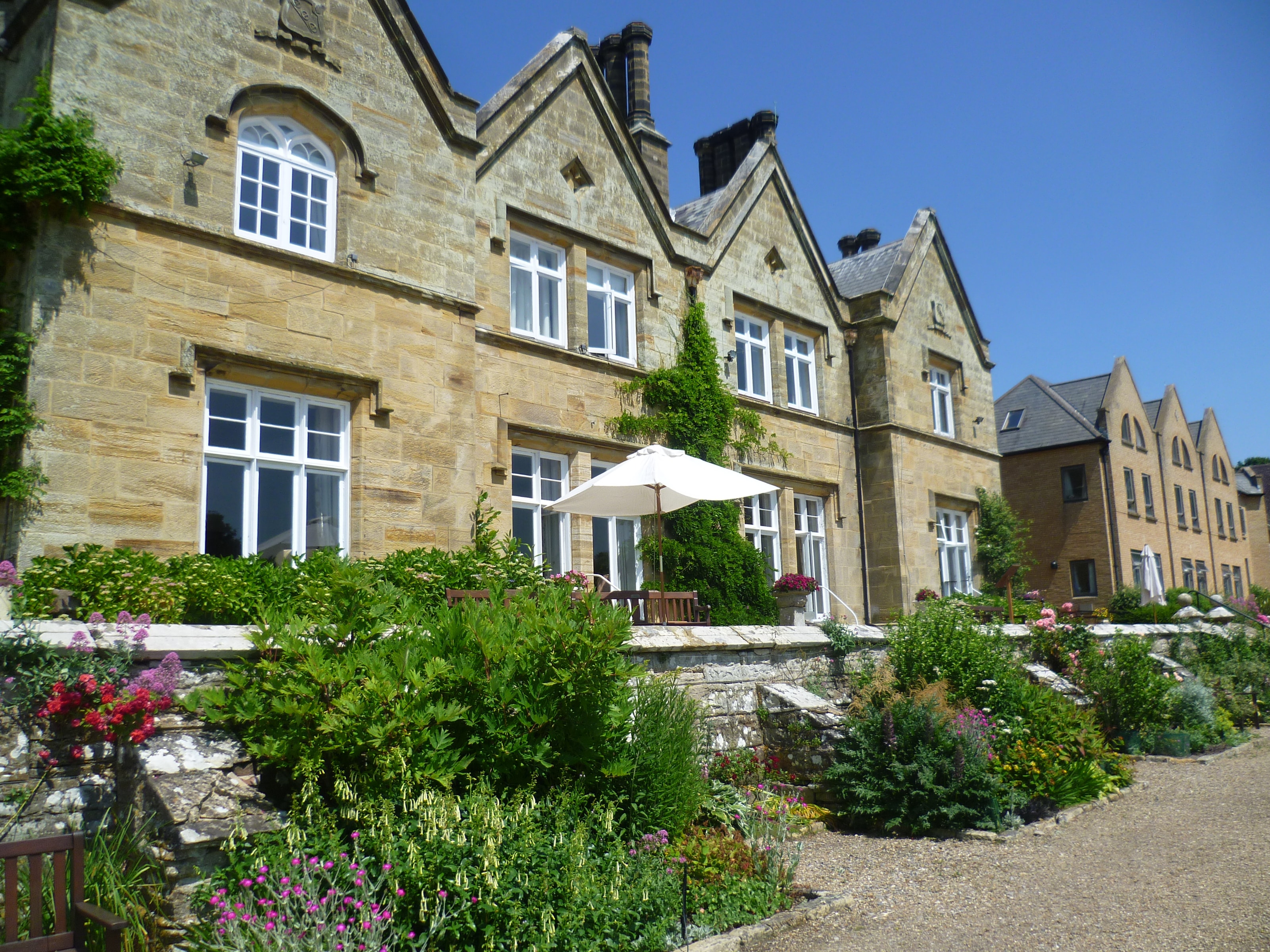
Burrswood, near Groombridge on the Kent and Sussex border, the Christian hospital Dorothy Kerin founded in 1948. Photo: Marathon, CC BY-SA 2.0, via Wikimedia Commons, resized.

The 30-second version:
Dorothy Kerin had been an invalid for seven years. Her doctor treated her for tuberculosis of both lungs, and in February 1912 she was dying: semi-conscious for two weeks, eyes closed, unable to keep food down. On Sunday evening, 18 February 1912, with her family around the bed, she sat up, opened her eyes, said a voice had told her to get up and walk, and walked. Doctors found no disease afterward, and X-rays showed no active tuberculosis. Dr. Edwin Ash published an investigation within two months. Some doctors argued the illness had been nervous in origin. Ash's answer: whatever it was, she was dying, and she recovered in a moment.
See this page's graph and discover linked topics
In full
Dorothy Kerin (28 November 1889 to 26 January 1963) fell ill in her teens after her father's death and was treated at a sanatorium, at St. Bartholomew's Hospital, at nursing homes and at home between 1906 and 1912. From February 1910 she was attended by a South London surgeon who recorded repeated haemorrhages, signs of tuberculosis over both lungs, and, in the last two months, an abdominal disorder he suspected was tubercular peritonitis, with bleeding, collapse and a sharp fall in blood pressure. She was officially notified as a case of consumption to the Lambeth health authority under the notification rules that came into force at the start of 1912. On the evening of Sunday, 18 February 1912, after about two weeks in a semi-conscious state, she sat up, opened her eyes, reported a vision and a voice, and walked unaided. Edwin Lancelot Ash, a London physician, saw her on 22 February, took her to his own house to rest, arranged X-ray examinations by two specialists and a chest examination with the Calmette and von Pirquet tuberculin tests, gathered reports from her earlier doctors, nurses and hospitals, and published Faith and Suggestion (London: Herbert & Daniel, 1912) about two months after the event. The X-rays showed no active disease (one specialist saw slight old deposits at the roots of the lungs, the other none at all). The medical dispute was over diagnosis. The honorary medical officer of the Reading sanatorium where she had stayed in 1906 wrote in the British Medical Journal (9 March 1912) that she had been diagnosed then with hysteria, not tuberculosis, and the chest specialist who examined her after the recovery attributed the illness to a functional nervous disorder. Ash weighed both views and concluded that, whatever the name, "the girl was exhausted to the point of death" and the recovery from that state was sudden and complete. She lived another fifty-one years and became one of the best-known figures in the Church of England's healing ministry, founding Burrswood in 1948.
Summary
Dorothy Kerin, aged 22, of Milkwood Road, Herne Hill, south London, recovered on the evening of Sunday, 18 February 1912, from a seven-year illness her attending doctor had diagnosed as pulmonary tuberculosis, after a reported vision in which a voice told her to get up and walk. Witnessed by her mother, a family friend, the friend's daughter Nellie, a Mrs. Ainley, the friend's husband and the daughter's fiancé, with her stepfather in the flat. Investigated from 22 February by physician Edwin Lancelot Ash, with post-recovery X-rays by two specialists, and published in his Faith and Suggestion (1912). Reported in the London press within days. The diagnosis was disputed by other doctors at the time; the recovery itself was not.
The event
The illness. Ash collected notes on the case from 1906 onward. Dorothy was admitted to a sanatorium for consumptives at Reading in May 1906, aged 16, and discharged in January 1907. In 1908 she was treated at St. Bartholomew's Hospital for gastritis and at a home in St. Leonards, where a nursing sister remembered her spitting blood with high fever. In January 1909 she was seen at the Mount Vernon Hospital for Consumption, where signs of early tuberculosis were noted without a firm diagnosis, and she then spent three months in the consumptive ward of St. Peter's Home, Kilburn. Doctors in these years disagreed: some thought she had tuberculosis, some thought the illness was largely nervous, and one told Ash he was sure it was neither hysteria nor malingering.
1910 to 1912. From February 1910 a South London surgeon attended her until the end of the illness. Ash reports that this doctor stated "on several occasions" his conviction that it was pulmonary tuberculosis affecting both lungs, recorded numerous haemorrhages including a severe one about Christmas 1911, and found signs of disease over both lungs late that year. District nurses from the Camberwell District Nursing Association visited through 1910 and 1911; one described the case as "hopeless."
The last weeks. In the final two months she developed a severe abdominal disorder: diarrhoea with blood, collapse, a large fall in blood pressure, rapid breathing, and vomiting of everything except a little liquid. For about two weeks before the recovery she lay semi-conscious, apparently blind and deaf, with her eyes closed. Her doctor did not expect her to live more than a few days.
Sunday, 18 February 1912. Ash prints an eye-witness account by a family friend who was in the room. Dorothy lay still for a time and seemed to stop breathing, then said, "I am listening." Later in the evening she raised her arms, sat up, passed her fingers over her eyes and opened them, recognised everyone, and said, "Isn't it wonderful; I haven't got any pain anywhere; I am quite well. I want to get out of bed." She asked for her dressing-gown, stood, and walked out of the room and down the passage looking for her stepfather. Dorothy's own account, dictated to Ash while it was fresh, says a voice told her, "Dorothy! Your sufferings are over! Get up and walk!" She ate supper that night. The witness, who stayed with her daily until Ash took her away on 22 February, said that in those days "she ate well, slept well, and was quite calm and collected."
Afterward. Several doctors examined her in the following days and found no trace of consumption or other disease. She went to rest at Ash's house, and the press attention became so heavy that she had to leave Herne Hill. She remained well. In later life she led a healing ministry within the Church of England and in 1948 opened Burrswood, near Groombridge, Kent, a Christian hospital whose Church of Christ the Healer was consecrated in 1960. She died at Burrswood on 26 January 1963.
Witnesses + documentation
- Patient: Dorothy Kerin, whose own account appears in Ash (1912), in The Living Touch (1914) and in Fulfilling (1952).
- Bedside witnesses on 18 February 1912: her mother; a family friend, whose written account Ash prints in full; the friend's daughter Nellie; a Mrs. Ainley; the friend's husband and the daughter's fiancé, who were sent for during the evening. Her stepfather was in another room of the flat when she walked in to find him. Ash notes the account "is corroborated by several other witnesses."
- Attending physician, 1910 to 1912: a South London surgeon, unnamed by Ash, whose written report Ash quotes. Later accounts name her doctor as Dr. Norman and record that he examined her after the recovery.
- Investigating physician: Edwin Lancelot Ash MD (later Hopewell-Ash), a London physician who wrote on nervous disorders and suggestion therapy. He saw her on 22 February 1912 and gathered reports from doctors, nurses, hospitals and a local charity covering 1906 to 1912.
- Post-recovery examiners: two X-ray specialists and a leading chest specialist, unnamed in Ash's book.
- Nursing records: Camberwell District Nursing Association reports for 1910 to 1911.
- Hospital records cited by Ash: St. Bartholomew's Hospital (admission 26 June to 30 August 1908) and Mount Vernon Hospital for Consumption (outpatient visit 3 January 1909).
- Contemporaneous press: the London Evening News (20 February 1912) and Daily Mirror (21 February 1912), with reprints in overseas papers through April and May 1912.
- Medical press: the British Medical Journal, 9 March 1912, report by the honorary medical officer of the Reading sanatorium.
Verification
- The calendar checks. 18 February 1912 fell on a Sunday, as Ash and the witness both state.
- Documentation began within days. Ash examined her four days after the recovery and published within about two months, while the patient, family, nurses and doctors were all available. The press reported it within two to three days.
- The investigator was not a partisan. Ash's book was a study of suggestion and the mind's influence on the body. He printed the evidence against an organic diagnosis alongside the evidence for it, and corrected claims made on the patient's behalf that he could not confirm (he found no record of a Brompton Hospital examination, and the only official bacteriological test, from September 1908, found no tubercle bacilli).
- Objective tests after the recovery. Two independent X-ray examinations and a chest examination with tuberculin tests found no active disease.
- Long follow-up. She lived fifty-one more years, most of them in public ministry.
Naturalistic explanations considered:
- Hysteria or functional disorder. This was the main medical objection in 1912. The Reading sanatorium's medical officer, writing about her stay six years earlier, said the diagnosis then had been hysteria, and the chest specialist who examined her after the recovery thought the whole illness was a functional nervous disorder. Ash's reply was that the doctors who saw her in 1910 to 1912 found physical signs over both lungs, ordered isolation and antiseptic precautions, and notified her as a consumptive; that no definite sign of hysteria was ever recorded; and that "had the disease terminated fatally, the diagnosis of tuberculosis would never have been questioned." Even on the functional reading, a patient semi-conscious for two weeks and unable to retain food rose and walked that evening and ate supper.
- Gradual recovery misremembered as sudden. The eye-witness account was written within weeks and describes a change within a single evening, from apparent death throes to walking.
- Fraud. No contemporary, including the doctors who rejected the tuberculosis diagnosis, suggested the illness or recovery was faked.
Caveats and remaining uncertainties:
- The diagnosis is genuinely contested. No sputum test confirming tuberculosis survives in Ash's record, and serious physicians at the time held that the illness was functional. The case therefore does not demonstrate the instant cure of a proven infection. Its strength is the documented sudden restoration of a patient in extremis.
- Named witnesses are partly anonymous in the primary source. Ash withholds the names of the attending surgeon, the X-ray specialists and the chest specialist, and identifies the main eye-witness only by her daughter's name. The attending doctor is named as Dr. Norman in later accounts.
- Date variation. Some later summaries give 4 February 1912. Ash's contemporaneous record gives the vision of 14 February and the recovery on Sunday 18 February, and this entry follows him.
- No formal review. There was no medical bureau process, and the hospital and health-authority records Ash cites have not been republished.
Apologetic value
- A Protestant case from the age before modern bureaus. Kerin was a member of the Church of England, and her healing came in a working-class London home with no shrine, no healer and no relic. The collection's documented healings lean heavily on Lourdes and the canonization process; this one is Anglican and documented by an independent physician.
- A case where the skeptical reading was put on the record at the time. The 1912 debate shows what the "it was hysteria" objection looks like when it is made with the evidence in hand, and why it does not close the question. Ash's point holds: the label changes nothing about a dying patient walking that evening.
- The Gospel pattern. The words she reported, "Get up and walk," echo Jesus's command to the paralyzed man in John 5:8 and Mark 2:11.
- How to deploy it. Lead with the physician's investigation and the X-rays, not the vision. Concede at once that the tuberculosis diagnosis was disputed. Use it to show that sudden, complete recovery from extremis is attested outside Catholic contexts and was examined skeptically in its own day. Pair it with Tier 1 cases from the Lourdes Medical Bureau when formal review is wanted.
Scholarship
Published academic works this page draws on, each matched to a publisher, index or library catalog record.
- Dorothy Musgrave Arnold, Called by Christ to heal (1966). Open Library
- Edwin Ash, Faith and suggestion (Herbert & Danie, 1912). Open Library
- Dorothy Kerin, The living touch (1914). Open Library
See also
- Miracles, master hub
- _schema, the vetting standard this entry follows
- Barbara Cummiskey Snyder (Wheaton 1981), another Protestant Tier 2 healing from a bedridden, hopeless state
- George Müller (Bristol Orphanages 1836-1898), a Protestant Tier 2 entry from England
- Gabriel Gargam (Lourdes 1901), a bureau-reviewed healing from the same era for comparison
- Argument from Miracles, the argument this case supports
- Naturalism, the worldview such cases press against
Common questions this page answers
Q: Who was Dorothy Kerin and how was she healed?
Dorothy Kerin was a young woman from Herne Hill, London, who had been ill for seven years and was treated for tuberculosis. On the evening of Sunday, 18 February 1912, while her family waited for her to die, she sat up, said a voice had told her to get up and walk, and walked. Doctors found no disease afterward, and she lived until 1963.
Q: Was Dorothy Kerin's healing investigated by doctors?
Yes. Dr. Edwin Ash examined her four days later, arranged X-rays by two specialists and a chest examination, and collected reports from her earlier doctors, nurses and hospitals. He published the results in Faith and Suggestion in 1912.
Q: Did Dorothy Kerin really have tuberculosis?
Her attending doctor in 1910 to 1912 was convinced she did, and she was officially notified as a consumptive. Other doctors, including the officer of a sanatorium where she stayed in 1906, thought the illness was nervous in origin. The diagnosis was disputed at the time; that she was near death and recovered suddenly was not.
Q: Was Dorothy Kerin Catholic or Protestant?
She was an Anglican, a member of the Church of England. She later led a healing ministry within that church and founded Burrswood, a Christian hospital in Kent, in 1948.
Q: What is the Herne Hill Miracle?
It is the name the London press gave in 1912 to Dorothy Kerin's sudden recovery at her home in Herne Hill, south London, after years of illness.