Concept
Decline of North African Christianity
Disappearance of North African Christianity, End of Christianity in North Africa, Decline of the North African Church, Christianity in the Maghreb, Vandal Persecution, Why did Christianity disappear from North AfricaIntro
For about five hundred years, the Roman provinces of North Africa, roughly modern Tunisia, Algeria, Libya and Morocco, held one of the strongest churches in the world. It produced Tertullian, Cyprian of Carthage and Augustine, hundreds of bishops, and a long line of martyrs. Yet by the 1100s this Latin-speaking church had almost vanished.
It did not disappear in a single blow. It was weakened by internal division, persecuted by the Arian Vandals, burdened under Byzantine rule, and then slowly worn away over several centuries after the Arab conquest of the late 600s. At the same time, the Coptic church of Egypt and the Ethiopian church survived and still exist today. Asking why one African church faded and the others endured is one of the most instructive questions in the history of Christianity.
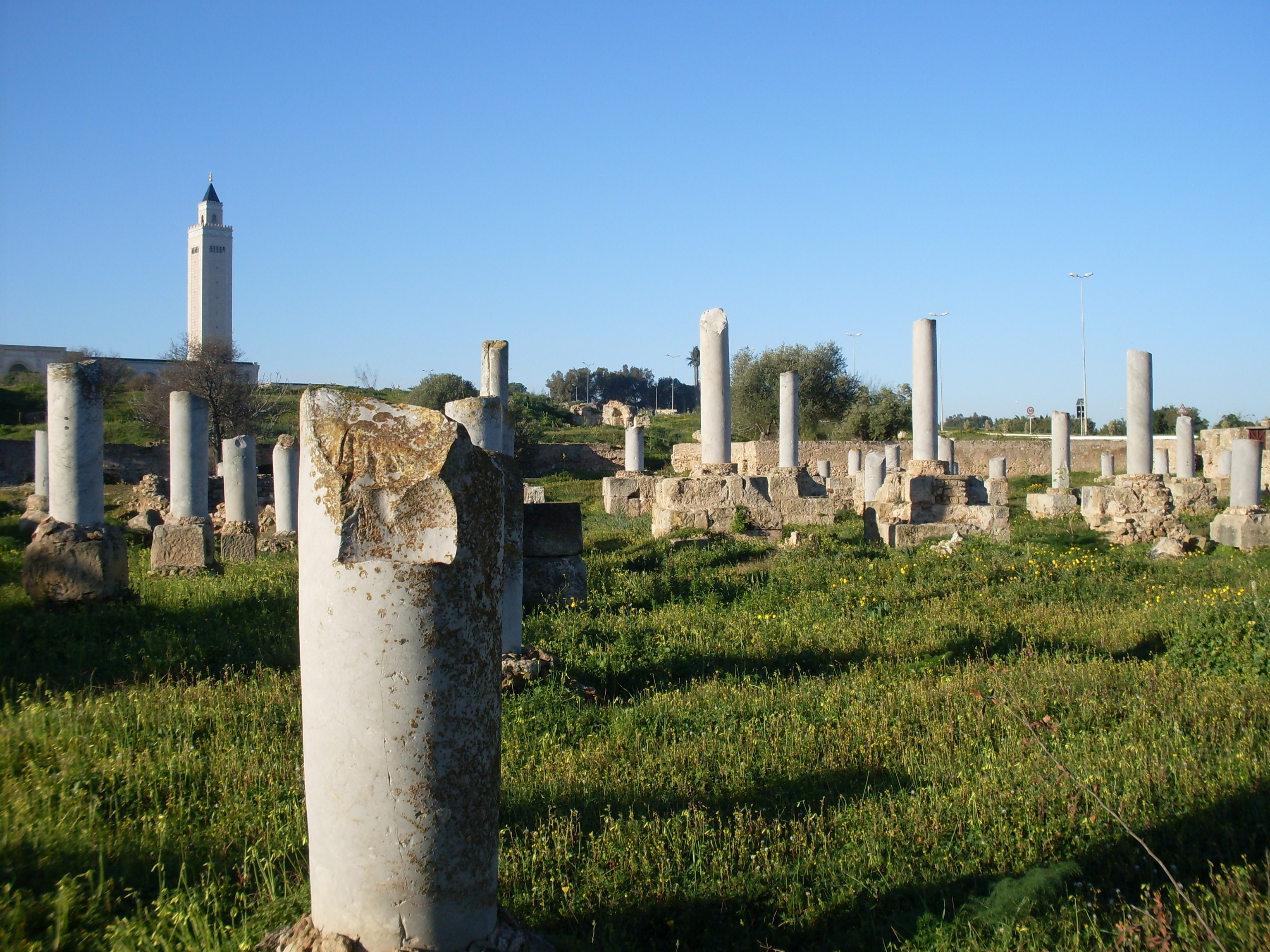 The ruins of the Damous el Karita basilica, Carthage, one of the largest churches of Christian North Africa. Photo: Rais67, CC0 (Wikimedia Commons), resized.

See this page's graph and discover linked topics
In full
The Latin church of Roman Africa (the provinces of Africa Proconsularis, Byzacena, Numidia, Tripolitania and the Mauretanias) was at its height in the late 4th and early 5th centuries, when councils regularly gathered hundreds of bishops. Its decline unfolded in stages: the century-long Donatist Controversy (from c. 311) divided it; the Arian Vandal kingdom (429-534) confiscated churches, exiled bishops and, under Huneric (484), persecuted Nicene Christians severely; the Byzantine reconquest (533-534) restored Catholic worship but brought heavy taxation, Berber wars and the alienating Three Chapters controversy; and the Arab-Muslim conquest (from 647, with Carthage falling in 698) began a long process of conversion, emigration and Arabization. Latin-speaking Christian communities persisted into the 11th and 12th centuries: Latin Christian epitaphs from Kairouan run into the 11th century, Pope Leo IX corresponded with a much-reduced African episcopate in 1053, and Gregory VII wrote in 1076 to Cyriacus of Carthage and to the Hammadid emir al-Nasir. Almohad policy in the mid-12th century, including forced conversions in Tunis in 1159, is generally taken to mark the end of an organized indigenous church, though scattered Christian communities are attested later. Historians weigh several explanations: division, persecution, the church's Latin and urban character and its limited translation into Punic or Berber languages, elite emigration, and the social and fiscal pressures of life under Islamic rule. The contrast with the survival of Coptic, Ethiopian and, for centuries, Nubian Christianity is central to the discussion.
Stages of decline
| Period | What happened | Effect on the church |
|---|---|---|
| c. 311-411 | Donatist Controversy: rival Catholic and Donatist churches in most towns | Energy spent on schism; violence; imperial coercion |
| 429-439 | The Vandals under Geiseric cross from Spain; Augustine dies during the siege of Hippo (430); Carthage falls (439) | Nicene churches confiscated and handed to Arian clergy |
| 484 | Huneric summons Nicene bishops to Carthage, then exiles and persecutes them; recorded by Victor of Vita | Hundreds of clergy exiled; many martyrs and confessors |
| c. 496-523 | Thrasamund exiles bishops, including Fulgentius of Ruspe, to Sardinia | Leadership scattered |
| 533-534 | Justinian's general Belisarius destroys the Vandal kingdom | Catholic worship restored; Arianism ends |
| 534-640s | Byzantine Africa: Berber wars, heavy taxation, the Three Chapters dispute in which African bishops resisted Justinian and some were deposed or exiled | Alienation of the African church from Constantinople |
| 647 | Arab army defeats the Byzantine exarch Gregory at Sufetula | Opening of the Muslim conquest |
| 670 | Uqba ibn Nafi founds Kairouan | A Muslim capital in the heart of Christian Byzacena |
| 683-c. 703 | Berber resistance under Kusaila and the queen known as al-Kahina | Long war; Berber leaders eventually defeated |
| 698 | Carthage taken by Hassan ibn al-Nu'man | End of Byzantine rule; many Latin Christians emigrate |
| 700s-1000s | Gradual conversion and Arabization; Christian communities shrink but persist | Latin epitaphs at Kairouan; a handful of bishops |
| 1053, 1076 | Papal letters of Leo IX and Gregory VII to the remaining African bishops; Gregory consecrates Servandus at the emir al-Nasir's request | The last glimpses of an organized African episcopate |
| 1150s-1160s | Almohad conquest; forced conversions of Christians and Jews in Tunis (1159) | The indigenous church effectively ends |
Why did it decline? The main explanations
- Division. The Donatist schism split African Christianity for a century and left a legacy of bitterness. Many historians count it as a lasting weakness.
- Persecution by fellow Christians. The Vandals were Arian Christians. Their confiscations and exiles (see Arianism) gutted the Nicene hierarchy for two generations.
- A Latin, urban church. The church's language of Scripture and worship was Latin. W. H. C. Frend and others argued that the church never translated the Bible into Punic or the Berber languages and remained tied to the Romanized towns, so that when Roman culture collapsed the faith had shallower roots in the countryside. Others reply that Donatism was strong precisely among rural Numidians, and that Punic-speaking clergy existed (Augustine sought Punic-speaking priests). The translation argument is often linked to the wider principle defended by Lamin Sanneh: churches that make the faith at home in a people's own language tend to endure. See Missionary Translation and African Languages.
- Emigration of the elite. Clergy and educated Latin speakers left for Italy, Sicily, Spain and Gaul during the Vandal persecution and the Arab conquest, taking leadership and learning with them.
- Life under Islamic rule. Christians and Jews were tolerated as protected peoples (dhimmi) but paid a poll tax (jizya) and faced legal and social disadvantages. Over centuries, conversion offered relief from tax, access to power, and intermarriage. Conversion was mostly gradual rather than forced, until the Almohads. See Forced Conversion By Sword Objection Defeater for the wider debate.
- Isolation. Cut off from Rome by sea and from Constantinople by the conquest, the African church could not easily renew its clergy or maintain its institutions.
No single cause suffices; most historians treat the decline as the result of all of these acting together over six centuries.
Why did the Coptic and Ethiopian churches survive?
| Factor | Latin North Africa | Coptic Egypt | Ethiopia (Aksum and successors) |
|---|---|---|---|
| Language of Scripture and worship | Latin, the language of the Roman towns | Coptic, the language of the people, from the 3rd-4th centuries | Ge'ez, from about the 5th century |
| Monasticism | Present but less central | Massive, rural and popular | Strong and widespread |
| Identity | Roman and Latin; divided by schism | A distinct national church after Chalcedon (451), with its own patriarch | A Christian kingdom with a Christian monarchy |
| Political situation after 700 | Under Muslim rule, far from any Christian power | Under Muslim rule but numerically large for centuries | Independent; protected by highlands |
| Outcome | Organized church gone by the 12th century | Survives today as a significant minority | Survives today as a majority church |
- Egypt. The Coptic church had translated the Bible, built a rural monastic culture, and possessed an identity distinct from Constantinople. Copts remained the majority of Egypt for several centuries after the conquest and are still millions strong. See Coptic Orthodox Church and Desert Fathers and Mothers.
- Ethiopia. Christianity was the faith of the kingdom itself, worshipping in its own language, and the highlands protected it. See Ethiopian Orthodox Church and Kingdom of Aksum.
- Nubia. The Nubian kingdoms negotiated a treaty with Muslim Egypt (the Baqt) that preserved their independence for some six centuries before their Christian states declined in the late Middle Ages. See Christian Nubia.
Lessons the historians draw
- Translation matters. Churches that rooted Scripture and worship in the vernacular survived better.
- Unity matters. A church that spent a century fighting itself was less able to face outside pressure.
- Christianity in Africa was not a colonial import. The very fact that there was an ancient African church to decline is part of the answer to the claim that Christianity is a European religion. See Christianity Is the White Mans Religion Objection Defeater.
Tensions
- Forced or gradual? Some popular accounts describe the end of North African Christianity as a forced conversion by the sword. Most historians describe a long, mostly non-violent attrition under discriminatory rule, punctuated by episodes of real coercion, especially under the Almohads. Both the pressure and the gradualness are real.
- The translation thesis. Frend's emphasis on the church's failure to evangelize the Berber countryside in its own languages is influential but contested, since Donatism was a strongly rural movement and evidence for Punic-language Christianity exists.
- How late did it last? The evidence for Christians after the 11th century is thin and scattered (later Arabic writers mention Christian communities in parts of southern Tunisia), so historians differ on when to date the end. The organized episcopate is not attested after the 12th century.
- Oden's question. Oden's admirers and critics both use this history: for critics it shows the fragility of Roman African Christianity; for Oden's admirers the Egyptian, Ethiopian and Nubian survivals show its depth. See How Africa Shaped the Christian Mind.
See also
- Donatist Controversy, the schism that divided the church
- Arianism, the theology of the Vandal persecutors
- Augustine, who died during the Vandal siege of Hippo
- Coptic Orthodox Church, the African church that survived Islamic rule in Egypt
- Ethiopian Orthodox Church, the African church that kept its independence
- Christian Nubia, the Nile kingdoms that endured for centuries
- Islam, the faith of the conquerors
- Africa and Christianity, the master hub
Common questions this page answers
Q: Why did Christianity disappear from North Africa?
Through a combination of causes over several centuries: a long internal schism (Donatism), persecution under the Arian Vandals, alienation under Byzantine rule, the Arab conquest of the late 600s, elite emigration, and gradual conversion to Islam under discriminatory rule, ending with Almohad coercion in the 12th century.
Q: Was North Africa Christian before Islam?
Yes. From the 2nd to the 7th centuries the Roman provinces of North Africa had a large Latin-speaking church with hundreds of bishops, and it produced Tertullian, Cyprian and Augustine.
Q: Were North African Christians forced to convert to Islam?
Mostly not by direct force at first. Conversion was largely gradual over centuries, encouraged by taxes, legal disadvantages and social pressures. There were episodes of coercion, above all under the Almohads, who forced Christians and Jews in Tunis to convert in 1159.
Q: When did the last Christians in North Africa disappear?
An organized church with bishops is attested until the late 11th century, and Christian communities survived into the 12th. After the Almohad conquests only scattered remnants are recorded, though modern North Africa has small Christian communities again.
Q: Why did the Coptic church survive when the North African church did not?
The Coptic church worshipped and read Scripture in the people's own language, had a strong rural monastic culture, and had a distinct identity with its own patriarch. The Latin church of the Maghreb was tied to Latin and the Roman towns and was weakened by schism and emigration.
Q: Who were the Vandals and what did they do to the African church?
A Germanic people who were Arian Christians. They conquered Roman Africa between 429 and 439, confiscated Nicene churches, exiled bishops and, under King Huneric in 484, persecuted Nicene Christians severely, until Justinian's army ended their kingdom in 533-534.
Q: Did Augustine see the fall of Roman Africa?
He saw its beginning. The Vandals crossed into Africa in 429, and Augustine died in August 430 while they besieged his city of Hippo.