Concept
Circumcision of the Heart
circumcised heart, circumcise your heart, heart circumcision, law written on the heart, letter and spirit, the letter kills, was the Old Testament law on the heart or the letter, heart vs letter of the lawIntro
"Was the Old Testament law only about outward rules, the letter of the law? Or did God want it on people's hearts?"
God always wanted it on their hearts. The Law of Moses was written on tablets of stone, and it had real, outward commands Israel was bound to keep. But the same Law told Israel to love God "with all thy heart" and said, "these words, which I command thee this day, shall be upon thy heart" (Deuteronomy 6:5-6, ASV). Moses even commanded, "Circumcise therefore the foreskin of your heart, and be no more stiffnecked" (Deuteronomy 10:16, ASV).
Circumcision was the outward sign of belonging to God's covenant people. "Circumcise your heart" meant: let the sign go all the way in. Cut away the stubbornness that keeps you from God.
The trouble was not the Law. The trouble was the heart. Israel kept failing to do what the Law asked from the inside out. The prophets said so plainly: "this people draw nigh unto me, and with their mouth and with their lips do honor me, but have removed their heart far from me" (Isaiah 29:13, ASV).
So God made a promise. He would do the cutting Himself: "Jehovah thy God will circumcise thy heart" (Deuteronomy 30:6, ASV). Through Jeremiah He promised to write His law on their hearts (Jeremiah 31:33), and through Ezekiel to give a new heart and put His Spirit within them (Ezekiel 36:26-27).
The New Testament says that promise has come true in Christ. Paul writes that real circumcision "is that of the heart, in the spirit not in the letter" (Romans 2:29, ASV). The short answer to the question, then: the Old Testament law was both written and aimed at the heart. What the New Covenant adds is God's own work to change the heart, so His people can finally love Him the way the Law always asked.
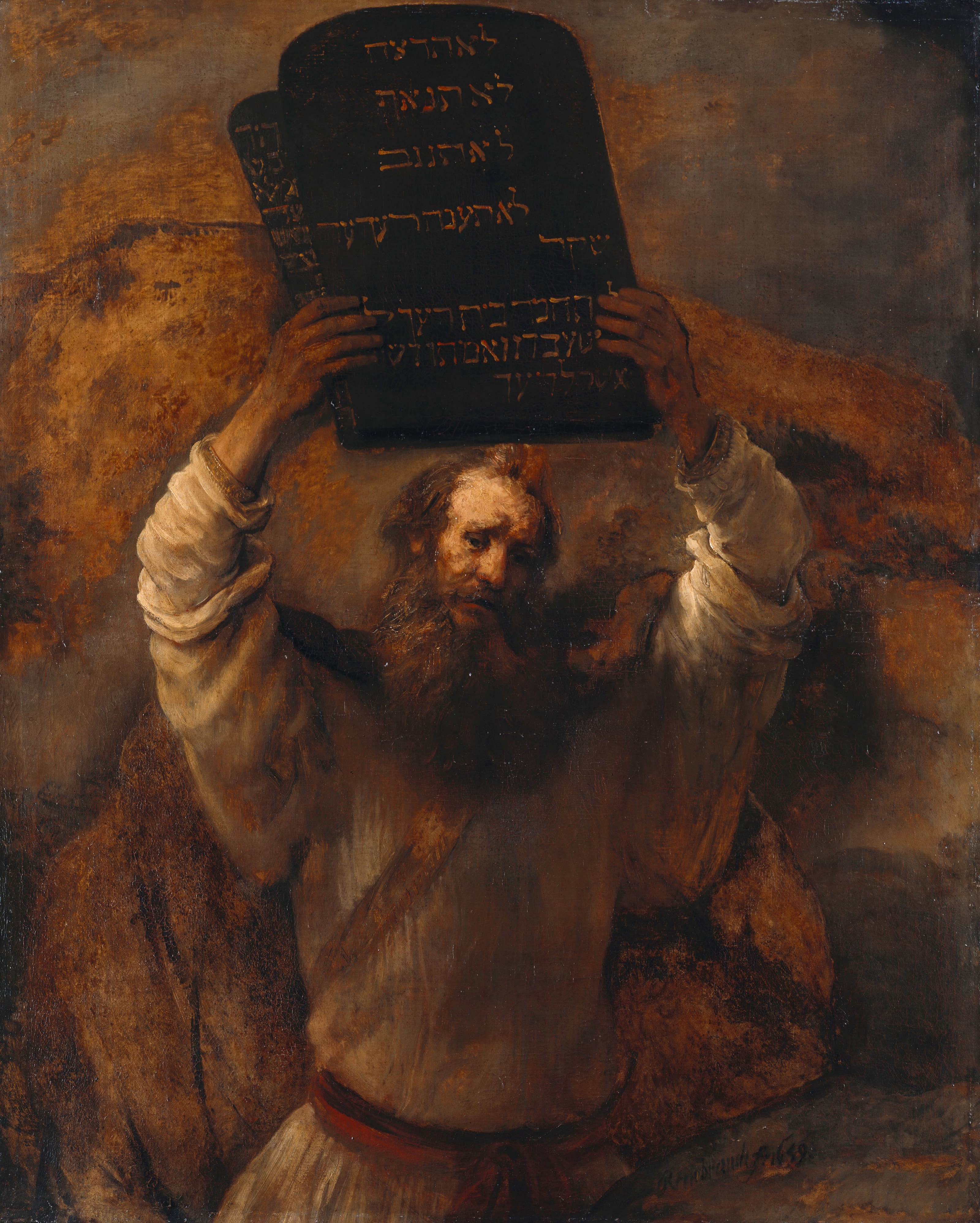
Rembrandt, Moses with the Ten Commandments (1659), Gemäldegalerie, Berlin. The law on "tables of stone" (Exodus 31:18), which Paul contrasts with "tables that are hearts of flesh" (2 Corinthians 3:3). Public domain, via Wikimedia Commons.
The 30-second version:
The Law of Moses was carved in stone and carried real, outward commands, but it always aimed at the heart. Moses told Israel to love God with all their heart, to keep His words on their heart, and to circumcise their hearts. Israel's problem was a hard heart, not a bad law, and the prophets condemned lip-service worship. So God promised to circumcise the heart Himself, to write His law within, and to put His Spirit in His people. Paul says that promise is fulfilled in Christ: true circumcision is of the heart, by the Spirit, not the letter.
See this page's graph and discover linked topics
In full
"Circumcision of the heart" is a biblical metaphor for inward covenant fidelity: the removal of the heart's resistance to God, figured by the covenant sign of circumcision (Genesis 17:10-11). The Torah itself commands it (Deuteronomy 10:16), the prophets indict Israel for lacking it (Jeremiah 4:4; Jeremiah 9:25-26; Leviticus 26:41), and Deuteronomy promises that God will perform it (Deuteronomy 30:6). The promise is restated as the law written on the heart under a new covenant (Jeremiah 31:31-34) and as a new heart and the indwelling Spirit (Ezekiel 36:26-27; 11:19). The New Testament identifies its fulfillment in Christ: circumcision "of the heart, in the spirit not in the letter" (Romans 2:28-29), a circumcision "not made with hands... the circumcision of Christ" (Colossians 2:11), and a ministry "not of the letter, but of the spirit" (2 Corinthians 3:6). The concept answers the question of whether the Mosaic Law was external or internal: it was an external, written covenant whose stated aim was internal love and obedience (Deuteronomy 6:5-6; Matthew 22:37-40), and the difference the New Covenant makes lies in divine enablement, not in a change of the Law's target.
Was the Law on the heart or to the letter?
Both, and the Old Testament says so itself.
The Law was outward and written.
- It was given on "the two tables of the testimony, tables of stone, written with the finger of God" (Exodus 31:18, ASV).
- It carried binding sanctions: "Cursed be he that confirmeth not the words of this law to do them" (Deuteronomy 27:26, ASV).
- Its ceremonial and civil commands governed bodies, food, calendars, courts and sacrifices. See Mosaic Law.
The Law was aimed at the heart from the start.
- The great commandment is a heart command: "thou shalt love Jehovah thy God with all thy heart, and with all thy soul, and with all thy might. And these words, which I command thee this day, shall be upon thy heart" (Deuteronomy 6:5-6, ASV).
- God's own lament at Sinai is about the heart: "Oh that there were such a heart in them, that they would fear me, and keep all my commandments always" (Deuteronomy 5:29, ASV).
- The word is meant to be internal and near: "the word is very nigh unto thee, in thy mouth, and in thy heart, that thou mayest do it" (Deuteronomy 30:14, ASV).
- Faithful Israelites had it there: "thy law is within my heart" (Psalm 40:8, ASV); "The law of his God is in his heart" (Psalm 37:31, ASV); "Thy word have I laid up in my heart" (Psalm 119:11, ASV).
- Outward ritual without the heart was rejected inside the Old Testament: "to obey is better than sacrifice" (1 Samuel 15:22, ASV); "I desire goodness, and not sacrifice" (Hosea 6:6, ASV); "The sacrifices of God are a broken spirit" (Psalm 51:17, ASV); "what doth Jehovah require of thee, but to do justly, and to love kindness, and to walk humbly with thy God?" (Micah 6:8, ASV).
So "letter versus heart" is not Old Testament versus New Testament. It runs through the Old Testament itself, between people who kept the outward form while their hearts were far off (Isaiah 29:13) and people who loved God and kept His word inwardly. Jesus summed up the whole Law and Prophets as two heart commands, love of God and love of neighbor (Matthew 22:37-40), quoting the Torah itself (Deuteronomy 6:5; Leviticus 19:18).
From command to promise
The striking movement in Deuteronomy is from what Israel must do to what God will do.
| Text | Who acts | |
|---|---|---|
| Command | "Circumcise therefore the foreskin of your heart" (Deuteronomy 10:16, ASV) | Israel |
| Diagnosis | "Jehovah hath not given you a heart to know, and eyes to see, and ears to hear, unto this day" (Deuteronomy 29:4, ASV) | God has withheld |
| Promise | "Jehovah thy God will circumcise thy heart, and the heart of thy seed, to love Jehovah thy God with all thy heart" (Deuteronomy 30:6, ASV) | God |
The same book that commands heart-circumcision admits Israel lacks the heart to obey, and then promises that God will do the work, with the stated result being the very love the Shema commands. Moses' farewell sermons already contain the shape of the new covenant.
The prophets carry the theme forward:
- Jeremiah repeats the command, "Circumcise yourselves to Jehovah, and take away the foreskins of your heart" (Jeremiah 4:4, ASV), and indicts a nation that is physically circumcised but "uncircumcised in heart" (Jeremiah 9:25-26, ASV). Then he relays God's promise: "I will put my law in their inward parts, and in their heart will I write it" (Jeremiah 31:33, ASV).
- Ezekiel promises the heart transplant: "A new heart also will I give you, and a new spirit will I put within you; and I will take away the stony heart out of your flesh, and I will give you a heart of flesh. And I will put my Spirit within you, and cause you to walk in my statutes" (Ezekiel 36:26-27, ASV).
Note what Jeremiah and Ezekiel do not promise: a different law. The law is the same; its location changes, from stone to heart, and the Spirit supplies the power to walk in it.
The vocabulary
- Heart. Hebrew lev and its longer form levav (H3820 - lev; H3824 - lebab) name the whole inner person: mind, will, affection and decision. Greek kardia (G2588 - kardia) carries the same range in the New Testament. A "circumcised heart" names a will turned toward God.
- Circumcise / foreskin. The Hebrew pairs the verb mul, "circumcise," with orlah, "foreskin." The image of an "uncircumcised" heart or ear (Jeremiah 6:10; Acts 7:51) pictures an organ covered over and closed to God.
- Law. Torah (H8451 - torah) is instruction, not merely legislation. Instruction is meant to be taken in.
- Letter and Spirit. Paul's pair is gramma (the written letter) and pneuma (Spirit; G4151 - pneuma). "The letter killeth, but the spirit giveth life" (2 Corinthians 3:6, ASV).
How Paul uses it
- Romans 2:28-29. "For he is not a Jew who is one outwardly; neither is that circumcision which is outward in the flesh: but he is a Jew who is one inwardly; and circumcision is that of the heart, in the spirit not in the letter; whose praise is not of men, but of God" (ASV). Paul is not inventing a new idea; he is quoting Moses' and Jeremiah's own category against reliance on the outward sign.
- 2 Corinthians 3:3 and 3:6. The Corinthian believers are a letter "written not with ink, but with the Spirit of the living God; not in tables of stone, but in tables that are hearts of flesh" (ASV), a direct echo of Ezekiel 36 and Jeremiah 31. "The letter kills" means the written code, on its own, can command and condemn but cannot give life; the Spirit gives what the letter requires.
- Romans 7:14 and 7:12. "We know that the law is spiritual: but I am carnal, sold under sin" (ASV); "the law is holy, and the commandment holy, and righteous, and good" (ASV). Paul locates the failure in the flesh, never in the Law. This rules out the reading that the Old Testament law was merely external.
- Romans 8:4. The goal is "that the ordinance of the law might be fulfilled in us, who walk not after the flesh, but after the Spirit" (ASV). The Spirit does not abolish the Law's righteous aim; He fulfills it in believers.
- Colossians 2:11. "In whom ye were also circumcised with a circumcision not made with hands, in the putting off of the body of the flesh, in the circumcision of Christ" (ASV). In union with Christ, God performs the heart-circumcision Deuteronomy 30:6 promised.
- Philippians 3:3. "We are the circumcision, who worship by the Spirit of God, and glory in Christ Jesus, and have no confidence in the flesh" (ASV).
Positions and tensions
- Continuity reading (common in Reformed covenant theology). The heart-demand and the heart-promise are present in both Testaments; Old Testament believers who trusted God had circumcised hearts by grace, and the new covenant brings the same reality in fuller measure and to all God's people ("they shall all know me").
- Discontinuity reading (common in dispensational and New Covenant Theology circles). The Spirit's permanent indwelling of every believer is distinctively new (cf. John 7:39); Old Testament saints were regenerate, but the corporate covenant people as a whole were not, which is why Jeremiah says the new covenant is "not according to" the Sinai covenant.
- Common ground. Both readings agree that the Law always aimed at the heart, that Israel's failure lay in the heart, and that the new covenant's promise is God's own work of inward renewal by the Spirit. The disagreement is over how much of that renewal was available before Pentecost.
- Jewish reading. Jewish tradition also reads Deuteronomy 30:6 and Jeremiah 31:33 as real promises, and it has always taught that the commandments are to be kept with the heart, beginning with the Shema itself. The disagreement with Christianity is over whether the promised new covenant has arrived in Jesus. See Jeremiah 31 New Covenant Objection Defeater.
Why it matters apologetically
- It answers the "legalistic Old Testament" caricature. Skeptics and some Christians picture the Old Testament God as wanting only rule-keeping. The Torah's own text says the opposite: love with all the heart, words on the heart, circumcise the heart.
- It answers the "Paul invented a new religion" charge. Paul's heart-and-Spirit theology is a reading of Deuteronomy, Jeremiah and Ezekiel, not a departure from them. See Paul Invented Christianity Objection Defeater.
- It answers Torah-observant objections from both directions. Against those who say Christians must keep the whole Mosaic code, the prophets themselves promised a covenant "not according to" Sinai. Against those who say the Old Testament law was worthless, Paul calls it "holy, and righteous, and good." See Christians Not Under Mosaic Law.
See also
- New Covenant, the covenant in which God writes His law on the heart
- Mosaic Law, the written covenant code this page asks about
- Old Covenant, the Sinai covenant on tables of stone
- Grace vs Law, the lived difference between the two covenants
- Law as Tutor (Paidagogos), Paul's picture of the Law's preparatory role
- Jeremiah 31 New Covenant Objection Defeater, the Jewish objection that the promise is unfulfilled
- Christians Not Under Mosaic Law, the structured argument on the Law's status today
- Pneumatology, the Spirit who gives what the letter requires
- Sanctification, the heart-renewal worked out over a life
- Repentance, the turning of the heart
- Deuteronomy 4.2 Forbids Later Scripture Objection Defeater, on adding to the commands Moses gave
- H3820 - lev, H3824 - lebab, G2588 - kardia, the heart in Hebrew and Greek
Common questions this page answers
Q: Was the Old Testament law about the heart or just the letter of the law?
Both. It was a written, outward covenant with binding commands, but it always aimed at the heart: "these words... shall be upon thy heart" (Deuteronomy 6:6) and "Circumcise therefore the foreskin of your heart" (Deuteronomy 10:16). The New Covenant's difference is that God Himself writes the law on the heart by His Spirit.
Q: What does "circumcise your heart" mean?
It means removing the heart's stubborn resistance to God, so that the covenant sign of circumcision is matched by inward devotion. Deuteronomy 10:16 pairs it with "be no more stiffnecked," and Deuteronomy 30:6 says God will do it so His people can love Him with all their heart.
Q: What does "the letter kills, but the Spirit gives life" mean?
In 2 Corinthians 3:6 Paul contrasts the written code, which can command and condemn but cannot change the heart, with the Spirit, who writes God's law "in tables that are hearts of flesh." He is not calling the Law evil; elsewhere he calls it "holy, and righteous, and good" (Romans 7:12).
Q: Where does the Old Testament talk about circumcision of the heart?
Deuteronomy 10:16 and 30:6, Jeremiah 4:4 and 9:25-26, and Leviticus 26:41 all use the image. Jeremiah 31:33 and Ezekiel 36:26-27 promise the same reality as the law written on the heart and a new heart and spirit.
Q: What is the circumcision of Christ in Colossians 2:11?
It is the inward circumcision "not made with hands" that believers receive in union with Christ, the putting off of the old sinful self. Paul presents it as the fulfillment of God's promise in Deuteronomy 30:6 to circumcise His people's hearts.
Q: Did Old Testament believers have the law in their hearts?
Faithful believers did: "thy law is within my heart" (Psalm 40:8) and "The law of his God is in his heart" (Psalm 37:31). Christians differ on how fully the Spirit's renewal was given before Pentecost, but all agree the Law asked for the heart from the beginning.