Concept
Carrie Judd (Buffalo 1879)
Carrie Judd, Carrie Judd healing, Carrie Judd Montgomery healing, Carrie F. Judd, The Prayer of Faith healingIntro
Carrie Judd was a 20-year-old woman in Buffalo, New York, who had been sick in bed for two years after a bad fall. By February 1879 she could barely whisper, could not eat solid food, and could not even turn over in bed. Her family and her pastor expected her to die.
Her father read in the newspaper about Mrs. Edward Mix, a Black Christian woman in Connecticut who prayed for the sick. Carrie's sister wrote to her. Mrs. Mix wrote back that her prayer group would pray for Carrie on Wednesday afternoon, 26 February 1879, and told Carrie to pray, believe, and get out of bed. During that hour Carrie turned over and sat up by herself for the first time in more than two years. Within weeks she was walking downstairs, and by April she was outdoors.
She told the story in a book, The Prayer of Faith (1880), and spent the next sixty-seven years in healing ministry, later as a Pentecostal. This entry sits in the reported tier: the record is early, dated and personal, but no doctor's statement survives.
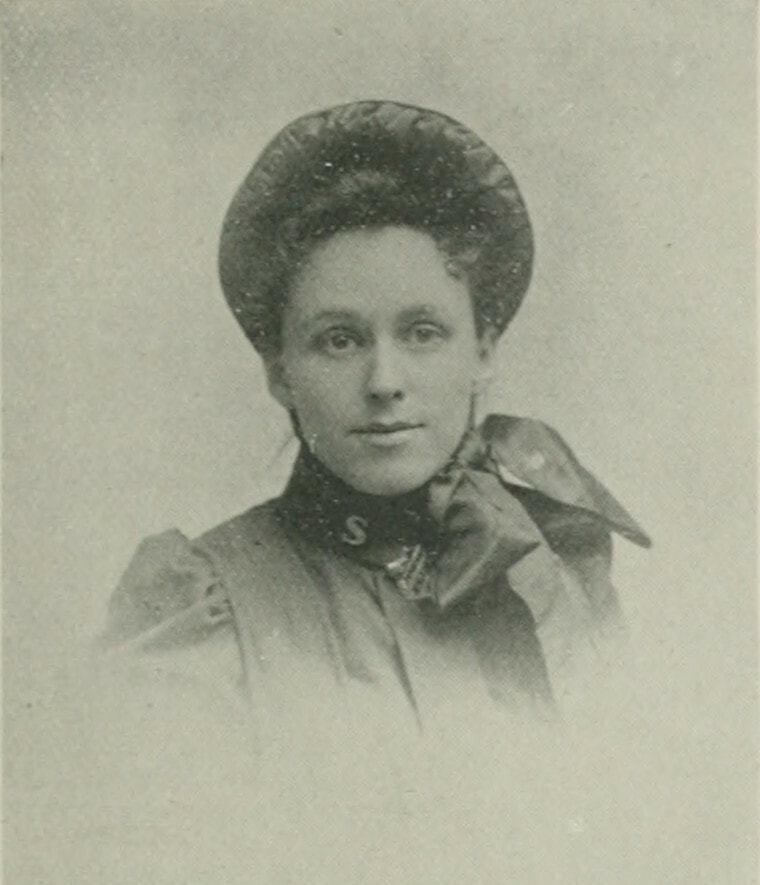
Carrie Judd Montgomery, from Frances E. Willard and Mary A. Livermore, eds., A Woman of the Century (Buffalo: Moulton, 1893), p. 523. Public domain, via Wikimedia Commons.

See this page's graph and discover linked topics
In full
Carrie Frances Judd (born Buffalo, 8 April 1858; died Oakland, California, 26 July 1946) fell ill on 6 January 1877 with a fever she attributed to a fall on a stone sidewalk some months earlier. The illness settled into what she called a spinal disease with hyperaesthesia, an extreme sensitivity of the nerves, in the spine, hips, knees and ankles. For eleven months she could not sit up; after a brief improvement in 1878 she relapsed, and by mid-February 1879 she was emaciated, unable to swallow solid food, often unable to speak above a whisper, and not expected to live from one day to the next. After reading a newspaper notice of healings through the prayers of Mrs. Edward Mix (Sarah Ann Freeman Mix) of Wolcottville, Connecticut, her sister Eva wrote to Mrs. Mix. Mrs. Mix's reply, dated 24 February 1879 and received on Tuesday the 25th, cited James 5:15, told Carrie to lay aside all medicine, and named the hour of a women's prayer meeting at her house on Wednesday afternoon, "between the hours of three and four." During that hour, on Wednesday, 26 February 1879, Carrie turned over and sat up alone and, with a little support from her nurse, walked a few steps to her chair. The nurse's diary, quoted in Carrie's book, records daily progress from 27 February. She walked unaided around the room in about three weeks, went downstairs in about four, and went outdoors on the first fine day in April. Her rector, C. F. A. Bielby of St. Mary's Church on the Hill (Episcopal), Buffalo, who had ministered at her bedside through the illness, attested the facts in writing on 13 March 1880. Her account, dated 7 July 1880, opens The Prayer of Faith (1880), and Mrs. Mix reprinted it with the rector's letter in Faith Cures, and Answers to Prayer (Springfield, 1882). There was no medical investigation, and none of her physicians is named.
Summary
Carrie F. Judd, aged 20, of Buffalo, New York, bedridden for more than two years with a spinal illness and hyperaesthesia and near death, rose from bed on Wednesday, 26 February 1879, during an hour of prayer arranged by letter with Mrs. Edward Mix of Wolcottville, Connecticut, and recovered steadily over the following weeks. Witnessed by her nurse, recorded in the nurse's diary from the next day, attested in writing by her rector in March 1880, and published by the patient in The Prayer of Faith (1880). She remained well and active for another sixty-seven years.
The event
The illness. Carrie dates the start precisely: "On the sixth of January, 1877, after a gradual decline in health, I was prostrated with an attack of fever, proceeding from my spine, the result, probably, of a severe fall on a stone sidewalk several months before." The fever passed, but the spinal trouble remained, and with it a hyperaesthesia that spread to her large joints. She writes that "for more than two years, turning over alone or moving myself a particle in bed was simply an impossibility." For eleven months she could not sit up at all. In the spring of 1878 she improved enough to be lifted into a chair for a short time each day, then relapsed in the summer heat.
February 1879. Her grandmother died in the house in January 1879, and Carrie was too low for any public notice of the death to be given. By the middle of February she could scarcely speak in a whisper, could take no solid food, and was, in her words, "not expected to live from one day to the next." She says her physicians had done everything they could.
The letter. Her mother told her of a short newspaper item about "Mrs. Edward Mix, a colored lady, of Wolcottville, Conn.," who had herself been healed through the prayers of "a Rev. Mr. Allen, of Springfield" and now prayed for others. Carrie asked her sister Eva to write. The reply, dated "Wolcottville, Conn., February 24th, 1879," arrived on Tuesday the 25th. Mrs. Mix quoted "The prayer of faith shall save the sick, and the Lord shall raise him up" (James 5:15), told Carrie to lay aside all medicine, and wrote: "Wednesday afternoon the female prayer-meeting is at our house. We will make you a subject of prayer, between the hours of three and four. I want you to pray for yourself, and pray believing and then act faith." She added: "get right out of bed and begin to walk by faith."
Wednesday, 26 February 1879. Carrie stopped her medicine. At the appointed hour, members of her family prayed in another room. She describes a period of darkness and doubt, then a sudden "child-like peace and confidence," and then: "without the least fear or hesitation, I turned over and raised up alone, for the first time in over two years." Her nurse, Mrs. H., who had cared for her for nearly a year, "was greatly affected, and began praising God." With a little support from the nurse, Carrie walked a few steps to her chair. She writes that within the same hour her color, circulation and pulse changed and she could talk aloud with ease.
The following days. The nurse's diary, quoted in the book, reads for 27 February: "Carrie moved herself in bed several times during the night. This afternoon she walked from her chair to the bed, a distance of about eight feet, by taking hold of my arms." For 28 February it notes a good appetite and that her skin, "instead of the yellow, dead look, it is pink and full of life." On 1 March she drew on her own stockings, and on 2 March "she has talked aloud a great deal." In about three weeks she walked around the room unaided, in four weeks she went downstairs with a little help, and on the first pleasant day in April she went out of doors to a neighbor's house.
Afterward. Carrie's account says Dr. Charles Cullis of Boston, a leader of the faith-cure movement, also added his prayers. She published The Prayer of Faith in 1880, began the journal Triumphs of Faith, and opened a "Faith Rest" in Buffalo for the sick. In 1890 she married George Simpson Montgomery of San Francisco and moved to California, where the couple founded the Home of Peace near Oakland. She received the baptism in the Spirit in 1908 and became a minister in the Assemblies of God. She died in Oakland on 26 July 1946, sixty-seven years after the recovery.
Witnesses + documentation
- Patient: Carrie F. Judd, whose signed account is dated "No. 260 Connecticut Street, Buffalo, N.Y., July 7th, 1880."
- Nurse: "Mrs. H.," who had nursed her for nearly a year, was present when she sat up, and kept the diary quoted for 27 February to 2 March 1879. Her full name is not given in the primary source.
- Family: her mother, who read her the newspaper notice; her sister Eva, who wrote to Mrs. Mix; family members who prayed at the appointed hour.
- The healer: Mrs. Edward Mix (Sarah Ann Freeman Mix) of Wolcottville, Connecticut, whose letter of 24 February 1879 is printed in full and who reprinted the case in her own book in 1882.
- The rector: C. F. A. Bielby, Rector of St. Mary's Church on the Hill (Episcopal), Buffalo, in a letter dated "No. 790 Seventh Street, Buffalo, N.Y., March 13th, 1880": "during all those months I ministered at her bedside, and saw her draw nearer and nearer to the end. But suddenly... she was, so to speak, in a day restored, and is now in perfect health. Of these facts I assure you. They are well known to all here."
- Publications: Carrie F. Judd, The Prayer of Faith (Buffalo, 1880), ch. 1; Mrs. Edward Mix, Faith Cures, and Answers to Prayer (Springfield, Mass., 1882), which reprints the account and the rector's letter and records that "several leading papers" had already published the case.
- Biographical confirmation: the entry on Carrie Judd Montgomery in Willard and Livermore, A Woman of the Century (1893), pp. 512-513, which gives her birth, parents, marriage, "Faith Rest" and continued ministry.
Verification
- The calendar checks. 26 February 1879 fell on a Wednesday and 25 February on a Tuesday, matching Mrs. Mix's "Wednesday afternoon" and Carrie's statement that the letter came on Tuesday the 25th.
- Documentation began the next day. The nurse's diary entries run from 27 February 1879. The rector's attestation followed about a year later, and the full account was published within about eighteen months, while the family, nurse, rector and neighbors could all be asked.
- A witness outside the family vouched for the before and after. The rector had visited throughout the illness and wrote that the facts were known to "any resident of Buffalo." He staked his name on a claim his own parishioners could check.
- Published twice, from both ends. The account appeared under the patient's name in Buffalo in 1880 and was reprinted by the healer in Springfield in 1882, together with the rector's letter. The reprint is not independent testimony, but it shows the healer's side accepted the account as given.
- Long follow-up. She lived to 88 and worked publicly for decades, married, travelled, ran healing homes and edited a journal for more than sixty years. A relapse would have been noticed.
- No documented refutation. No contemporary or later investigator is known to have shown the illness or the recovery to be fabricated.
Naturalistic explanations considered:
- Functional or nervous illness. This is the strongest alternative. Hyperaesthesia and prolonged invalidism in young women were often diagnosed in the period as nervous disorders, and a sudden recovery after a strong expectation fits a functional reading. The record cannot rule it out, because no physician's diagnosis survives. Against it: by February 1879 the patient was emaciated, unable to take solid food and not expected to live, and her recovery included a visible change in color and the rapid return of muscle and strength, not only of mobility.
- Gradual recovery dated in hindsight. The nurse's diary was kept day by day and begins the morning after, recording movements she had not been able to make for two years.
- Embellishment. The rector's statement is independent of the patient's wording and confirms the essential facts: near death, then restored "in a day."
Caveats and remaining uncertainties:
- No physician. None of her doctors is named or quoted, and there was no medical examination after the recovery. This is why the entry is flagged. It has named witnesses and a contemporaneous record, but the witnessed tier needs a physician, journalist, lawyer or scholar among them, and its one professional witness is a clergyman.
- The diagnosis is a lay description. "Spinal difficulty," "hyperaesthesia" and "blood consumption" are the patient's terms. What the illness was medically cannot now be known.
- The nurse is identified only by initial.
- The newspaper notices are unlocated. Mrs. Mix says several papers printed the case, and later writers mention the Buffalo Commercial Advertiser (October 1880), but no notice from the weeks after the recovery has been traced for this entry.
Apologetic value
- A Protestant case at the root of the modern healing movement. Carrie Judd was an Episcopalian in 1879 and a Pentecostal minister by 1917. Her book was one of the first widely read American books on divine healing, and her story links the faith-cure movement of the 1880s to early Pentecostalism. It is not a shrine cure: the prayer took place in two homes, two states apart.
- Prayer at a distance with a fixed hour. Mrs. Mix named the day and hour in advance, in writing, and the recovery came during that hour. The letter survives in print. The timing was set before the event, not fitted to it afterward.
- The Gospel pattern. The case follows the instruction of James 5:14-15 and recalls the healing of the centurion's servant at a distance (Matthew 8:13).
- How to deploy it. Lead with the dated letter, the nurse's diary and the rector's statement. Concede at once that no physician's diagnosis survives and that a functional illness cannot be excluded. Use it to show how answered prayer was recorded in its own day by people who could be checked. For medically reviewed cases, pair it with Barbara Cummiskey Snyder (Wheaton 1981) or Tier 1 entries.
Scholarship
Published academic works this page draws on, each matched to a publisher, index or library catalog record.
- Heather Curtis, Faith in the Great Physician (Johns Hopkins University Press, 2007). doi:10.1353/book.3480
- Edward Mrs. Mix, Faith cures and answers to prayer (1882). Open Library
- Frances Elizabeth Willard, A woman of the century (Moulton, 1893). Open Library
See also
- Miracles, master hub
- _schema, the vetting standard this entry follows
- Dorothy Kerin (Herne Hill 1912), a Protestant Tier 2 recovery of a bedridden young woman expected to die
- Barbara Cummiskey Snyder (Wheaton 1981), a Protestant Tier 2 healing with named physicians
- George Müller (Bristol Orphanages 1836-1898), a nineteenth-century Protestant record of answered prayer
- Pentecostalization of Global Christianity, the movement Carrie Judd Montgomery later joined
- Argument from Miracles, the argument this case supports
- Naturalism, the worldview such cases press against
Common questions this page answers
Q: Who was Carrie Judd Montgomery?
Carrie Judd Montgomery (1858-1946) was an American healing evangelist, writer and editor from Buffalo, New York. After her own recovery in 1879 she wrote The Prayer of Faith, edited the journal Triumphs of Faith, opened homes for the sick in Buffalo and California, and later became a Pentecostal minister in the Assemblies of God.
Q: How was Carrie Judd healed?
She had been bedridden for more than two years and was near death when Mrs. Edward Mix, a Black Christian woman in Connecticut, wrote that her prayer meeting would pray for her between three and four o'clock on Wednesday, 26 February 1879. During that hour Carrie turned over and sat up alone for the first time in two years, walked a few steps with her nurse's help, and recovered fully over the following weeks.
Q: Is there evidence for Carrie Judd's healing?
The main evidence is her own account in The Prayer of Faith (1880), which prints Mrs. Mix's dated letter, her nurse's diary from the days after the recovery, and a signed statement from her rector confirming that she had been near death and was restored "in a day." No physician's statement survives, which is the main weakness of the record.
Q: Who was Sarah Mix?
Sarah Ann Freeman Mix, known in print as Mrs. Edward Mix, was an African American Christian from Wolcottville, Connecticut, who had been healed herself and became known for praying for the sick. She published Faith Cures, and Answers to Prayer in 1882, which includes Carrie Judd's case.
Q: Could Carrie Judd's illness have been psychosomatic?
It is possible, and this entry says so. No doctor's diagnosis survives, and her symptoms, including extreme nerve sensitivity, were often treated as nervous disorders in that era. But she was emaciated, unable to eat solid food and expected to die, and her nurse's diary records daily changes in movement, appetite, voice and color from the morning after.