Argument
Bible Never Says Thou Shalt Not Rape Objection Defeater
Thou Shalt Not Rape, Bible doesn't say thou shalt not rape, Ten Commandments don't forbid rape, missing commandments objection, Bible never forbids rape, why isn't rape in the Ten CommandmentsIntro
"The Bible gives us 'thou shalt not steal' and 'thou shalt not covet,' but nowhere does it say 'thou shalt not rape.' If God wrote a moral code, He left out one of the worst crimes there is." The objection usually comes with a list: no command against slavery, child abuse, torture, wife-beating or racism either.
It sounds devastating for about ten seconds. Then two facts settle it.
First, the Bible does condemn rape, and severely. The law of Moses makes rape a capital crime, declares the victim innocent, and compares the act to murder: "as when a man riseth against his neighbor, and slayeth him, even so is this matter" (Deuteronomy 22:25-27). The two rape narratives call the act an outrage, a thing that "ought not to be done" (Genesis 34:7; 2 Samuel 13:12). A text that gives the rapist the same sentence as a murderer has not overlooked rape.
Second, no moral code lists every wrong by name. The Ten Commandments do not say "thou shalt not poison" or "thou shalt not torture a prisoner" either. They name categories, and Jesus and Paul summed all of them in one: love your neighbor as yourself. Paul says outright that the list is not exhaustive: "and if there be any other commandment, it is summed up in this word" (Romans 13:9). Rape is the opposite of loving your neighbor, and Scripture says so in as many words.
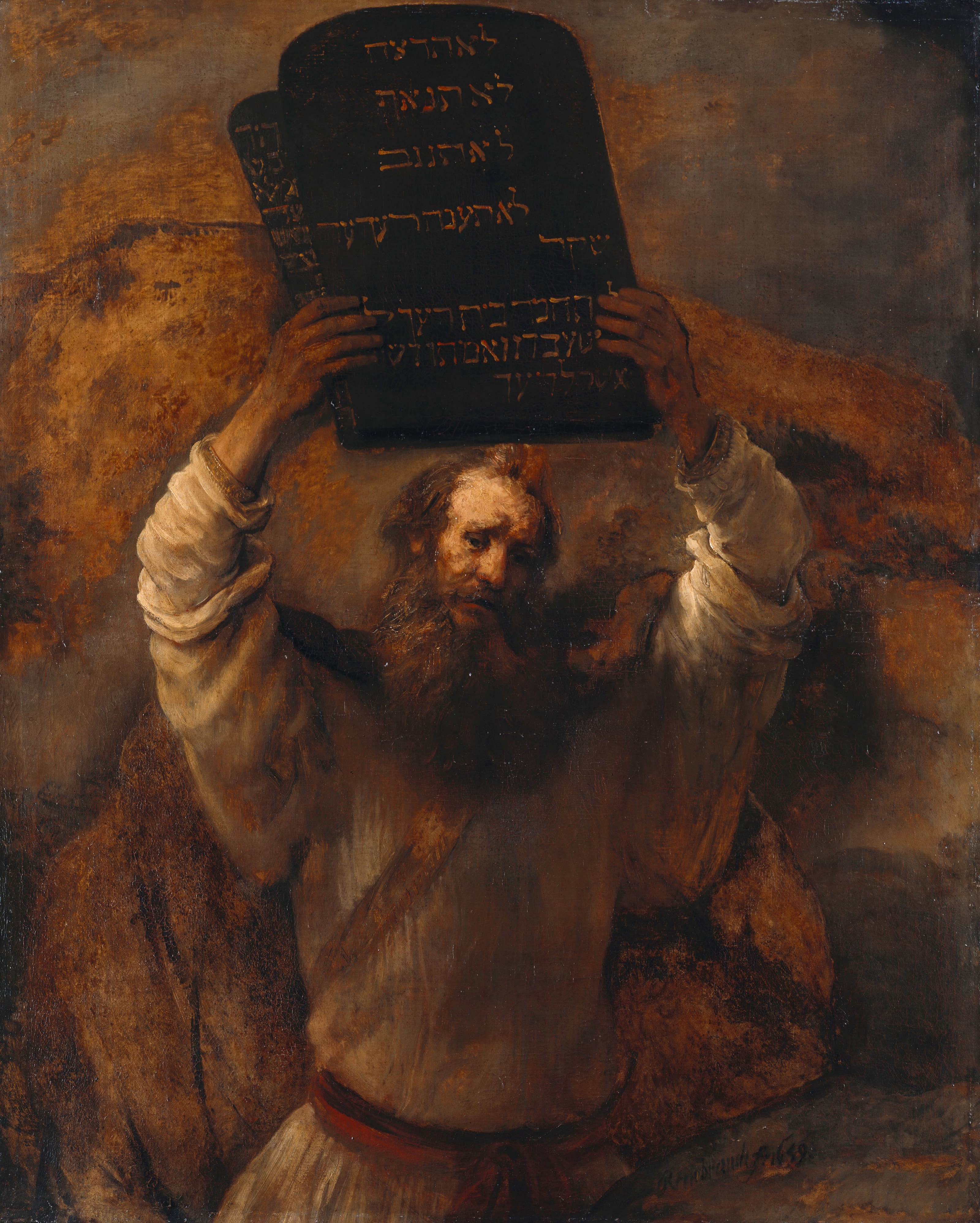
Rembrandt, Moses with the Ten Commandments (1659), Gemäldegalerie, Berlin. The tablet facing the viewer carries the short Hebrew prohibitions of the second table: murder, adultery, theft, false witness, coveting. Categories, not an index of every crime. Image: public domain, via Wikimedia Commons.
See this page's graph and discover linked topics
Cheatsheet
The 30-second reply:
The Bible doesn't say those exact words, and it doesn't need to. Deuteronomy 22 makes rape a capital crime, says the victim is innocent, and compares it to murder. Genesis 34 and 2 Samuel 13 call it an outrage that "ought not to be done." The Ten Commandments name categories, not every crime, which is why they also don't say "thou shalt not poison." Paul says every other commandment is summed up in "love thy neighbor as thyself," and rape is the opposite of that.
The fast facts:
- Rape is a capital crime. "The man only that lay with her shall die," and "unto the damsel thou shalt do nothing" (Deuteronomy 22:25-26).
- The law compares rape to murder. "As when a man riseth against his neighbor, and slayeth him, even so is this matter" (22:26).
- The narratives call it an outrage. Dinah (Genesis 34:7) and Tamar (2 Samuel 13:12): "folly in Israel," a thing that "ought not to be done."
- The list is not exhaustive by its own account. "If there be any other commandment, it is summed up in this word" (Romans 13:9).
- Jesus raised the standard above the act. Lust alone is "adultery... already in his heart" (Matthew 5:28). A teaching that condemns the look has not permitted the assault.
The 3 strongest counter-moves:
- "Read Deuteronomy 22:26 aloud." The law itself puts rape in the same sentence as murder.
- "Where does your criminal code say 'thou shalt not rape' in those words?" Most codes define offences by elements and categories. Demanding a slogan is not a test of moral seriousness.
- "What makes rape wrong on your view?" If the answer is human dignity and the equal worth of women, those claims come from Genesis 1:27, which the objector is borrowing.
Reciprocal concessions (grant the small point, then collect a bigger one):
- Grant: no verse contains the exact words "thou shalt not rape." Now collect: the law that does address rape treats it as a capital offence comparable to murder, which is more severe than the penalty most modern codes carry, so the objection has the Bible's seriousness backwards.
- Grant: the Ten Commandments omit many specific crimes. Now collect: so does every summary of law, and the New Testament explicitly says the list is summed up and completed by the love command (Romans 13:9), so "not named" never meant "permitted."
- Grant: some biblical laws regulate practices modern readers reject, such as servitude. Now collect: those are separate questions with their own answers (see Biblical Slavery Objection Defeater), and they do not touch the claim at issue here, which is simply false: the Bible condemns rape.
The closing line:
A text that sentences the rapist like a murderer and calls the victim innocent has not left rape off the list. It wrote it into the law in blood.
In full
The objection runs: "A complete moral code from God would explicitly prohibit the worst evils. The Bible never says 'thou shalt not rape' (nor 'thou shalt not enslave,' 'abuse children,' 'torture,' 'beat your wife,' or 'discriminate by race'). Therefore biblical morality is incomplete or permissive on these evils, and modern morality is ahead of it." It is common on social media and in popular atheist argument, often as a list of "missing commandments."
The defeat has four strands:
- Textual counter-evidence. The Mosaic law addresses rape directly and treats it as a capital crime with an innocent victim (Deut 22:25-27), and the narratives condemn it in the strongest moral vocabulary Hebrew has (Gen 34:7; 2 Sam 13:12). The premise "the Bible never condemns rape" is false.
- The explicit-list fallacy. The argument assumes that a moral code condemns only what it names in a short imperative. No code works that way. The Decalogue is a set of categories, the case laws apply them, and the New Testament sums them in the love command and says so (Rom 13:9; Gal 5:14; Matt 22:37-40).
- Principle to case. Rape violates several commands at once: love of neighbor (Lev 19:18), the prohibition of coveting a neighbor's wife (Ex 20:17), and the dignity of the image of God (Gen 1:27; Gen 9:6). Jesus extends the prohibition from the act to the desire (Matt 5:28).
- Borrowed capital. The objector's own judgment that rape is gravely wrong rests on the equal dignity of women as persons, which is a biblical claim. A worldview that cannot ground that dignity cannot use it as a standard against the text that supplies it.
The other items on the usual "missing commandments" list are handled the same way under The rest of the list below. The harder texts in the same field, such as Deuteronomy 22:28-29, have their own defeater: Rape Only Condemned When Unmarried Objection Defeater.
Grammar and hermeneutics
The objection can be answered from the form and wording of the texts before any theology is invoked.
- Two kinds of law. Old Testament law comes in two forms, a distinction scholars have used since Albrecht Alt: short absolute commands ("thou shalt not steal"), called apodictic, and case laws ("if the man find the damsel... and force her"), called casuistic. Rape is handled in case-law form. The form says how a law is framed, not how seriously it is taken: murder is both an absolute command (Exodus 20:13) and a subject of case law, and the rape case law carries the same penalty.
- The force verb. In Deuteronomy 22:25 "force her" is the causative of chazaq (chazaq), to seize or overpower. The law names the act by its violence, the same verb used when Amnon "being stronger than she, he forced her" (2 Samuel 13:14).
- The legal analogy is explicit. Verse 26 does not leave the gravity to inference: "as when a man riseth against his neighbor, and slayeth him, even so is this matter." The law itself classes rape with murder.
- The victim is declared innocent in so many words. "Unto the damsel thou shalt do nothing; there is in the damsel no sin worthy of death." The sentence falls on "the man only."
- The narrative verdict word. Both rape narratives use nevalah (nevalah), an outrage or disgraceful folly "in Israel," and both add that such a thing "ought not to be done" (Genesis 34:7; 2 Samuel 13:12). That is a statement of a standing moral norm, not a private complaint.
- Paul's "if there be any other commandment." In Romans 13:9 Paul lists four commandments and then adds "and if there be any other commandment, it is summed up in this word." The conditional clause tells the reader that the named commandments are representative, not exhaustive. The next verse gives the test every unnamed act must pass: "Love worketh no ill to his neighbor" (Romans 13:10).
- Genre. Genesis 34 and 2 Samuel 13 are narratives. They report rapes in order to condemn them, and the consequences that follow are part of the verdict. Reporting is not approving.
Argument structure
| Premise | Notes | |
|---|---|---|
| P1 | Scripture explicitly condemns rape as a capital crime with an innocent victim, comparable to murder (Deut 22:25-27), and names it an outrage in its narratives (Gen 34:7; 2 Sam 13:12) | Textual counter-evidence |
| P2 | No moral or legal code lists every wrong by name; codes state categories and principles that cover unnamed cases | The explicit-list fallacy |
| P3 | Scripture states its own categories as summed up and completed by the love command, and says the named list is not exhaustive (Rom 13:9-10) | Principle to case |
| P4 | The objector's standard (the equal dignity of women) is a biblical claim (Gen 1:27) | Borrowed capital |
| C | The premise "the Bible never condemns rape" is false, and the inference from "not named in a slogan" to "permitted" is invalid. The objection fails. |
P1, Scripture explicitly condemns rape
Affirmative case
- Capital crime. "If the man find the damsel that is betrothed in the field, and the man force her, and lie with her; then the man only that lay with her shall die" (Deut 22:25).
- Innocent victim, by statute. "Unto the damsel thou shalt do nothing; there is in the damsel no sin worthy of death" (22:26). The law presumes she resisted: "the betrothed damsel cried, and there was none to save her" (22:27).
- Compared to murder. "As when a man riseth against his neighbor, and slayeth him, even so is this matter" (22:26).
- Condemned in narrative. Dinah's rape is "folly in Israel... which thing ought not to be done" (Gen 34:7). Tamar pleads, "do not force me; for no such thing ought to be done in Israel: do not thou this folly" (2 Sam 13:12), and the narrator records Amnon's act as force against her will (13:14). Both stories trace the ruin that follows.
Anticipated objections
- "Deuteronomy 22:25 only covers a betrothed woman. That shows the crime is against her fiancé, not her."
- "Deuteronomy 22:28-29 makes the victim marry her rapist."
Rebuttals
- The law's reason is stated, and it is not property: it is the analogy to murder, a crime against the person. And the narratives that condemn rape most strongly concern unmarried women, Dinah and Tamar. See Rape Only Condemned When Unmarried Objection Defeater.
- That reading is answered at length in the same defeater and in OT Sexual-Violence Laws: 22:28-29 lacks the force verb and the cry test of 22:25-27 and parallels the seduction law of Exodus 22:16-17, where the father may refuse the marriage.
Live-cite kit
- Scripture: Deuteronomy 22:25-27; Genesis 34:7; 2 Samuel 13:12-14.
- Scholarly: Jeffrey Tigay, Deuteronomy (JPS Torah Commentary, 1996), on Deuteronomy 22.
- Aphorism: "The Bible gave the rapist the murderer's sentence."
Tactical notes
- Lead with 22:26. The murder comparison does the work in one sentence and is in the text itself.
P2, No code lists every wrong by name
Affirmative case
- The Ten Commandments omit many crimes. They do not name poisoning, arson, kidnapping, fraud or torture. Nobody concludes that the Decalogue permits poisoning. Kidnapping, for instance, is a capital crime in the case law (Exodus 21:16) though absent from the Ten.
- Modern codes work the same way. Statutes define offences by their elements, and most moral teaching works through principles. The demand for a one-line slogan for each crime is a test applied to no other moral tradition.
- Categories cover cases. "Thou shalt not kill" covers every method of murder. "Thou shalt not covet thy neighbor's wife" (Exodus 20:17) already condemns the desire that rape acts on.
Anticipated objections
- "An all-knowing God could have just written it down."
- "Then the Bible is vague, and people can read anything into it."
Rebuttals
- He did write it down, in the case law, with the death penalty attached (P1). The objection is about the form of the sentence, not the content of the law.
- The principles are not vague: love of neighbor is defined negatively as working "no ill to his neighbor" (Romans 13:10), and Jesus' Golden Rule (Matthew 7:12) makes the test personal. No reader can apply either and approve of rape.
Live-cite kit
- Scripture: Exodus 21:16; Exodus 20:17.
- Scholarly: Christopher Wright, Old Testament Ethics for the People of God (2004), on how the law moves from principles to cases.
- Aphorism: "The Ten Commandments don't say 'thou shalt not poison' either."
Tactical notes
- Ask the objector to name the law in their own country that says "thou shalt not rape" in those words. The point lands without argument.
P3, The love command sums the law and covers the unnamed cases
Affirmative case
- Jesus. "Thou shalt love thy neighbor as thyself. On these two commandments the whole law hangeth, and the prophets" (Matthew 22:39-40).
- Paul. "And if there be any other commandment, it is summed up in this word, namely, Thou shalt love thy neighbor as thyself. Love worketh no ill to his neighbor" (Romans 13:9; 13:10).
- Sexual wrong named directly. Paul ties sexual sin to wronging another person: "that no man transgress, and wrong his brother in the matter: because the Lord is an avenger in all these things" (1 Thessalonians 4:6).
- Jesus moves the line inward. "Every one that looketh on a woman to lust after her hath committed adultery with her already in his heart" (Matthew 5:28). A teacher who condemns the lustful look has not left the assault open.
Anticipated objections
- "'Love your neighbor' is too general to do moral work."
Rebuttals
- It is general and decisive. It rules out every act that does harm to another, which is why Paul can say it fulfils the whole law. Rape is not a hard case under it.
Live-cite kit
- Scripture: Romans 13:8-10; Galatians 5:14; Matthew 22:37-40; Matthew 5:28.
- Aphorism: "Love worketh no ill to his neighbor. Rape is nothing but ill."
Tactical notes
- Quote Romans 13:9 exactly, including "if there be any other commandment." It answers the objection in Paul's own words.
P4, The objector's standard is borrowed
Affirmative case
- The objection presupposes the equal worth of women. Its force depends on the conviction that a woman is a person whose will may not be overridden.
- That conviction is biblical. "God created man in his own image... male and female created he them" (Genesis 1:27). Bloodshed is wrong "for in the image of God made he man" (Genesis 9:6). See Imago Dei.
- The objection therefore borrows from the text it accuses. It judges the Bible by a standard the Bible supplied.
Anticipated objections
- "I can hold that rape is wrong without God."
Rebuttals
- Of course you can hold it, and you should. The question is what makes it true rather than a preference. See Atheist Moral Realism Objection and Moral Argument.
Live-cite kit
- Scripture: Genesis 1:27; Genesis 9:6.
- Aphorism: "Your outrage is right. Ask where it comes from."
Tactical notes
- Use P4 last, and only after the textual facts have landed. Opening with it sounds like a dodge.
The rest of the list
The objection usually comes with other "missing commandments." Each is either named in Scripture or covered by a named principle, and the harder ones have their own pages.
| "No commandment against..." | What Scripture actually says | Full treatment |
|---|---|---|
| Enslaving another person | Kidnapping a person to sell is a capital crime (Exodus 21:16); "menstealers" are listed among the lawless (1 Timothy 1:10) | Biblical Slavery Objection Defeater; Why Didnt God Ban Slavery Objection Defeater; Chattel Slavery vs Biblical Servitude |
| Owning a person as property | The servitude laws of Leviticus 25:44-46 are the hard text here | Israelite Slavery Possession-vs-Ownership Defeater; Forever Slavery Objection Defeater |
| Abusing children | "Provoke not your children to wrath" (Ephesians 6:4); Jesus' millstone warning for whoever causes "one of these little ones" to stumble (Matthew 18:6) | God and the Killing of Children |
| Torture | The Golden Rule (Matthew 7:12); even an animal's life is to be regarded (Proverbs 12:10), so the argument runs from lesser to greater | Covered by the love command (P3) |
| Abusing a wife | "Husbands, love your wives, and be not bitter against them" (Colossians 3:19); "no man ever hated his own flesh; but nourisheth and cherisheth it" (Ephesians 5:29); honor her "as being also joint-heirs of the grace of life" (1 Peter 3:7) | Covered by the love command (P3) |
| Racial discrimination | God "made of one every nation of men" (Acts 17:26); favoritism is sin (James 2:1-9); the redeemed come "out of every nation" (Revelation 7:9); Miriam is judged for opposing Moses over his Cushite wife (Numbers 12:1) | Galatians 3:28 |
Slavery and servitude are the genuinely hard items on this list. They deserve the full answers on the pages linked, not a one-line reply.
Master objections to the whole argument
MO1: "You are reading modern values back into the text."
- The capital penalty, the innocence of the victim and the murder analogy are in Deuteronomy 22:25-27 as written, about three thousand years before modern values. If anything, the modern reader is borrowing from the text.
MO2: "Even so, the penalty depended on whether she was betrothed, which shows women were property."
- Answered in Rape Only Condemned When Unmarried Objection Defeater and OT Sexual-Violence Laws. The law's own stated reason is the murder analogy, a crime against the person, and the narratives condemn the rape of unmarried women in the strongest terms.
MO3: "If the Bible's morality is so clear, why did Christians commit these crimes?"
- Because people disobey the morality they profess. The texts above condemn them for it. The objection is now about Christians, not about whether the Bible condemns rape.
Tactical opening / closing
Opening line: "Let's read what the law actually says about rape, then we'll talk about why the Ten Commandments don't list every crime."
Closing landing strip: "The Bible sentences the rapist like a murderer, calls the victim innocent, and sums every commandment in 'love worketh no ill to his neighbor.' The objection needs the Bible to be silent, and it isn't."
Connection to Scripture
- Deuteronomy 22:25-27, rape a capital crime, victim innocent, compared to murder
- Genesis 34:7, Dinah: "folly in Israel... which thing ought not to be done"
- 2 Samuel 13:12-14, Tamar: "no such thing ought to be done in Israel"
- Exodus 20:13; Exodus 20:17, categories of the second table
- Exodus 21:16, kidnapping a capital crime
- Romans 13:8-10, "if there be any other commandment"
- Matthew 22:37-40; Galatians 5:14, the love command sums the law
- Matthew 5:28, lust already adultery in the heart
- Genesis 1:27; Genesis 9:6, the image of God
Patristic / scholarly note
Modern:
- Albrecht Alt ("The Origins of Israelite Law," 1934), the distinction between apodictic and casuistic law
- Christopher Wright (Old Testament Ethics for the People of God, 2004), principles and cases in Old Testament law
- Paul Copan (Is God a Moral Monster?, 2011), the Old Testament sexual-violence texts
- Jeffrey Tigay (Deuteronomy, JPS Torah Commentary, 1996), Deuteronomy 22
Scholarship
Published academic works this page draws on, each matched to a publisher, index or library catalog record.
- Paul Copan, Is God a Moral Monster? (2011). Open Library
- Christopher J. H. Wright, Old Testament Ethics for the People of God (2004). Open Library
See also
- OT Sexual-Violence Laws, the full cluster of hard texts
- Rape Only Condemned When Unmarried Objection Defeater, the Deuteronomy 22:28-29 objection
- Hebrew Verbs for Sexual Contact, the vocabulary of force, seduction and violation
- H2388 - chazaq, the force verb of Deuteronomy 22:25
- H5039 - nevalah, "folly in Israel"
- Biblical Slavery Objection Defeater, the slavery items on the list
- Imago Dei, the ground of human dignity
- Mosaic Law, how the case laws work
- Arguments, master index
Common questions this page answers
Q: Does the Bible say "thou shalt not rape"?
Not in those words, but it condemns rape directly. Deuteronomy 22:25-27 makes rape a capital crime, declares the victim innocent, and compares the act to murder. The rapes of Dinah and Tamar are called an outrage that "ought not to be done" (Genesis 34:7; 2 Samuel 13:12).
Q: Why isn't rape in the Ten Commandments?
The Ten Commandments name categories, not every crime; they also do not mention poisoning, arson or kidnapping. Specific crimes are handled in the case laws that apply them, and rape carries the death penalty there. Paul says every other commandment is "summed up" in loving your neighbor (Romans 13:9).
Q: What is the punishment for rape in the Bible?
Death for the rapist, and nothing for the victim: "the man only that lay with her shall die," and "unto the damsel thou shalt do nothing" (Deuteronomy 22:25-26).
Q: Doesn't the Bible make a rape victim marry her rapist?
No. That reading of Deuteronomy 22:28-29 misses that the passage lacks the force verb and the cry test of the rape law just before it, and parallels the seduction law of Exodus 22:16-17. See Rape Only Condemned When Unmarried Objection Defeater.
Q: Does the Bible condemn slavery, child abuse and racism?
It names kidnapping to sell as a capital crime (Exodus 21:16), forbids provoking children (Ephesians 6:4), says God made every nation "of one" (Acts 17:26), and sums every duty in love of neighbor. The servitude laws are the hard case and have their own answer in Biblical Slavery Objection Defeater.