Person
Belshazzar
Bel-sharra-usur, Bel-shar-usur, Belsharusur, Baltasar, King Belshazzar, Belshazzar king of Babylon, Belshazzar the ChaldeanIntro
Belshazzar is the king of Babylon in Daniel 5. During a drunken feast he ordered the gold and silver cups taken from the temple in Jerusalem to be brought out so his guests could drink from them. A hand appeared and wrote on the wall: MENE, MENE, TEKEL, UPHARSIN. Daniel read it as God's verdict: the kingdom was numbered, weighed and given to the Medes and Persians. That night Belshazzar was killed and Babylon fell.
For centuries no source outside the Bible mentioned him, and critics said Daniel had invented him. Then Babylonian texts turned up naming Belshazzar as the eldest son of Nabonidus, Babylon's last king, and showing that he ruled Babylon for years while his father was away in Arabia.
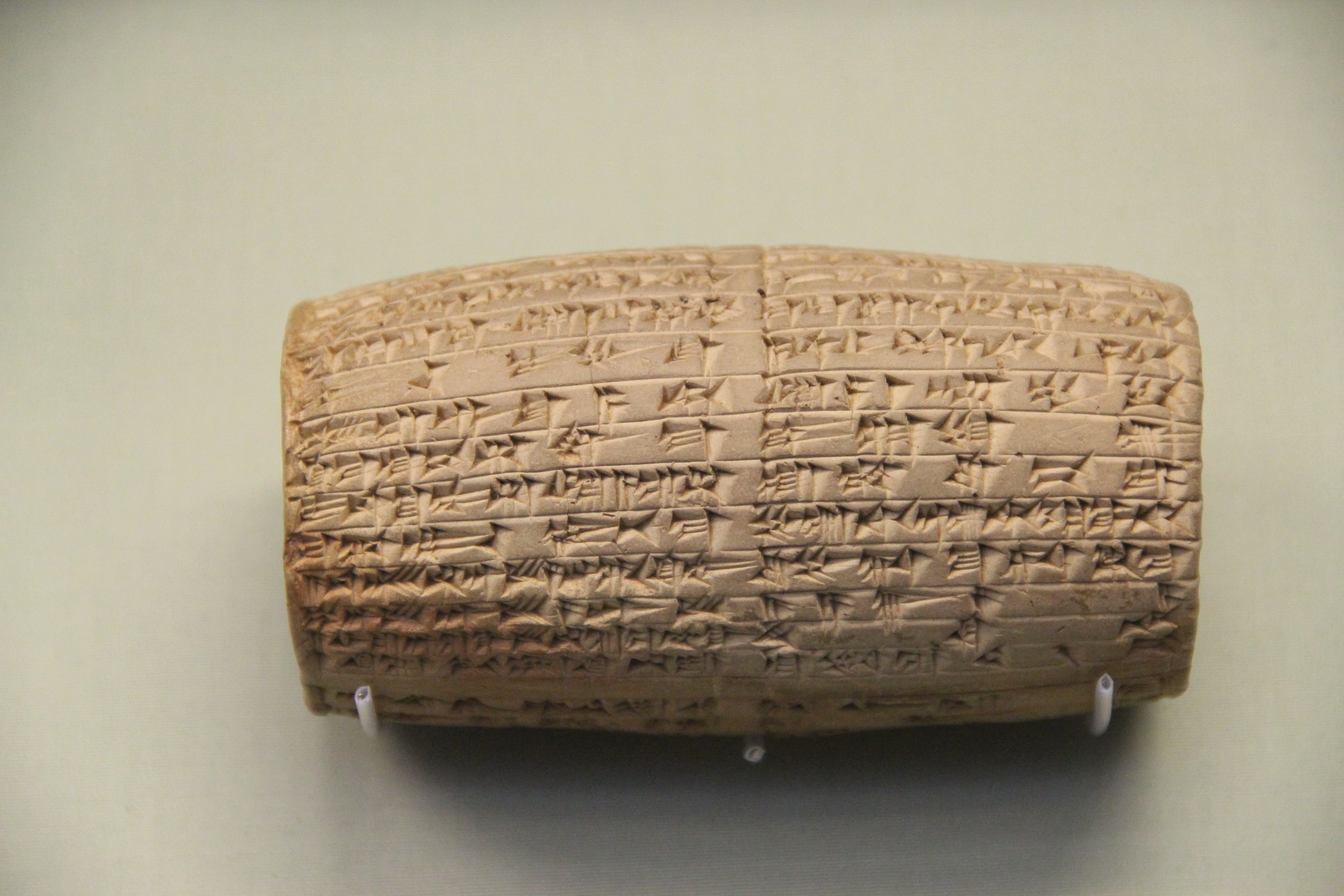
A clay cylinder of Nabonidus in the British Museum (91125), a copy of the building text whose closing prayer names "Belshazzar, the eldest son," 6th century BC. Image: CC0, via Wikimedia Commons.
The 30-second version:
Belshazzar is the king of Daniel 5, who drank from the Jerusalem temple's cups and saw the writing on the wall the night Babylon fell. Critics once called him fictional, because Greek historians named Babylon's last king as Nabonidus. Cuneiform texts found from 1854 onward show that Belshazzar was Nabonidus' eldest son and ruled Babylon for about ten years in his father's absence. That explains why he offered Daniel the third place in the kingdom: he himself was second.
See this page's graph and discover linked topics
In full
Belshazzar (Babylonian Bēl-šarra-uṣur, "Bel, protect the king") was the eldest son and crown prince of Nabonidus, last king of the Neo-Babylonian Empire (556-539 BC). Nabonidus' cylinders from the ziggurat at Ur close with a prayer for "Belshazzar, the eldest son"; the Verse Account of Nabonidus (BM 38299) says that before leaving for Tayma in Arabia the king "entrusted the kingship" to his firstborn; and the Nabonidus Chronicle (BM 35382) records for several years that the king was in Tayma while "the prince" and the army were in Akkad. Administrative and legal texts name him as mār šarri, "the king's son," taking oaths and offerings alongside the king. Daniel calls him king (5:1), dates visions by his first and third years (7:1; 8:1), and has him offer the interpreter the rank of "third ruler in the kingdom" (5:7, 16, 29). Babylonian sources do not record his death; Daniel 5:30 says he was slain the night the city fell, October 539 BC. Lawrence Mykytiuk lists him among the 53 Hebrew Bible persons confirmed by archaeology.
In the Bible
- Daniel 5:1-4. "Belshazzar the king made a great feast to a thousand of his lords, and drank wine before the thousand" (5:1, ASV). He orders "the golden and silver vessels which Nebuchadnezzar his father had taken out of the temple which was in Jerusalem" (5:2, ASV) and the company praises their gods.
- Daniel 5:5-16. The hand writes on the plaster; the wise men cannot read it; the queen recalls Daniel; Belshazzar promises purple, a gold chain and the third place in the kingdom.
- Daniel 5:17-28. Daniel reminds him of Nebuchadnezzar's humbling and charges him: "thou his son, O Belshazzar, hast not humbled thy heart, though thou knewest all this" (5:22, ASV). He reads MENE (numbered), TEKEL (weighed and found wanting), PERES (divided and given to the Medes and Persians).
- Daniel 5:29-31. Belshazzar honors Daniel, and "In that night Belshazzar the Chaldean king was slain" (5:30, ASV); Darius the Mede receives the kingdom.
- Daniel 7:1 and 8:1. Visions dated "In the first year of Belshazzar king of Babylon" and "In the third year of the reign of king Belshazzar" (ASV).
- Outside the Protestant canon. The deuterocanonical book of Baruch (1:11-12) asks prayer for "Nebuchadnezzar king of Babylon" and "Belshazzar his son."
Family and lineage
- Father: Nabonidus, king of Babylon 556-539 BC.
- Grandmother: Adad-guppi of Harran, Nabonidus' mother.
- Sister: Ennigaldi-Nanna, high priestess of the moon god at Ur.
- "Nebuchadnezzar his father." Daniel 5 calls Nebuchadrezzar his father five times. Nabonidus was not Nebuchadnezzar's son, so most interpreters read "father" in the common Semitic sense of royal predecessor, as Jehu is called a "son of Omri" in Assyrian texts. Some propose that Belshazzar descended from Nebuchadnezzar through his mother, which would make him a grandson; no Babylonian text confirms this.
- The queen of Daniel 5:10. Usually taken to be the queen mother, either Nabonidus' wife or Nebuchadnezzar's widow; the text does not name her.
Historical and archaeological evidence
- The Ur cylinders of Nabonidus. Found by J. E. Taylor in 1854 in the ziggurat at Ur. The text ends with a prayer for Nabonidus and "Belshazzar, the eldest son" (Paul-Alain Beaulieu's translation). British Museum 91128. Grade: direct. See Nabonidus Cylinder and Belshazzar.
- The Verse Account of Nabonidus (BM 38299). A Persian-era poem that says Nabonidus "entrusted the kingship" to his firstborn and left for Tayma (Oppenheim's translation). Grade: direct for the regency.
- The Nabonidus Chronicle (BM 35382). Records that the king stayed in Tayma while "the prince" remained with the army in Akkad, and that the New Year festival was not held. Grade: direct.
- Administrative and legal tablets. Mykytiuk's endnotes, citing Muhammad Dandamayev's article in the Reallexikon der Assyriologie, note Babylonian administrative documents and a text naming "Belshazzar the crown prince." Tablets record oaths sworn by the king and the king's son together and offerings made by Belshazzar at Babylonian temples. Grade: direct.
Scholarly consensus
- Existence and role: settled. That Belshazzar was Nabonidus' eldest son and exercised royal authority in Babylon during his father's years in Arabia is accepted by all specialists. The old objection that Daniel invented him was answered by the Ur cylinders in 1854.
- The title "king." Babylonian texts call him "the king's son," never king. Alan Millard (1985) argued that he acted as king in practice and that a narrator would naturally call him so; John J. Collins and other critical scholars count the title, the "father" language and the absence of Nabonidus as signs that Daniel 5 was written long after the events. See Daniel Was Written in the 2nd Century Objection Defeater.
- The third ruler. The reading that Nabonidus was first, Belshazzar second and Daniel third is widely held among defenders of the chapter's historicity. Some scholars read the Aramaic talti as a title, "triumvir" or high officer, rather than a numeric rank.
- His death. No Babylonian source records it. The Nabonidus Chronicle says Babylon was taken without a battle, while Xenophon and Herodotus describe the city captured during a festival; Daniel's report of his death that night is neither confirmed nor contradicted.
Theological significance
- Sacrilege judged. Belshazzar's offense was not only drunkenness but desecration: he used the vessels of God's house to praise "the gods of silver and gold, of brass, iron, wood, and stone" (Daniel 5:23, ASV). The chapter is a set piece on God's sovereignty over kings who mock him.
- Knowledge without repentance. Daniel's charge is that Belshazzar knew what had happened to Nebuchadnezzar and still did not humble himself (5:22). The contrast between the humbled king of Daniel 4 and the unrepentant king of Daniel 5 is deliberate.
- Weighed in the balances. "Thou art weighed in the balances, and art found wanting" (5:27, ASV) became a proverb for divine judgment. The fall of Babylon in 539 BC fulfilled Isaiah 13, 21 and 47 and Jeremiah 50-51 and opened the way for Cyrus' decree and the return from exile.
- A test case for Daniel's history. Belshazzar is the classic example of a biblical figure dismissed as fiction and then found in the ground. It does not prove the date of Daniel, but it shows the author knew a detail the later Greek historians had lost.
Church Fathers
- Jerome, following Berossus and Josephus, did not know Belshazzar's father and placed him after Evilmerodach, Neriglissar and Labosordach; he explains "Nebuchadnezzar his father" by noting that Scripture calls all ancestors fathers, and he reads the "third" place as third in rank after the king (Commentary on Daniel, on Daniel 5:1, 5:2 and 5:7).
See also
- Nabonidus, his father, Babylon's last king
- Nabonidus Cylinder and Belshazzar, the texts that confirmed him
- Daniel 5, the writing on the wall
- Nebuchadrezzar, the king Daniel calls his father
- Cyrus the Great, whose army took Babylon the night of his death
- Daniel Was Written in the 2nd Century Objection Defeater, the dating debate
- Daniel 2 and 7 Prophecy Argument, the succession of empires
- Biblical Figures Confirmed by Archaeology, Mykytiuk's list
- People of the Bible, every person on the hub, grouped by book of first mention
Common questions this page answers
Q: Was Belshazzar a real person?
Yes. Babylonian texts, including the Ur cylinders of Nabonidus found in 1854, the Verse Account and the Nabonidus Chronicle, name Belshazzar as the eldest son of King Nabonidus and show that he governed Babylon while his father lived in Arabia.
Q: Why did Belshazzar offer Daniel the third place in the kingdom?
Because Belshazzar was himself only second. His father Nabonidus was still king, so the highest rank Belshazzar could give was third. Many scholars see this as a detail only a writer familiar with the late Babylonian court would get right.
Q: Why does Daniel call Nebuchadnezzar Belshazzar's father?
In Hebrew and Aramaic usage "father" can mean ancestor or royal predecessor, as Jerome already noted. Nebuchadnezzar was the great king of the dynasty Belshazzar's family inherited. Some suggest a family link through Belshazzar's mother, but no Babylonian text confirms it.
Q: What does MENE, MENE, TEKEL, UPHARSIN mean?
Daniel interprets the words as weights and verbs: MENE, God has numbered your kingdom and ended it; TEKEL, you are weighed in the balances and found wanting; PERES, your kingdom is divided and given to the Medes and Persians (Daniel 5:26-28).
Q: How did Belshazzar die?
Daniel 5:30 says he was slain the night Babylon fell to the Medes and Persians in 539 BC. Babylonian sources do not record his death, so the account is neither confirmed nor contradicted by them.