Concept
Barbara Cummiskey Snyder (Wheaton 1981)
Barbara Snyder, Barbara Cummiskey, Barbara Snyder MS healing, Barbara Cummiskey healing, Wheaton MS healing 1981Intro
Barbara Cummiskey was a young woman from the Wheaton area, west of Chicago, who had lived with multiple sclerosis since her teens. By 1981 she was 31 and dying. She could barely breathe without help, could hardly see, and had not walked in years. Her hands and feet had curled inward. She was in hospice care, and her family was preparing for her funeral.
A Christian radio station in Chicago asked its listeners to pray for her. Hundreds of letters arrived. On Sunday, June 7, 1981, which was Pentecost Sunday, two friends from her church were reading those letters to her when she heard a voice say, My child, get up and walk. She got out of bed and walked down the hall to find her mother. Her doctors, who had expected her to die within weeks, examined her and found her well.
This entry is filed in the witnessed tier. Three named physicians attested the recovery, her family and church saw it, and a national magazine reported it in 1983. It has not been through a formal medical review board, and her full medical chart has never been published, which is why it is not in the top tier.
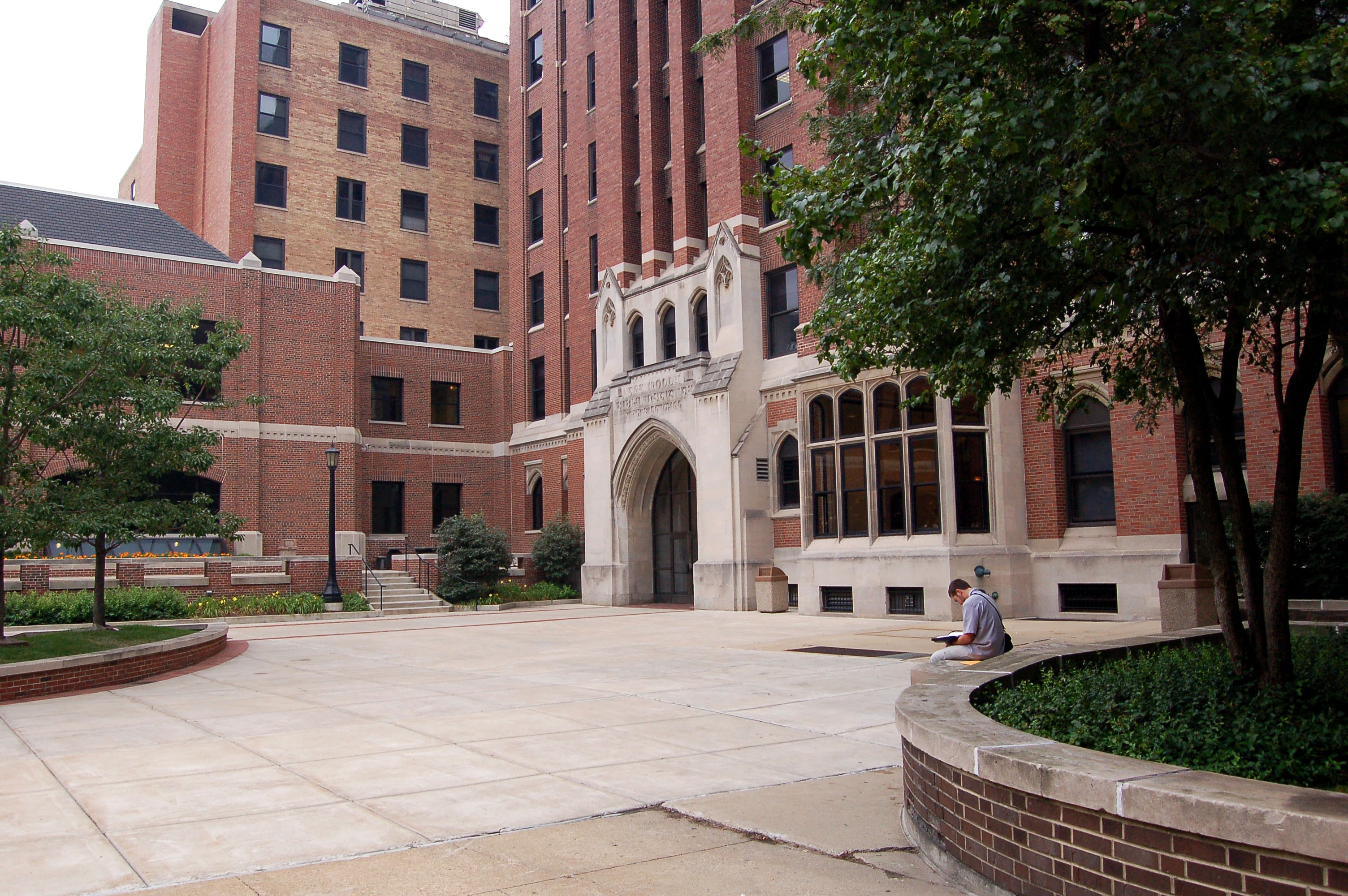
The arch at Moody Bible Institute, Chicago, whose radio station WMBI carried the request for prayer. Photo: Son of thunder, public domain, via Wikimedia Commons, resized.

The 30-second version:
Barbara Cummiskey had multiple sclerosis from her teens. By 31 she was on hospice care with a paralyzed diaphragm, a collapsed lung, a breathing tube and limbs that had wasted away. A Chicago Christian radio station asked people to pray, and about 450 letters came in. On Pentecost Sunday 1981 she heard a voice tell her to get up and walk, and she did. Her physicians, Dr. Thomas Marshall and Dr. Harold Adolph, confirmed the change, and she went on to train as a surgeon's assistant. It is a named, physician-attested case, though her full chart has never been published.
See this page's graph and discover linked topics
In full
Barbara Cummiskey (later Barbara Cummiskey Snyder) developed neurological symptoms at about 14 or 15 and was diagnosed with multiple sclerosis at 19; Lee Strobel and Craig Keener both report that the diagnosis was confirmed at the Mayo Clinic. Over the following decade the disease, together with an unrelated chronic lung disease, produced diaphragm paralysis, a collapsed lung, repeated respiratory arrests, a tracheostomy, an ileostomy, a permanent catheter, near-total loss of vision and severe contractures. At 31 she was an outpatient of a hospice with a do-not-resuscitate order. After a prayer request on WMBI, the radio station of Moody Bible Institute, on Pentecost Sunday, 7 June 1981, she reported hearing an audible voice, rose from bed and walked. Her internist, Thomas Marshall, examined her the following day; her surgeon, Harold Adolph, later described her as one of the most hopelessly ill patients he had seen. The case was reported by Rodney Clapp in Christianity Today (16 December 1983), treated in Strobel's The Case for Miracles (2018) and in Keener's Miracles Today (2021), for which Keener interviewed the patient in 2015 and checked the account with her physicians. The strongest skeptical treatment (Nicholas Halden, 2025) does not offer an alternative explanation; it argues that without the chart neither the diagnosis nor the miracle can be fully assessed. The case therefore meets the Tier 2 standard (named professional witnesses, family and congregational witnesses, published documentation) but not Tier 1 (no bureau review, no published records).
Summary
Barbara Cummiskey, a member of a Wesleyan congregation in Wheaton, Illinois, was healed on Pentecost Sunday, 7 June 1981, from end-stage multiple sclerosis and its respiratory complications while friends read her prayer letters sent in response to a WMBI radio appeal. Attested by her physicians Thomas Marshall and Harold Adolph (and, per later accounts, a third physician named Edwards), by her parents and friends, and reported in Christianity Today in 1983. Documented again by Craig Keener, who interviewed her in 2015 and found her still free of the disease 34 years later.
The event
The illness. According to the Christianity Today account, Barbara's first symptoms came in her mid-teens: a hand that would not hold a gymnastics ring, blurred vision, stumbling. At 19 she was diagnosed with multiple sclerosis. She attended college from 1972 to 1974 as a disabled student and later worked as a secretary when the disease allowed. By 1977 her diaphragm was paralyzed, and she also had a chronic lung disease unrelated to MS, with constant pneumonia and asthma. A year later one lung collapsed and the other worked at about half capacity. The disease reached her bowel and bladder, requiring an ileostomy and a catheter. She suffered episodes of respiratory and cardiac arrest, lost most of her sight, and was bedridden.
The prognosis. At 31 she was admitted as a hospice outpatient, with orders not to resuscitate. Strobel reports that one of her doctors considered her among the most hopelessly ill patients he had seen. Her family was preparing for her death.
The prayer. A friend called WMBI, the Chicago radio station of Moody Bible Institute, asking listeners to pray for her. Christianity Today reports that nearly 450 cards and letters arrived.
Pentecost Sunday, 7 June 1981. After church that day two women from her congregation came to read the letters aloud. Barbara reported hearing a calm male voice, from a corner of the room where no one stood, say My child, get up and walk. No one else heard it. She removed her oxygen, got out of bed and walked down the hall to her mother. Christianity Today records her mother's first words on seeing her legs: Calves! You have calves! Her muscles, wasted after years in bed, had filled out. She then danced with her father. Later accounts add that she went to the evening service at her church in Wheaton that same night and walked to the front.
The next day. Dr. Thomas Marshall, her internist, saw her walk into his office. Keener quotes him: I thought I was seeing an apparition! Later accounts report that a chest X-ray showed the collapsed lung re-expanded, that her medications and catheter were discontinued, and that the tracheostomy tube was removed at a following visit. Christianity Today reports that subsequent spinal taps showed no trace of MS, that the damaged lung was functioning, and that the ileostomy could be reversed because her surgeon had not removed the whole bowel.
Afterward. By December 1983 she was training as a surgeon's assistant, working alongside the surgeon who had once expected her to die. She later married a minister and took the name Snyder. Keener interviewed her in 2015 and reports she was still free of MS.
Witnesses + documentation
- Patient: Barbara Cummiskey Snyder, who has told the account consistently in interviews from 1983 to 2015.
- Thomas Marshall, MD: internist who managed her care at the end and examined her the day after the healing. His first-person account is reported to appear as a chapter in Scott J. Kolbaba, MD, Physicians' Untold Stories (2016).
- Harold Adolph, MD: surgeon who had treated her for years. Keener quotes him calling her one of the most hopelessly ill patients he ever saw. Adolph described the case in his own book Today's Decisions, Tomorrow's Destiny (1987).
- A third physician, Dr. Edwards, is listed among the attesting doctors in later accounts.
- Family and friends: her parents, who saw her walk within minutes; the two friends present at the bedside; an occupational therapist friend present that afternoon.
- Congregation: her church in Wheaton, which saw her walk in that evening.
- Published record: Rodney Clapp, "One Who Took Up Her Bed and Walked," Christianity Today, 16 December 1983; Pat Robertson, Answers to 200 of Life's Most Probing Questions (1984); Lee Strobel, The Case for Miracles (Zondervan, 2018); Craig S. Keener, Miracles Today (Baker Academic, 2021).
Verification
- The calendar checks. In 1981 Easter fell on 19 April, so Pentecost Sunday, fifty days later, fell on 7 June, the date every account gives.
- Professional witnesses on both sides of the event. The same physicians who documented the decline documented the recovery. Their testimony does not depend on the patient's own report of her condition.
- Contemporaneous enough to check. Christianity Today reported the case about two and a half years later, with the patient, her family and her surgeon all available. The account has stayed stable across 1983, 1984, 2018 and 2021 tellings.
- Independent investigation. Keener, a New Testament scholar who grades miracle claims by evidential strength, interviewed the patient and checked the facts with her physicians before including the case in Miracles Today.
Naturalistic explanations considered:
- Relapsing-remitting MS. MS often goes into remission. But a remission does not, in a moment, restore muscle mass lost to years of disuse, straighten contracted limbs, re-expand a collapsed lung, or end a separate chronic lung disease. The objection explains why she might stop getting worse, not why she could walk that afternoon.
- Misdiagnosis. Even if the original diagnosis were wrong, the documented state before 7 June (respiratory failure with a tracheostomy, a collapsed lung, contractures, wasted legs) is what changed, and that state is not a diagnosis but a set of physical findings.
- Suggestion or a psychogenic condition. Diaphragm paralysis, lung collapse and muscle atrophy are not produced or reversed by expectation.
Caveats and remaining uncertainties:
- No published chart. The medical records have not been released. Nicholas Halden ("Final thoughts on the Barbara Snyder miracle," A Glassed Truth, November 2025) argues that without them neither the MS diagnosis nor the miracle can be properly assessed. That is the honest limit of the case, and it is why the entry sits in Tier 2.
- Not entirely instantaneous in every respect. Halden notes that Adolph's 1987 account says some life-threatening complications briefly developed before she was eventually restored to complete health. The walking, muscle and lung changes were sudden; the full return to health was not a single moment. Claims that nothing at all went wrong afterward overstate the record.
- Adolph's outlook. Halden points out that Adolph believed in healing miracles before he met her and counts ordinary answered prayers as miracles in his books. That bears on how much weight his interpretation carries, though not on what he observed, and Marshall's account is independent of his.
- Small discrepancies. Accounts differ on how long she had been unable to walk (two years in Christianity Today, four in Keener's summary, seven in Adolph's book) and on the year of diagnosis. None bears on the event itself.
Apologetic value
- A Protestant case with named physicians. Most well-documented modern healings in this collection come through Lourdes or the Vatican canonization process. This one comes from a Wesleyan congregation, a Moody Bible Institute radio appeal and evangelical journalism, and still carries named medical witnesses.
- An answer to "it was just remission." The case shows why remission is not a catch-all: several separate systems (neurological, muscular, respiratory) changed at once.
- The Gospel pattern. The command she heard echoes Jesus's words to the paralyzed man in John 5:8 and Mark 2:11, and the day was Pentecost, when the church remembers the Spirit's coming in Acts 2.
- How to deploy it. Lead with the physicians and the 1983 magazine report, not the voice. Concede up front that the chart is unpublished; the case is strong as cumulative testimony, not as a lab result. Pair it with Tier 1 cases from the Lourdes Medical Bureau when the listener wants formal review.
Scholarship
Published academic works this page draws on, each matched to a publisher, index or library catalog record.
- Craig S. Keener, Miracles Today (Baker Academic, 2021). Open Library
- Pat Robertson, Answers to 200 of Life's Most Probing Questions (1984). Open Library
- Lee Strobel, The Case for Miracles: A Journalist Investigates Evidence for the Supernatural (Zondervan, 2018). Open Library
See also
- Miracles, master hub
- _schema, the vetting standard this entry follows
- George Müller (Bristol Orphanages 1836-1898), another Protestant Tier 2 entry
- Don Piper (Resurrection 1989), Protestant Tier 2 case with physician and witness documentation
- Vittorio Micheli (Lourdes 1962), Tier 1 bureau-reviewed healing for comparison
- STEPP Mozambique Study (Brown 2010), peer-reviewed study of healing prayer in a Pentecostal setting
- Argument from Miracles, the argument this case supports
- Pentecost, the feast on which the healing took place
- Naturalism, the worldview such cases press against
Common questions this page answers
Q: Who is Barbara Snyder and how was she healed of MS?
Barbara Cummiskey Snyder had multiple sclerosis from her teens and by 1981 was in hospice care, unable to walk or breathe on her own. On Pentecost Sunday, 7 June 1981, after a Chicago Christian radio station asked people to pray, she heard a voice tell her to get up and walk, and she got out of bed and walked. Her doctors confirmed the recovery.
Q: Which doctors confirmed Barbara Snyder's healing?
Her internist, Dr. Thomas Marshall, examined her the day after and said he thought he was seeing an apparition. Her surgeon, Dr. Harold Adolph, called her one of the most hopelessly ill patients he had seen. Craig Keener checked the account with her physicians before publishing it in Miracles Today (2021).
Q: Could Barbara Snyder's recovery have been an MS remission?
MS can go into remission, but a remission does not instantly rebuild wasted leg muscles, straighten contracted limbs, or re-expand a collapsed lung. Those changes were seen the same day and the next. The fair limit is that her full medical chart has never been published.
Q: Has the Barbara Snyder miracle been debunked?
No one has shown a natural explanation. The main skeptical critique, by Nicholas Halden in 2025, argues the case cannot be fully assessed without her records and notes that some complications briefly followed. That is a call for more data, not a refutation.
Q: Where was Barbara Snyder's healing reported?
It was first reported at length by Rodney Clapp in Christianity Today in December 1983. It was later told in Lee Strobel's The Case for Miracles (2018) and Craig Keener's Miracles Today (2021).