Person
Ashurbanipal
Osnappar, Asnapper, Assurbanipal, Ashshur-bani-apli, Asenappar, Ashurbanipal king of Assyria, SardanapalusIntro
Ashurbanipal was king of Assyria from 669 BC to about 631 BC, the last great king of the empire. He is famous today for his library at Nineveh, tens of thousands of clay tablets that preserved the literature of Mesopotamia, including the Epic of Gilgamesh. His reliefs of the royal lion hunt are among the masterpieces of ancient art.
The Bible probably names him once. Ezra 4:10 speaks of "the great and noble Osnappar" (ASV), who deported peoples to Samaria. Most scholars take Osnappar as a worn Aramaic form of Ashurbanipal's name. His own inscriptions also name Manasseh king of Judah as one of his vassals.
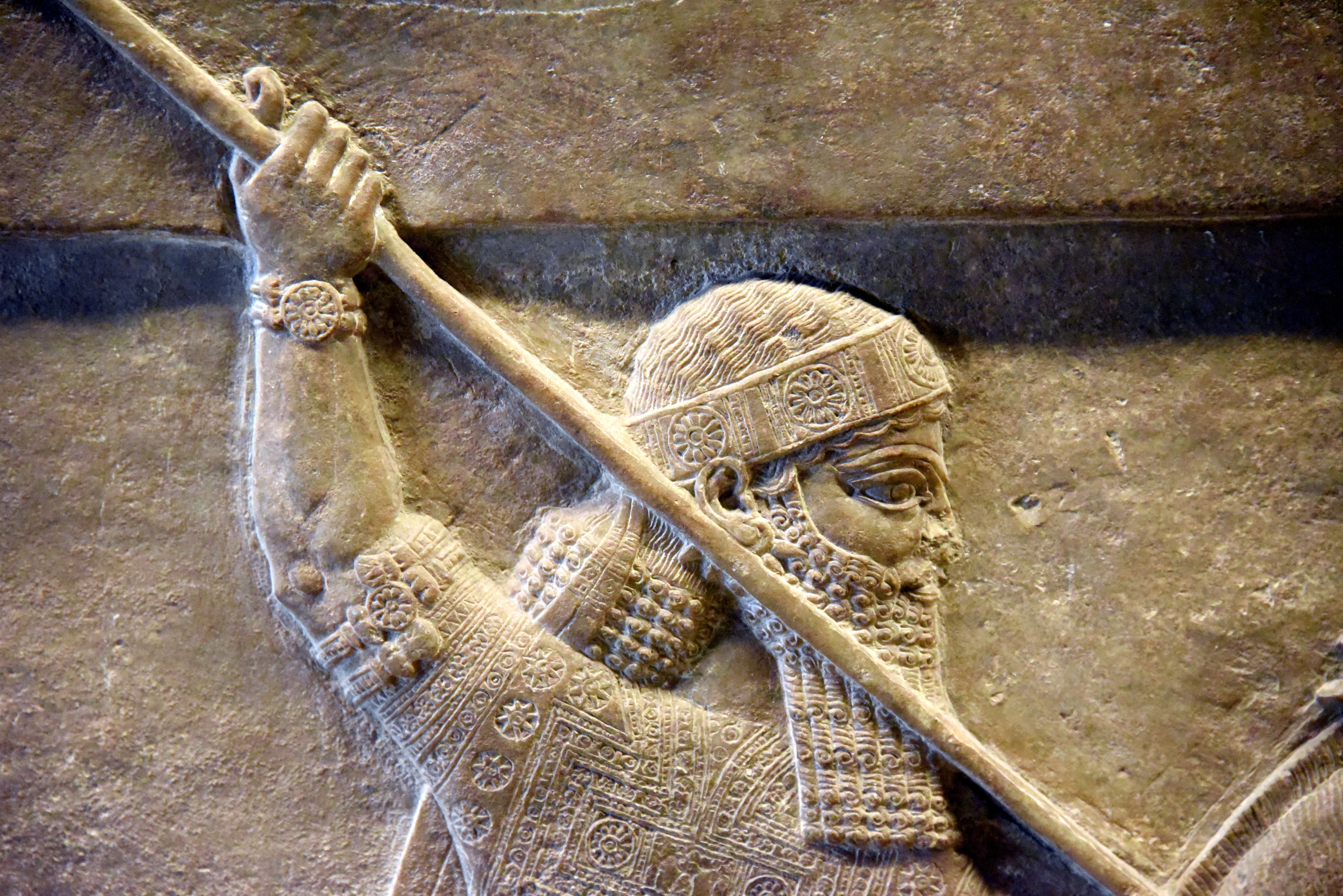 Ashurbanipal, detail of the royal lion hunt reliefs from his North Palace at Nineveh, about 645-635 BC, British Museum. Photo: Osama Shukir Muhammed Amin FRCP(Glasg), CC BY-SA 4.0, via Wikimedia Commons, resized.

The 30-second version:
Ashurbanipal ruled Assyria from 669 to about 631 BC, at the peak of its power. He sacked Thebes in Egypt, crushed his brother's revolt in Babylon, and destroyed Susa in Elam. He gathered the great library at Nineveh. Ezra 4:10 calls him "the great and noble Osnappar," who settled foreign peoples, including men of Susa and Elam, in Samaria. His inscriptions list Manasseh of Judah among the kings who served him.
See this page's graph and discover linked topics
In full
Ashurbanipal (Akkadian Aššur-bāni-apli, "Ashur is the creator of the heir") was a younger son of Esarhaddon, chosen as crown prince in 672 BC under the Succession Treaty, while his older brother Shamash-shum-ukin received Babylon. Unusually for a king he trained as a scribe and boasted of reading ancient tablets. On his accession in 669 he finished his father's war with Egypt: Taharqa was driven south, and when Taharqa's successor Tantamani tried to retake Egypt, Ashurbanipal's army sacked Thebes in 663 BC. From 652 to 648 he fought a bitter civil war with Shamash-shum-ukin, who died when Babylon fell. He then turned on Elam, which had supported the revolt, and destroyed Susa around 646 BC, deporting its people. The end of his reign is poorly documented; he died about 631 BC, and within twenty years of his death Nineveh fell (612 BC).
In the Bible
- Ezra 4:9-10. A letter of the officials of Samaria lists the peoples settled there, among them "the Shushanchites, the Dehaites, the Elamites, and the rest of the nations whom the great and noble Osnappar brought over, and set in the city of Samaria" (Ezra 4:9-10, ASV). Shushanchites are people of Susa, which Ashurbanipal destroyed.
- 2 Chronicles 33:11 (unnamed). The king of Assyria whose captains took Manasseh to Babylon may be Ashurbanipal, after he recovered Babylon in 648 BC, or his father Esarhaddon.
- Nahum 3:8-10 (event, not name). Nahum asks Nineveh, "Art thou better than No-amon... Yet was she carried away" (ASV). No-amon is Thebes, which Ashurbanipal's army sacked in 663 BC. Nahum thus writes after that event and before Nineveh's own fall in 612.
Family and lineage
- Father: Esarhaddon (reigned 681-669 BC).
- Grandfather: Sennacherib.
- Grandmother: Naqi'a (Zakutu), who imposed an oath of loyalty to him at his accession.
- Brother: Shamash-shum-ukin, king of Babylon 668-648 BC, who rebelled against him.
- Successors: his sons Ashur-etil-ilani and Sin-shar-ishkun, the last kings before Nineveh fell.
Historical and archaeological evidence
| Source | What it says | Date | Findspot and current home | Grade |
|---|---|---|---|---|
| Library of Ashurbanipal | Tens of thousands of tablets and fragments: literature, omens, letters, lexical lists, including the standard Epic of Gilgamesh | 7th century BC | Nineveh; found by Austen Henry Layard and Hormuzd Rassam from 1849 and 1853; British Museum | Direct |
| Lion hunt reliefs | Carved panels of the king hunting lions | about 645-635 BC | North Palace, Nineveh; British Museum | Direct |
| Rassam Cylinder (Prism A) | Annals of his reign, including the Egyptian campaigns, the sack of Thebes, the civil war and the Elamite wars | about 643 BC | Nineveh; British Museum | Direct |
| Cylinder C and parallel prisms | List twenty-two kings who brought tribute and joined his first Egyptian campaign (667 BC), including "Manasseh (Mi-in-se-e) king of Judah" | about 667-660 BC | Nineveh; British Museum | Direct for Manasseh |
| Susa campaign texts and reliefs | Describe the destruction of Susa and the deportation of Elamites | about 646 BC | Nineveh; British Museum | Direct, background to Ezra 4:9 |
Grade: strong. Ashurbanipal's existence is beyond question, from thousands of documents and monuments. The biblical identification is the open point. Lawrence Mykytiuk places Osnappar among the persons about whom the Bible says too little for a firm identification, which is why Ashurbanipal is not on his list of 53. See Biblical Figures Confirmed by Archaeology.
Scholarly consensus
- Osnappar is Ashurbanipal. This is the majority view among commentators on Ezra (for example H. G. M. Williamson). The Aramaic 'Osnappar is explained as a shortened form of Aššur-bāni-apli that dropped the final element and softened the consonants, and the Greek versions read similar forms (Asennaphar). The deportation of Susians and Elamites in Ezra 4:9 fits his destruction of Susa. Other proposals, such as Esarhaddon or an Assyrian officer, have few supporters.
- The end of his reign. His last secure inscriptions date to about 639 BC. The date of his death (about 631 or 627 BC) and the order of his successors are debated among Assyriologists.
- Manasseh's captivity. Chronicles' report that Manasseh was taken to Babylon has no direct Assyrian parallel. Historians who accept it often place it after Ashurbanipal's recovery of Babylon in 648 BC, when western vassals suspected of sympathy with Shamash-shum-ukin's revolt may have been summoned to answer for it.
Theological significance
- The height before the fall. Ashurbanipal's reign is the summit of Assyrian power, and within two decades of his death Nineveh lay in ruins. Nahum and Zephaniah (Zephaniah 2:13-15) announce that fall in the very generation of Assyria's greatest strength.
- Thebes as a warning. Nahum's use of the fall of Thebes (No-amon) to warn Nineveh turns Ashurbanipal's own victory into a sign of what awaits his city.
- Exile as policy and as providence. The peoples Osnappar planted in Samaria appear in Ezra as opponents of the rebuilt temple. The Bible frames the scattering and resettlement of nations as part of a history God oversees, from Assyria to Persia.
Church Fathers
No verified patristic comment identifying Osnappar or discussing Ashurbanipal is cited here; the Assyrian king was known to the Greek world chiefly through the later legend of "Sardanapalus," which blended him with other figures.
See also
- People of the Bible, every person in this series grouped by the book of first mention
- Nineveh Discovery, the excavation of his library and palace
- Manasseh of Judah, named among his vassals
- Esarhaddon, his father
- Sennacherib, his grandfather
- Taharqa, the Kushite pharaoh he drove from Egypt
- Biblical Figures Confirmed by Archaeology
Common questions this page answers
Q: Is Ashurbanipal mentioned in the Bible?
Probably once, as "the great and noble Osnappar" in Ezra 4:10, who settled foreign peoples in Samaria. Most scholars identify Osnappar with Ashurbanipal, though the identification is not certain.
Q: What is the Library of Ashurbanipal?
A collection of tens of thousands of clay tablets gathered by Ashurbanipal at Nineveh in the seventh century BC and excavated in the nineteenth century. It preserved Mesopotamian literature, including the Epic of Gilgamesh, and is now in the British Museum.
Q: Does Ashurbanipal mention Manasseh?
Yes. His inscriptions list "Manasseh king of Judah" among twenty-two kings who brought tribute and supported his first campaign against Egypt in 667 BC.
Q: What does Nahum's "No-amon" have to do with Ashurbanipal?
No-amon is Thebes in Egypt, which Ashurbanipal's army sacked in 663 BC. Nahum 3:8-10 uses its fall to warn Nineveh, which fell in 612 BC.