Person
Aretas IV
Aretas, Aretas the king, King Aretas, Aretas IV Philopatris, Harithath, Haritat IV, Aeneas (Aretas IV)Intro
Aretas IV was king of the Nabataeans, the Arab kingdom whose capital was the rock-cut city of Petra in modern Jordan. He ruled for almost fifty years, from 9 BC to AD 40, the height of Nabataean wealth and building.
Paul mentions him once. Soon after his conversion, Paul had to escape from Damascus because "the governor under Aretas the king" was guarding the city to arrest him, so his friends let him down through a window in the wall in a basket (2 Corinthians 11:32-33). Aretas also appears in the Gospel story from the other side: his daughter was the wife whom Herod Antipas divorced to marry Herodias, and Aretas later destroyed Antipas' army in revenge. Hundreds of his coins and many inscriptions dated by his reign survive.
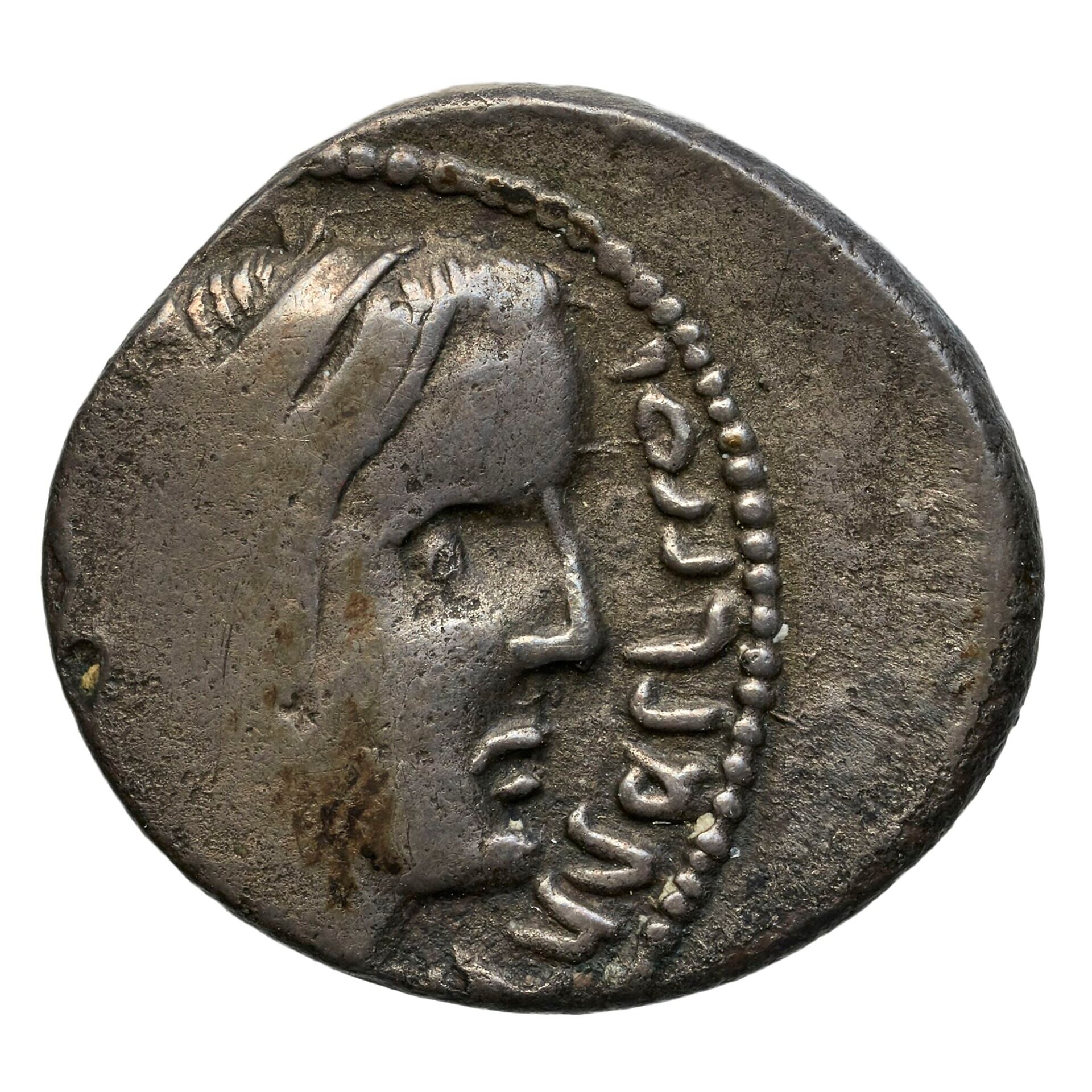
Silver coin of Aretas IV, king of the Nabataeans (9 BC to AD 40), with his name in Nabataean script. Bibliothèque nationale de France, Cabinet des médailles. Public domain, via Wikimedia Commons, resized.

See this page's graph and discover linked topics
In full
Aretas IV (Nabataean Ḥrtt, Haritat) came to the throne about 9 BC on the death of Obodas III. Josephus says he was originally named Aeneas and took the royal name Aretas, and that he assumed the kingdom without first asking Augustus' permission, which angered the emperor until he was confirmed (Antiquities 16.294-299, 16.353-355).
- Title. His inscriptions and coins call him "Aretas, king of the Nabataeans, who loves his people" (rḥm ʿmh), a title chosen in deliberate contrast with Hellenistic kings who styled themselves "lover of Rome" or "lover of Caesar".
- Prosperity. His reign was the peak of the Nabataean caravan trade in incense and spices from Arabia to the Mediterranean. Much of the monumental building at Petra and at Hegra (Mada'in Salih, in modern Saudi Arabia) dates to his time.
- The war with Antipas. His daughter was married to Herod Antipas. When Antipas decided to marry Herodias, she learned of it and fled to Machaerus and then to her father. Aretas, already in a border dispute with him, made war on Antipas and destroyed his army in AD 36. Tiberius ordered Vitellius, legate of Syria, to bring Aretas to him dead or alive, but on learning of Tiberius' death in March AD 37 Vitellius halted the campaign (Josephus, Antiquities 18.109-125). Josephus records that some Jews saw Antipas' defeat as God's punishment for the killing of John the Baptist (Antiquities 18.116).
- Death. He died about AD 40 and was succeeded by his son Malichus II.
In the Bible
In Damascus the governor under Aretas the king guarded the city of the Damascenes in order to take me: and through a window was I let down in a basket by the wall, and escaped his hands. (2 Corinthians 11:32-33, ASV)
- "The governor." Paul's word is ethnarchēs, ethnarch, a ruler or official over a people. Exactly what this official's authority in Damascus was is debated (see below).
- Acts' account. Acts tells the same escape from the side of Paul's Jewish opponents: "the Jews took counsel together to kill him... And they watched the gates also day and night that they might kill him: but his disciples took him by night, and let him down through the wall, lowering him in a basket" (Acts 9:23-25, ASV). The two accounts are commonly harmonized as a joint effort: Jewish opponents in the city and the Nabataean ethnarch both sought Paul.
- Arabia. Paul says that after his conversion "I went away into Arabia; and again I returned unto Damascus" (Galatians 1:17, ASV). Arabia in this setting most naturally means the Nabataean kingdom. Many scholars suggest that Paul's preaching there is what made him a wanted man to Aretas' officials.
- Not named in the Gospels. Aretas does not appear in the Gospel accounts of John the Baptist's death, but the divorce of his daughter is the background to the marriage John condemned (Mark 6:17-18).
Family and lineage
- Predecessor: Obodas III. Whether Aretas was related to him is not stated; Josephus' remark that he was earlier called Aeneas suggests he was not the direct heir.
- Wives: Huldu, and later Shaqilat, both of whom appear with him on his coins.
- Children: Malichus II, his successor; other children named in Nabataean inscriptions; and the daughter married to Herod Antipas, whose name Josephus does not record.
Historical and archaeological evidence
Aretas IV is among the best-documented client kings of the Roman East.
- Coins. He struck silver and bronze coins in large numbers throughout his reign, with his portrait and, at different periods, that of his queen Huldu or Shaqilat, and Nabataean legends naming "Aretas, king of the Nabataeans, who loves his people", dated by his regnal years. Specimens are held in the Bibliothèque nationale de France, the British Museum and many other collections. Grade: direct.
- Inscriptions. Many Nabataean inscriptions are dated by his regnal years, among them the tomb inscriptions of Hegra (Mada'in Salih) and dedications at Petra and Avdat in the Negev, and a Nabataean dedication at Puteoli in Italy. Grade: direct.
- Josephus, Antiquities 16.294-299, 16.353-355, 17.287 and 18.109-125, on his accession, his dealings with Herod the Great and Varus, and his war with Antipas. See Josephus.
- Strabo, Geography 16.4.21-26, describes the Nabataean kingdom and Petra in this period.
- Mykytiuk lists Aretas IV among the thirty New Testament figures confirmed outside the New Testament, citing Josephus, inscriptions at Petra, Avdat and Puteoli, and coins. See Biblical Figures Confirmed by Archaeology.
Scholarly consensus
- The person: certain. The identification of Paul's "Aretas the king" with Aretas IV is not in doubt, since he was the Nabataean king during the whole period of Paul's conversion and early ministry.
- The ethnarch in Damascus. Damascus was a Roman-controlled city, so how an official of Aretas could guard it is debated. The main proposals:
- Nabataean control of Damascus. Roman coins of Damascus are lacking between the later years of Tiberius and the reign of Nero. Robert Jewett (A Chronology of Paul's Life, 1979) and others took this to suggest that Caligula granted the city to Aretas about AD 37-40, which would date Paul's escape to that window.
- A brief Nabataean seizure. Douglas A. Campbell ("An Anchor for Pauline Chronology", Journal of Biblical Literature 121, 2002) argued that Aretas took Damascus during the disorder after his war with Antipas and the death of Tiberius, dating the escape to about AD 36-37.
- A community leader. Others argue that the ethnarch was the head of the Nabataean community in Damascus, or a Nabataean official watching the roads outside it, and that no Nabataean control of the city is implied. The coin gap is an argument from silence and does not prove a change of rule.
- Chronology. On every view the escape took place before Aretas' death about AD 40, which makes 2 Corinthians 11:32 one of the few fixed points for dating Paul's conversion, usually placed between about AD 31 and 36.
Theological significance
- The persecutor persecuted. Paul, who had gone to Damascus to arrest Christians (Acts 9:1-2), left it as a hunted man, lowered over the wall in a basket. He lists the episode at the end of his catalogue of sufferings and weaknesses, as something to boast of because it shows God's power in weakness (2 Corinthians 11:30; 12:9-10).
- The gospel goes to Arabia. Paul's time in Arabia, the first place he went after his conversion, shows the gospel crossing into a Gentile kingdom almost at once.
- One web of history. The same king appears in Paul's letter, in Josephus' account of John the Baptist's death, and on his own coins and monuments. The New Testament's references to the politics of its world keep landing in the right place.
Church Fathers
Eusebius, Church History 1.11, quotes Josephus on Antipas' marriage to Herodias, the war with Aretas, king of Petra, and the Jewish view that the defeat was punishment for the death of John the Baptist. See Eusebius of Caesarea. No other significant patristic comment on Aretas is known.
Scholarship
Published academic works this page draws on, each matched to a publisher, index or library catalog record.
- Douglas A. Campbell, "An Anchor for Pauline Chronology: Paul's Flight from 'The Ethnarch of King Aretas' (2 Corinthians 11:32-33)," Journal of Biblical Literature 121 (2002). doi:10.2307/3268357
- Robert Jewett, A chronology of Paul's life (1979). Open Library
See also
- People of the Bible, the full list of biblical people by book of first mention
- Herod Antipas, his son-in-law and enemy
- Herodias, for whom Antipas divorced Aretas' daughter
- Paul the Apostle, whose escape from Damascus involved Aretas' ethnarch
- Paul's Damascus Road Encounter, Paul's conversion near Damascus
- Tiberius, who ordered the campaign against him
- Biblical Figures Confirmed by Archaeology, Mykytiuk's list
- New Testament Archaeology Evidence Catalog, the graded catalog of NT evidence
Common questions this page answers
Q: Who was King Aretas in 2 Corinthians 11:32?
Aretas IV, king of the Nabataeans from 9 BC to AD 40, with his capital at Petra. Paul says Aretas' governor in Damascus guarded the city to arrest him, and he escaped by being let down through a window in the wall in a basket.
Q: Is there archaeological evidence for Aretas IV?
Yes. He struck large numbers of coins bearing his portrait and the title "king of the Nabataeans, who loves his people", and many inscriptions at Petra, Hegra and elsewhere are dated by the years of his reign. Josephus also describes his reign.
Q: How did Aretas control Damascus?
Scholars disagree. Some think Caligula gave Damascus to Aretas about AD 37-40; others think Aretas seized it briefly about AD 36-37; others think his ethnarch was a leader of the Nabataean community there and not the ruler of the city.
Q: What does Aretas have to do with John the Baptist?
Herod Antipas divorced Aretas' daughter to marry Herodias, the marriage John condemned. Aretas later defeated Antipas in battle in AD 36, and Josephus says many Jews saw the defeat as God's punishment for John's execution.
Q: Why is 2 Corinthians 11:32 important for dating Paul?
Because Aretas died about AD 40, Paul's escape from Damascus must have happened before then. That makes it one of the few fixed points for dating Paul's conversion and early ministry.