Person
Andrew Snelling
Andrew A. Snelling, Dr. Andrew Snelling, SnellingAustralian geologist and the leading geologist of the young-earth creationist movement. He holds a PhD in geology from the University of Sydney and has for many years directed research at Answers in Genesis, the organization founded by Ken Ham. His best-known work argues that the rock layers of the Grand Canyon were laid down and folded during Noah's Flood.
The 30-second version:
Andrew Snelling is an Australian geologist with a PhD from the University of Sydney and the lead geologist at Answers in Genesis. His two-volume Earth's Catastrophic Past (2009) is the most complete textbook statement of Flood Geology. After winning a permit through a lawsuit, he collected 53 rock samples from folded layers in the Grand Canyon in 2017 and argues they show the layers were bent while still soft, not after hardening over millions of years. Mainstream geologists dispute that reading.
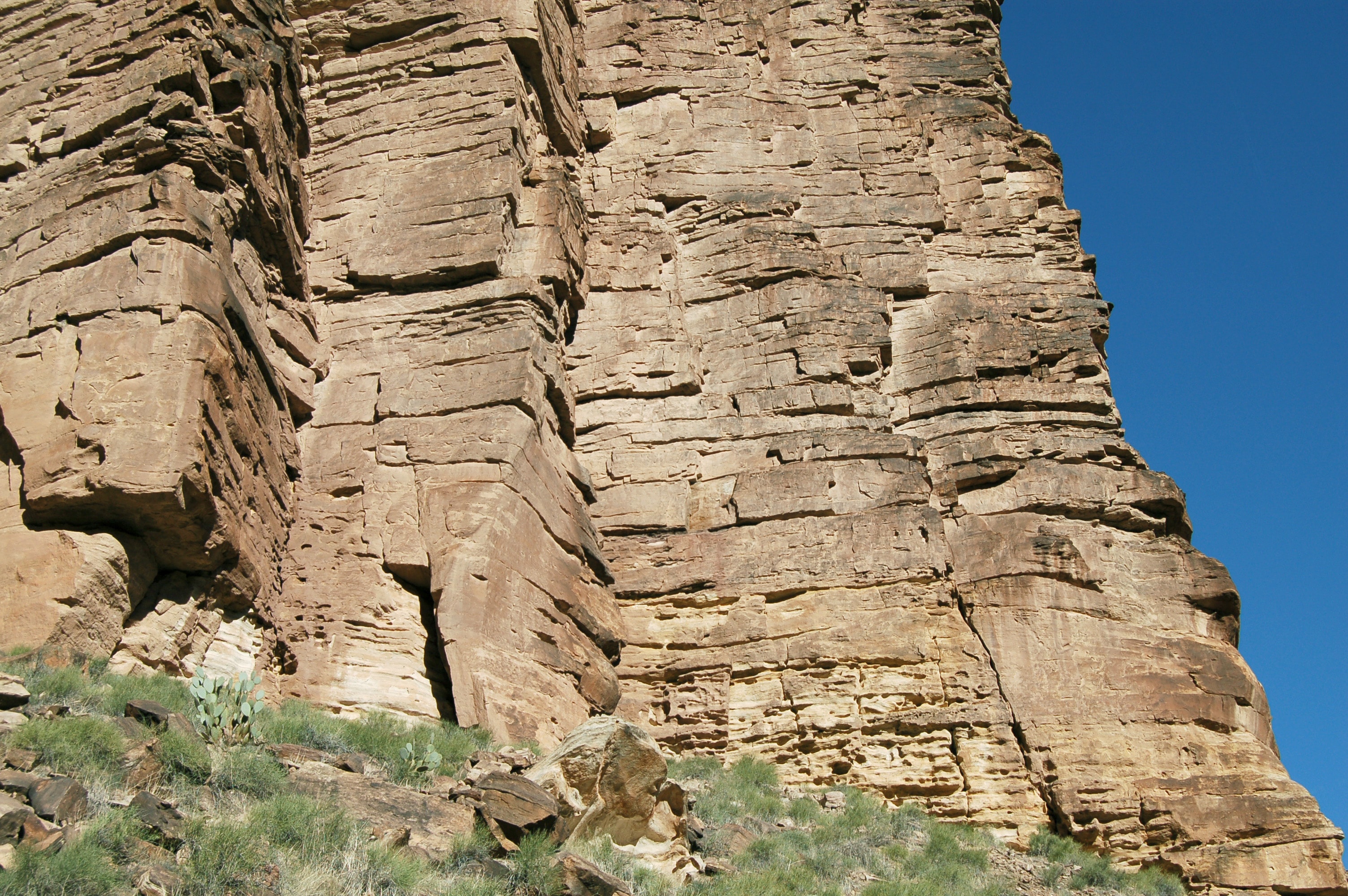
Tapeats Sandstone along the Hermit Trail, Grand Canyon, one of the Tonto Group formations Snelling sampled. Photo: Michael Quinn, Grand Canyon National Park (NPS), public domain, via Wikimedia Commons, resized.
Career
- Training. PhD in geology from the University of Sydney; his doctoral research concerned uranium mineralization.
- Creation science. A long-serving researcher with Australian and then American creationist organizations, and later director of research at Answers in Genesis in the United States. He took part in the RATE project on radioisotopes and the age of the earth.
- Publications. Many research papers in Answers Research Journal and the two-volume Earth's Catastrophic Past: Geology, Creation and the Flood (2009).
See this page's graph and discover linked topics
The Grand Canyon folds project
Snelling's signature project concerns the folds in the Tonto Group (the Tapeats Sandstone, Bright Angel Formation and Muav Formation) of the Grand Canyon.
- The question. Were these layers bent while still soft and wet, soon after deposition, or after they had hardened over long ages?
- The samples. After a lawsuit secured a sampling permit, he collected 53 samples on a 2017 river trip, from the hinges of folds, from the adjacent limbs and from the same beds miles away, so the folded and unfolded rock could be compared.
- The analysis. A commercial laboratory in Calgary prepared the samples; the work used X-ray diffraction, thin sections and electron microscopy.
- The publications. Papers on the petrology of the three formations and on four individual folds appeared in Answers Research Journal from 2021 to 2024, summarized in "The Grand Canyon Was Formed Rapidly" (Answers in Genesis, 4 February 2025).
- His conclusions. No metamorphic change in the folded rocks, no plastic deformation of the kind hard rock would need, and cement that formed after the folding. He reads this as evidence the layers were deposited and folded within the Flood year.
The critique. Stephen Mitchell and Kennen Tillman (Peaceful Science, 2024) argue that the folds' straight limbs and sharp hinges, the faults and fractures crossing beds, twinned calcite, crushed grains and cement cut by fractures show the rock was already hard when folded. The exchange is set out on Grand Canyon Formation and Folded Strata Without Fracturing Argument.
Scholarship
Published academic works this page draws on, each matched to a publisher, index or library catalog record.
- Stephen Mitchell and Kennen Tillman, "Examining Young Earth Creation Claims About the Grand Canyon" (2024). doi:10.54739/tyet
- Andrew A. Snelling, Earth's Catastrophic Past (2009). Open Library
See also
- Grand Canyon Formation, the full comparison of mainstream and Flood-model accounts
- Folded Strata Without Fracturing Argument, the folding argument in debate-prep form
- Flood Geology, the framework his work develops
- Steven A. Austin, fellow Flood geologist and Grand Canyon researcher
- John Whitmore, fellow Flood geologist working on the Coconino Sandstone
- Ken Ham, founder of Answers in Genesis
- Young Earth Creationism, the wider position