# Why Trust Christianity When Christians Are Hypocrites
## Intro
Maybe a church leader who preached purity was living a double life, or Christians you know are harsh, greedy or fake. It is fair to ask why you should trust a faith whose followers fall so short. Jesus saw religious hypocrisy more clearly than any critic, condemned it more sharply, and invited people to judge Him by His own life and words.
## In full
The question has two parts. One is an argument: if Christianity were true, its followers would be visibly better, so widespread hypocrisy counts as evidence against it. The other is a wound: someone who claimed to speak for God hurt you or someone you love. The main text is [Matthew 23](/codex/matthew-23/), where Jesus, teaching in the Temple courts in the last week of His life, pronounces seven woes on the scribes and Pharisees and calls them "hypocrites," a word borrowed from the Greek stage for an actor behind a mask. Jesus predicted false disciples ([Matthew 7:21-23](/codex/matthew-7-21-23/)) and a mixed field of wheat and weeds until the harvest ([Matthew 13:24-30](/codex/matthew-13-24-30/)). On the argument, this page holds that hypocrisy is a failure measured by the standard Christianity itself sets, so it confirms the diagnosis of human sin the faith teaches and leaves the question of whether Jesus is who He claimed to be untouched. On the wound, it holds that Jesus takes the side of those harmed by religious pretense, and that leaving a harmful leader is different from leaving Him. Christians differ on how much the visible church should be expected to change a person and how quickly, but they agree that Jesus' words in [Matthew 23](/codex/matthew-23/) apply to churches today. The codex treats the apologetic side more fully in [Christians Behaving Badly Defeater](/codex/christians-behaving-badly-defeater/).
## The struggle
You remember the pastor who shouted about sin and was later exposed. Or the family member who quotes verses at you and treats people with contempt. Or the church that welcomed you warmly until you asked a hard question. Now when someone talks about Jesus, you feel your guard go up. Part of you still wants what they claim to have. Another part says, *If this were real, wouldn't it work better on the people who believe it?*
## What Jesus said
> Woe to you, scribes and Pharisees, hypocrites! For you are like whitened tombs, which outwardly appear beautiful, but inwardly are full of dead men’s bones, and of all uncleanness. Even so you also outwardly appear righteous to men, but inwardly you are full of hypocrisy and iniquity. ([Matthew 23:27-28](/codex/matthew-23-27-28/), WEB)
Jesus aims His strongest words at the most religious people in the room. He says that looking righteous while being corrupt inside is deadly, and He says it publicly.
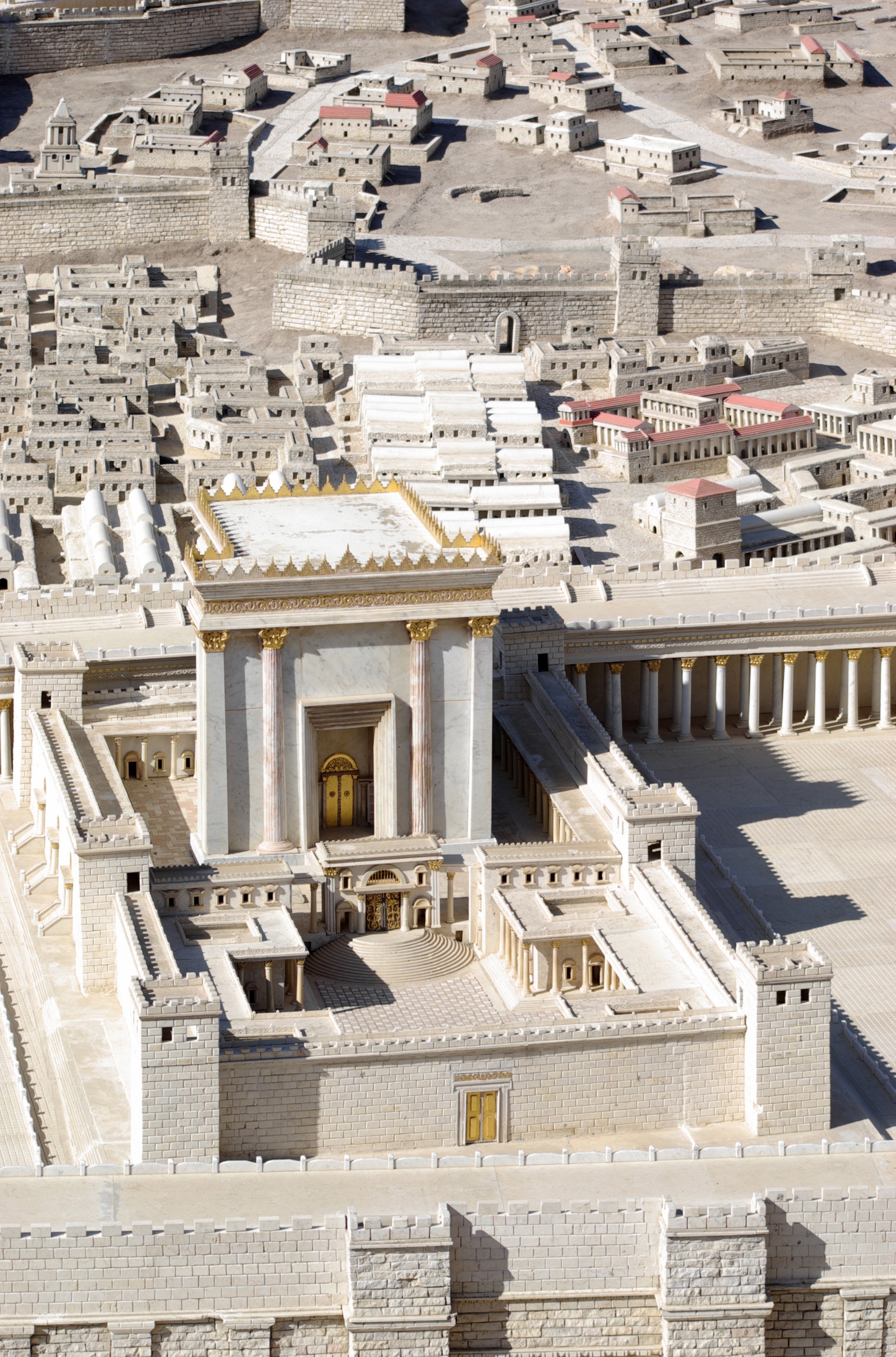
_The sanctuary of the Second Temple in the Holyland Model of Jerusalem at the Israel Museum. Jesus spoke the woes of [Matthew 23](/codex/matthew-23/) while teaching in these courts during His final week. Photo: Berthold Werner, public domain, via Wikimedia Commons, resized._
## The setting
[Matthew 23](/codex/matthew-23/) comes in the last days before the cross. Jesus had entered Jerusalem, cleared the Temple, and was teaching daily in its courts while the chief priests and elders challenged His authority ([Matthew 21:23](/codex/matthew-21-23/)). He spoke "to the multitudes and to his disciples" ([Matthew 23:1](/codex/matthew-23-1/)), so the woes were a warning to ordinary listeners as much as a rebuke to the leaders.
He did not reject everything the scribes taught. "All things therefore whatever they tell you to observe, observe and do, but don’t do their works; for they say, and don’t do" ([Matthew 23:3](/codex/matthew-23-3/)). His charge was the gap between their words and their lives: heavy burdens laid on others, prayers made for show, and widows' houses devoured (23:4-5, 23:13). Whitewashed tombs were a vivid image. Jewish custom, preserved in the Mishnah, was to mark graves with lime in the month before Passover (Shekalim 1:1; Ma'aser Sheni 5:1) so that travelers would not touch them by accident and become ritually unclean. Clean on the outside, death within. The chapter ends with Jesus weeping over the city: "How often I would have gathered your children together, even as a hen gathers her chicks under her wings" (23:37). See [Matthew 23](/codex/matthew-23/) and [Matthew 23.27-28](/codex/matthew-23-27-28/), and the codex hub [Hypocrisy](/codex/hypocrisy/).
## What this means today
This is application, drawn from the texts above.
1. **Jesus is on your side against religious hypocrisy.** The person who hurt you while claiming God's name fell under Jesus' sharpest words ([Matthew 23:13](/codex/matthew-23-13/)). Your anger at hypocrisy is something He shares, and He also warned that anyone who causes "little ones" to stumble faces grave judgment ([Matthew 18:6](/codex/matthew-18-6/)).
2. **Jesus expected fakes among His followers.** He said many would call Him "Lord, Lord" whom He never knew ([Matthew 7:21-23](/codex/matthew-7-21-23/)), and that weeds would grow among the wheat until the harvest ([Matthew 13:24-30](/codex/matthew-13-24-30/)). The presence of hypocrites fits what He said would happen.
3. **Judge the faith by its founder.** Jesus told His followers that the world would recognize them by their love ([John 13:35](/codex/john-13-35/)) and that a tree is known by its fruit ([Matthew 7:16-20](/codex/matthew-7-16-20/)). Those words give you the right to hold Christians to His standard, and they also point you to Him as the measure. Frederick Douglass, who had suffered under slaveholders who called themselves Christians, drew exactly this line in the appendix to his 1845 *Narrative*: he loved "the pure, peaceable, and impartial Christianity of Christ" and rejected what he called the "partial and hypocritical Christianity of this land."
## Common misunderstandings
- **"Christians claim to be better than everyone else."** The faith begins by admitting the opposite. In Jesus' parable the man who went home right with God was the one who prayed "God, be merciful to me, a sinner!" ([Luke 18:13](/codex/luke-18-13/)), while the one who thanked God he was better than others did not. Jesus described Himself as a physician who came for the sick ([Matthew 9:12](/codex/matthew-9-12/)). A church full of struggling people is what that would look like.
- **"Every Christian who sins is a hypocrite."** Hypocrisy is pretending, wearing a mask of goodness one has no intention of living. A believer who fails, admits it and keeps trying is doing what Jesus taught ([Matthew 7:3-5](/codex/matthew-7-3-5/)). That person is weak, which is different from fake.
- **"If you were hurt, you should just forgive and come back."** Forgiveness matters, but Jesus did not tell people to sit under leaders who exploited them. If you were abused by a church leader, your safety comes first, and reporting abuse to authorities is right. Healing may take time, counsel and a different, healthier church.
- **The hard objection: "If Christianity were true, it would change people more."** Many believers do change, often quietly, in ways outsiders do not see. Jesus also said growth is slow and the field stays mixed until the end ([Matthew 13:30](/codex/matthew-13-30/)). The deeper question is whether Jesus rose and is who He said. Bad followers cannot settle that, in either direction, so the question deserves to be weighed on its own evidence.
## Put it into practice
1. **Today:** Name, privately, the person or church whose hypocrisy has shaped how you see Jesus. Tell God honestly how it affected you.
2. **This week:** Read [Matthew 23](/codex/matthew-23/) in one sitting. Notice who Jesus defends and who He confronts.
3. **With someone else:** Talk with one Christian you respect, someone whose life matches their words, about what happened to you and what keeps you wary. If you were abused, speak with a counselor or a trusted outside authority.
## A prayer for today
Jesus, You know what was done to me by people who used Your name. You saw through the masks then, and You see through them now. Heal what was hurt in me. Help me see You clearly, apart from the people who misrepresented You, and keep me honest about my own masks too. In Jesus' name, amen.
## Reflect and respond
1. Whose hypocrisy has most shaped the way you think about Jesus?
2. What in [Matthew 23](/codex/matthew-23/) surprised you about how Jesus treats religious pretense?
3. What would it look like for you to judge Christianity by Jesus Himself this month?
## Talk it over
Many readers carry this question, some from outside the church and some from inside it. Share in the discussion below what helped you separate Jesus from the people who misrepresented Him, or what you are still wrestling with.
## See also
- [Life's Hard Questions](/codex/lifes-hard-questions/), the full series
- [How Do I Love Someone Who Deliberately Hurt Me](/codex/how-do-i-love-someone-who-deliberately-hurt-me/), when the hurt is personal
- [Christians Behaving Badly Defeater](/codex/christians-behaving-badly-defeater/), the apologetic case in full
- [Hypocrisy](/codex/hypocrisy/), the codex hub on hypocrisy in Scripture
- [Feeling Distant from God](/codex/feeling-distant-from-god/), for the distance that church hurt can leave
- [Matthew 23](/codex/matthew-23/), the seven woes
- [Matthew 13.24-30](/codex/matthew-13-24-30/), the wheat and the weeds
## Common questions this page answers
**Q: Why are so many Christians hypocrites?**
Christianity teaches that every person is a sinner in need of grace, so believers still fail, and some people use religion as a mask. Jesus predicted both: He said false followers would call Him "Lord, Lord" and that weeds would grow among the wheat until the harvest.
**Q: What did Jesus say about hypocrites?**
In [Matthew 23](/codex/matthew-23/) Jesus pronounced seven woes on religious leaders who said one thing and did another, calling them whitewashed tombs that look beautiful outside and are full of death within. He also warned against praying and giving to be seen ([Matthew 6:1-6](/codex/matthew-6-1-6/)).
**Q: Does hypocrisy in the church prove Christianity is false?**
No. Hypocrisy is a failure to meet the standard Christianity itself sets, and it matches the faith's own teaching about human sin. Whether Christianity is true depends on who Jesus is and whether He rose from the dead, questions that deserve to be weighed on their own evidence.
**Q: Can I follow Jesus if I was hurt by a church?**
Yes. Jesus sided with people harmed by religious pretense. If you were abused, your safety comes first, and reporting abuse is right; healing may take time and may include finding a healthier church.