# Atheism Is Escapism (Reverse-Crutch Argument)
## Intro
Atheism likes to present itself as the brave, grown-up position. Believers, the story goes, cannot face a cold universe, so they invent a heavenly Father to comfort them. The atheist is the one who looks reality in the eye.
**This argument turns that story around.** If God is real, there is a Judge, and everyone answers to Him for how they live. If God is not real, nobody answers to anyone. Ask honestly which of those two beliefs a person would *want* to be true, and the "crutch" charge lands on atheism, not on Christianity.
We do not have to guess at the motive. Some of the most famous unbelievers of the last two centuries told us in their own words that they *hoped* there was no God, and why. The Bible saw it coming long before: *"The fool hath said in his heart, There is no God"* ([Psalm 14:1](/codex/psalms-14-1/), ASV). In his *heart*, the place where a person decides what he wants.
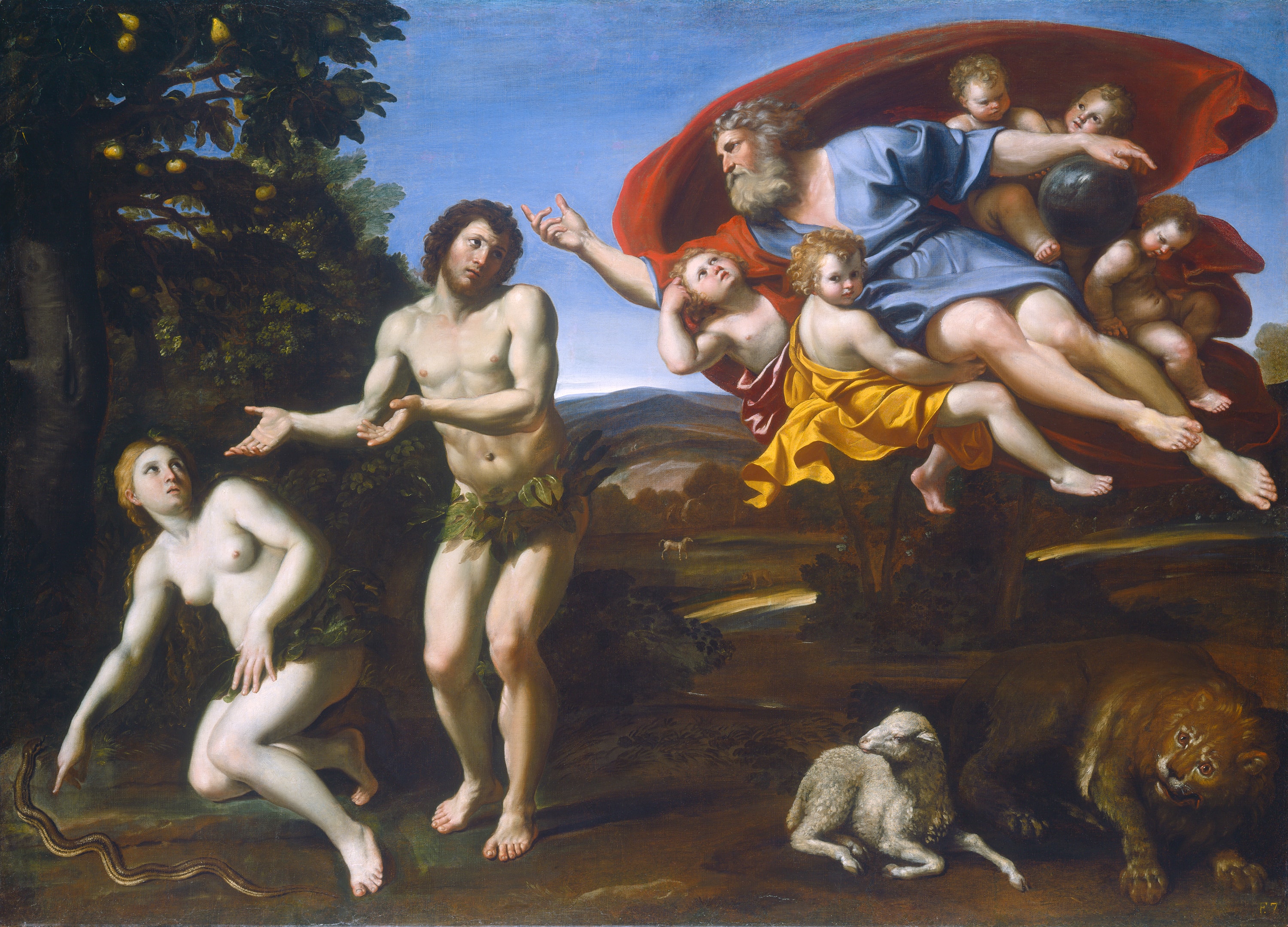
_Domenichino, *The Rebuke of Adam and Eve* (1626). Adam blames Eve, Eve blames the serpent: the first escape from accountability ([Genesis 3:12-13](/codex/genesis-3-12-13/)). National Gallery of Art, Washington. Image: CC0, via Wikimedia Commons._
For the even-handed treatment of the same question, including how believers can use faith as an escape too, see the concept page [Atheism as Escapism](/codex/atheism-as-escapism/).
## Cheatsheet
**30-second reply.** *"You say faith is a crutch. Let's apply that test fairly. Christianity gives me a Judge, a standard I can't meet, a call to die to myself, and a warning of hell. Atheism gives you no Judge, no standard above your own, and no account to give. Which of those sounds like wishful thinking? And you don't have to take my word for it. Thomas Nagel wrote, 'I don't want there to be a God.' Huxley called meaninglessness his 'instrument of liberation.' So the motive question doesn't hurt my side. If you want to drop motives, great. Let's talk evidence."*
**Fast facts.**
- Thomas Nagel, *The Last Word* (1997): "I hope there is no God! I don't want there to be a God." He called it the "cosmic authority problem" and guessed it was common.
- Aldous Huxley, *Ends and Means* (1937): meaninglessness was "an instrument of liberation," partly from a morality that "interfered with our sexual freedom."
- Friedrich Nietzsche, *Thus Spoke Zarathustra*, Part II: "if there were gods, how could I endure it to be no God! Therefore there are no Gods."
- Richard Lewontin, *New York Review of Books* (9 January 1997): "we have a prior commitment, a commitment to materialism," and "we cannot allow a Divine Foot in the door."
- C.S. Lewis on his own atheism, *Surprised by Joy* (1955): no word "expressed deeper hatred than the word Interference."
- Paul Vitz, *Faith of the Fatherless* (1999): Nietzsche, Hume, Russell, Sartre and Camus lost their fathers young; Freud regarded his as weak.
**Counter-moves.**
- *"That's ad hominem."* So is "religion is a crutch." Retire both and we go to the evidence, where Christianity is glad to stand.
- *"Atheism is courage."* Courage about death is not courage about judgment. Giving up heaven is cheap if it also cancels the account.
- *"You just want heaven."* I also get hell, the cross and a Judge. Nobody invents that package to feel better.
**Concessions, and what each one collects.**
- **Grant:** motive does not settle truth. **Collect:** then "religion is a crutch" is dead too, and atheism loses its claim to be the neutral default.
- **Grant:** many atheists are decent people and some grieve their lost faith. **Collect:** the argument is about what atheism *offers*, not about anyone's character, and the offer is the removal of every authority above the self.
- **Grant:** some Christians use faith as an escape. **Collect:** Scripture condemns that first ([2 Timothy 4:3-4](/codex/2-timothy-4-3-4/)), and Christianity stakes itself on a public event that could be checked ([1 Corinthians 15:14-19](/codex/1-corinthians-15-14-19/)). Atheism has no equivalent check on the wish that there be no Judge.
**Closing line.** *"You can deny the Judge, but you cannot cancel the court."*
## In full
The **reverse-crutch argument** answers the projection thesis of Ludwig Feuerbach and [Sigmund Freud](/codex/sigmund-freud/), that belief in God is wish-fulfilment, by applying the same test to unbelief. It makes four claims:
1. **Freud's standard is a content test.** A wish-fulfilment belief is one that gives its holder what he wants and is held apart from, or against, the evidence.
2. **Atheism passes that test better than Christianity does.** Atheism removes accountability, binding obligation, real guilt and judgment, which are exactly what the natural human will would like removed. Christianity imposes all four and adds repentance, self-denial and hell.
3. **The motive is confessed, not guessed.** [Thomas Nagel](/codex/thomas-nagel/), Aldous Huxley and [Friedrich Nietzsche](/codex/friedrich-nietzsche/) said in print that they wanted no God. Richard Lewontin said his materialism was a commitment made before the evidence. [C.S. Lewis](/codex/c-s-lewis/), looking back on his own atheism, said the same of himself.
4. **Scripture predicted the pattern.** The Bible's account of unbelief is knowledge held down for moral reasons ([Romans 1:18-32](/codex/romans-1-18-32/); [John 3:19-20](/codex/john-3-19-20/); [Psalm 14:1](/codex/psalms-14-1/)). The confessions are that prediction fulfilled in the first person. See [Suppression of God Thesis](/codex/suppression-of-god-thesis/).
**What the argument does not claim.** It does not say motive refutes atheism. That would be the [Genetic Fallacy](/codex/genetic-fallacy/), and the case for God does not need it. It claims three things the positive arguments cannot deliver alone:
- **The crutch objection rebounds.** Whatever psychology can do to belief, it does to unbelief first and harder.
- **Atheism loses the neutral ground.** Both sides carry motives, so both carry a burden, and both must answer the evidence.
- **Resistance to evidence gets an explanation.** When the [Kalam Cosmological Argument](/codex/kalam-cosmological-argument/), the [Fine-Tuning Argument](/codex/fine-tuning-argument/), the [Moral Argument](/codex/moral-argument/) and the [historical case for the resurrection](/codex/minimal-facts-argument/) are on the table and the answer is still "I just don't want it to be true," this argument names what is happening.
## Grammar and hermeneutics
The biblical texts behind P5 say what they say on their own grammar, before any theology is added.
1. **"Said in his heart" ([Psalm 14:1](/codex/psalms-14-1/)).** The Hebrew *lēv* ([heart](/codex/h3820-lev/)) is the seat of will and intention as well as thought. The fool's denial sits in what he *wants*, not only in what he has concluded. The verse joins the denial straight to conduct: "They are corrupt, they have done abominable works." The Hebrew *nābāl* (fool) is a moral term in the Old Testament, the man who lives as if no one will hold him to account, not the man of low intelligence.
2. **"Hinder the truth" ([Romans 1:18](/codex/romans-1-18/)).** The verb is *katechō* ([katechō](/codex/g2722-katecho/)), to hold fast or hold down. The truth is *possessed* and *restrained*, not missing. "In unrighteousness" names the means by which it is held down.
3. **"Knowing God" ([Romans 1:21](/codex/romans-1-21/)).** The participle is concessive: *although* they knew God, they did not glorify Him. Paul's subject is not people short of information but people who had it and refused its claim.
4. **"Refused to have God in their knowledge" ([Romans 1:28](/codex/romans-1-28/)).** Paul plays on one word family. They did not *approve* (*edokimasan*) of keeping God in their knowledge, so God gave them over to an *unapproved* (*adokimos*) mind. The refusal is a verdict of the will, and the consequence mirrors it.
5. **"Lest his works should be reproved" ([John 3:20](/codex/john-3-20/)).** A purpose clause. Avoiding the light aims at a goal: not being exposed. Jesus states the motive, not only the result.
Read on their own terms, these are not proof-texts forced onto atheism. They describe the very behaviour the hostile witnesses in P3 describe in themselves.
## Argument structure
| # | Premise |
|---|---|
| **P1** | A belief that gives its holder what he wants, and is held apart from or against the evidence, fits the wish-fulfilment charge (Freud's own standard). |
| **P2** | Atheism gives its holder what the natural human will wants: freedom from accountability, binding obligation, real guilt and judgment. |
| **P3** | Leading unbelievers confess wanting exactly that, and some fixed the conclusion before weighing the evidence. |
| **P4** | Christianity gives its holder what the natural will does not want (a Judge, repentance, self-denial, hell) and stakes itself on a public, checkable event. |
| **P5** | Scripture predicted motivated unbelief, and the confessions match the prediction. |
| **C** | **By its own standard the crutch charge fits atheism better than Christianity. Atheism loses its claim to neutral ground, and the question must be settled by evidence, where the escape from accountability cannot follow.** |
## Form
The argument is **defensive**: it answers an objection rather than proving God's existence on its own. Its core is a **reductio of the crutch objection**. Grant the objector's standard (P1), apply it to both worldviews (P2, P4), and the standard condemns the objector's side more than the believer's. P3 and P5 add an **abductive** layer: the first-person confessions are better explained by the Christian account of unbelief (knowledge suppressed for moral reasons) than by the naturalist account (honest people following the data).
The argument is valid as a reductio whatever one thinks of motives, because it uses only the objector's own premise. Its weakest point is P3 read as a generalization: a handful of confessions does not show that every atheist is motivated. The argument does not need that. It needs only that atheism *offers* the payoff (P2) and that the payoff is *wanted* by real people at the top of the movement (P3).
---
## P1, A belief that gives its holder what he wants, held apart from the evidence, fits the wish-fulfilment charge
### Affirmative case (second-order arguments)
1. **This is the objector's own standard.** Freud in *The Future of an Illusion* (1927) defined religious belief as an illusion because it is driven by wishes, and the crutch objection repeats him. The argument does not invent a test. It borrows the one already aimed at Christians.
2. **The test is about content, not feelings.** Everyone has feelings about God. What makes a belief a crutch is that its *content* supplies what the believer wants, so that the wanting can do the work the evidence should be doing.
3. **The test is symmetrical by nature.** Nothing in Freud's definition limits it to belief in God. A wish can drive "there is no Judge" as easily as "there is a Father."
### Anticipated objections
1. **"Freud's test applies only to positive beliefs, not to a lack of belief."**
2. **"The test is the genetic fallacy, so it proves nothing about either side."**
### Rebuttals
1. **Lack of belief can be motivated too.** A man who never opens the letter from the tax office has not shown he owes nothing. Declining to examine a question because of what the answer might cost is a motivated stance. See [Atheism is a Belief](/codex/atheism-is-a-belief/).
2. **Then the crutch objection proves nothing either.** If the objector retires the test, the debate goes to evidence. If he keeps it, P2 to P5 apply it to him. The argument wins on either branch. See [Genetic Fallacy](/codex/genetic-fallacy/) and [Tu Quoque](/codex/tu-quoque/).
### Live-cite kit
- **Scripture:** [John 7:17](/codex/john-7-17/), willingness to obey as a condition of knowing.
- **Scholarly:** Freud, *The Future of an Illusion* (1927), the test itself.
- **Aphorism:** *"If wishes explain belief, they can explain unbelief."*
### Tactical notes
- Get agreement on the test before applying it. Ask: *"So a belief is suspect when it gives people what they want?"* Most skeptics will say yes.
- Do not defend the genetic fallacy. Concede it at once and use the concession to close the crutch objection.
---
## P2, Atheism gives its holder what the natural human will wants
### Affirmative case (second-order arguments)
1. **Four payoffs.** If God exists, I answer to Someone who knows everything I have done (accountability); there are commands that bind me whether I agree or not, including about sex, money, power and forgiveness (obligation); my guilt is a debt owed, not a feeling to manage (guilt); and death is followed by an accounting ([Acts 17:30-31](/codex/acts-17-30-31/); [Hebrews 9:27](/codex/hebrews-9-27/)). Atheism removes all four in one move.
2. **Atheists have named the payoff.** [Jean-Paul Sartre](/codex/jean-paul-sartre/), in *Existentialism Is a Humanism* (1946), took Dostoevsky's line, "If God did not exist, everything would be permitted," as existentialism's starting point. A worldview that turns *everything* into *permitted* is the most attractive offer ever made to a human will.
3. **The payoff is greatest where the rules cost most.** People rarely reject God over the command not to steal from strangers. The pressure falls on sexual ethics, money and forgiveness, which is where Huxley located his own motive (P3).
> *The times of ignorance therefore God overlooked; but now he commandeth men that they should all everywhere repent: inasmuch as he hath appointed a day in which he will judge the world in righteousness by the man whom he hath ordained; whereof he hath given assurance unto all men, in that he hath raised him from the dead.* ([Acts 17:30-31](/codex/acts-17-30-31/), ASV)
### Anticipated objections
1. **"Atheism is courage, not escape. It means facing death and meaninglessness without comfort."** ([Bertrand Russell](/codex/bertrand-russell/), "A Free Man's Worship," 1903; [Albert Camus](/codex/albert-camus/), *The Myth of Sisyphus*, 1942)
2. **"Atheists are perfectly moral. We are not escaping morality."**
### Rebuttals
1. **Atheism gives up two things, and only one is a loss.** It gives up *cosmic comfort*: heaven, final justice, guaranteed meaning. It also gives up *cosmic authority*: no Judge, no binding command, no debt. Russell and Camus describe bravely losing the first. They say nothing about the second, and the second is the bigger prize. Trading heaven for freedom from judgment is not a sacrifice. For many people it is a bargain. And courage, like comfort, is not evidence.
2. **The point is authority, not behaviour.** Many atheists live decent lives, some better than many Christians. But atheism leaves no one above the self to whom morality is *owed*, so morality becomes something chosen rather than commanded. See [I Can Do Good Without God Objection](/codex/i-can-do-good-without-god-objection/) and [Atheist Moral Realism Objection](/codex/atheist-moral-realism-objection/).
### Live-cite kit
- **Scripture:** [Acts 17:30-31](/codex/acts-17-30-31/), the appointed day; [Hebrews 9:27](/codex/hebrews-9-27/), after death, judgment.
- **Scholarly:** Sartre, *Existentialism Is a Humanism* (1946), "everything would be permitted" as the starting point.
- **Aphorism:** *"Giving up heaven is cheap if it also cancels the account."*
### Tactical notes
- Ask the payoff question directly: *"If Christianity were true, what would have to change in your life?"* Let the answer make the point.
- Do not claim atheists behave worse. It is false as a generalization and it moves the debate off the offer onto the person.
---
## P3, Leading unbelievers confess wanting exactly that
### Affirmative case (second-order arguments)
1. **Thomas Nagel, the cosmic authority problem.** The NYU philosopher, an atheist, wrote in *The Last Word* (1997):
> *I want atheism to be true... It isn't just that I don't believe in God and, naturally, hope that I'm right in my belief. It's that I hope there is no God! I don't want there to be a God; I don't want the universe to be like that.* (Thomas Nagel, as quoted in [Frank Turek](/codex/frank-turek/), *Stealing from God*, PDF p. 120)
He guessed this "cosmic authority problem" was "not a rare condition" and was responsible for "much of the scientism and reductionism of our time." An atheist philosopher diagnosing his own guild.
2. **Aldous Huxley, conclusion first, reasons second.** In *Ends and Means* (1937) Huxley admitted he "had motives for not wanting the world to have a meaning," assumed it had none, and then found reasons for the assumption without difficulty. For him and most of his contemporaries, he said, the philosophy of meaninglessness was "essentially an instrument of liberation," partly from "a certain system of morality," which they objected to "because it interfered with our sexual freedom."
3. **Nietzsche, an argument from what cannot be endured.** In *Thus Spoke Zarathustra*, Part II, "In the Happy Isles" (trans. Thomas Common):
> *if there were gods, how could I endure it to be no God! Therefore there are no Gods.* ([Friedrich Nietzsche](/codex/friedrich-nietzsche/), *Thus Spoke Zarathustra*, Part II)
That is not reasoning from evidence. It is the serpent's offer, "ye shall be as God" ([Genesis 3:5](/codex/genesis-3-5/), ASV), turned into a premise.
4. **Richard Lewontin, the prior commitment.** The Harvard geneticist wrote in the *New York Review of Books* (9 January 1997) that scientists side with materialism because "we have a prior commitment, a commitment to materialism," and "we cannot allow a Divine Foot in the door." He was describing method, not confessing a moral motive. That is the point: the conclusion was fixed before the evidence was allowed in. See [Methodological Naturalism](/codex/methodological-naturalism/).
5. **C.S. Lewis, the witness from inside.** Looking back on his atheism in *Surprised by Joy* (1955), [C.S. Lewis](/codex/c-s-lewis/) wrote that "no word in my vocabulary expressed deeper hatred than the word Interference," and that Christianity placed at the centre "a transcendental Interferer." When he finally gave in, he called himself "the most dejected and reluctant convert in all England." He did not run *to* God for comfort. He ran *from* God for freedom until the evidence caught him.
### Anticipated objections
1. **"Five quotes don't describe millions of atheists."**
2. **"Plenty of atheists wish God were real and just can't believe."**
3. **"Nagel is quote-mined. He was making a point about his own temperament, not about atheism's truth."**
### Rebuttals
1. **The argument does not need a generalization.** P3 shows that the payoff in P2 is not hypothetical: it is wanted, in so many words, by people at the top of the movement. That is enough to end the claim that unbelief is the motive-free default. Nagel himself guessed the condition is common.
2. **Grant it, and the honest seeker has a promise.** This is a diagnosis of a pattern, not of every person. "Ye shall seek me, and find me, when ye shall search for me with all your heart" ([Jeremiah 29:13](/codex/jeremiah-29-13/), ASV). Jesus puts the condition on the will: "If any man willeth to do his will, he shall know of the teaching" ([John 7:17](/codex/john-7-17/), ASV).
3. **Agreed, and that is how the argument uses him.** Nagel is not saying his atheism is irrational. He is admitting a stake in the outcome, which is exactly what P3 claims.
### Live-cite kit
- **Scripture:** [Genesis 3:5](/codex/genesis-3-5/), "ye shall be as God."
- **Scholarly:** Nagel, *The Last Word* (1997); Huxley, *Ends and Means* (1937); Lewontin, "Billions and Billions of Demons" (1997); Lewis, *Surprised by Joy* (1955).
- **Aphorism:** *"The best witnesses for this argument are the ones who wanted it to fail."*
### Tactical notes
- Lead with Nagel. He is a living-memory, mainstream academic atheist, and the quote needs no gloss.
- Use Huxley for the sexual-ethics point; let his words make it, not yours.
- Present Lewontin precisely as method, not motive. Over-reading him hands the opponent an easy correction.
---
## P4, Christianity gives its holder what the natural will does not want
### Affirmative case (second-order arguments)
1. **The content is costly.** A holy God who sees everything, a moral law no one keeps, the call to repent, to deny oneself and take up a cross, to forgive enemies, to give money away, to keep sex inside marriage, and a real hell for those who refuse. Jesus told would-be followers to count the cost first. If a person were inventing a belief to feel better, he would not invent this.
2. **The hope is tied to a falsifiable event.** "If Christ hath not been raised, then is our preaching vain" ([1 Corinthians 15:14](/codex/1-corinthians-15-14-19/), ASV). Wish-fulfilment avoids checkable claims. Christianity stakes everything on one. See [Resurrection of Jesus](/codex/resurrection-of-jesus/).
3. **The classical witnesses felt the cost.** Augustine prayed, before his conversion, "Give me chastity and continency, only not yet" (*Confessions* VIII.7.17, trans. Pusey), because he knew what faith would take from him. Pascal observed that people despise religion, hate it, and fear it may be true (*Pensées*). Neither describes a comfort people run toward.
### Anticipated objections
1. **"You just want heaven. That's your crutch."**
2. **"Christians escape too: prosperity preaching, a God who never judges, faith walled off from questions."**
### Rebuttals
1. **Heaven comes in a package nobody would design.** Christians want heaven and Scripture never pretends otherwise. But the same faith brings judgment, the cross and hell. A religion invented to soothe would cut those. See [Argument from the Fear of Death](/codex/argument-from-the-fear-of-death/) and [Argument from Desire](/codex/argument-from-desire/).
2. **Counterfeit faith does not make true faith false.** Scripture condemns religious escapism before any skeptic does: people "having itching ears, will heap to themselves teachers after their own lusts" ([2 Timothy 4:3-4](/codex/2-timothy-4-3-4/), ASV). Counterfeit money does not make real money worthless. Christianity carries its own cure, the demand that faith rest on what happened. Atheism has no equivalent check on the wish that there be no Judge. See [Faith is Belief Without Evidence Objection](/codex/faith-is-belief-without-evidence-objection/).
### Live-cite kit
- **Scripture:** [1 Corinthians 15:14-19](/codex/1-corinthians-15-14-19/), faith staked on the resurrection; [2 Timothy 4:3-4](/codex/2-timothy-4-3-4/), itching ears.
- **Scholarly:** Augustine, *Confessions* VIII; Pascal, *Pensées*.
- **Aphorism:** *"If I were inventing a religion to escape into, I would leave out hell."*
### Tactical notes
- Make the opponent list what Christianity demands before you list what atheism offers. The contrast lands harder when he supplies half of it.
---
## P5, Scripture predicted motivated unbelief
### Affirmative case (second-order arguments)
1. **The fool's denial is in his heart.**
> *The fool hath said in his heart, There is no God. They are corrupt, they have done abominable works; There is none that doeth good.* ([Psalm 14:1](/codex/psalms-14-1/), ASV)
2. **Truth is held down, not missing.**
> *For the wrath of God is revealed from heaven against all ungodliness and unrighteousness of men, who hinder the truth in unrighteousness; because that which is known of God is manifest in them; for God manifested it unto them. For the invisible things of him since the creation of the world are clearly seen, being perceived through the things that are made, even his everlasting power and divinity; that they may be without excuse.* ([Romans 1:18-20](/codex/romans-1-18-20/), ASV)
3. **Jesus names the motive.**
> *And this is the judgment, that the light is come into the world, and men loved the darkness rather than the light; for their works were evil. For every one that doeth evil hateth the light, and cometh not to the light, lest his works should be reproved.* ([John 3:19-20](/codex/john-3-19-20/), ASV)
4. **The prediction is confirmed.** Naturalism has to treat Nagel's and Huxley's words as personal quirks. Christianity predicted them. A worldview that explains its rival's psychology, when the rival cannot explain it away, has the better explanation. See [Suppression of God Thesis](/codex/suppression-of-god-thesis/) and [Innate Knowledge of God](/codex/innate-knowledge-of-god/).
### Anticipated objections
1. **"Quoting the Bible to diagnose atheists is circular."**
2. **"This just insults unbelievers."**
### Rebuttals
1. **It is a test, not a premise.** The argument does not assume the Bible is true. It notes that the Bible made a specific prediction about unbelief and checks it against what unbelievers say about themselves. A prediction that comes true counts in the predictor's favour.
2. **It describes every human, not atheists only.** [Romans 1](/codex/romans-1/) leads into [Romans 3](/codex/romans-3/): "all have sinned." The Christian claims no better heart, only a confession that his own was the same. Polemical on the position, tender on the person.
### Live-cite kit
- **Scripture:** [Psalm 14:1](/codex/psalms-14-1/); [Romans 1:18-20](/codex/romans-1-18-20/); [Romans 1:28](/codex/romans-1-28/); [John 3:19-20](/codex/john-3-19-20/).
- **Scholarly:** see [Suppression of God Thesis](/codex/suppression-of-god-thesis/) for the philosophical convergence.
- **Aphorism:** *"The Bible described Nagel's confession before Nagel was born."*
### Tactical notes
- Quoting [Romans 1](/codex/romans-1/) *at* a person as a diagnosis of his heart usually ends the conversation. Use it to explain why Christians expect motives to be in play, then ask whether any are in play for him.
---
## Conclusion
**By its own standard, the crutch charge fits atheism better than Christianity.** Atheism pays its holder in freedom from a Judge (P2). Leading unbelievers said that is what they wanted (P3). Christianity pays in costs no wish would choose and stakes itself on a checkable event (P4). Scripture predicted the whole pattern (P5).
None of that proves God exists, and the argument does not claim it does. It proves something narrower and very useful: **the skeptic cannot win on motives.** The debate has to be settled by evidence, where the cosmological, design, moral and resurrection arguments stand. And the escape fails in either case. If there is no God, there was no Judge to escape. If there is, denying Him changes what a person expects, not what is so: conscience already bears witness ([Romans 2:15](/codex/romans-2-14-16/)), and "it is appointed unto men once to die, and after this cometh judgment" ([Hebrews 9:27](/codex/hebrews-9-27/), ASV).
## Master objections to the whole argument
- **"This is just a tu quoque."** A tu quoque fails when it is used to dodge a charge. Here it is used to expose the charge's standard as one that condemns the accuser more than the accused, and then the argument moves straight to evidence. See [Tu Quoque](/codex/tu-quoque/).
- **"You can't read anyone's heart."** Correct, and the argument doesn't. It reads what atheism *offers* and what atheists *wrote*. Both are public.
- **"I lack belief; I'm not escaping anything."** Then the question is simple: if it turned out to be true, would you want to know? A no, or a refusal to look, is the pattern this argument describes. See [Burden of Proof](/codex/burden-of-proof/).
## Tactical opening / closing
**Opening line:** *"Freud said belief in God is a wish. Let's test it together. Which belief gives you what you'd wish for: a Judge, or no Judge?"*
**Closing landing strip:** *"I'm not saying you're an atheist because you want to sin. I'm saying neither of us gets to win this on motives. So let's look at the evidence, and let's both promise that if it points to God, we'll follow it. You can deny the Judge, but you cannot cancel the court."*
## Connection to Scripture
- [Psalm 14:1](/codex/psalms-14-1/), the fool denies God in his heart
- [Romans 1:18-20](/codex/romans-1-18-20/), truth held down in unrighteousness
- [Romans 1:28](/codex/romans-1-28/), they did not approve of keeping God in their knowledge
- [John 3:19-20](/codex/john-3-19-20/), men loved darkness lest their works be reproved
- [John 7:17](/codex/john-7-17/), the will to obey precedes knowing
- [Genesis 3:5](/codex/genesis-3-5/), "ye shall be as God"
- [Romans 2:14-16](/codex/romans-2-14-16/), conscience bears witness
- [Hebrews 9:27](/codex/hebrews-9-27/), after death, judgment
- [Jeremiah 29:13](/codex/jeremiah-29-13/), the promise to the honest seeker
## Patristic / scholarly note
**Classical / patristic / medieval:**
- Augustine (*Confessions* VIII), the will resisting what the mind already sees: "only not yet"
- Blaise Pascal (*Pensées*), people hate religion and fear it may be true
**Modern:**
- C.S. Lewis (*Surprised by Joy*, 1955), the "transcendental Interferer" and the reluctant convert
- Paul Vitz (*Faith of the Fatherless*, 1999), Freud's method run in reverse: the defective-father hypothesis
- Frank Turek (*Stealing from God*, 2014), Nagel's confession in apologetic use
- Thomas Nagel (*The Last Word*, 1997), hostile witness: the cosmic authority problem
- Aldous Huxley (*Ends and Means*, 1937), hostile witness: meaninglessness as liberation
## Scholarship
Published academic works this page draws on, each matched to a publisher, index or library catalog record.
- Sigmund Freud and W. D. Robson-Scott, *The Future of an Illusion* (1928). [Open Library](https://openlibrary.org/works/OL38080740W)
- Aldous Huxley, *Ends and means: an enquiry into the nature of ideals and into the methods employed for their realization* (1937). [Open Library](https://openlibrary.org/works/OL64455W)
- C. S. Lewis, *Surprised by Joy* (1955). [Open Library](https://openlibrary.org/works/OL71159W)
- Frank Turek, *Stealing From God* (2014). [Open Library](https://openlibrary.org/works/OL20290336W)
- Paul C. Vitz, *Faith of the Fatherless* (1999). [Open Library](https://openlibrary.org/works/OL3454812W)
## See also
- [Atheism as Escapism](/codex/atheism-as-escapism/), the even-handed concept page on the same question
- [Religion Is a Crutch Objection Defeater](/codex/religion-is-a-crutch-objection-defeater/), the objection this argument reverses
- [Suppression of God Thesis](/codex/suppression-of-god-thesis/), the philosophical convergence on motivated unbelief
- [Atheism Targets the Vulnerable (Recruitment-Dynamic Defeater)](/codex/atheism-targets-the-vulnerable-recruitment-dynamic-defeater/), a companion defeater that also uses the Huxley admission
- [Atheism is a Belief](/codex/atheism-is-a-belief/), why "lack of belief" is not motive-free
- [Thomas Nagel](/codex/thomas-nagel/), the cosmic authority problem
- [Paul Vitz](/codex/paul-vitz/), the defective-father hypothesis
- [Sigmund Freud](/codex/sigmund-freud/), the projection thesis this argument turns around
- [Genetic Fallacy](/codex/genetic-fallacy/), why the argument does not claim motive refutes atheism
- [Arguments](/codex/arguments/), master index
## Common questions this page answers
**Q: Is atheism a crutch?**
By the crutch objection's own standard, it fits atheism better than Christianity. A crutch belief gives people what they want. Atheism gives freedom from a Judge, from binding moral law and from judgment after death, while Christianity imposes all three.
**Q: Did any atheist admit to not wanting God to exist?**
Yes. Thomas Nagel wrote in *The Last Word* (1997), "I hope there is no God! I don't want there to be a God," and called it a cosmic authority problem. Aldous Huxley admitted in *Ends and Means* (1937) that meaninglessness was "an instrument of liberation," partly from a morality that "interfered with our sexual freedom."
**Q: Isn't saying atheism is escapism just an ad hominem?**
Only if it is offered as proof that atheism is false, and it is not. It answers "religion is a crutch," which is the same move aimed at believers. If motives are out of bounds, the crutch objection goes too and the debate returns to evidence. If they are in bounds, the atheists' own words make the charge land on atheism.
**Q: Isn't atheism just facing reality without comfort?**
Atheism gives up comfort, but it also gives up a Judge, and the second is the bigger prize. A person can bravely accept that death is the end and still be relieved that no one will ask for an account. Courage, like comfort, is not evidence.
**Q: What does the Bible say about why people reject God?**
Scripture treats unbelief as moral before it is intellectual. [Psalm 14:1](/codex/psalms-14-1/) says the fool denies God "in his heart," [Romans 1:18-20](/codex/romans-1-18-20/) says people "hinder the truth in unrighteousness," and [John 3:19-20](/codex/john-3-19-20/) says people avoid the light "lest his works should be reproved."
**Q: Does not believing in God remove accountability?**
No. If God does not exist, there was no Judge to escape. If He does, denying Him changes what a person expects, not what is true ([Hebrews 9:27](/codex/hebrews-9-27/)). You can deny the Judge, but you cannot cancel the court.